


January 1, 2026 | Regional Legislative & Market Outlook
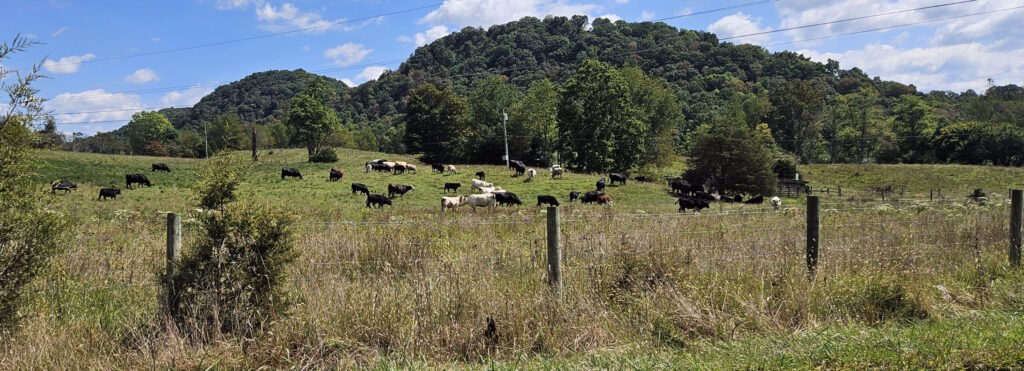
For farmers, meat producers, and market gardeners in the Appalachian Highlands, the new year isn’t just a calendar flip—it is the effective start date for one of the most significant marketing shifts and changes in rules in a generation.
As we wake up on January 1, 2026, a strict new federal definition of “American meat” is officially the law of the land, while state legislatures in Nashville, Richmond, Charleston, and Raleigh are preparing sessions that might transform everything from beekeeping rights to crop-theft penalties.
Here is your operational briefing for the year ahead.
Federal Update: The Labeling Shift & A New USDA Direction
“Product of USA” Is Now Exclusive: New Rules
As of today, the USDA’s FSIS has closed the loophole allowing repackaged imported beef or pork to use the “Product of USA” label.
The new rule: The “Product of USA” or “Made in the USA” label now requires animals to be born, raised, slaughtered, and processed solely in the US.
- Why it matters: This is a distinct competitive advantage for local livestock producers in Virginia and Tennessee who compete against cheaper imported beef.
Action Item: Immediately audit your label claims if you sell direct-to-consumer or at farmers markets. Confirm that every animal you market as “Product of USA” was born, raised, slaughtered, and processed entirely in the United States. If you control every stage of your animals’ lifecycle, use the new definition to differentiate your products in your marketing clearly.

The Rollins Era Begins at USDA
Just two days ago, on December 30, 2025, Agriculture Secretary Brooke Rollins signed her first major strategic memorandum, announcing a sharp pivot from the previous administration’s priorities.
Secretary Rollins explicitly stated that the department is moving away from recent DEI and environmental justice initiatives to focus purely on “increasing profitability” and “expanding markets.”
“The priorities we are announcing today further reiterate President Trump’s pledge to put Farmers First,” Rollins said in the December 30 announcement.
Farmers should expect the USDA to prioritize grant funding for mechanization, automation, and invasive species control (including the Spotted Lanternfly and citrus greening) over social equity programs in the coming fiscal cycle.

State-by-State Legislative Outlook

Tennessee: TAEP Checks & Land Fights
Action Item: If you applied for the Tennessee Agricultural Enhancement Program (TAEP), check your mailbox for approval notifications. Verify receipt and verify your awarded funding cap for the 2025-2026 cycle.
- Genetics & Livestock Equipment: Now capped at $3,000 (up from $2,000).
- Hay Storage: Now capped at $8,000 (up from $7,000).
- Working Structures: Now capped at $5,000 (up from $4,000).
- Status: Approval notifications were mailed on December 1. If you haven’t received yours, check your application status immediately.
Action Item: Monitor updates from the Tennessee Department of Agriculture about Farmland Preservation Act hearings. Prepare to submit public comments when periods open in February.

Virginia: Apple Industry Shakeup & Flood Money
Action Item: Keep track of the General Assembly session in Richmond. Track the progress of the key bills that impact apple producers and resilience funding.
- Repealing the Apple Board (HB 65): Introduced just this week, this bill proposes abolishing the Virginia Apple Board by 2028 and transferring its assets to the Governor’s Agriculture and Forestry Industries Development Fund. For orchardists in the Shenandoah Valley and Southwest VA, this signals a significant change in how commodity marketing will be handled.
- Resilience Funding (HB 70): This bill directs the Resilient Virginia Revolving Fund to give precedence to “nature-based solutions.”
Action Item: Assess if your farm practices qualify for funding under HB 70, such as regenerative grazing, riparian buffers, or wetland restoration. If so, prepare to apply for low-interest loans or grants to support flood mitigation.
West Virginia: The “Bee Bill” Returns
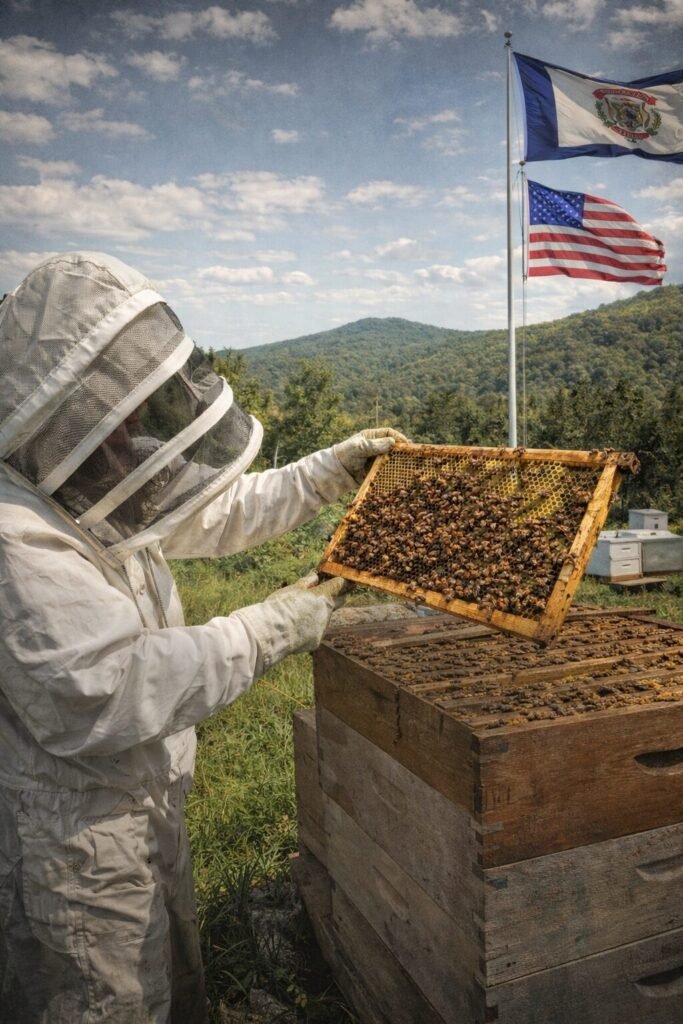
Action Item: Follow developments on the 2026 “Bee Bill.” If enacted, review your local ordinances and adjust your beekeeping practices to comply with the new statewide protections.
- The Goal: To strip municipalities of the power to ban beekeeping.
- The Detail: It updates the definition of “Honey Bee Pest” to include the Tropilaelaps mite, guaranteeing the state can fight this emerging threat.
- The Quote: Advocates argue that “Cities, towns, and counties would no longer be able to regulate or prohibit beekeeping,” effectively creating a “Right to Farm” clause specifically for apiarists.
North Carolina: Rules for Cracking Down on Rural Crime
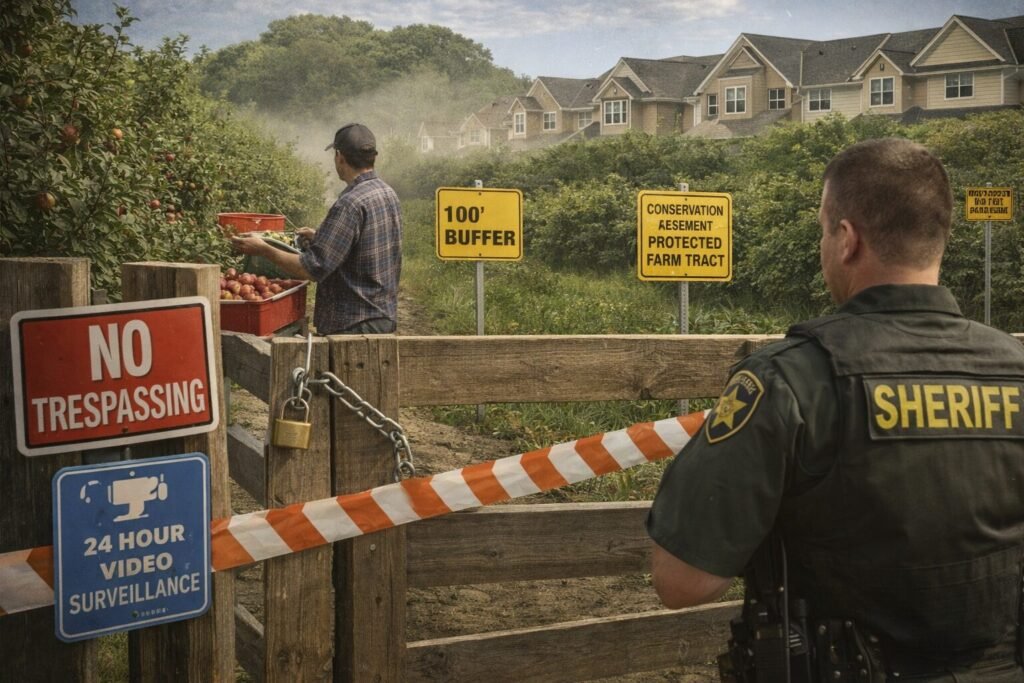
Action Item: Review your farm’s perimeter security and record-keeping to comply with the Farm Act of 2025, especially regarding protection from theft and confirming the new 100-foot buffer requirements if near new developments.
- Hard Time for Crop Theft: As of last month, the larceny of ungathered crops (fruit, vegetables, or row crops) is a Class H felony for the first offense. This is a direct response to the increase in large-scale theft from orchards and fields.
- The 100-Foot Buffer: In a win for “Right to Farm” advocates, new subdivisions built next to “protected farm tracts” (land under conservation easement) must now include a 100-foot vegetative buffer. This physical barrier is designed to prevent the typical “suburban complaints” regarding dust, spray, and noise that often plague working farms.
Summary: The Rules give A “Hyper-Local” Advantage
If there is a single theme for early 2026, it is protectionism.
Federal law now protects the “American” meat label. State laws (NC, WV) shield farmers from theft and municipal overreach. Funding (TN, VA) is shifting to infrastructure and resilience.
The Takeaway: The “global market” remains unstable and expensive. The legislation effective today suggests that the safest bet for 2026 is tightening your local supply chain, securing your land rights, and leaning hard into the “Product of USA” label that you—and only you—can now legally claim.

















Leave a Reply