


In the Appalachian Highlands, we are conditioned to view the first hard freeze as an ending. It’s the signal to drain the hoses, close up the high tunnels, and say goodbye to the peppers and tomatoes.
But for the patient gardener and the pragmatic farmer, the freeze isn’t an end—it’s an ingredient.
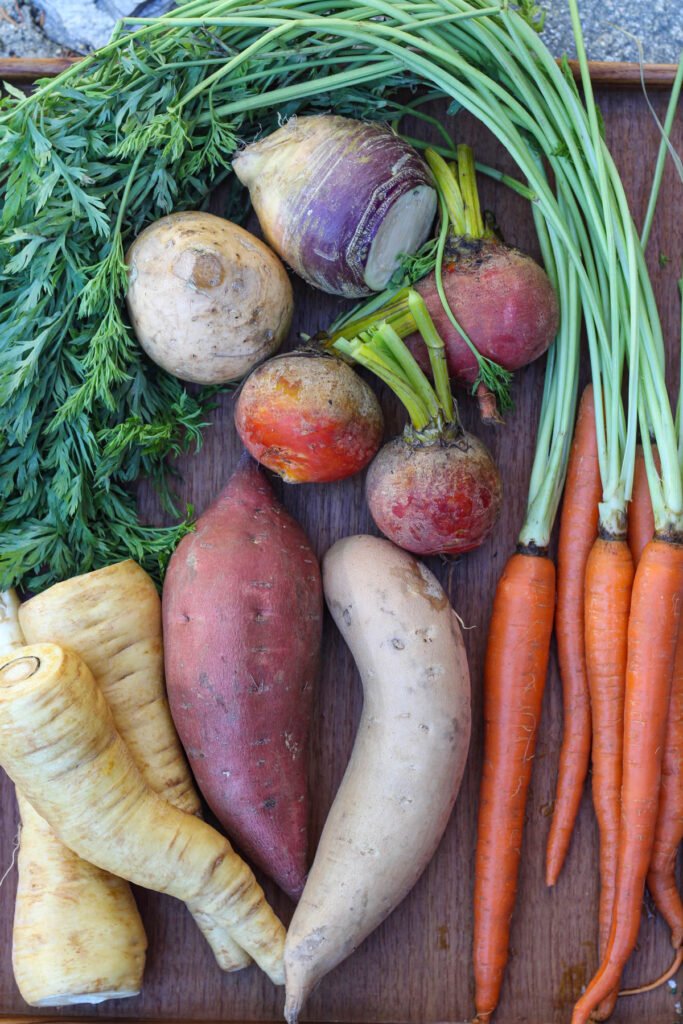
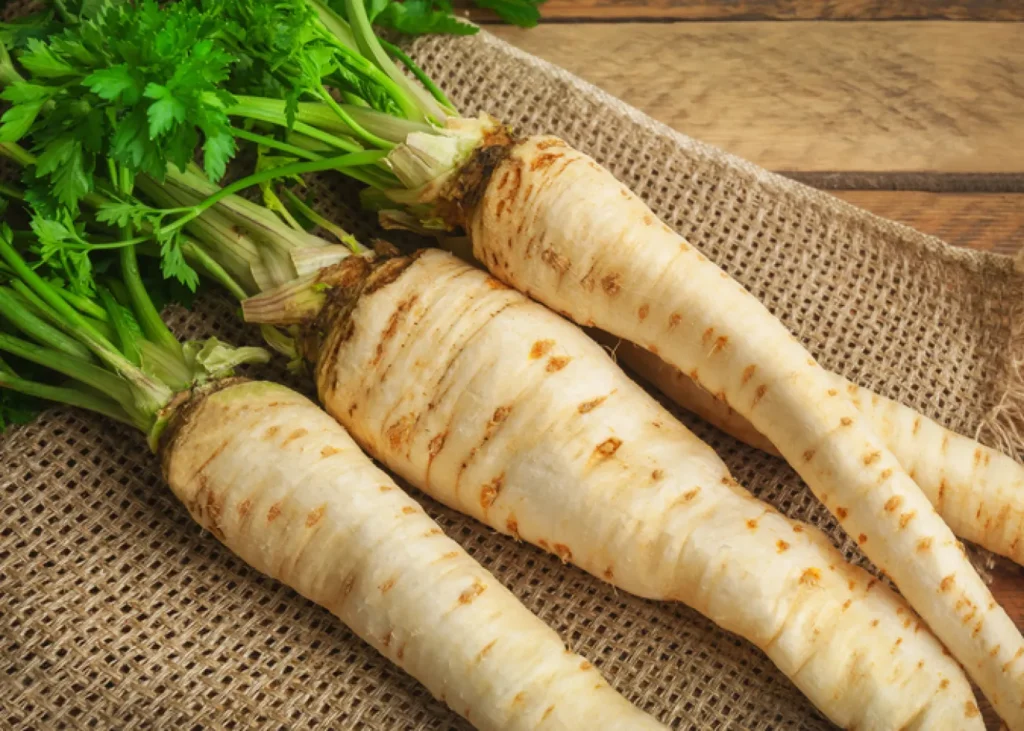
If you have walked through a farmers market in the area lately, you might have noticed gnarly, pale roots that look like white carrots that have seen a ghost. These are parsnips. And if you bought them in September, they probably tasted woody and bland. But if you buy them now, after the frosts of late November and December have settled into the soil, you are in for one of the most remarkable transformations in the vegetable kingdom.
The Science of Parsnips: Nature’s Antifreeze
Why does a parsnip dug in December taste like candy compared to one dug in October? The answer lies in survival.
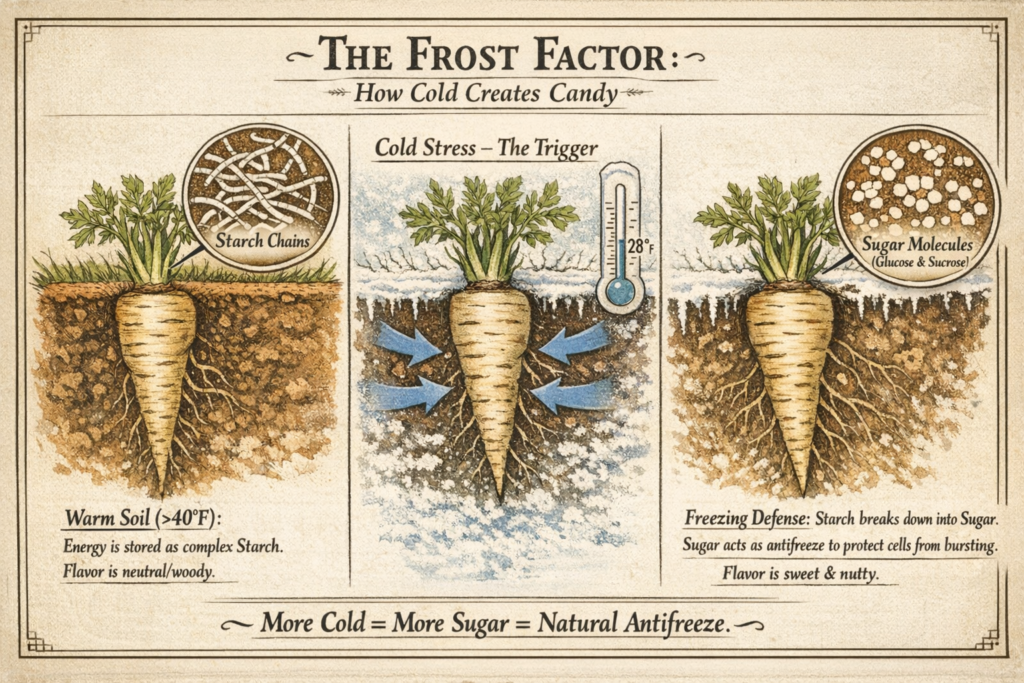
When temperatures in the Highlands drop below freezing, vegetables left in the ground face a crisis: the water inside their cells wants to freeze. If that water crystallizes into ice, it expands and ruptures the cell walls, turning the vegetable into mush.
To prevent this, root crops like parsnips (as well as carrots, rutabagas, and beets) perform a chemical magic trick. They rapidly convert their stored starches into sugars. Sugar acts as a natural cryoprotectant—or antifreeze. Just as salt water freezes at a lower temperature than fresh water, sugary sap freezes at a lower temperature than starchy sap.
By flooding its cells with sugar, the parsnip lowers its freezing point, enabling it to survive the Appalachian winter. The result for us? A vegetable that is significantly sweeter, nuttier, and more complex than anything you can grow in the summer.
The Pragmatic Harvest: Waiting it Out
For local growers, the “Frost Factor” is a lesson in patience. In a region where we are often rushing to beat the weather, parsnips require us to wait for it.
The ideal harvest time for the sweetest roots is right now—after we’ve had several weeks of nights dipping into the 20s.
However, there is a practical challenge: getting them out of the ground. Once the ground freezes solid in January, harvesting becomes a pickaxe job. The pragmatic window is December. The soil is cold and perhaps crusted with frost, but it is usually still workable with a broadfork.
Grower’s Tip: If you have parsnips still in the ground and you want to harvest them throughout January and February, pile a thick layer (6–8 inches) of straw or leaf mulch over the bed. This insulates the soil enough to keep it from freezing solid, allowing you to reach under the “blanket” and pull fresh roots even when the air temperature is in the single digits.
In the Kitchen: Roasting Parsnips Over Boiling
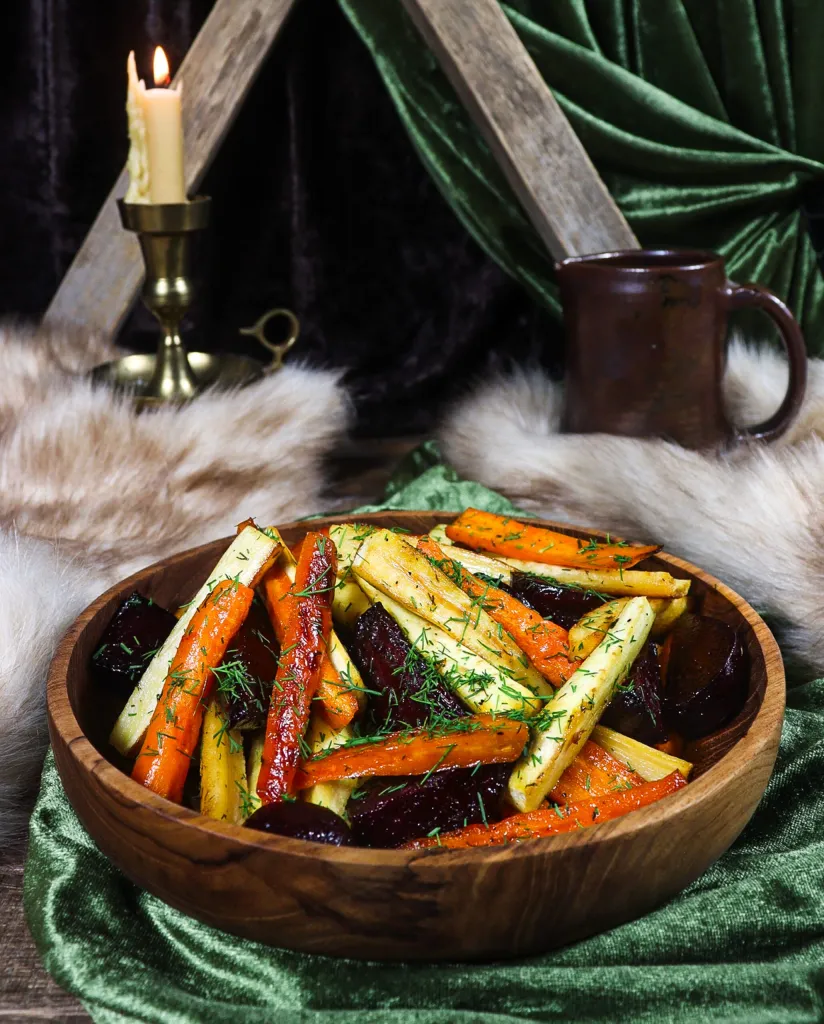
For generations, the parsnip suffered from a bad reputation, mainly due to the British tradition of boiling them to death. A boiled parsnip is edible, but a roasted parsnip is a revelation.
Because of their high sugar content, winter parsnips caramelize beautifully.
The Method:
The Bottom Line
As we settle into winter, our diet naturally shifts from the bright, acidic flavors of summer to the deep, comforting flavors of the earth. The winter parsnip is the bridge between the two—a root vegetable with the sugar content of a fruit, gifted to us by the very frost we usually fear.
So, next time you’re at the market or checking your late-season garden, don’t overlook those pale roots. They’ve been out in the cold, working hard to get sweet just for you.













Leave a Reply