


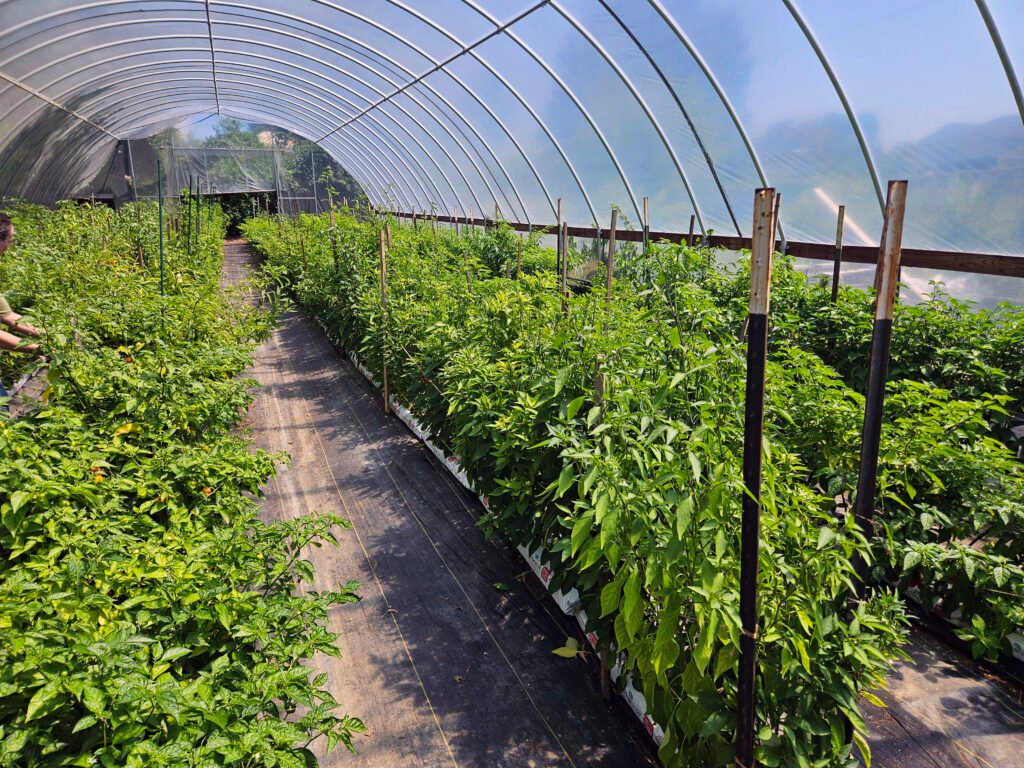
Drive through the back roads of Washington or Smyth County in Winter, and the landscape tells you a clear story: Nothing is happening here. The pastures are brown, the corn stubble is gray, and the soil is locked up tight.
But if you spot a 100-foot-long arch of polyethylene plastic glowing in the winter sun, you know that story is a lie.
Inside that plastic bubble, it might be 70 degrees. The air smells like wet earth and chlorophyll, and while the rest of the county is buying bagged lettuce shipped from Yuma, Arizona, the farmer inside that tunnel is harvesting crisp, sweet spinach that has never seen the inside of a refrigerated truck.
This is the High Tunnel revolution. For the Appalachian Highlands, it is the single most effective way to cheat winter, bridging the stark reality of frozen fields with the promise of fresh greens.
It’s Not a Greenhouse
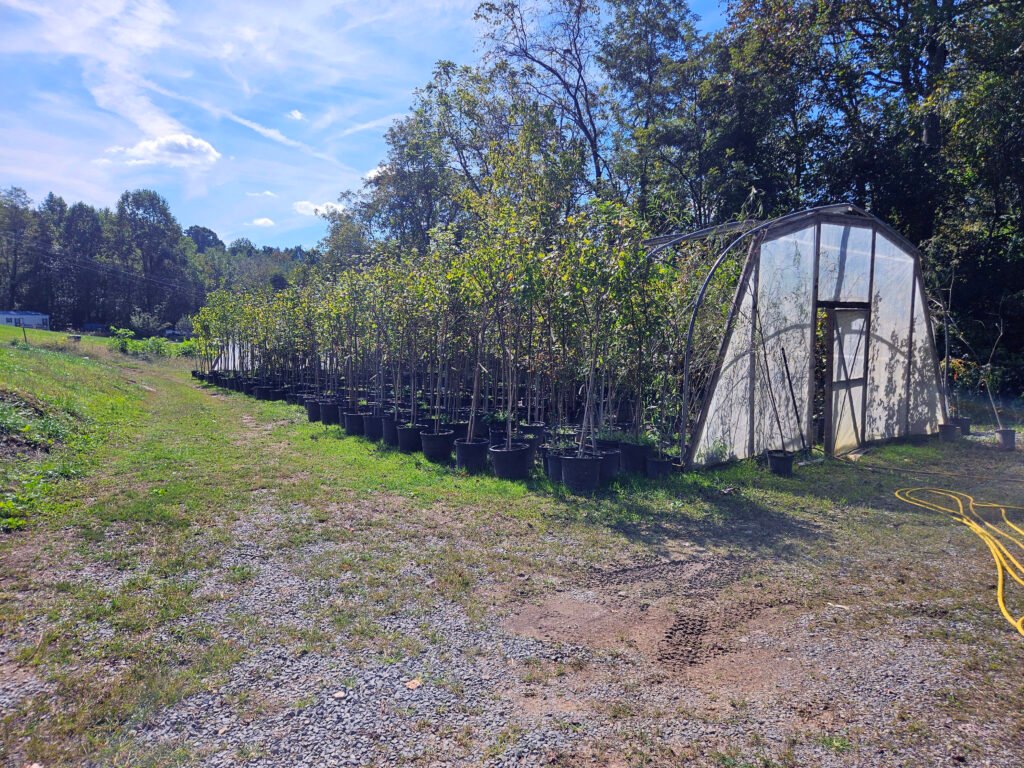
First, let’s clear up the terminology. A greenhouse is usually a climate-controlled environment with heaters, fans, and grow lights, where plants are grown on benches. It is expensive to build and costly to run.
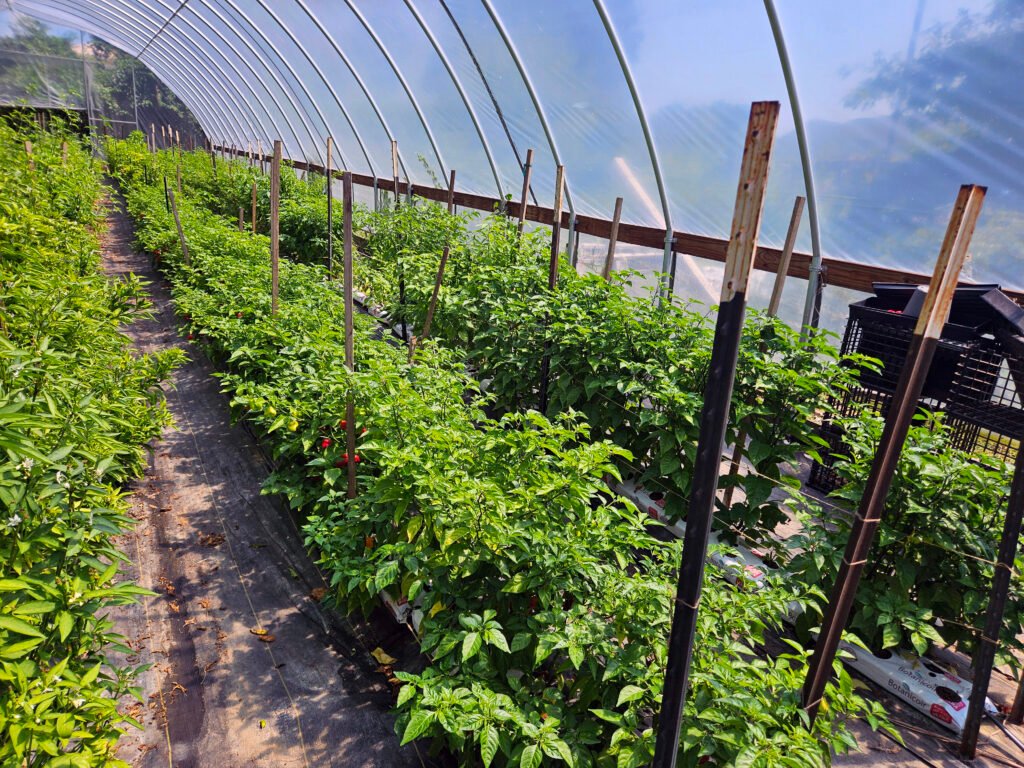
A High Tunnel (or hoop house) is the pragmatic cousin. It is passive solar. There are no heaters. The plants grow directly in the native soil. It relies entirely on the sun for heat and manual labor for ventilation.
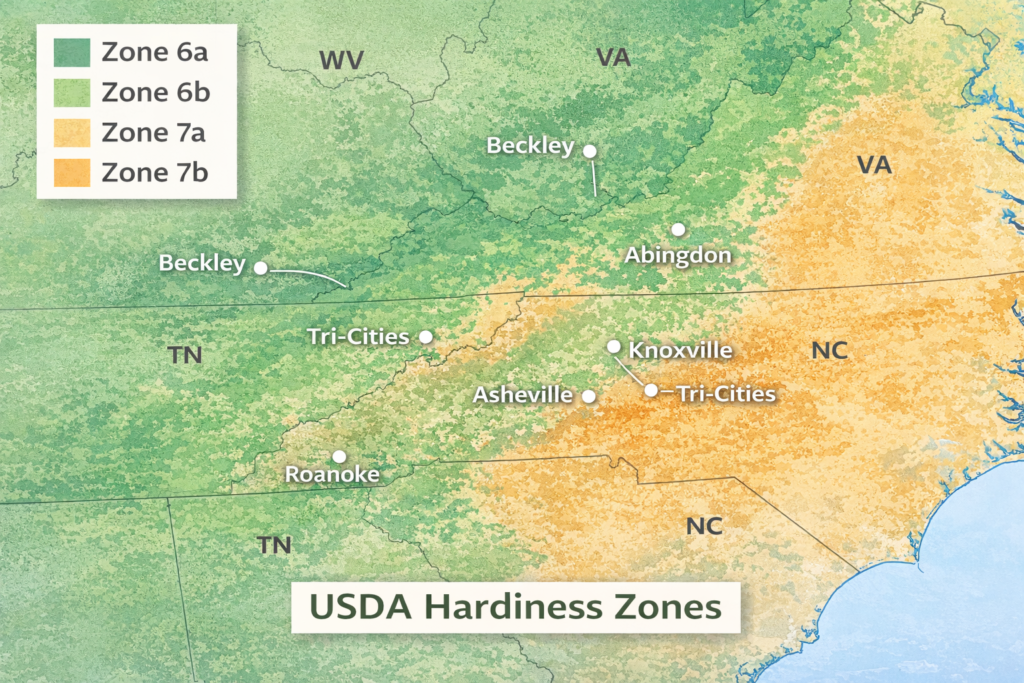
In our region (USDA Zone 7a/7b, 6a/6b-9a), a single layer of 6-mil greenhouse plastic essentially moves your farm one or two zones south. Suddenly, you aren’t farming in Bristol, Virginia; you’re farming in South Georgia.
The Eliot Coleman Effect: The Double Layer
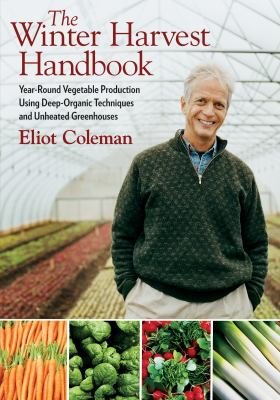
You cannot talk about winter farming in America without talking about Eliot Coleman. A farmer, author, and researcher based in Harborside, Maine, Coleman is widely considered the father of the modern winter harvest movement.
Working on his “Four Season Farm”—which sits in a climate even colder than ours—he proved that you don’t need expensive fossil fuels to grow food in December; you just need better biology and smarter physics.
His seminal book, The Winter Harvest Handbook, popularized the specific strategy that allows us to harvest fresh salads when the ground outside is frozen solid.
The real magic happens when you add a second layer. Following Coleman’s model, high tunnel farmers in the mountains often use “low tunnels” or floating row covers (fabric blankets) inside the high tunnel over the crops.
- Layer 1 (The Tunnel): Protects from wind, snow, and rain, creating a climate zone one or two steps south of our actual location.
- Layer 2 (The Cover): Traps the ground heat released at night directly around the plants.
This “double layer” system can keep greens alive even when outside temperatures drop to -10°F. It doesn’t keep them growing fast—light is too low in January for rapid growth—but it keeps them in a state of suspended animation, fresh and ready to pick.
With the technical setup in place, the question becomes: what can actually thrive inside these tunnels during winter’s darkest days?
You aren’t growing tomatoes in January (unless you have a heater). The Winter High Tunnel is the kingdom of the cold-hardy.
- Spinach: The undisputed king. Cold triggers sugar production (just like parsnips), making winter tunnel spinach incredibly sweet.
- Claytonia (Miner’s Lettuce): A native succulent green that thrives in low light.
- Mâche: Nutty, tender, and virtually indestructible.
- Carrots: Sown in October, harvested all winter.
The Pragmatic Challenges involved in Winter Growing
It sounds idyllic, but high tunnel farming in the Highlands is not for the faint of heart.
1. The Wind Load We live in the mountains. Winds here can tear specialized greenhouse film to shreds in minutes if it isn’t adequately secured. Orientation matters (usually perpendicular to prevailing winds if possible, or streamlined to face them), and using “iggle wire” (wiggle wire) in metal channels is non-negotiable.
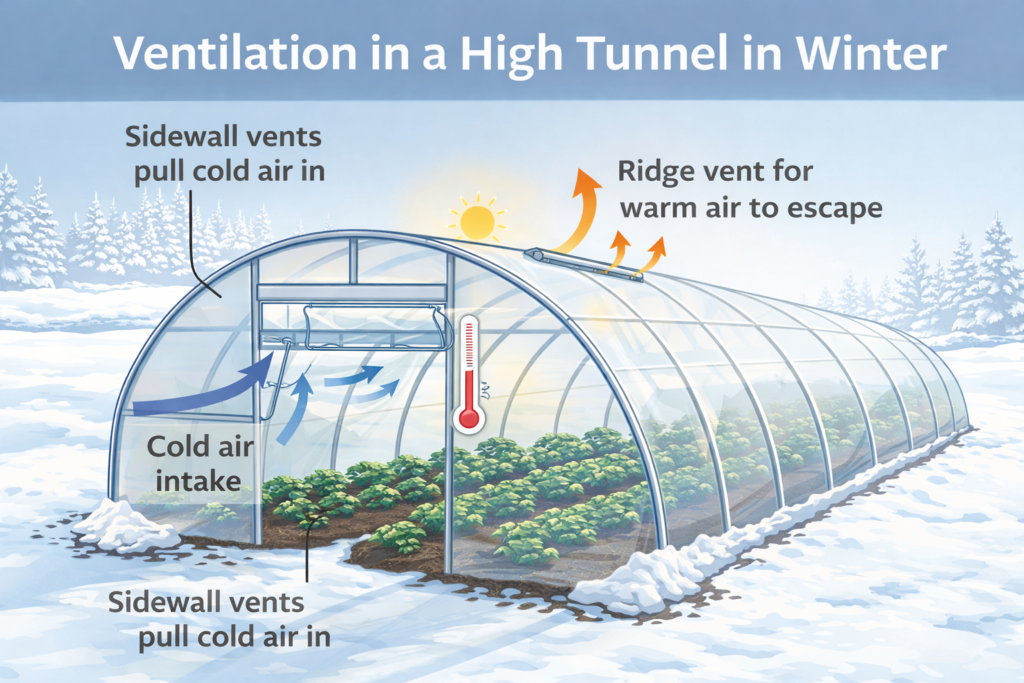
2. The Ventilation Dance This is the hardest part. On a sunny day in February, even if it is 30°F outside, the inside of a sealed tunnel can hit 95°F. That heat will stress your cool-weather crops. You have to go out and roll up the sides in the morning and roll them down before the sun drops behind the ridge. It is a daily chore, seven days a week.
3. Humidity is the Enemy. Mold and mildew love a stagnant, damp tunnel. You aren’t battling bugs in winter; you are battling fungal disease. Airflow is critical, even when it’s cold.
The Market Advantage of Winter Growing
Why go through the trouble?
If you are a market grower, having fresh green products in February and March is a superpower. When the markets open (or if you sell to restaurants), showing up with fresh, local greens when everyone else is still waiting on their seedlings gives you a massive competitive edge.
But even for the homesteader, there is a profound satisfaction in walking out into a blizzard, stepping through a plastic door, and eating a salad that is still alive. It’s a small victory over the seasons, and in the depths of winter, that tastes pretty good.








Leave a Reply