

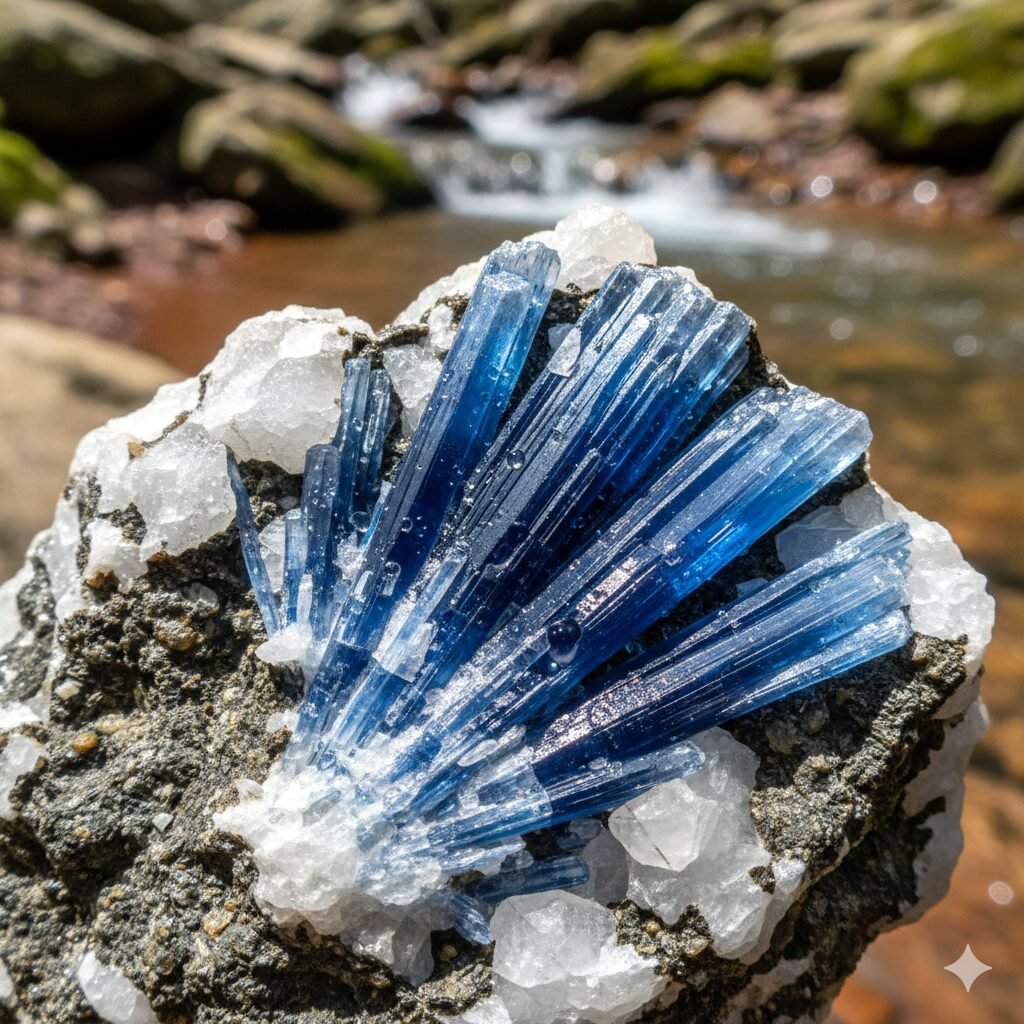
You can find Kyanite at high elevations in the Blue Ridge and deep within the Piedmont. For scientists, it is a physical anomaly. In industry, it is a “super-material” that keeps furnaces operating. For storytellers, it is the blue heart of the Appalachian Highlands.
I. The Physics of the “Split Personality”
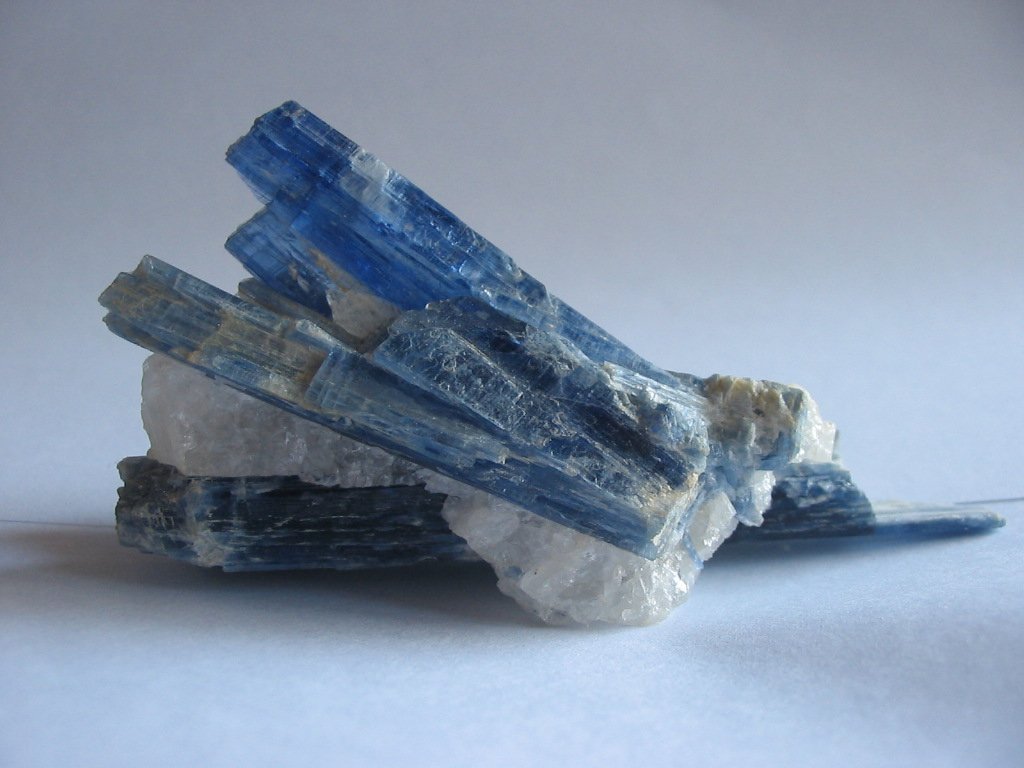
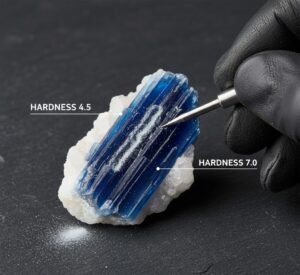
Kyanite is notable for its anisotropy. While most minerals have a uniform hardness, kyanite is a “two-strength” mineral. Its original Greek name, disthene, means “two strengths.”
- Hardness: Scratching a kyanite blade along its length gives a 4.5 on the Mohs scale, which is fairly soft. If you turn the crystal and scratch across its width, the hardness increases to 7.0, approximately the same as that of quartz.
- Formation: Kyanite is an aluminum silicate and a polymorph of andalusite and sillimanite. It forms only under very high pressure deep in Earth’s crust, so geologists use it as a “pressure gauge” to study how mountains are formed.
II. Mining and Refining: From Mountain to Powder
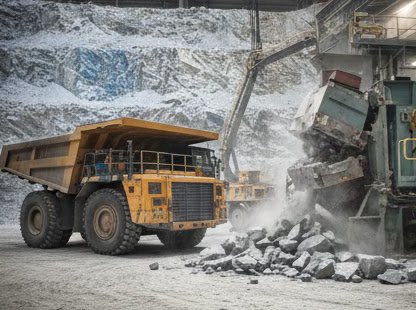
Mining kyanite is challenging because the mineral rarely occurs in pure veins. Instead, kyanite typically disseminates throughout host rocks—most often kyanite-quartzite or schist—requiring miners to separate it from the surrounding material.
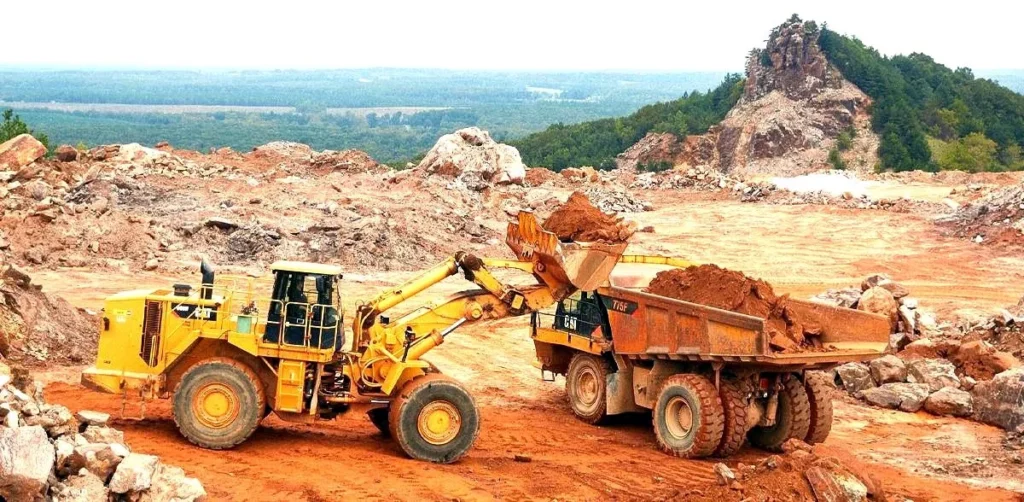
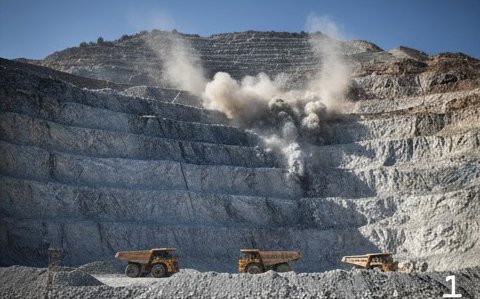
- Extraction: Modern mining involves large-scale open pits. Explosives break the massive quartzite benches at industrial sites.
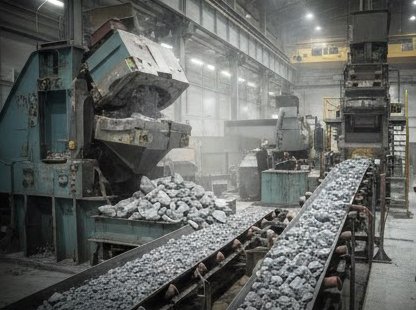
- The Crushing Cycle: Trucks transport the ore to primary jaw crushers and then to secondary cone crushers until the machines reduce the rock to small pebbles.
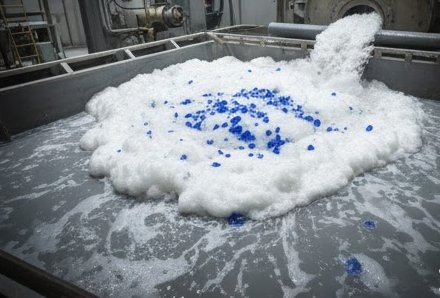
- Froth Flotation: Since kyanite is chemically similar to the quartz around it, gravity separation does not work. The crushed ore is mixed into a chemical slurry. Special reagents are added that bind selectively to kyanite, causing the crystals to repel water. Air is pumped through the tanks, and the kyanite rises on the bubbles to the surface, where it is skimmed off.
- Calcination (The Transformation): Most refined kyanite is heated in large rotary kilns to 1,450°C (2,642°F). This process transforms it into mullite, which expands the crystal lattice and produces a material that does not deform when reheated.
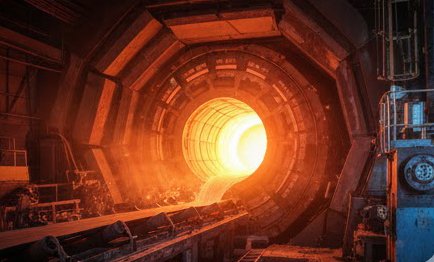
III. The Industrial Hero: Specific Applications
Gem-quality kyanite is appreciated for its beauty, but its industrial uses are even more important. Its main strength is thermal shock resistance, meaning it can be heated and cooled rapidly without fracturing.
- Refractories (The Steel Backbone): Kyanite is the primary constituent of the bricks that line blast furnaces. These linings are used in the production of steel and glass and have to withstand temperatures above 3,000°F.
- Investment Casting: In aerospace, kyanite is used to fabricate molds for jet-engine turbine blades. According to Kyanite Mining Corporation, Virginia Mullite™—derived from kyanite—is used in brake shoe linings as a friction modifier because it is heat-resistant and helps maintain a clean friction surface as brakes wear.
IV. Local History: From Tobacco Barn Weights to A Global Resource

The story of Appalachian kyanite is about a local discovery that became important worldwide.

- Early Discovery: The US Geological Survey reports that kyanite was initially regarded as a curiosity. In the late 1800s, settlers in areas such as Western North Carolina and Central Virginia often encountered blue rocks in their fields. Because they were heavy and strong, people sometimes used them as doorstops or weights for tobacco barns.
- The 1839 Reporting: The kyanite deposits at Willis Mountain were first officially reported by Governor David Campbell in 1839. However, for nearly a century, they remained largely untouched because no industrial-scale production of the mineral was known to exist.
- The 1920s Industrial Pivot: The “Kyanite Rush” started in the 1920s. As the automotive and electronics industries grew, manufacturers needed better insulators for spark plugs and electric motors.

- The Dixon Legacy: In the late 1940s, Gene B. Dixon Sr. and other local investors purchased the mine and founded the Kyanite Mining Corporation. A former coal miner, he used his savings to buy a bankrupt quarry on Baker Mountain. This became the start of the Kyanite Mining Corporation. His family later expanded the business to Willis Mountain in 1957, and it eventually became the world’s top supplier.
V. 2026 Destinations for Research and Exploration
In the Appalachian Highlands, kyanite is more than merely a mineral. It is a major regional industry and a favorite find for local rockhounds.
Regional Rockhounding: The Community Network
To get access to special dig sites and expert advice, it is important to join a regional club. Most clubs are part of the Southeast Federation of Mineralogical Societies (SFMS) or the Eastern Federation of Mineralogical and Lapidary Societies (EFMLS).
Virginia Clubs (Appalachian Region Focus)
- Shenandoah Valley Gem & Mineral Society (Waynesboro, VA): Meets on the 2nd Monday at Waynesboro Public Library. They offer rock shop access, field trips, and lapidary instruction. https://www.shenandoahvalleyrockclub.org/
- Roanoke Valley Mineral & Gem Society (Roanoke, VA) is an active group focusing on regional mineralogy. https://www.rvmgs.org/
- Gem & Mineral Society of Lynchburg, club meetings take place from 7:00 p.m. to 9:00 p.m. on the third Tuesday of each month in the large banquet hall at 715 Moose Lodge, 2307 Lakeside Dr., Lynchburg, VA. https://www.lynchburgrockclub.org/
North Carolina Clubs (Southern Appalachians)
- Southern Appalachian Mineral Society (SAMS – Arden/Asheville, NC): Founded in 1931, meets on the 1st Monday at the LDS Church in Arden. https://www.main.nc.us/sams/
- Gem & Mineral Society of Franklin (Franklin, NC): Located in a high-variety gem area. https://www.fgmm.org/
- Catawba Valley Gem & Mineral Club (Hickory, NC): Active in the foothills. https://www.cvgmc.com/
- Henderson County Gem and Mineral Society (Hendersonville, NC). https://www.facebook.com/groups/136940423038426/
- Mountain Area Gem and Mineral Association (MAGMA) (Leicester, NC). https://www.facebook.com/p/MAGMA-Land-of-Sky-Gem-Show-61552471386136/
Tennessee Clubs
- Knoxville Gem and Mineral Society (Knoxville, TN): Meets on the 3rd Thursday; focuses on education and field collecting. https://www.knoxrocks.org/
- Mountain Gems (Tri-Cities area, TN): A dedicated group for women in the area to connect and rockhound. https://www.facebook.com/groups/228674912166181/
Group Digs and the “Kyanite Connection.”
The best way to see kyanite in the wild is through a Club Field Trip.
- The Benefit: Many of the best kyanite locations (like Willis Mountain or private pegmatite mines in NC) are closed to the general public. However, these firms often grant one-day access to members of the Southeast Federation of Mineralogical Societies (SFMS) for supervised group digs.
- What to expect: On these trips, you will often find “float” kyanite, which are crystals that have weathered out of the rock. You can also use chisels to pry blades directly from large boulders.
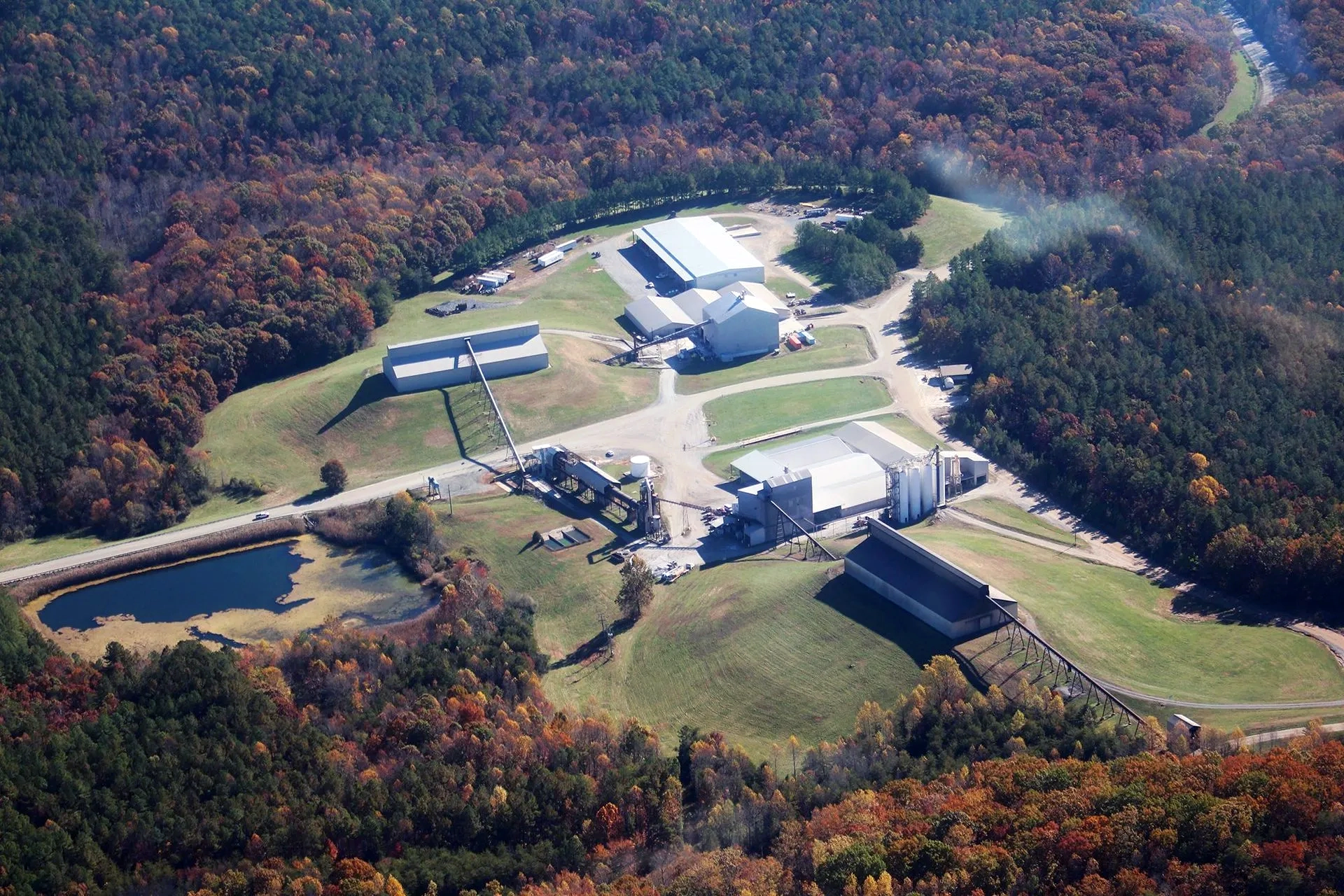
Willis Mountain (Dillwyn, VA) is the world’s largest Kyanite deposit.
- The Experience: This is an active surface mine. Kyanite Mining Corporation is a fourth-generation, family-owned and operated business that produces kyanite and mullite products in central Virginia. Although it is not open to daily public tours, the company sometimes hosts large-group digs for mineral clubs, often attracting more than 100 participants.
Nearby, visitors interested in historical landscapes can explore Appomattox Court House National Historical Park or High Bridge Trail State Park to see remnants of the area’s historic rail infrastructure.
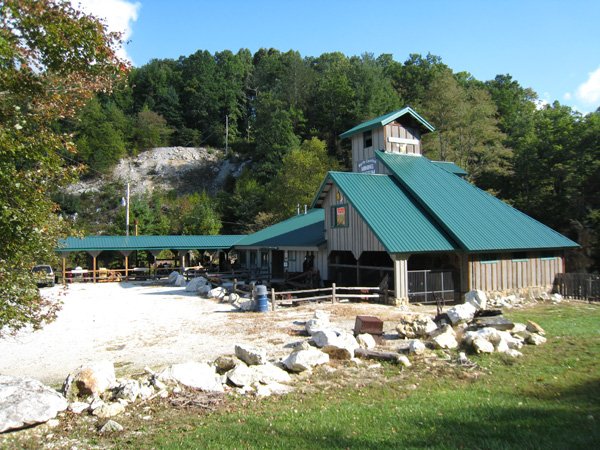
Emerald Village (Little Switzerland, NC)
Emerald Village provides a comprehensive overview of the history of underground mining in the Spruce Pine Mining District.
- Features the North Carolina Mining Museum and guided tours of the historic Bon Ami Mine.
- According to Stark Caverns, guests can join specialized Black Light Tours to explore remarkable fluorescent minerals, including calcite that glows under ultraviolet light. The site also offers “gem mining” flumes where visitors can search for minerals such as kyanite and garnet in local ore.
Gem Mountain (Spruce Pine, Burnsville, NC)
Gem Mountain is a key destination for hands-on prospecting with professional guidance.
- Offers guided mine trips to private, secluded locations where you can dig for your own specimens.
- The Museum of North Carolina Minerals is open year-round, making it a reachable resource for those interested in the geology of the Blue Ridge, according to the National Park Service.
- Located at Milepost 331 on the Blue Ridge Parkway.
- Features extensive exhibits on the 300+ varieties of minerals found in the state, including massive kyanite specimens.
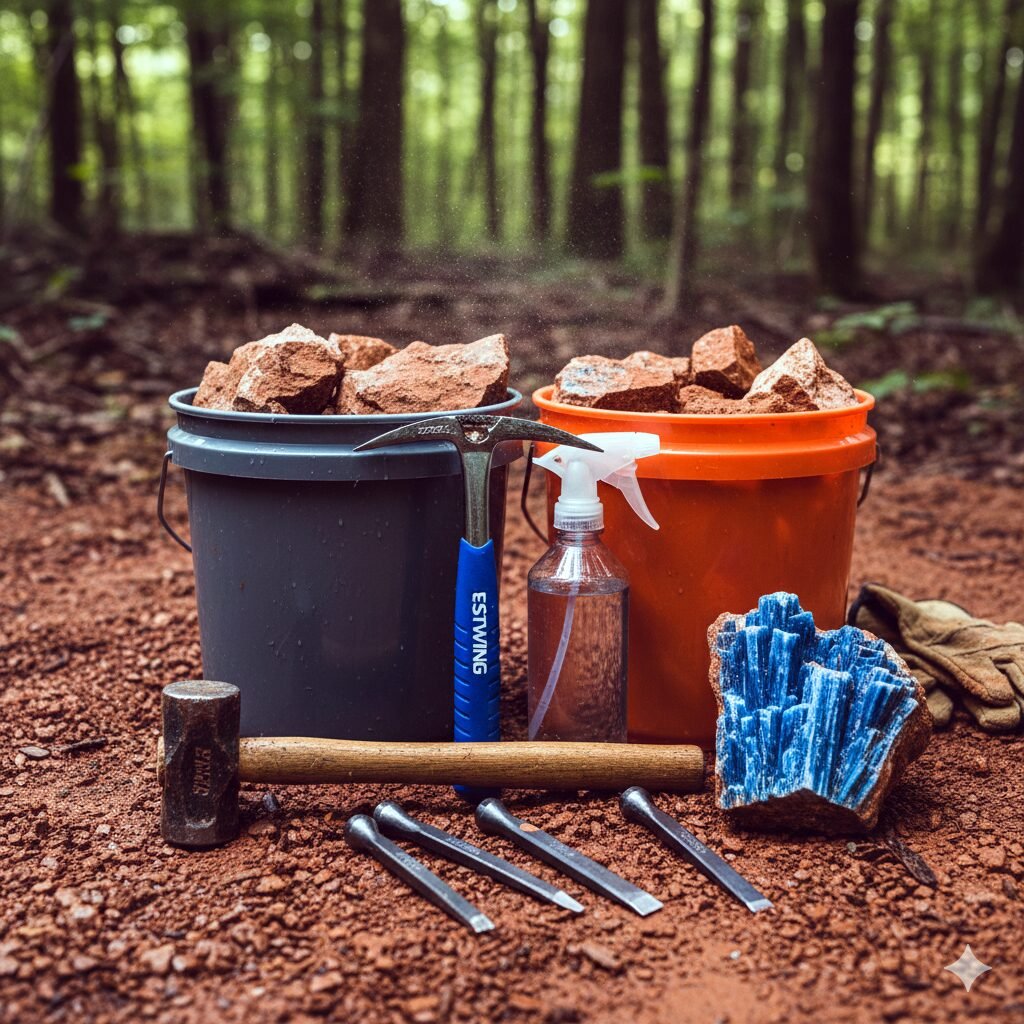
VI. The Collector’s Craft: Tools of the Trade
To find your own specimens, you’ll need a specialized kit to handle the tough Appalachian rock:
- 22oz Rock Pick: For general prying and “float” hunting on the surface.
- 3lb Crack Hammer & Masonry Chisels: Essential for extracting blades from the hard quartzite found in Virginia.
- Water Spray Bottle: Kyanite’s bright blue color stands out when wet, making it easier to spot in mountain clay.
- Sturdy Buckets: Rocks containing kyanite can become very heavy in a short time.
From the industrial blast furnaces that forge our modern world to the quiet, azure-streaked hills of the Blue Ridge, Kyanite symbolizes the transformational power of the Appalachian Highlands. It is a mineral that defines resilience—weathering millions of years of erosion to crown our ridges and enduring thousands of degrees of heat to protect our technology.
Whether you encounter it as a curious “two-strength” blade in a mountain stream or as the invisible ceramic backbone of a jet engine, Kyanite remains one of the region’s most profound gifts. To examine its history and geology is better to understand the grit and beauty of the mountains themselves. This trip commences with a single blue flash in the red Appalachian clay.














Leave a Reply