



In the pages of Smoky Mountain Magic—that beloved culinary bible compiled by the Junior Service League of Johnson City in 1960—there sits a recipe that feels less like instructions for dinner and more like a map to the past. Credited to “Mrs. Charles Piston,” this Brunswick Stew traces its lineage back to the 1800s, when the Appalachian frontier was still raw, and the cookpot was the center of the home.
But who was Mrs. Charles Piston?
In our research on Johnson City and Elizabethton history, the name “Piston” is a ghost, likely a typo preserved in print. After all, the O and the I are right next to each other on the keyboard. The real history of this region belongs to the Poston family. The Postons have deep roots in Washington and Carter counties, dating back to the late 18th century. It is highly probable that our mystery cook is Margaret Poston, wife of Charles Poston, a family name woven into the fabric of Elizabethton and Johnson City.
If this is indeed a Poston family heirloom, it fits perfectly with the dish’s history. While Brunswick, Virginia, and Brunswick, Georgia, have fought a century-long war over who “invented” the stew (Virginia claims 1828; Georgia claims 1898), we in the Highlands know the truth: this stew is older than both claims.
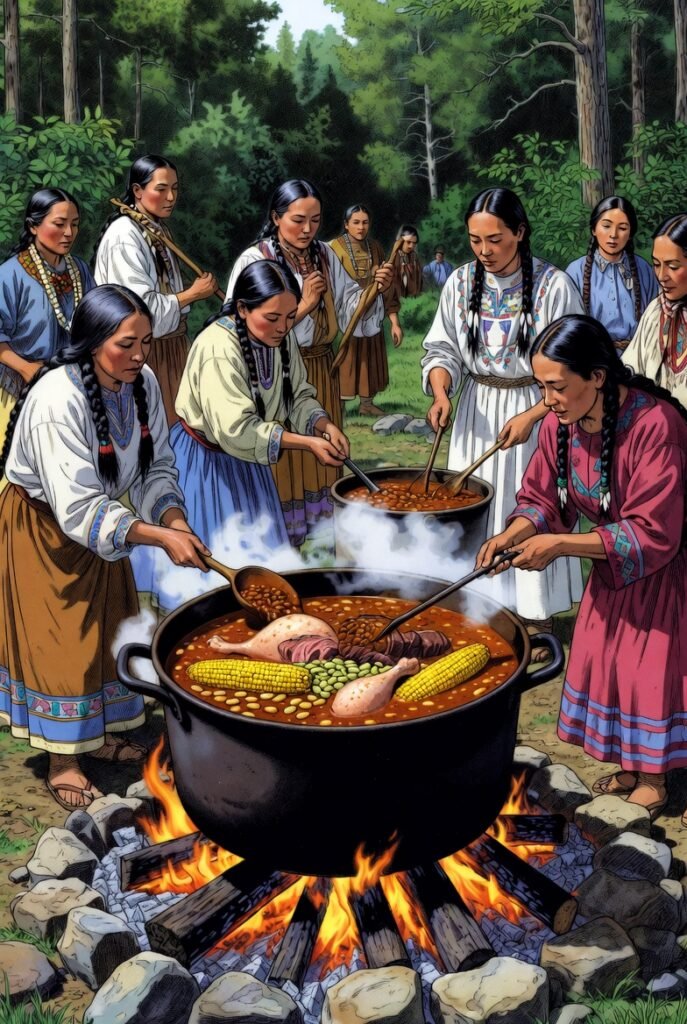
Long before it was named for a town, this thick, hearty mixture was Native American survival food—a hunter’s necessity. Originally made with squirrel, groundhog, or rabbit and thickened with corn and lima beans, it was a communal dish designed to feed a crowd with whatever the land provided. As it moved into the kitchens of 19th-century Appalachia, like the one Marget Poston would have presided over, it evolved. Chicken and pork replaced the small game, but the spirit remained the same: use what you have, cook it slow, and share it with neighbors.
The recipe below is a rare glimpse into that transition. It carries the cadence of an older time—poetic, precise, and practical. It invites us to do what Appalachian cooks have done for two centuries: stand over a slow fire, stir with patience, and taste the magic of the mountains. We are placing it here the way it was typed, including errors.
BRUNSWICK STEW (Very Old)
First, get your chickens, wash and cut them
And in an iron pot you put them;
Add water nearly to the top
And in it, salt and pepper drop
Boil slowly, now your tomato peel
Put in a slim or so of veal.
And for flavor, bear in mind
A chuck of middling with the rind.
Next some onions you throw in
The young and tender skin.
And butter beans do not forget
And what is more important yet
The corn, but do not be too fast
This you must grate and add at last
For better than the flour, you’ll find it’ll do
To give a thickness to the stew.
Some lemon peel cut very thin
May now be added and stirred in,
And ere it’s taken from the fire
Give it a dash of Worcestershire.
And soon you will hear the praises ring
This is a dish fit for a King.
1 large hen cut up ¼ lb. of side bacon (cut up)
¼ lb. veal or veal bone
Cover with water and add:
¼ t. pepper 3 tomatoes, peeled
1 t. salt 1 pt. green butter beans
3 small onions
Cook until tender; then add:
3 ears of grated corn dash of Worcestershire sauce
small amount of lemon peel, cut fine
Serve hot. MRS. CHARLES PISTON
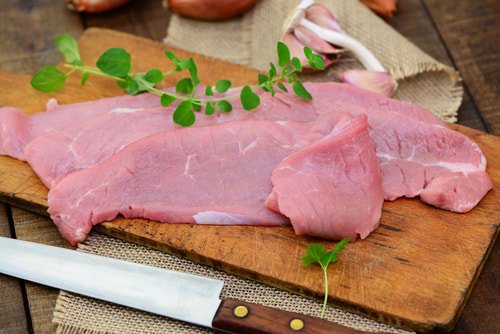
What’s a Slim of Veal?
In the context of a Brunswick Stew recipe, a “slice of veal” typically refers to a lean cutlet or round steak taken from the leg or shoulder of a young calf. Unlike beef, which has a bolder flavor, this tender meat offers a delicate taste and a high gelatin content that helps naturally thicken the stew’s broth as it simmers. It is generally cooked slowly alongside other proteins—such as chicken, pork, or traditionally small game—until it is tender enough to be shredded into the thick, stringy consistency that defines a classic Brunswick Stew.
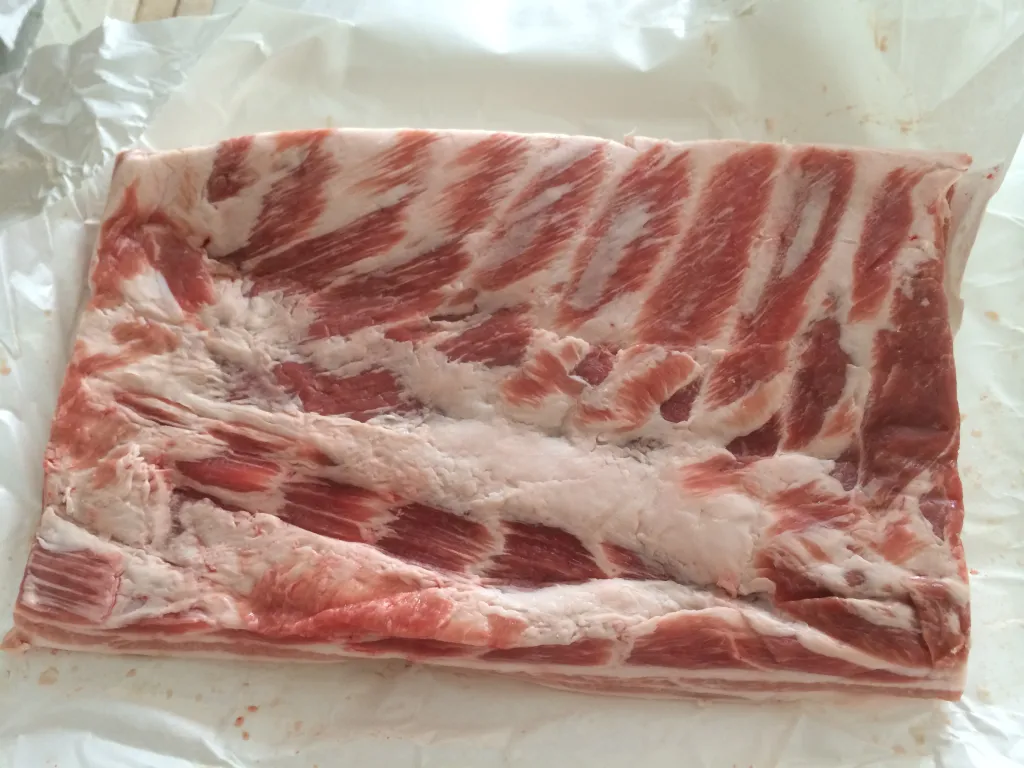
So, what is a “Chuck of Middling”?
A “chuck of middling” (more commonly referred to as “middling” or “middlings”) is an old-fashioned term for a specific cut of pork, widely used in historical Appalachian and Southern cooking.
In modern terms, it is essentially salt pork or a thick slab of bacon.
Here are the specific details of the cut:
- The Anatomy: It comes from the “middle” of the hog—the side of the pig between the shoulder and the hind leg (ham). This is the same section where modern bacon comes from.
- The Texture: Unlike modern bacon, which is often sliced thin and streaked with meat, middling was typically a thick, solid block of white fat with a strip of lean meat running through it.
- The Preservation: It was almost always salt-cured to preserve it for the winter. In the 1800s and early 1900s, this was a staple “seasoning meat.”
- The Usage: You wouldn’t typically eat a “chuck of middling” like a steak. Instead, a chunk (or “chuck”) would be cut off and thrown into a pot of beans, greens, or stew (like your Brunswick Stew) to render out the fat and add salty, savory flavor during a long, slow cook.
In the context of Mrs. Piston’s Brunswick Stew recipe, she likely calls for a chunk of salt pork to provide the stew’s fat base and salt content.
This video from Townsends is relevant because it demonstrates the 19th-century method of making Brunswick Stew over an open fire, visually connecting your readers to the “1800s” era mentioned in your Mrs. Piston/Poston recipe.
If any of our readers have more information about Mrs Piston or Mrs. Poston, please let us know.















Leave a Reply