
In the Appalachian Highlands, a barn has never been merely a structure. It is a survival machine.
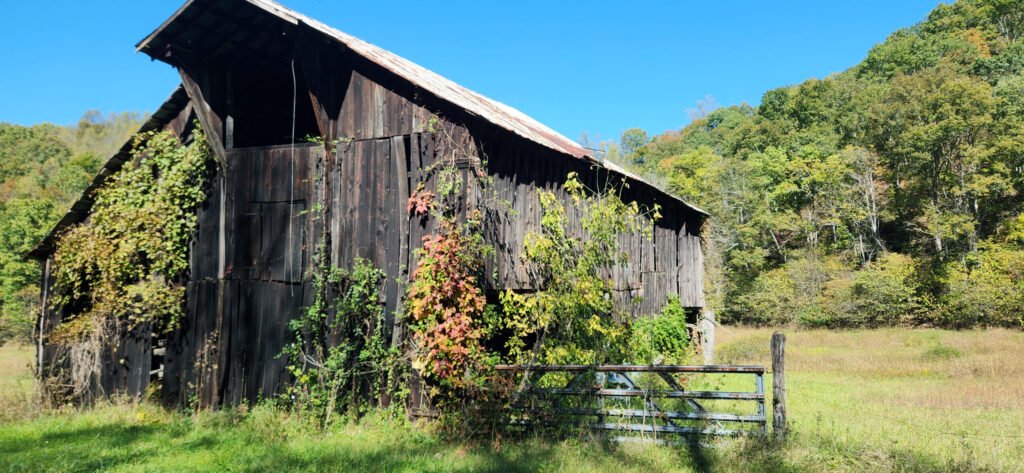
Driving through the ridges of East Tennessee, the hollows of Southwest Virginia, or the rolling hills of Western North Carolina reveals barns in all conditions: some stand as graying ghosts of American Chestnut, while others gleam as steel structures with automated sensors.
To fully understand the region’s farming culture, it is essential to look to the barns themselves—structures created by settlers without blueprints but informed by hands-on knowledge of their environment. These buildings showcase enduring local ingenuity.
From this foundation, it becomes apparent how Appalachian barns have both influenced and adapted alongside regional agriculture. Examining their designs reveals the ongoing interplay of landscape and tradition throughout the region’s history. To delve further, let’s consider the relationship between traditional barn forms and the unique mountain landscape.
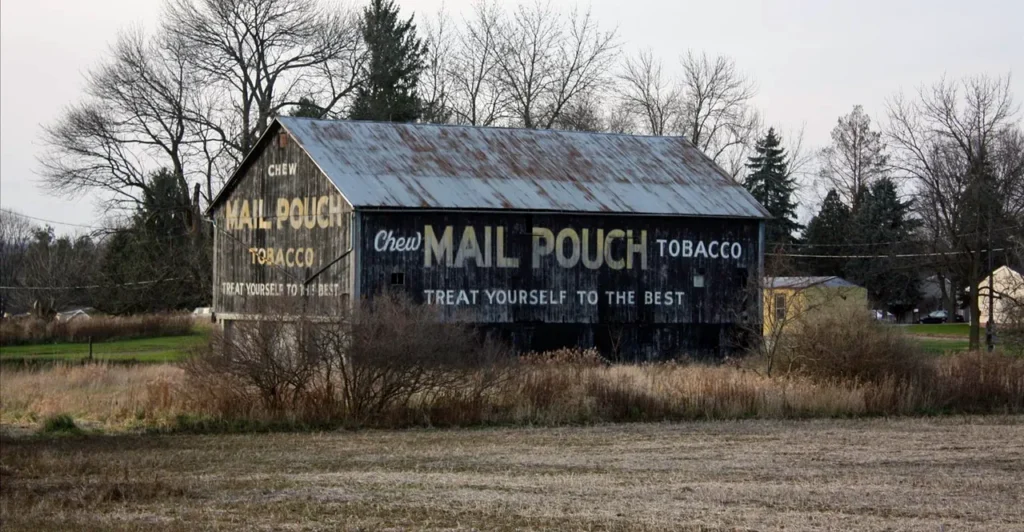
Form Follows Landscape: The Traditional Barn Designs
In contrast to the flatland farmers of the Midwest who could build anywhere, Appalachian farmers have always negotiated with the mountains. The topography—steep slopes, heavy rainfall, and narrow valleys—dictates the design.
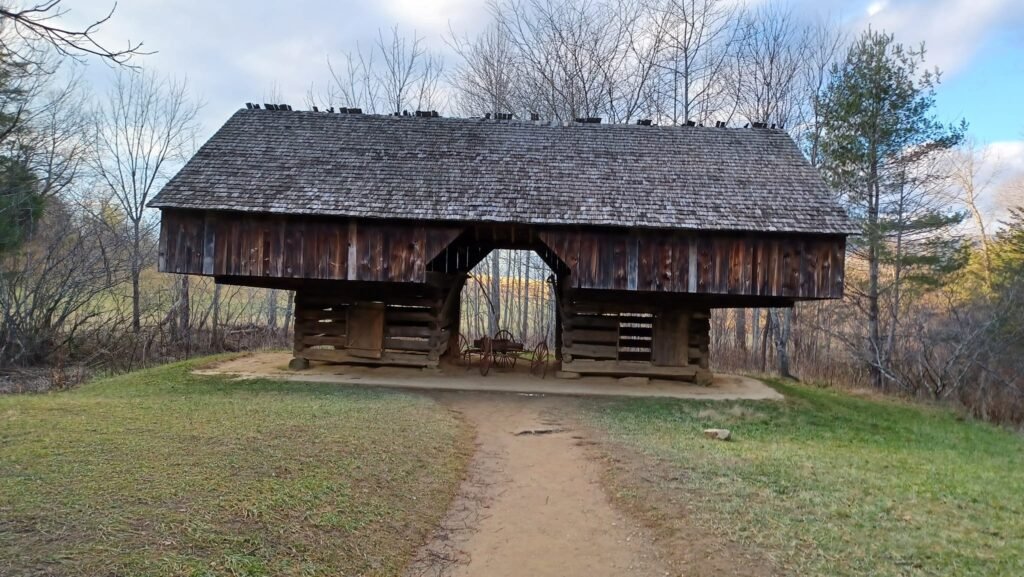
The Cantilever: The King of the Smokies
In parts of Sevier and Blount counties in Tennessee and Western North Carolina, travelers encounter the Cantilever Barn, a remarkable example of American folk engineering.
The loft, or upper storage area of the barn used for storing hay or crops, overhangs the log base by 8 to 10 feet, appearing to float above the ground.
The large overhang sheds rainwater, protecting against rot and providing shelter, while interior cribs hold grain.
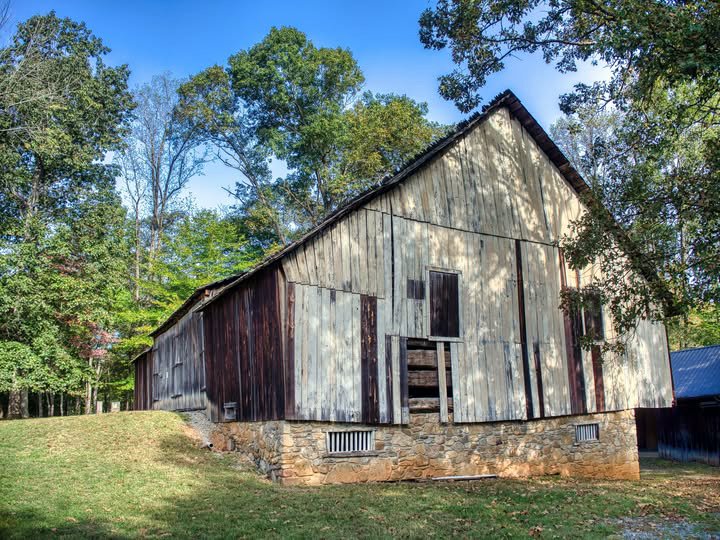
The Bank Barn: Gravity Engineering
Farmers in the Highlands learned early on to work with the slope, not against it. The Bank Barn is built directly into a hillside.
Ground-level access on two floors lets hay be unloaded using gravity; livestock below stay warm, insulated by earth.
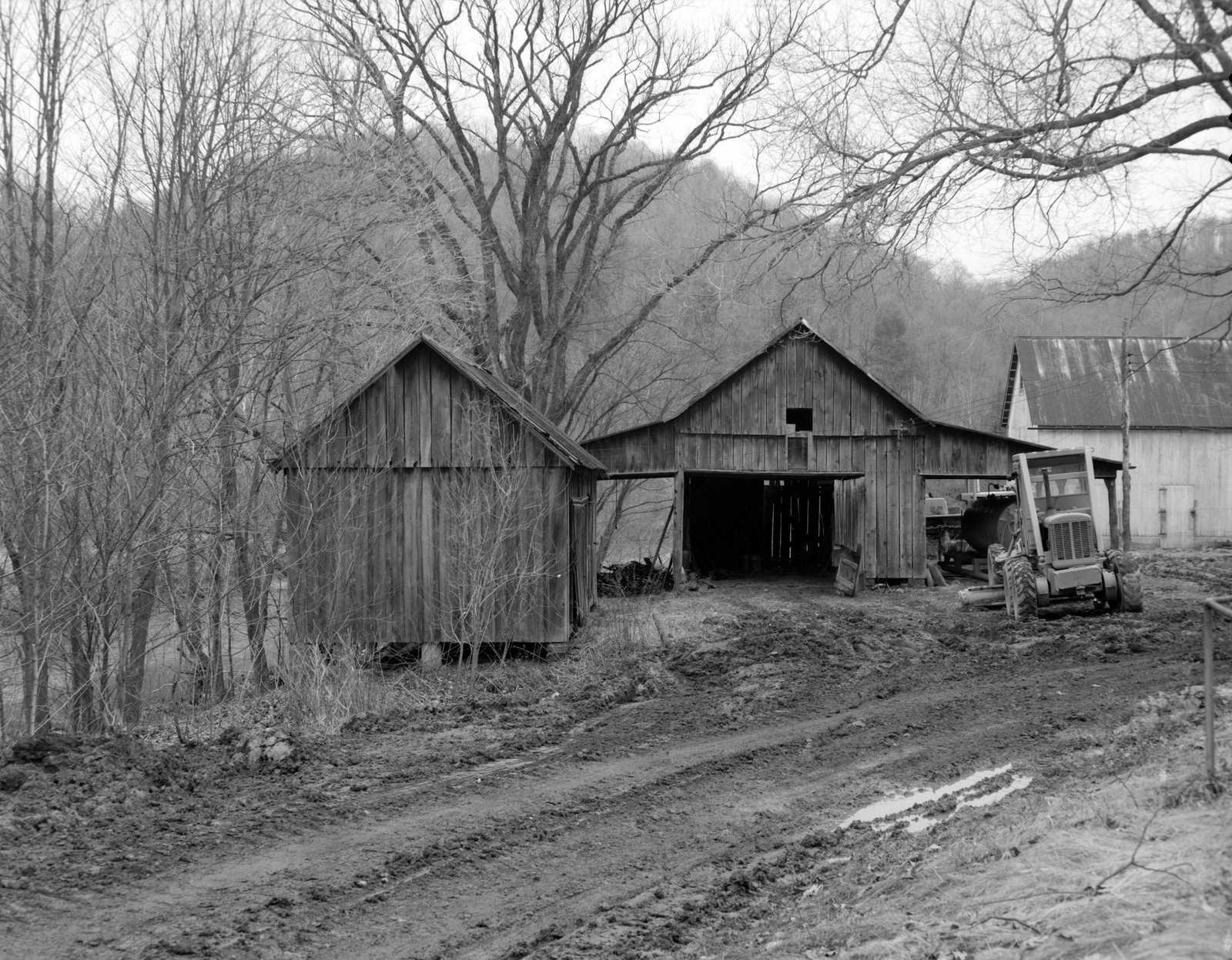
The Crib Barn: The Fundamental Unit
The ‘crib’—a simple square of notched logs used as a storage unit—serves as the fundamental building block of mountain architecture.
The Double Crib barn has two log compartments (cribs used for storage) separated by a breezeway—an open passage for airflow and workspace. The Transverse Crib barn features adjacent storage cribs with a central aisle wide enough for wagons, serving as a precursor to the modern drive-through garage.
The Roofline: An Engineering Signature
The silhouette of a barn against the sky reveals the specific problem its builder was trying to solve.
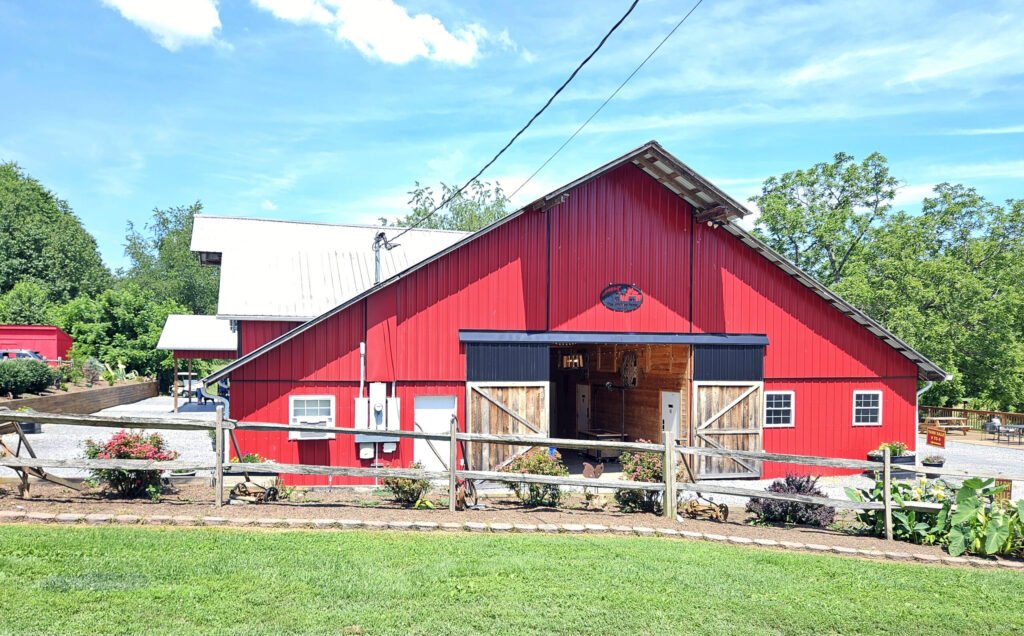
The Gable: The A-frame roof sheds heavy snow but offers limited loft space.
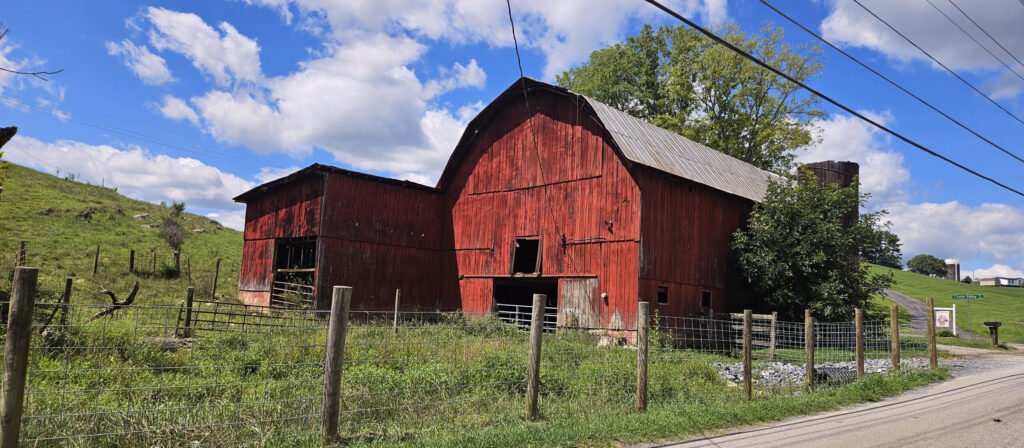
The Gambrel (Dutch): With two slopes per side, this shape maximizes storage while keeping exterior walls modest in height.
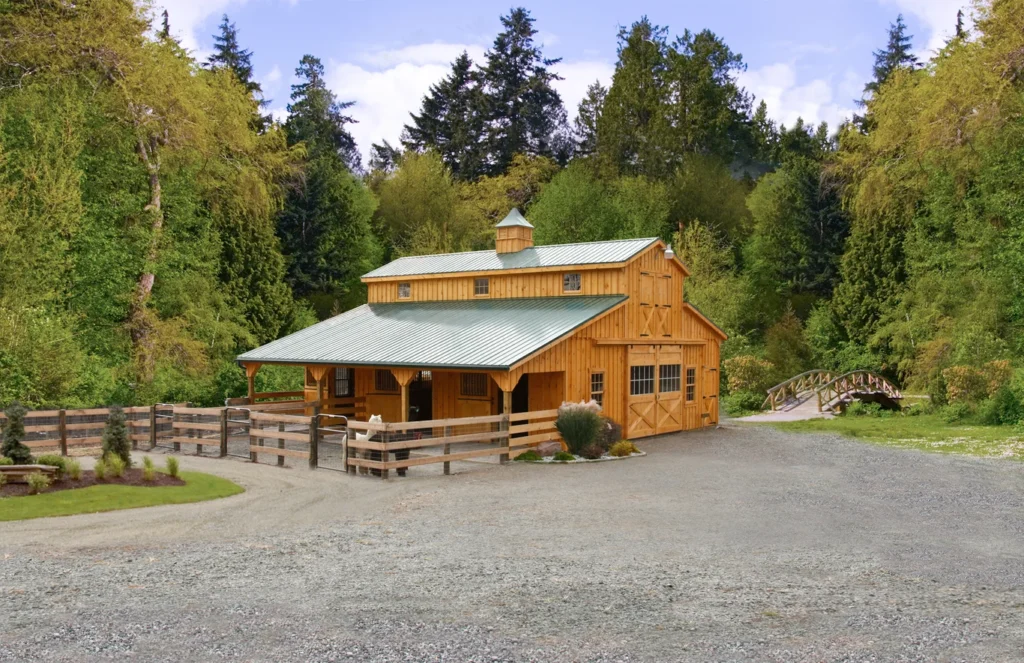
The Monitor: Also known as ‘Raised Center Aisle’, uses a raised ridge and vents for chimney-style ventilation, helping barns stay cool and livestock healthy.
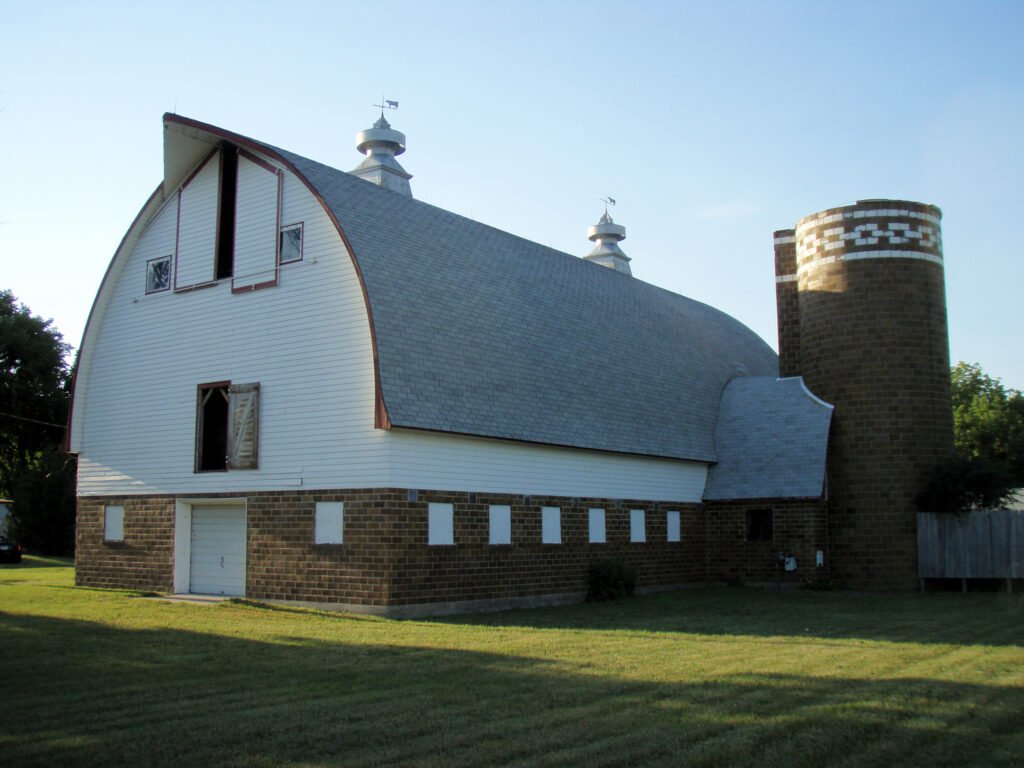
The Gothic Arch Roof, popularized in the early 20th century, features pointed, arch-shaped rafters—the curved support beams for the roof, typically made of wood. This design eliminates the need for horizontal crossbeams (beams running across the width of the barn), creating a large, open interior space and helping the barn withstand strong winds.
Built for a Purpose: Specialized Barn Architecture
In Appalachia, crops determine the structures. This is particularly clear in tobacco country.
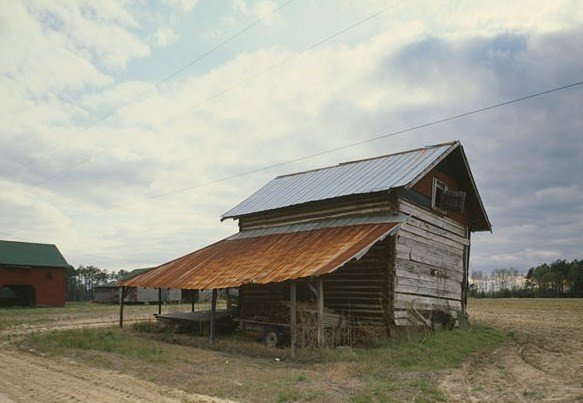
- Flue-Cured Barns (Lowlands): These are small, square barns, tightly chinked (sealed) with mud and built airtight to trap heat. The flue-curing process uses heated air, controlled by flues or pipes, to dry the tobacco, turning the leaf gold.
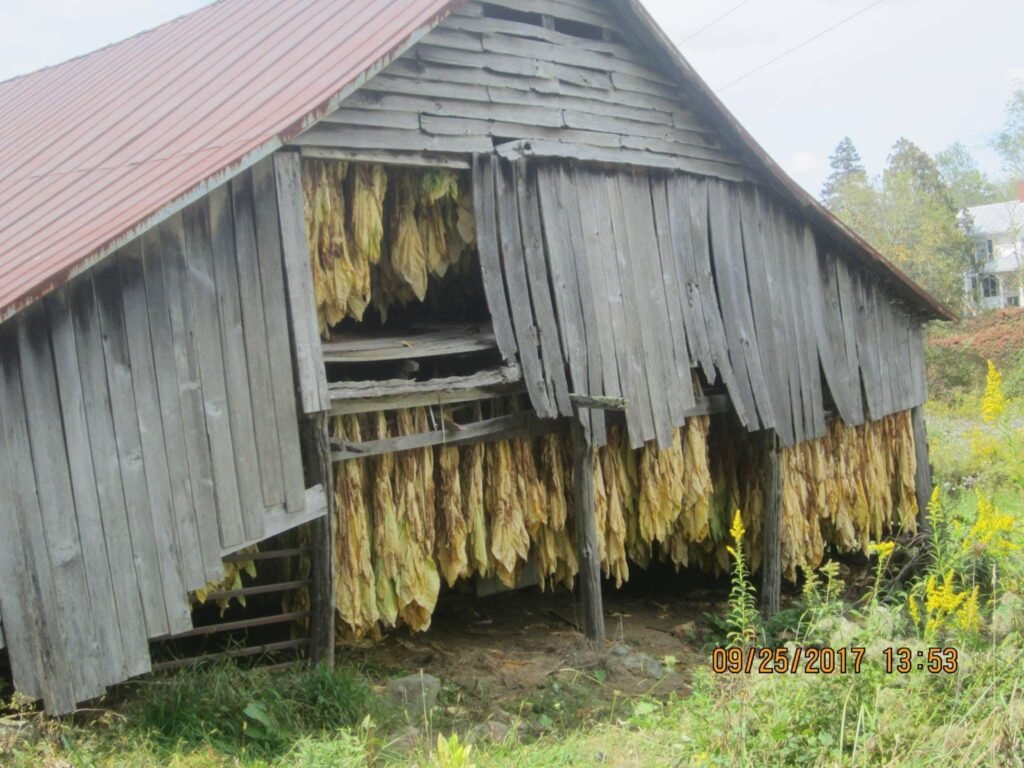
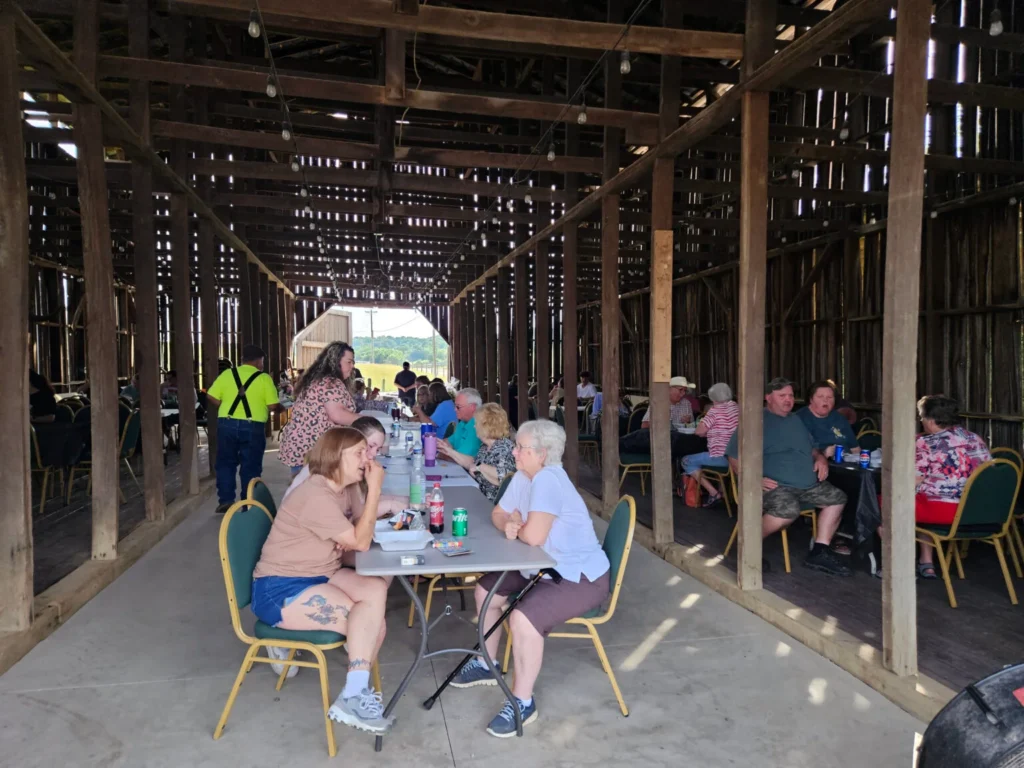
- Air-Cured “Burley” Barns of the Highlands are large, lofty buildings with vented vertical siding—every third board hinges open to let breezes cure (dry naturally) the hanging Burley tobacco over several weeks.
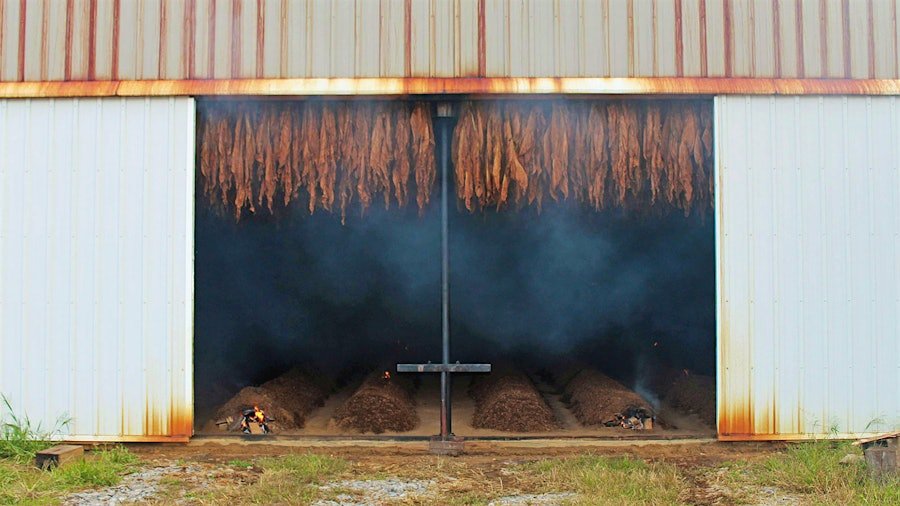
- Fire-Cured Barns: In the “Black Patch” of Kentucky and Tennessee, barns were built as tight as smokehouses to hold in the hardwood smoke that gives the tobacco its dark, pungent flavor.
Beyond tobacco, the region includes Corn Cribs, with their slanted, slated walls that prevent mold, as well as Henderson County’s Apple Packing Houses, often built with thick masonry to serve as natural refrigerators for fruit.
The Engineering of Survival: “Wood Logic”
Before affordable nails were available, builders relied on geometry—the mathematical study of shapes—and the biological properties of wood to join structures without strong building metals.
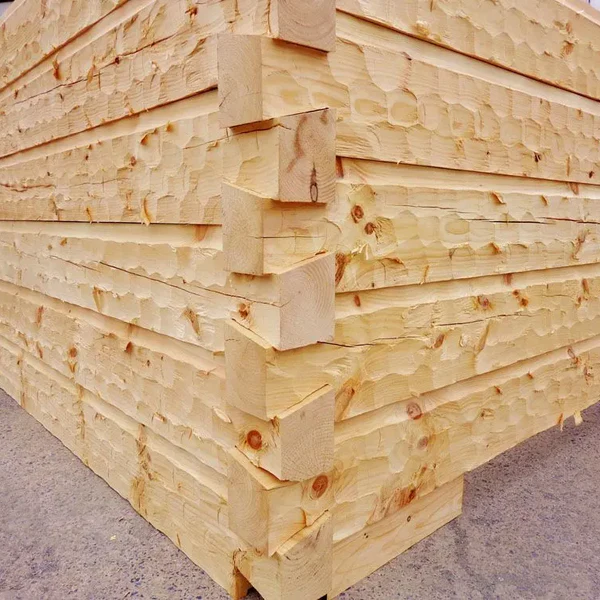
Instead of nails, they used joinery, which is the craft of connecting wooden parts with carefully shaped cuts and interlocking notches.
American Chestnut was chosen for its rot resistance and light weight, and Yellow Poplar for its straight grain and specific notches.
- The Half-Dovetail joint was the masterwork of mountain joinery (the art of connecting wooden pieces). The notch—a specific cut in the wood—slopes downward and outward. As the green, freshly cut wood dried and shrank over decades, the notch’s shape pulled the logs tighter together, creating a structure that actually became stronger with age.
Unlike cabins, barn logs were often left unchinked to allow airflow, preventing moisture and mold in stored crops.
The Modern Evolution: From Shelter to Systems
Today, the barn is evolving from a place of storage to a center of technology.
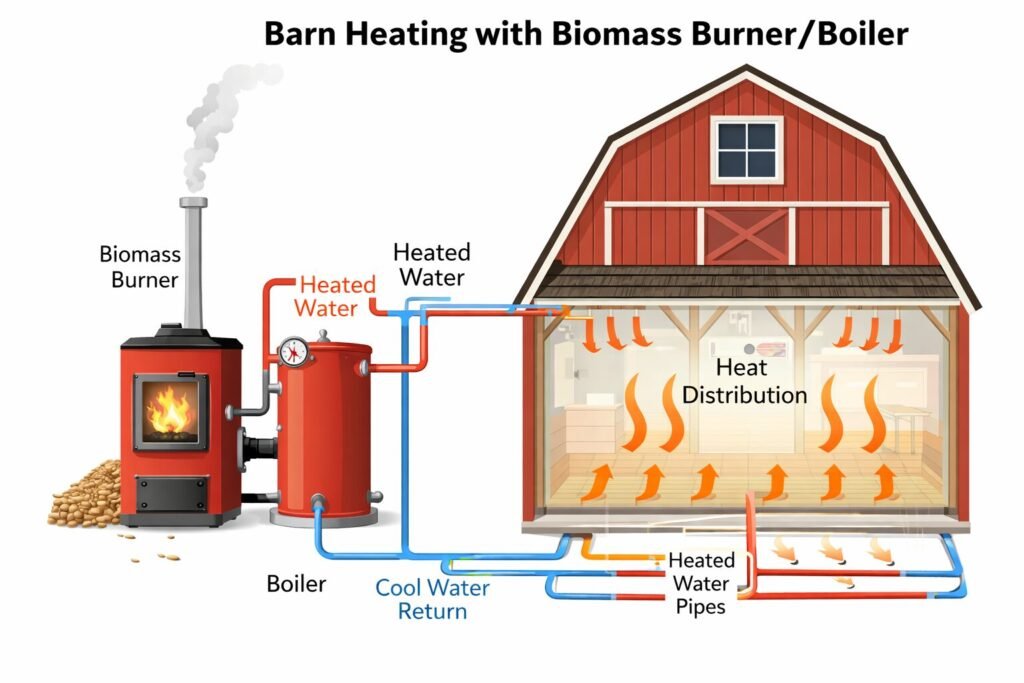
Biomass Burner Boiler Barns: These are a major advancement for tobacco and hemp farming. Instead of using expensive propane or other new materials, these systems burn agricultural waste such as wood chips and corn stalks in a central boiler—a device that heats water. The hot water is carried through underground pipes to heat several barns, making a closed-loop energy system that is also eco-friendly.
The Robotic Dairy: New barns center on ‘cow traffic,’ encouraging cows to walk to automated milking stations and emphasizing animal comfort through automated back-scratchers and waterbeds.
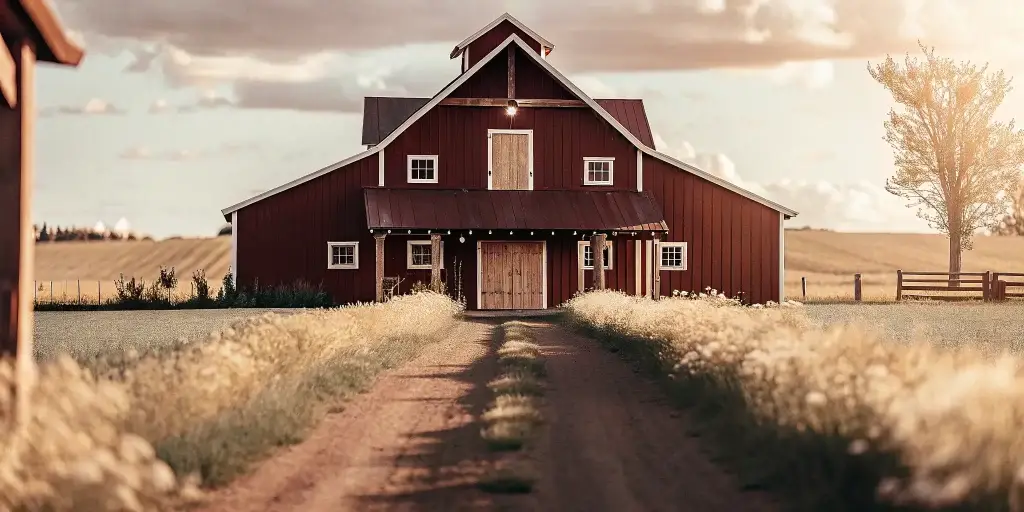
Barndominiums and Clear Spans: The ‘Bank Barn’ design has been recreated using modern steel building methods. Pre-engineered trusses—triangular frameworks that support the roof, especially those made with Machine Stress-Rated (MSR) lumber or steel—can now span more than 100 feet, providing space for large farming machines such as combines (machines that harvest crops). Often, the upper levels of these barns are converted into high-end living spaces, blending work areas with home life—a tradition in the region.
The Painted Barn: A Trail of Quilts
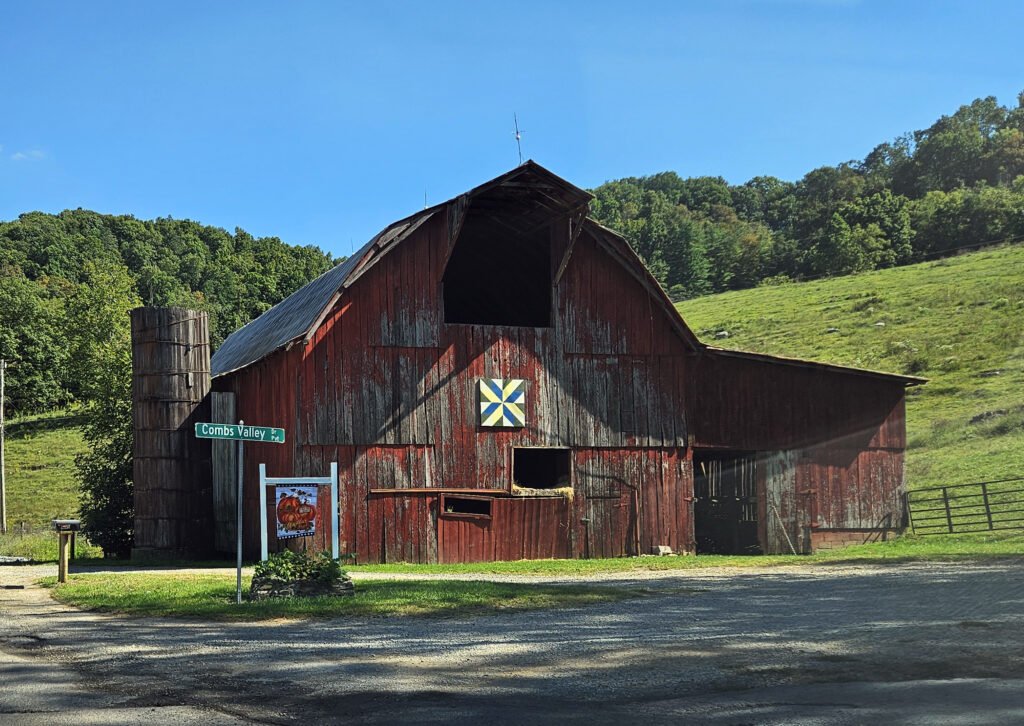
No discussion of the Appalachian barn feels complete without mention of the bright geometric squares that adorn these structures.
The Barn Quilt movement, which began in Adams County, Ohio, in 2001, has spread across the region. Painted 8×8 plywood squares are not hex signs; they are tributes. They display patterns such as “Grandmother’s Flower Garden” or “The Churn Dash,” honoring the farm’s matriarchs.
These symbols hold deep meaning for Appalachia: the structure shows the male timber tradition, while the art reflects female textile heritage. Together, they honor the family unit that has sustained these hills for centuries.
This article is part of our ongoing series on Appalachian Agricultural Heritage.
