


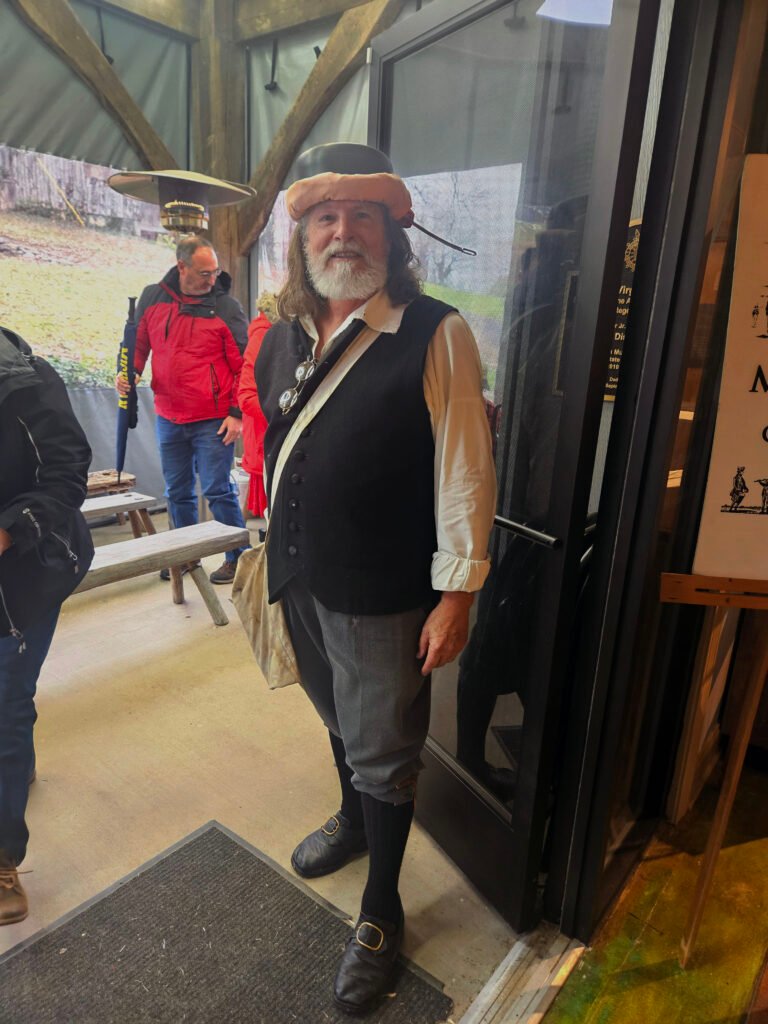
ABINGDON, Va. —The rain dampened the ground on November 30, 2025, turning the late autumn sky a bruised shade of gray. It was a cold day in Southwest Virginia—the kind of weather that makes you appreciate a thick wool coat and a warm fire. But inside the W. Blair Keller Jr. Interpretive Center at the Abingdon Muster Grounds, the atmosphere was anything but dreary.
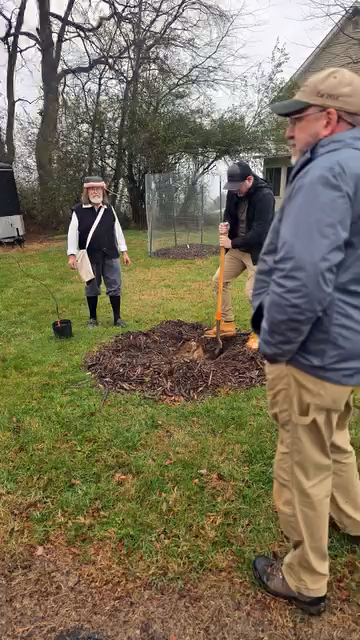
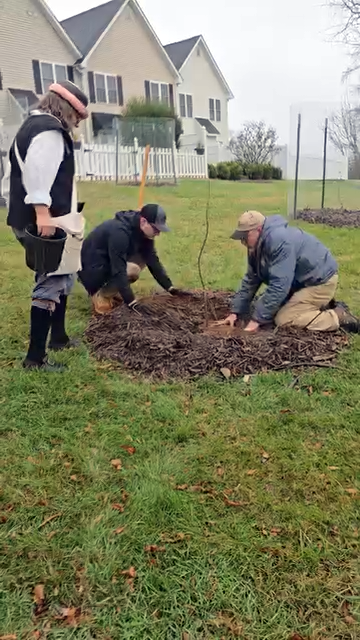
The air was thick with the sweet, spiced aroma of boiling apple cider and fresh apple bread. A damp but spirited ceremonial planting of a Heritage Apple Tree on the hill behind the museum had just finished —the final addition to a project fifteen years in the making. Now, drying off among artifacts of the Revolutionary War, a gathered crowd settled in to listen to Tom McMullen, owner and orchardist at Tumbling Creek Cider Company.
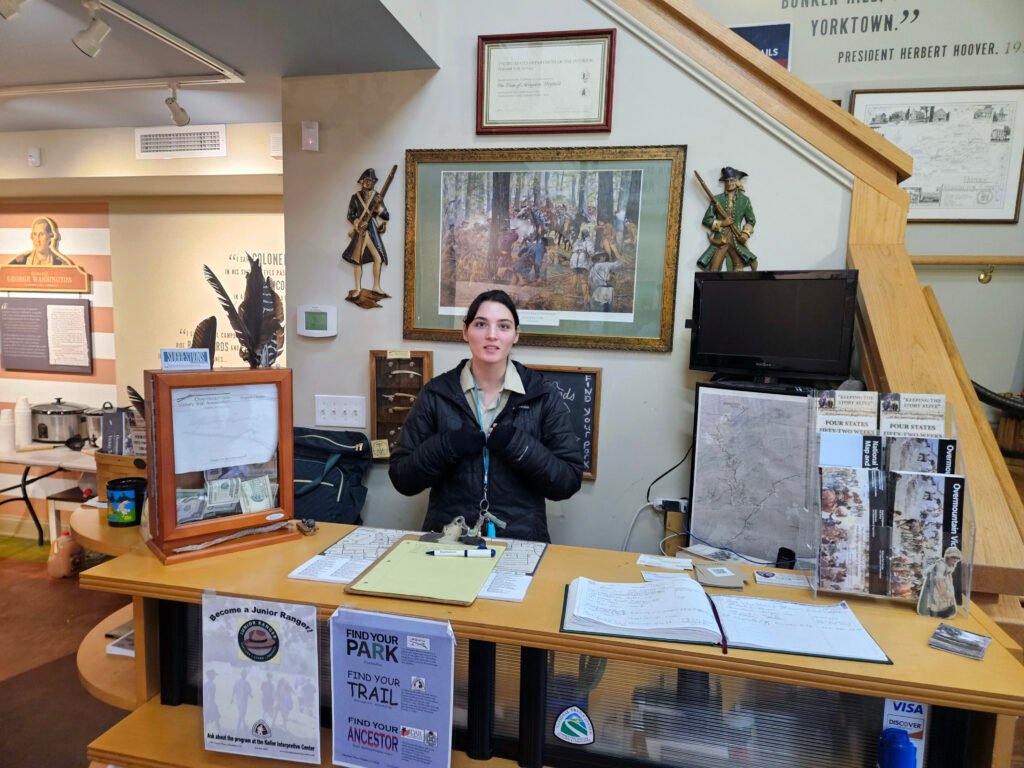
Across the room from him stood Michael Henningsen, the site’s Living History Interpreter. Henningsen was hard to miss; he was dressed in the rugged, tattered garb of the frontier, capped not with a tricorn hat, but with a metal cooking pot. He was in character as Johnny Appleseed.
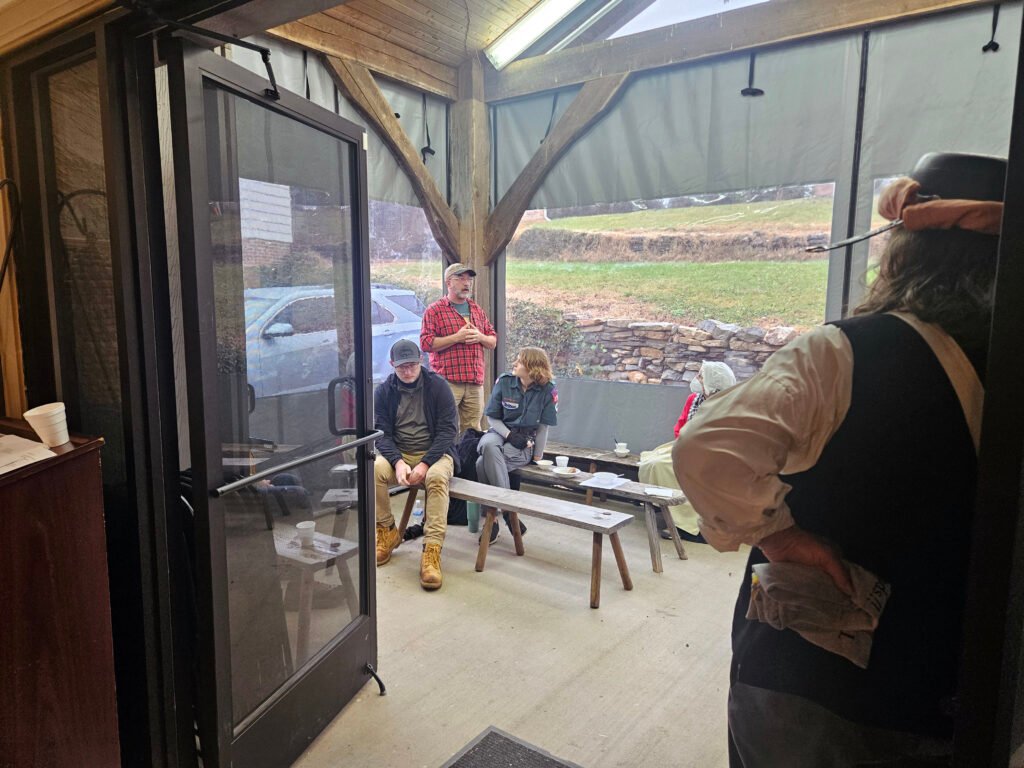
Together, the orchardist and the interpreter wove a narrative that connected the roots of the trees we just planted to the very roots of American independence.
The 1780 Connection Between Apples and the Muster Ground
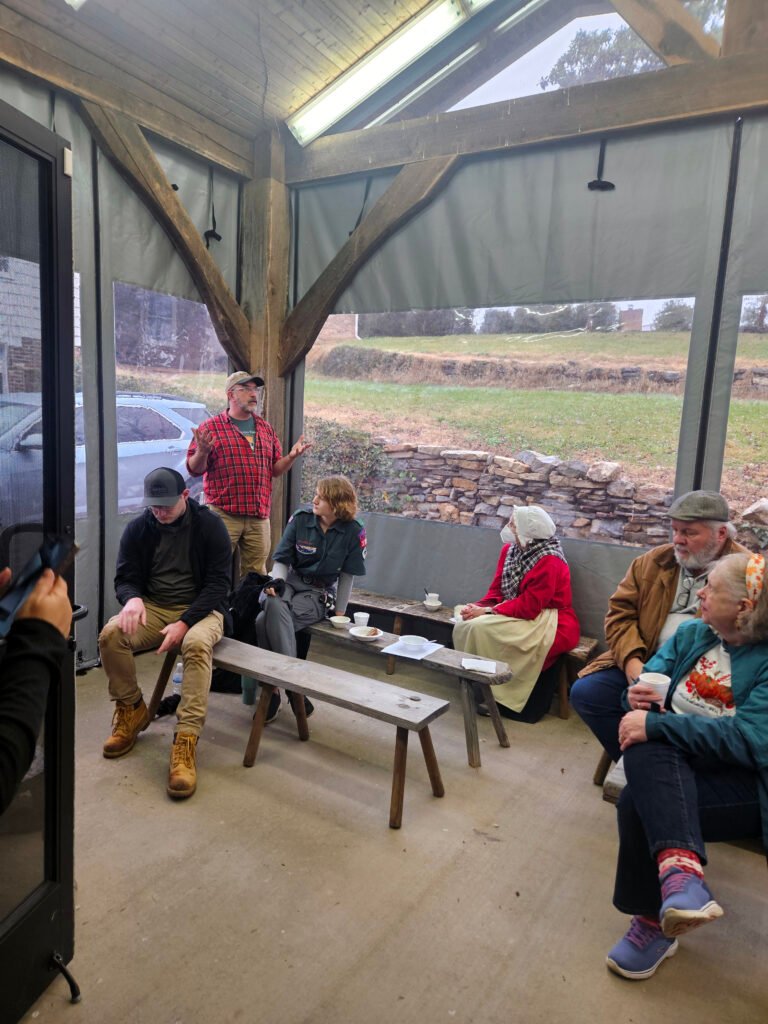
“Apples,” McMullen began, his voice carrying over the sound of the rain. “All kinds of apples to make hard cider. It was a safe thing to drink. The alcohol was a preservative, something that could kill any critters in your water source.”
McMullen, whose cidery in nearby Meadowview grows over 70 varieties of apples, sees a direct lineage between his work and the site’s history. He spoke of Kelly Ridge Farms, the land where he grows his fruit. “In 1780, the Kelly family was first granted that land,” he noted. That same year, 1780, was the defining moment for the Abingdon Muster Grounds.
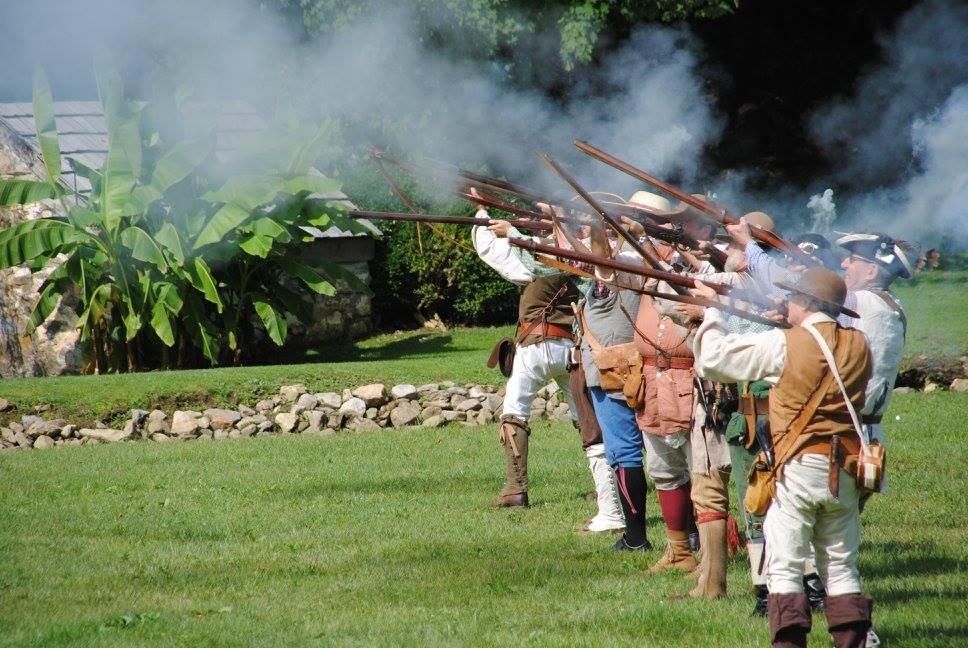
On September 24, 1780, four hundred Virginia militiamen gathered on these very grounds—then known as Dunn’s Meadow. They joined the Overmountain Men to pursue British Major Patrick Ferguson, eventually defeating him at the Battle of Kings Mountain in South Carolina. It was a victory Thomas Jefferson later called “the turn of the tide of success.”
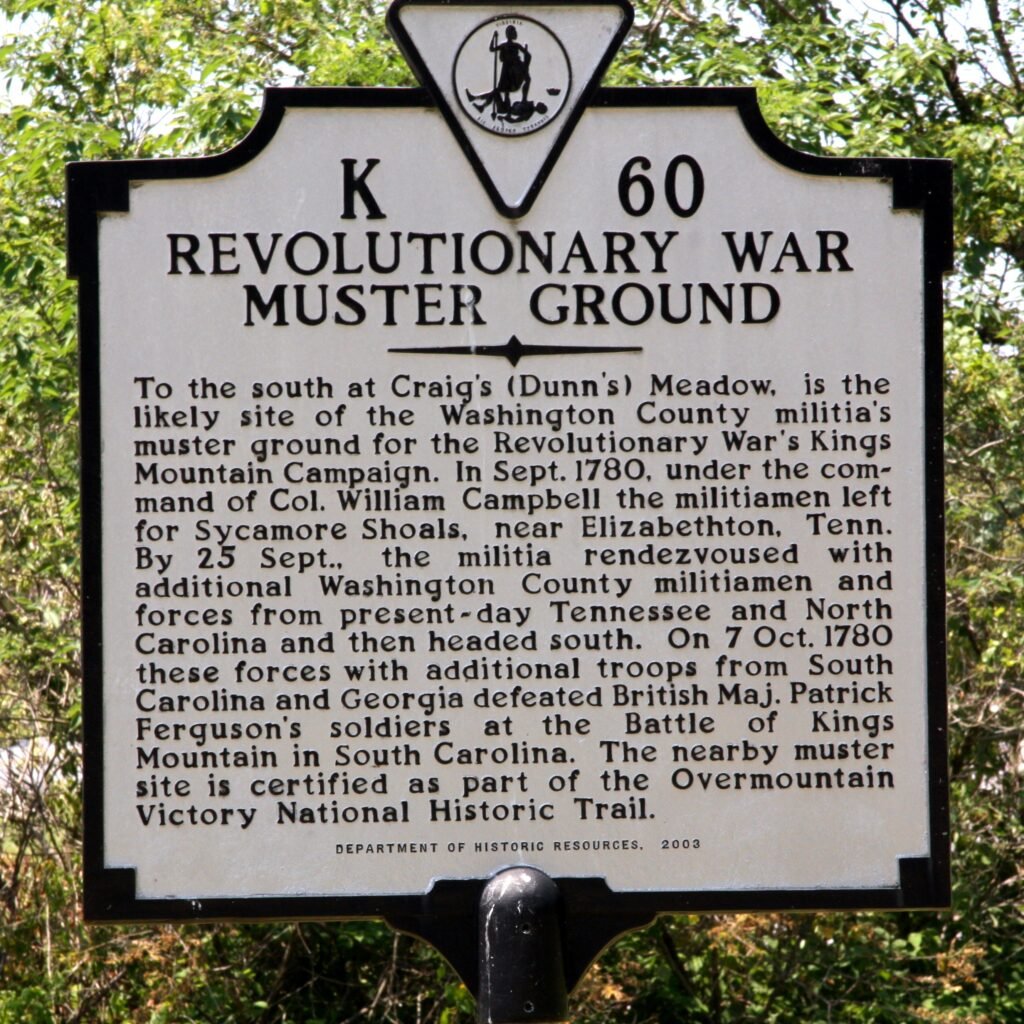
“We don’t know if there were apple orchards actually here in 1780 when the men gathered,” Henningsen added later. “But European settlers had been here for at least 10 or 15 years. It makes sense that they brought apple seedlings. You can imagine the guys getting ready to go south probably put a few apples in their pocket to snack on over the mountain.”
McMullen’s company has honored this history with a cider blend named “1780,” the first made from 100% juice from their own trees. “We took a sniff… it smelled like Jolly Rancher and a big bag of delicious ripe apples,” McMullen said of the vintage. “It was probably the best cider we had ever made.”
Science of Apples in the Soil
While the history is romantic, the horticulture is precise. McMullen offered a masterclass on the science of the orchard, explaining how modern growers preserve the genetics of the past.
“A tree is only as big as its root system can handle,” McMullen explained to the audience. He described the process of grafting—taking a branch (scion wood) of a desired apple, like his favorite King David, and fusing it to a specific rootstock.
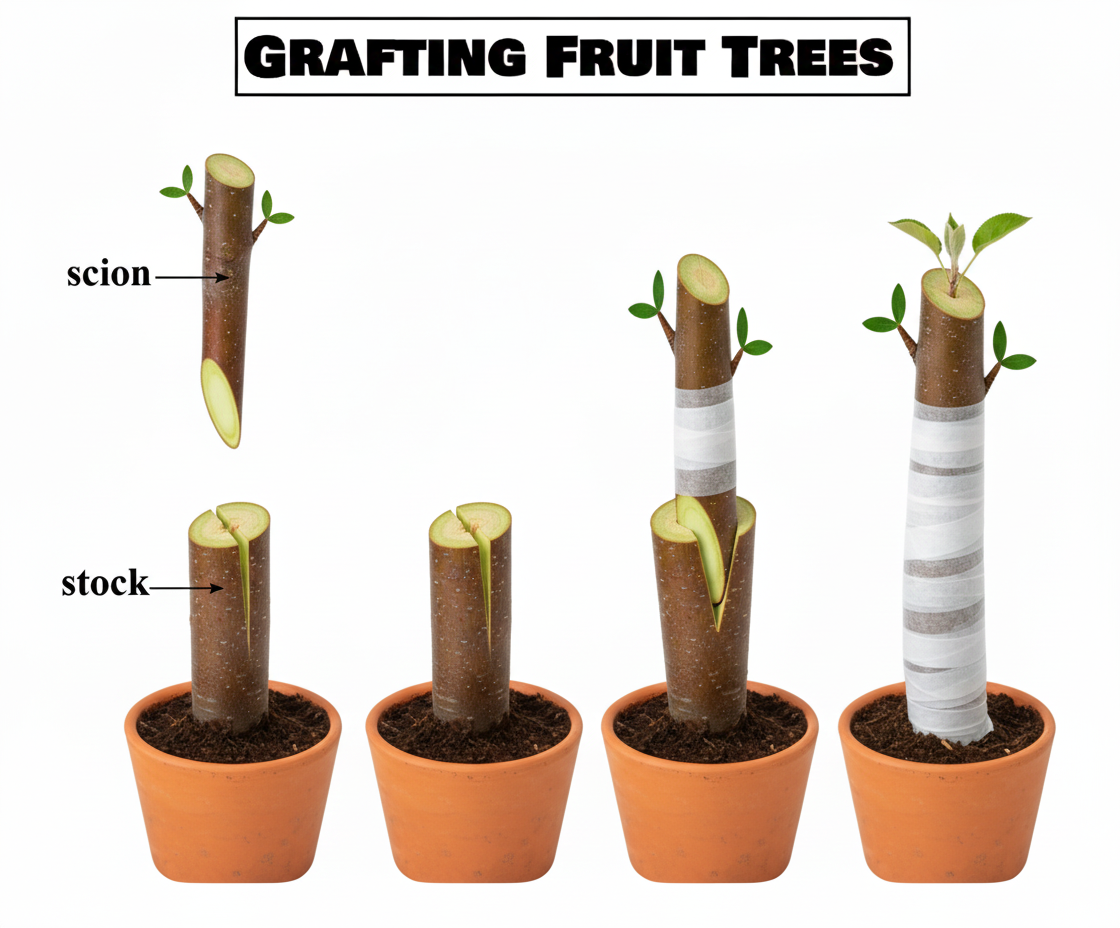
“We use Geneva rootstock developed at Cornell University,” he said. “They develop a rootstock that limits the tree’s size.” This allows the trees planted at the Muster Grounds to remain dwarf-sized—manageable for harvest and maintenance—while producing full-sized fruit.
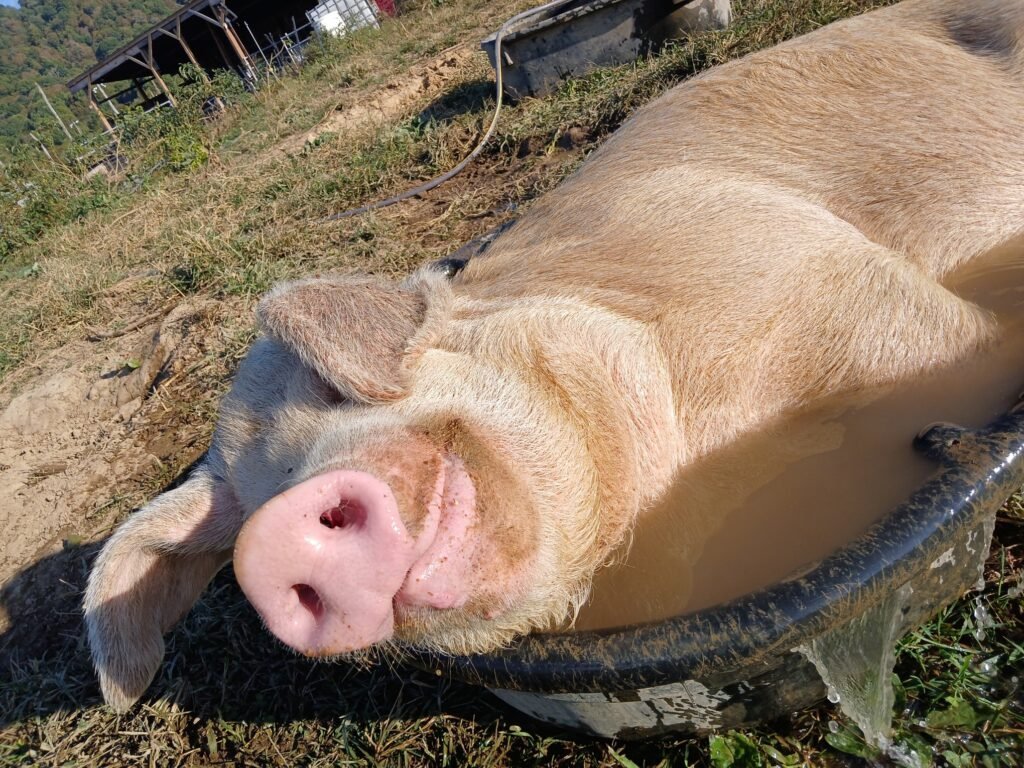
McMullen also touched on the sustainability of his operation. At Tumbling Creek, nothing goes to waste. The “pomace”—the dry, squeezed-out apple debris—is fermented in silage bags to increase its protein content. “It becomes perfect pig food,” McMullen laughed. “Everything we do cycles right back in.” He even grows ginger in his backyard, moving the plants indoors before the frost, to flavor their ciders.
The Truth About Johnny Appleseed
While McMullen handled the science, Henningsen brought the folklore to life, albeit with a heavy dose of historical reality. As he adjusted the metal pot on his head, he dispelled the Disneyfied image of Johnny Appleseed.
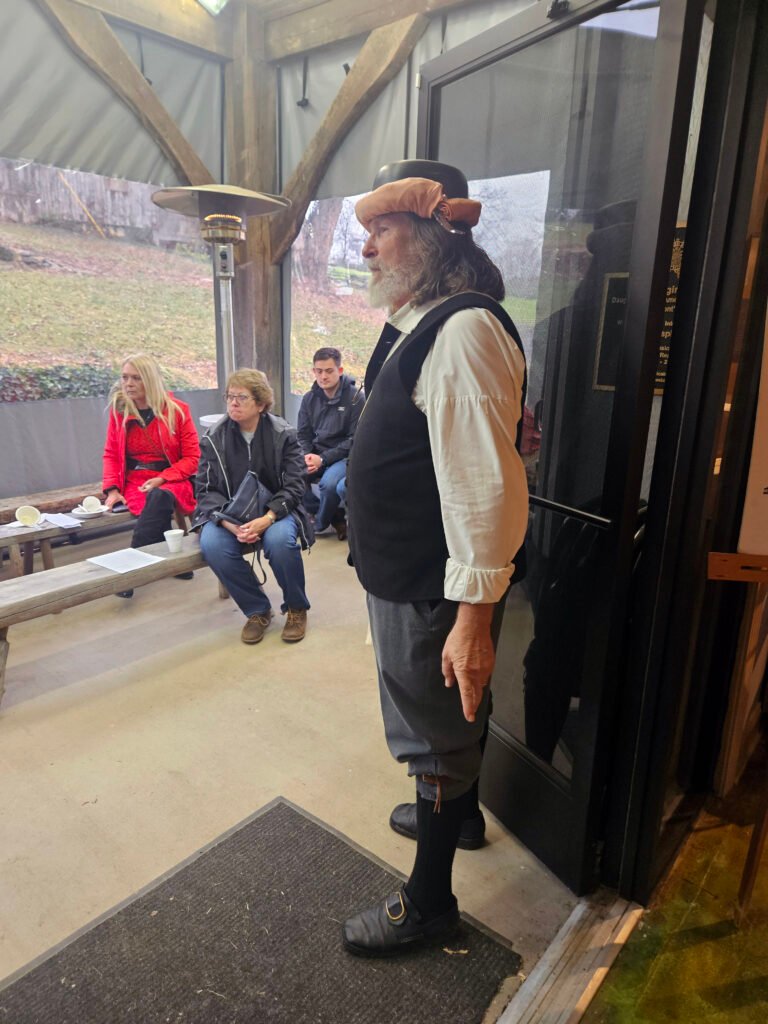
“I did a bunch of research and found out he was an itinerant missionary with the Jerusalem New Church,” Henningsen revealed. The real John Chapman was a follower of Emanuel Swedenborg and a shrewd land developer. “He planted apple nurseries from seeds to claim land grants.”
And the pot?
“It’s a survival tool,” Henningsen said, removing it to demonstrate. “You have something to cook in. You have something to wash in.” He gestured to the liner inside, made from a t-shirt. “You take the lining out, you have a towel. Soldiers in World War I and II boiled stuff in their helmets all the time.”
Preserving the Grounds
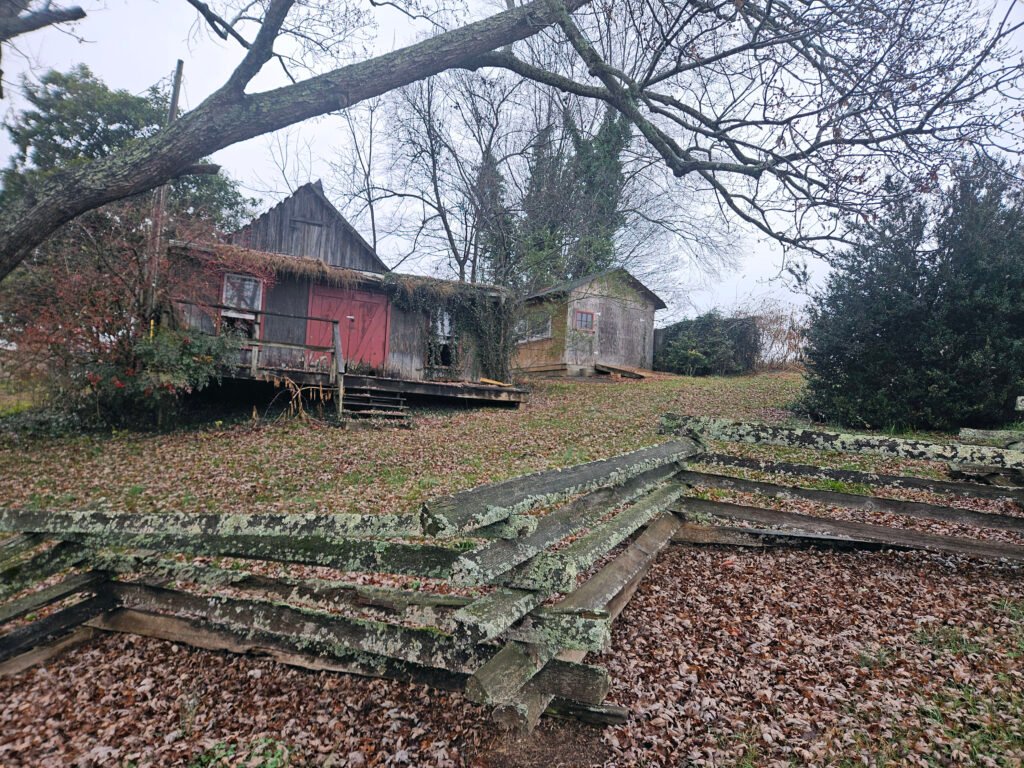
The planting of the orchard is just one part of a larger revitalization effort at the Muster Grounds. The Town of Abingdon owns the site. Still, day-to-day operations are handled by the Muster Grounds Committee, a dedicated friends group operating under a memorandum of understanding with the town.
Henningsen spoke candidly about the financial resources needed to keep history alive. “It cost about $17 to put this on today,” he said, gesturing to the event. “We’ll get it from somewhere.”
But the community is stepping up. Henningsen announced that a new endowment fund has been established at True Point Bank to ensure the site’s long-term sustainability. The fund was kick-started by a $25,000 donation from a retired criminal defense attorney from Chicago, whose ancestor built “Retirement”—the stately 1808 brick house that stands on the property.
“He said he’d like to see it invested in something far more sustainable than just doing events,” Henningsen shared, clearly moved.
The site has also received significant support from the state, including a $350,000 grant from the VA 250 Preservation Fund, matched by the town, to restore the “Retirement” house. The goal is to open the home as a museum space while converting the non-historic rear addition into a modern event space with an industrial kitchen.
“The goal is for us to be a self-sustaining historic site,” Henningsen emphasized. “We want to host weddings, graduations… a normal, multipurpose space to reactivate it.”
A Living Legacy
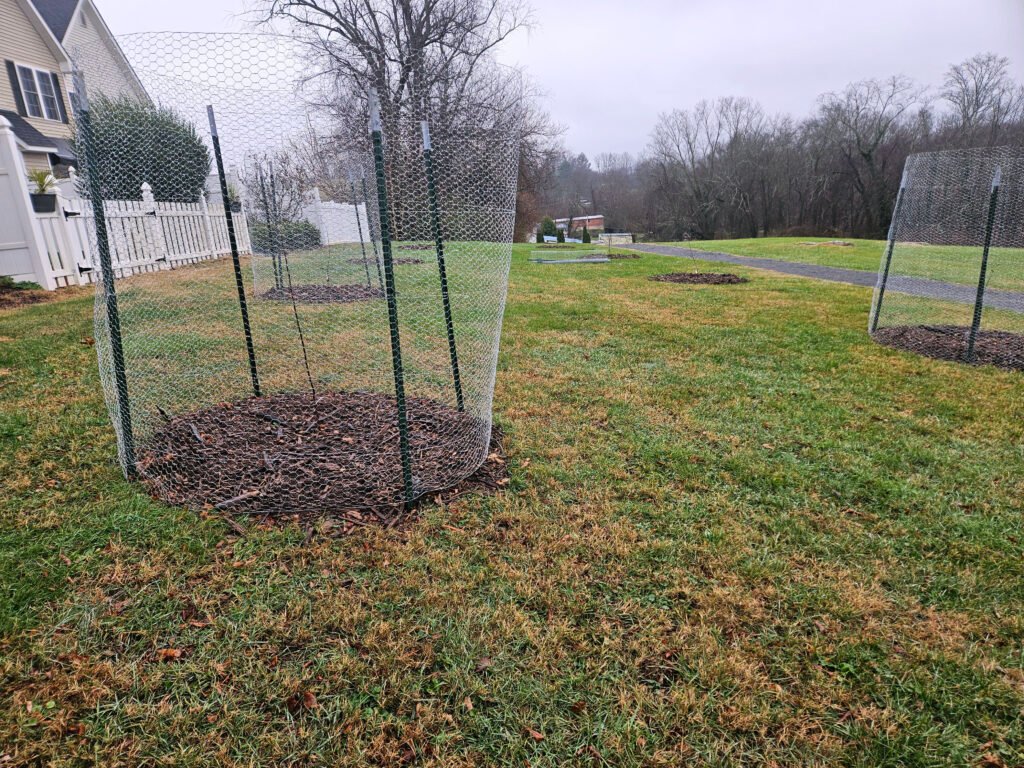
As the event wound down and guests finished their cider, the connection between the past and present felt tangible. The trees planted today on the hill, caged in chicken wire against the deer, are the great-grandchildren of the trees that fed the frontier.
“The seeds are being planted, just like planting this apple orchard,” Henningsen concluded. “In the long run, it is to grow new trees. Grow new trees, train new people, and bring the stories of Abingdon to life.”
Visit the Muster Grounds
- Location: 1780 Muster Place, Abingdon, VA.
- The Grounds: Open daily, dawn to dusk.
- The Museum: Open seasonally and by appointment.
- Donations: To support the preservation of this site, contributions can be made to the endowment fund at True Point Bank. Contact the Abingdon Muster Grounds Committee for details on mailing a check or donating online.
- Phone: 276-525-1050
Visit Tumbling Creek Cider Company
- Location: The taproom is located at Avenue Commons in Abingdon, VA.
- Recommendation: Try the “King David” or the “1780” blend.
- Phone: 276-451-5901













Leave a Reply