


New platform promises price transparency for developers and landowners in the mitigation market.

RICHMOND — The Virginia Department of Environmental Quality (DEQ) has launched a new digital platform, SWaN, designed to overhaul how environmental credits are bought and sold in the Commonwealth, a move that could bring new financial clarity to landowners and farmers in the Appalachian Highlands.
The platform, called SWaN (Stream, Wetland, and Nutrient), was developed with Water Ledger. It serves as a centralized online marketplace for compensatory mitigation—the process by which negative impacts to streams or wetlands from development are offset by funding or implementing restoration projects at different locations.
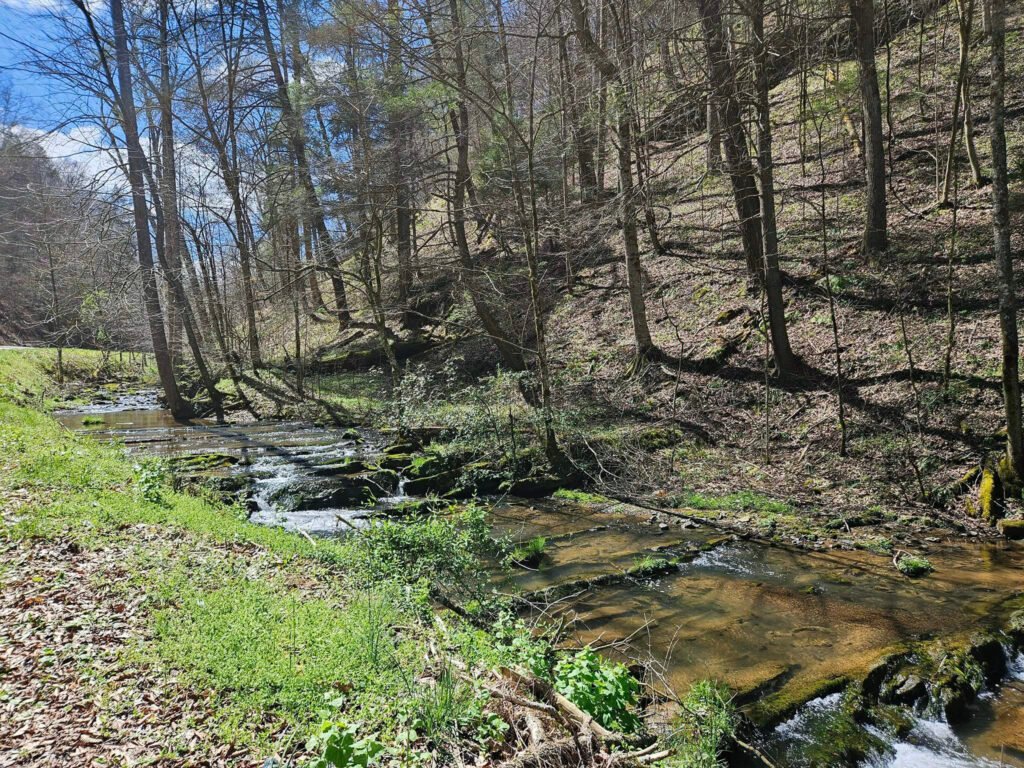
Under Virginia’s “no net loss” policy, projects impacting waterways must buy credits from mitigation banks—sites where wetlands or streams are restored or preserved. Previously, the market relied on the U.S. Army Corps of Engineers’ RIBITS system, which listed sites but did not track pricing or enable sales.
This opaque system made prices fluctuate wildly and forced people to spend days making phone calls to find available credits.
“When credits aren’t readily available, or information is not up-to-date, projects are delayed, and environmental outcomes suffer,” said DEQ Director Mike Rolband. He noted that SWaN aims to bring “transparency, consistency, and efficiency” to the system.
Transitioning to a regional perspective, what does this mean for the Highlands? For our region, where topography often dictates that development and agriculture coexist closely with headwater streams, the platform offers practical benefits.
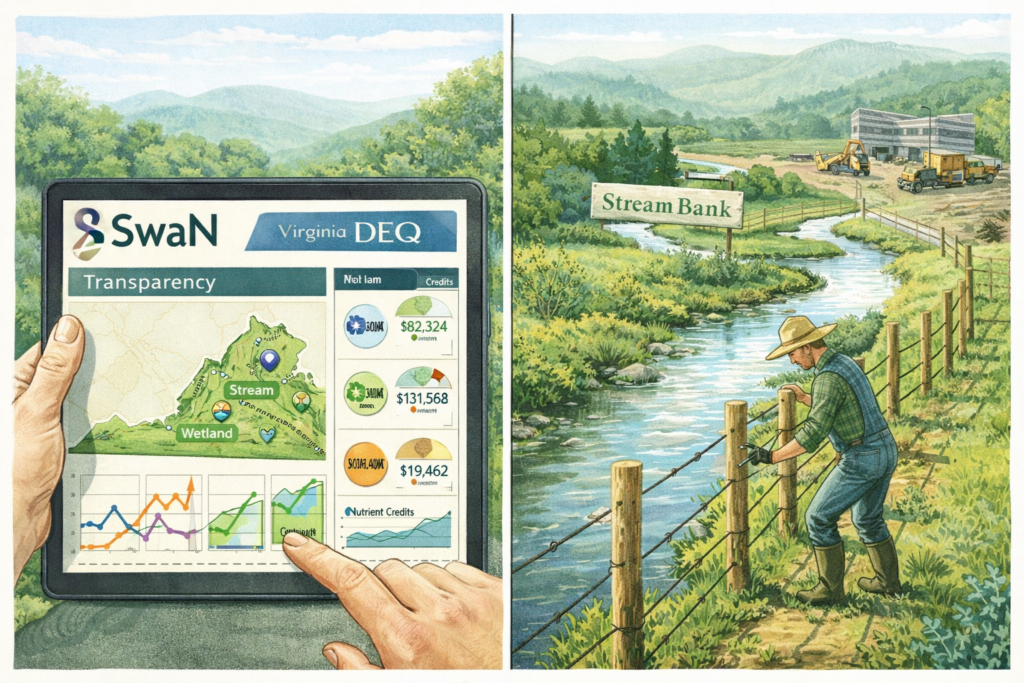
SWaN shows real-time credit availability and pricing for each watershed.
- For Developers: Builders and municipalities in Southwest Virginia can now instantly locate necessary offsets for road or construction projects, potentially lowering soft costs and shortening timelines.
- For Landowners: Farmers and landowners managing mitigation banks—turning marginal farmland into conservation zones—now see true market pricing. By publicly disclosing transaction data, SWaN prevents price gouging and ensures fair compensation for ecological services.
Streamlining Conservation. The platform handles three primary credit types:
- Wetland Credits: For impacts to marshy areas and bogs.
- Stream Credits: For impacts to creek beds and river banks.
- Nutrient Credits: For stormwater management, offsetting phosphorus and nitrogen runoff.
According to DEQ, the digital marketplace will reduce price volatility and encourage more buyers to use established banks rather than rely on delayed, ad hoc solutions. Once a mitigation bank sells its credits, it places the land under perpetual conservation easement, so environmental benefits—such as flood reduction and water filtration—remain in the local watershed forever.
The SWaN platform is now live and accessible to the public.
Analysis: What SWaN Means for Appalachian Highlands Farmers
The Stream, Wetland, and Nutrient (SWaN) platform is essentially “Zillow meets the Stock Market” for environmental credits. In Virginia, if you destroy a wetland or stream during construction, you must pay to restore one elsewhere (mitigation). If you reduce runoff on your farm, you can generate “credits” to sell.
Here is how this impacts farmers in Southwest Virginia explicitly:
1. A Transparent Revenue Stream (The “Selling” Side)
- The Old Way: If a farmer in Washington County wanted to turn a degraded creek into a “stream bank” (by fencing out cattle and planting trees) to sell credits, they often had to rely on brokers. Prices were murky. A farmer might sell a credit for $10,000, not knowing the broker flipped it for $25,000.
- Now, pricing is public and visible. Farmers can see what credits are worth in their watershed and get fair market value for conservation.
2. Easier Expansion (The “Buying” Side)
- If a farm operation needs to expand significantly—say, building a large processing facility or a new access road that crosses a creek—they might be the ones buying credits.
- SWaN eliminates guesswork. Farmers log in, check inventory, and budget easily, reducing project delays.
3. Environmental & Social Impact
- Water Quality: The Appalachian Highlands are the headwaters for major river systems. By making the credit market more efficient, SWaN incentivizes more stream restoration projects. This leads to cleaner trout streams and better water for livestock.
- Leveling the Field: Historically, environmental trading favored large developers and specialized consultants. A digital, transparent platform democratizes access, allowing smaller landowners in rural Appalachia to participate in a market previously dominated by urban interests in Northern Virginia or Richmond.











Leave a Reply