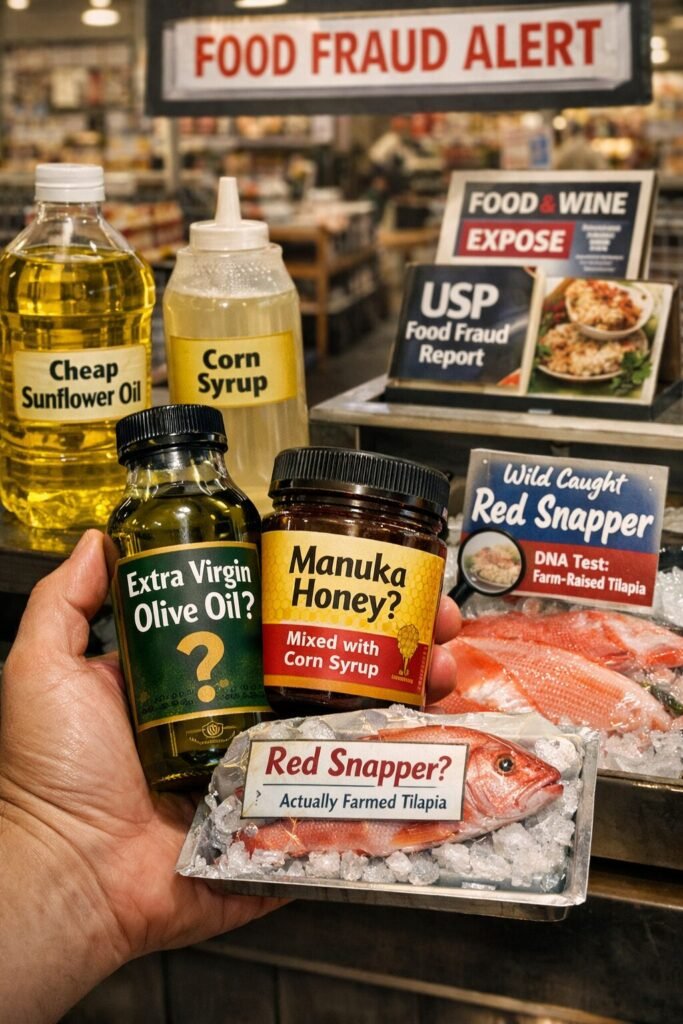
It is a bitter pill to swallow, yet a necessary one: Some of our food is fake. The “Extra Virgin Olive Oil” you drizzle on your salad might be colored sunflower oil. Some people dilute that expensive Manuka honey with corn syrup. The “wild-caught Red Snapper” on the menu? DNA testing suggests the fish likely came from unregulated tilapia or catfish farms
A recent wave of reporting, including extensive coverage by Food & Wine and by investigative bodies such as the USP Food Fraud Database, has highlighted a stark fact of the modern grocery landscape: food fraud is rampant. As global supply chains grow longer and more complex, commodities pass through dozens of hands—aggregators, exporters, importers, bottlers—creating ample opportunities for adulteration, dilution, and outright counterfeiting.

The deception relies on distance. When you cannot see the farm, you have to trust the label. And the label is lying.
For conscientious consumers in the Appalachian Highlands, this can foster a sense of helplessness. We can’t police international fishing waters or audit Italian olive groves. But we aren’t helpless. The argument for eating locally has always centered on freshness and local economic benefits. Now, we must add a third, essential pillar: Verification.
We don’t need better global policing; we need shorter supply chains. While we can’t easily grow Kalamata olives or cinnamon trees in our mountains, our region offers historical, deeply flavorful, and entirely authentic alternatives to the most commonly faked foods on the global market.
“The defense against food fraud isn’t better international policing. It’s shortening the supply chain to the distance between your hand and a local farmer’s harvest.”
Here is how to purge the impostors from your pantry and replace them with mountain-grown food options.
I. The Fats: The “Virginity” Myth vs. The Hard-Won Nut
The Fraud: Olive oil is perhaps the most romanticized ingredient in the kitchen, and also the most corrupted. “The Great Olive Oil Swindle” is an open secret in the industry. To meet the insatiable global demand for “Extra Virgin,” unscrupulous suppliers often dilute the oil with cheap seed oils (such as soy or canola), color it with chlorophyll to simulate freshness, and flavor it with beta-carotene. By the time a bottle reaches a supermarket in Bristol or Abingdon, it may be rancid, fake, or a mix of “lampante” oil—oil historically deemed fit only for oil lamps.
“The label is lying: The “Extra Virgin Olive Oil” you drizzle on your salad might be colored sunflower oil. Some people dilute that expensive Manuka honey with corn syrup“
Because we are landlocked, we invite vulnerability by relying on Mediterranean fats. We must look to our own woods. We often overlook an abundant treasure growing right here in the Appalachian Highlands: Black Walnuts, Hickory Nuts, and Acorns.
For decades, these were ignored because they are “hard-won”—difficult to crack and process. But a quiet revolution is happening in Western North Carolina that functions as a blueprint for the entire region. Organizations like The Nutty Buddy Collective and The Acornucopia Project have revived the concept of community-based “perennial agriculture.” They view the forest not simply as scenery, but as an orchard.
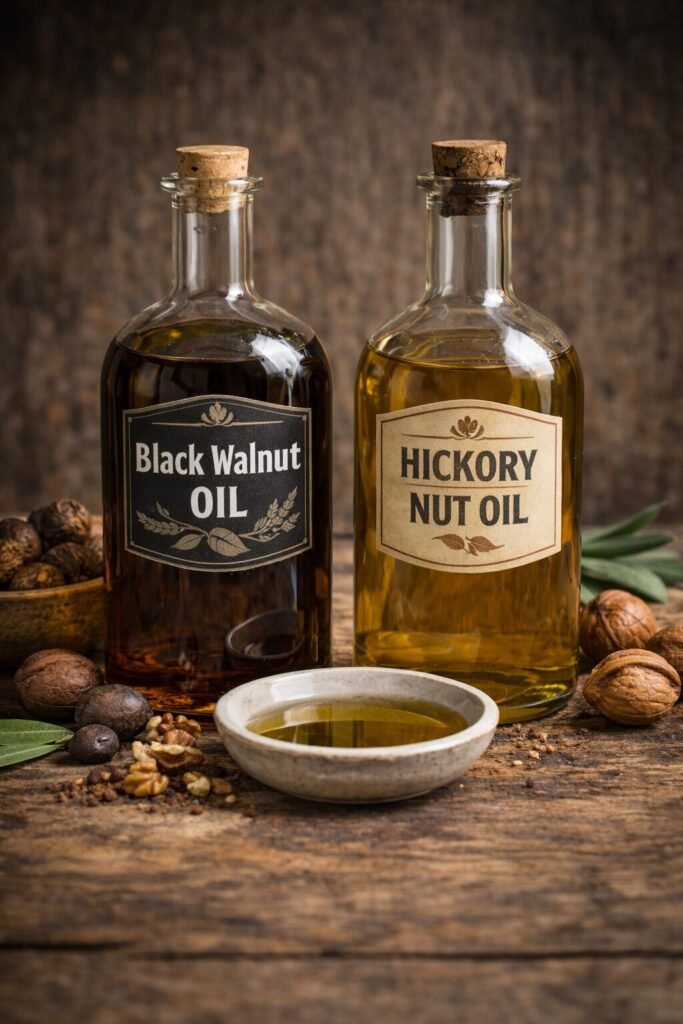
Through their processing hub, The Asheville Nuttery, they have created a supply chain that is impossible to fake. They operate on a community harvest model: neighbors forage nuts from their own land and bring them to the Nuttery for processing.
The resulting oils are culinary powerhouses:
- Black Walnut Oil: Bold, earthy, and aromatic. It has a high smoke point but works best as a finishing oil. A drizzle over roasted beets or goat cheese offers a complexity that generic olive oil cannot touch.
- Hickory Nut Oil: Incredibly buttery, sweet, and rich. Chefs and critics describe it as the ‘American Truffle Oil’ for its rarity and distinct flavor.
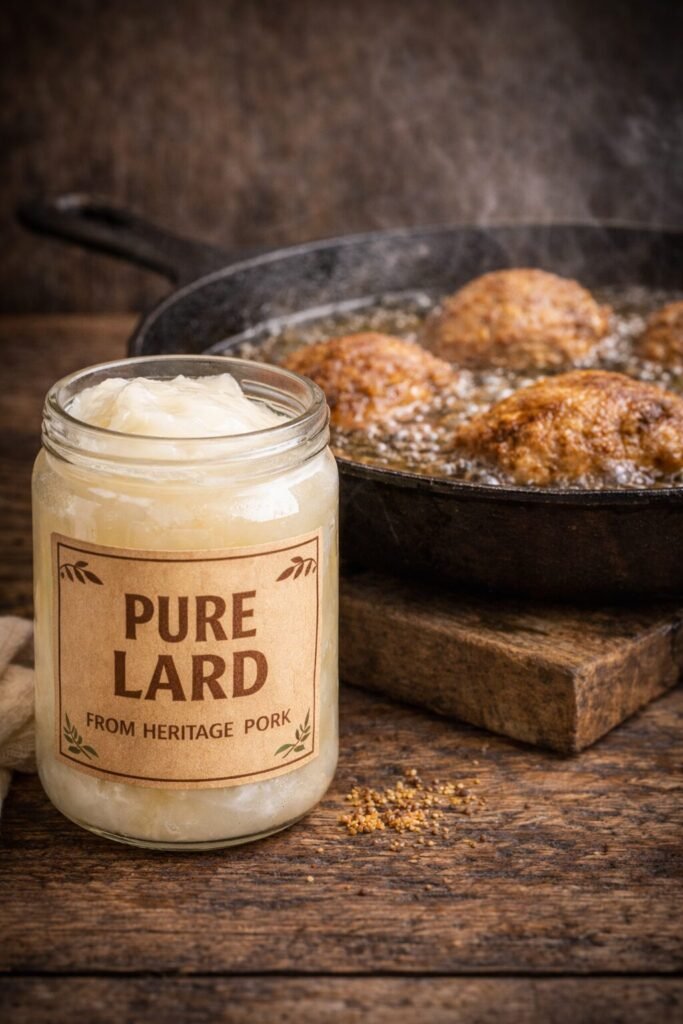
The Heritage Fat Redemption: We must also reconsider the “health halo” of vegetable oils. Many industrial seed oils are extracted with hexane. The traditional Appalachian alternative? Pasture-Raised Lard. Pure leaf lard from heritage-breed pigs (like those raised by small farmers in Washington and Smyth counties) is snow-white, odorless, and rich in Vitamin D. It is an honest fat, rendered from animals raised on land you can visit.
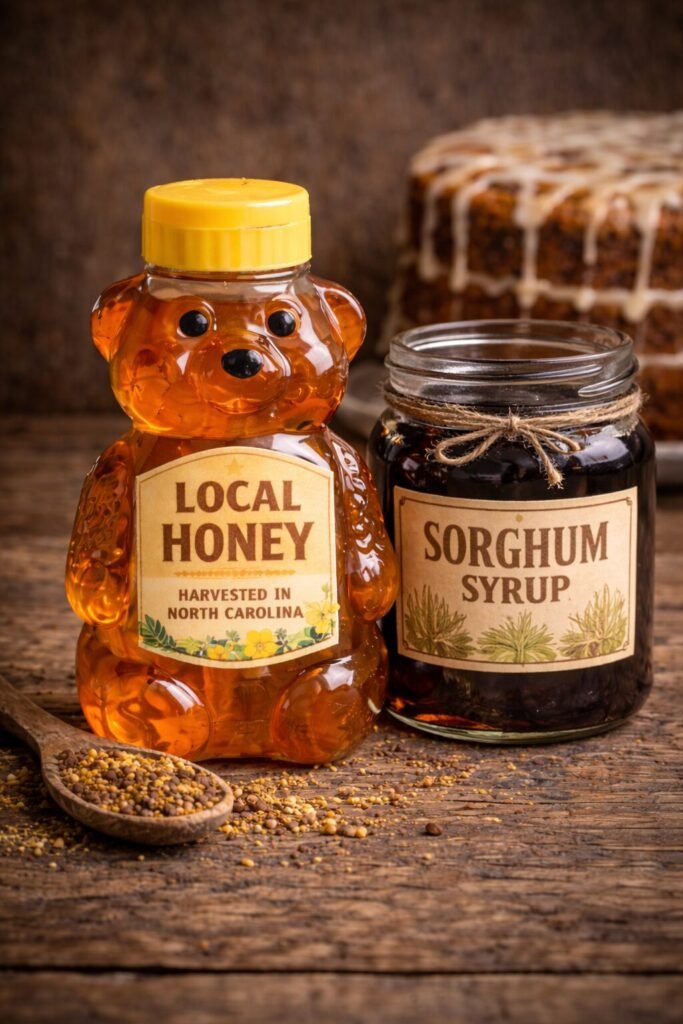
II. The Sweeteners: The Honey Laundry vs. The Sorghum Stir-Off
The Fraud: Honey is widely considered the third-most-faked food in the world. The scam is called “honey laundering.” Chinese industrial honey, often contaminated with antibiotics or heavy metals, is ultra-filtered to remove all pollen—the only way to trace a honey’s geographic origin. It is then shipped through third-party countries to mask its source and diluted with rice syrup. That “Grade A” plastic bear in the big-box store is essentially flavored sugar syrup.
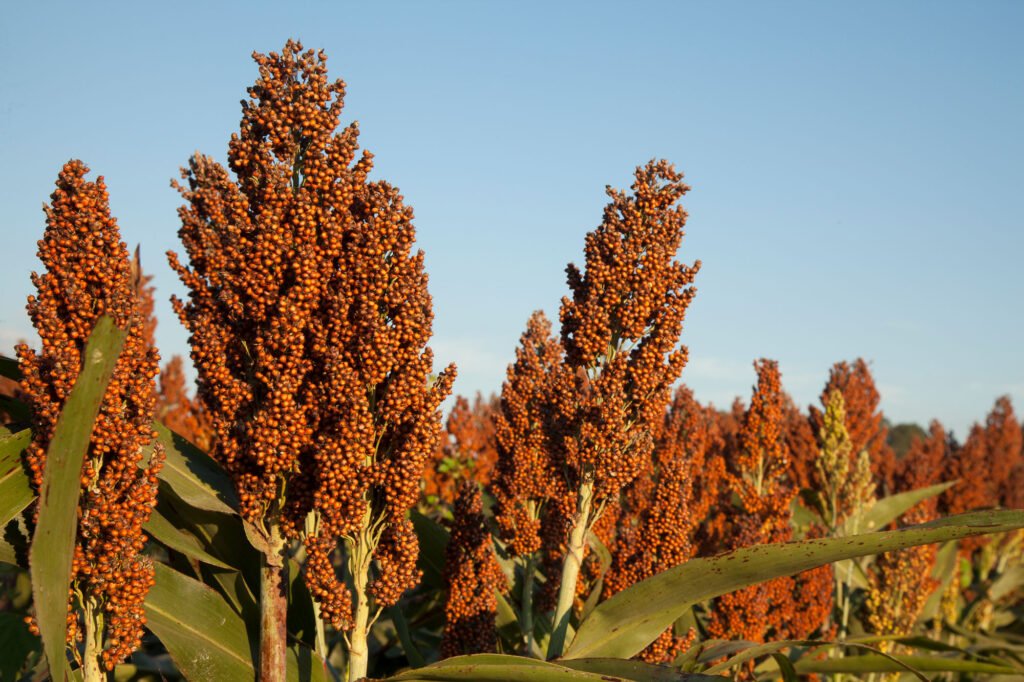
The Appalachian Solution: Liquid Gold and “The Stir-Off” If you want real honey, you need to know the beekeeper. Fortunately, the Highlands are rich in apiaries. When you buy raw local honey, you aren’t just getting unadulterated sweetness; you are tasting the specific terroir of a single mountain holler. A jar of Sourwood honey from the Blue Ridge tastes different than Tulip Poplar honey from the valley floor. That variance is your guarantee of authenticity.
But Appalachia has an even deeper answer to generic sweeteners: Sweet Sorghum Syrup.
“Sorghum is immune to fraud because it is too difficult to fake.”
Often called “Appalachian Gold,” Sorghum is immune to fraud because it is too difficult to fake. It requires growing cane, stripping it, pressing it in a mill, and boiling the green juice down over a wood fire for hours until it reaches the consistency of molasses. It is often a community event—a “stir-off.”
Sorghum is not just “sweet.” It is mineral-rich, with notes of caramel, smoke, and earth. It is a culinarily superior product for glazing hams, baking gingerbread, or topping biscuits. When you buy a jar from a producer in Muddy Creek or Jonesborough, you can often see the steam rising from the pan where the farmer cooked it.
III. The Seafood: The “Snapper” Swap vs. The Cold Stream
The Fraud: Seafood fraud is arguably the most pervasive. In 2019, the conservation group Oceana tested seafood in major U.S. cities and found that 1 in 5 fish were mislabeled. “Wild Salmon” is often farmed; “Red Snapper” is almost always cheaper than rockfish or tilapia; and “White Tuna” is frequently Escolar, a fish that can cause severe digestive distress. In the mountains, our desire for “fresh ocean fish” makes us easy targets for this bait-and-switch.
“If you can’t see the ocean, don’t buy the ocean fish. Look to the stream.”
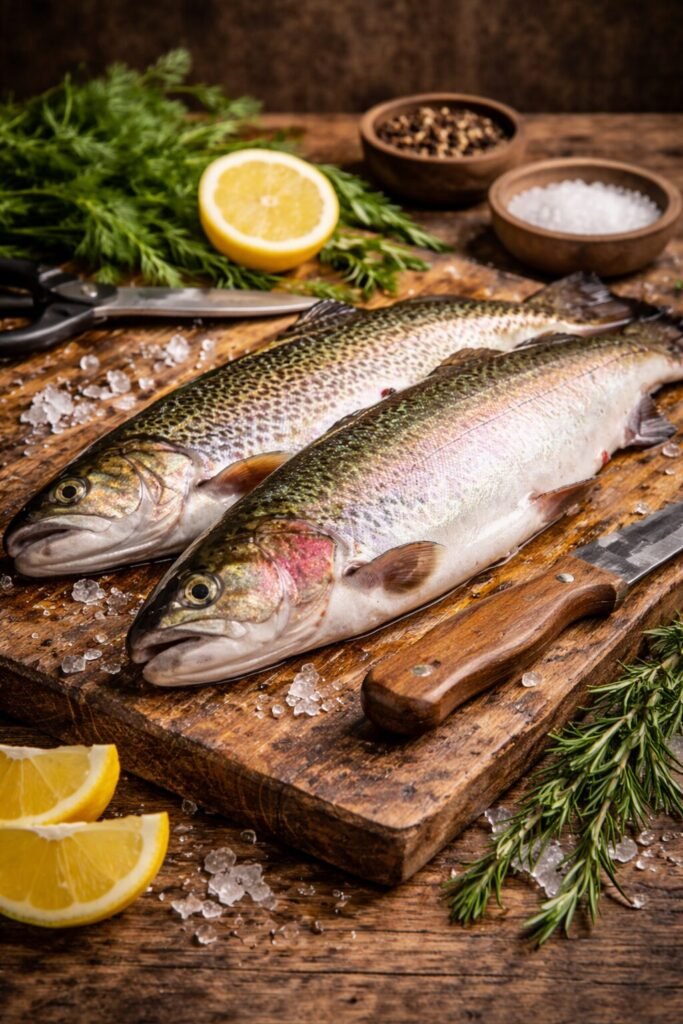
The Appalachian Solution: Mountain Trout. If you can’t see the ocean, don’t buy the ocean fish. Look to the stream.
The Appalachian Highlands, particularly Southwest Virginia and Western North Carolina, boast some of the finest cold-water aquaculture in the country. Our karst geology provides cold, oxygen-rich spring water that is perfect for raising Rainbow and Brook Trout.
Farm-raised trout from our region is a “Best Choice” by Seafood Watch standards. It offers excellent omega-3 profiles and a clean, mild flavor. Smoked Appalachian trout is a delicacy that rivals any imported smoked salmon. By shifting your palate from the ocean to the mountain stream, you opt out of a global system rife with piracy and labor abuse, and support a local farmer.
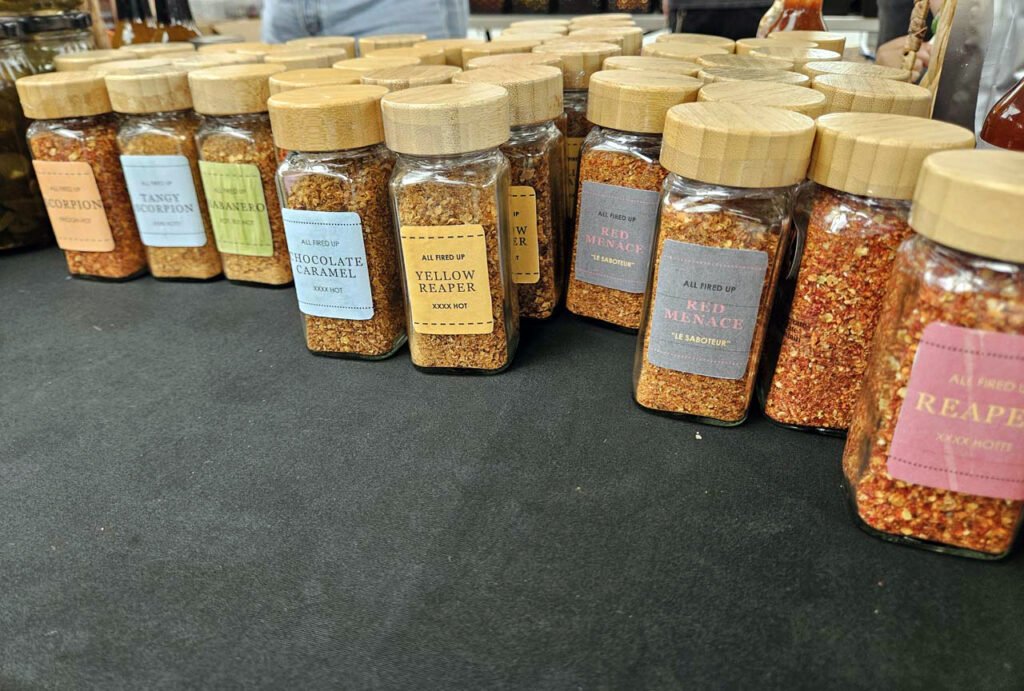
IV. The Spice Rack: Sawdust vs. The Forest Pantry
The Fraud: Ground spices are the easiest target for fraudsters. Because they are sold as powders, “fillers” are undetectable to the naked eye. Ground peanut shells, flour, starch, and even brick dust are used as bulking agents in imported paprika, turmeric, and black pepper.
The Appalachian Solution: Spicebush, Ramps, and Cobaneros. The solution is to buy whole ingredients or forage your own.
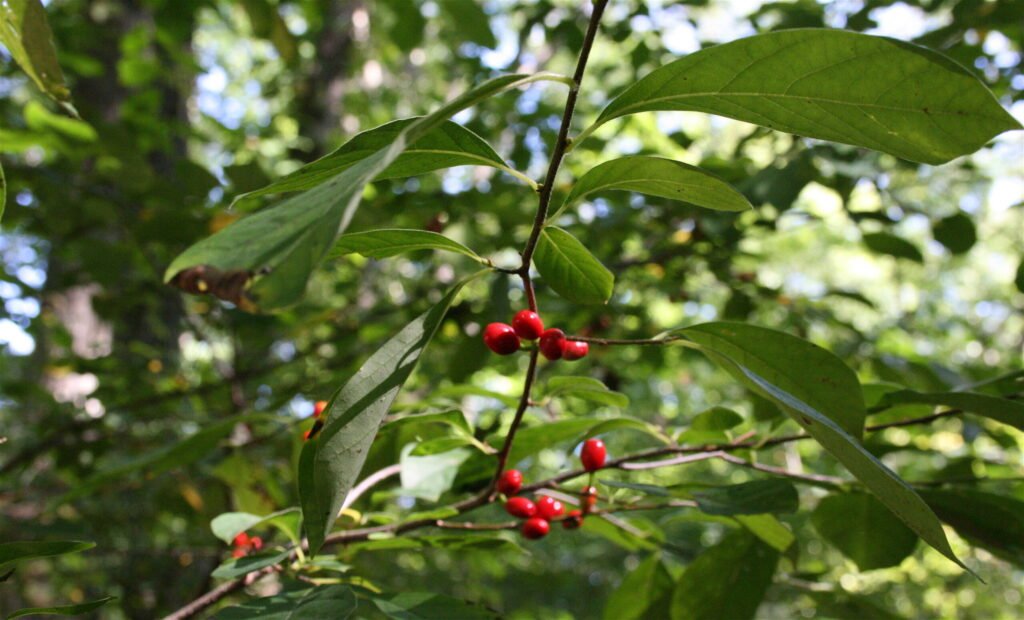
- The Wild Allspice: Walk into the Appalachian woods and look for Lindera benzoin, the Spicebush. Its berries, when dried and ground, offer a complex flavor profile that ranges from allspice to black pepper to citrus. It is the definitive “wild spice” of our region.
- The Onion Substitute: Instead of generic onion powder (which may contain anti-clumping agents), use Ramp Powder. Dehydrating the green leaves of sustainably harvested wild ramps creates a pungent, savory dust that packs more flavor per pinch than anything in the spice aisle.
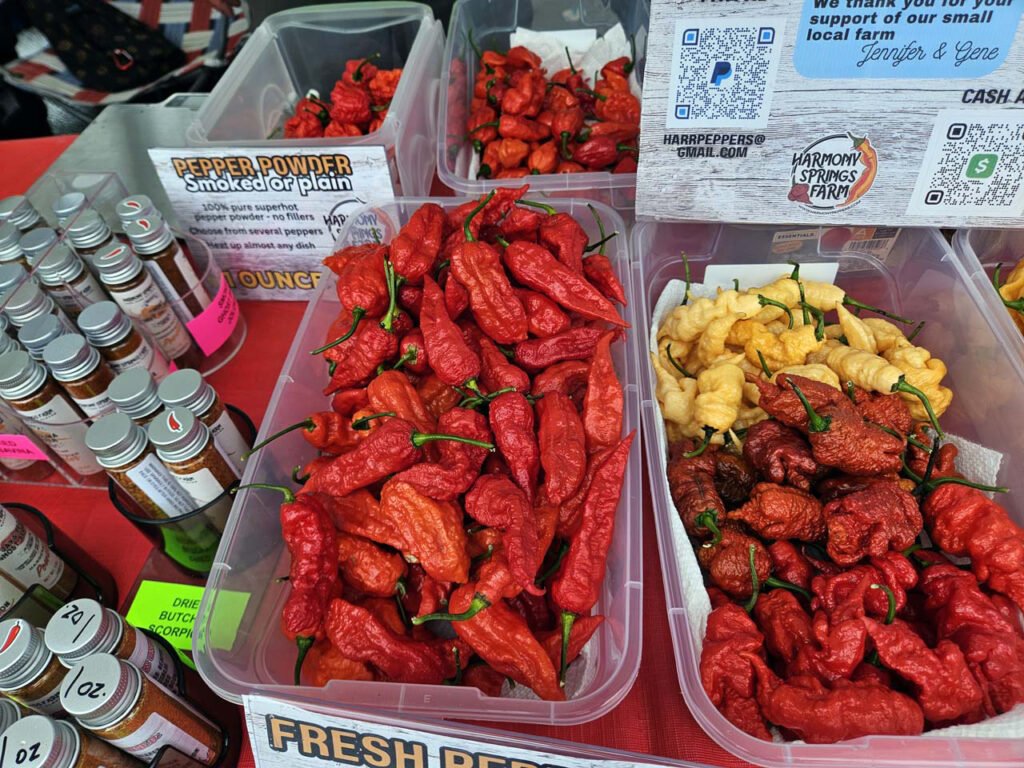
- The Pepper Fix: Instead of “Red Pepper Flakes” of unknown origin, grow or buy local chilies. Varieties like the Cobanero, which thrive in our humid summers, can be dried and crushed. Smoking your own Jalapeños over hickory wood to make chipotle powder brings about purity and heat.
“The ultimate alternative to counterfeit food isn’t just a different ingredient; it’s a different relationship.”
Conclusion: Trust is a Flavor
Global food fraud thrives on anonymity. It relies on the consumer not knowing—and not asking—where the food came from.
The local food systems of the Appalachian Highlands thrive on the opposite: Radical transparency. When you buy a bottle of Hickory Oil from the Asheville Nuttery, you know a person in these mountains gathered the nuts. When you buy Sorghum, you know the cane was pressed here.
The ultimate alternative to counterfeit food isn’t just a different ingredient; it’s a different relationship. The solution to the “Impostor in the Pantry” isn’t a better label. It’s a neighbor.