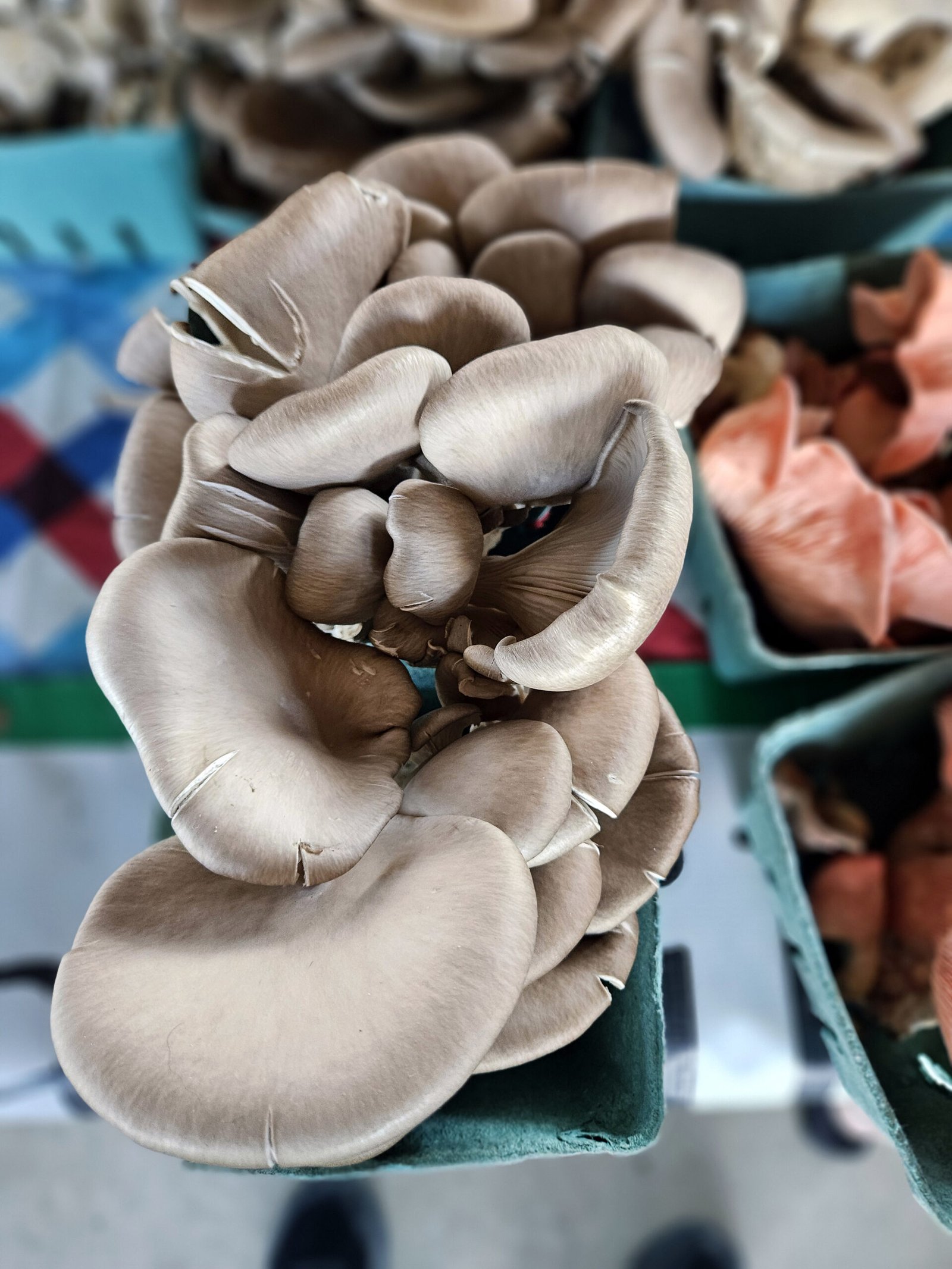
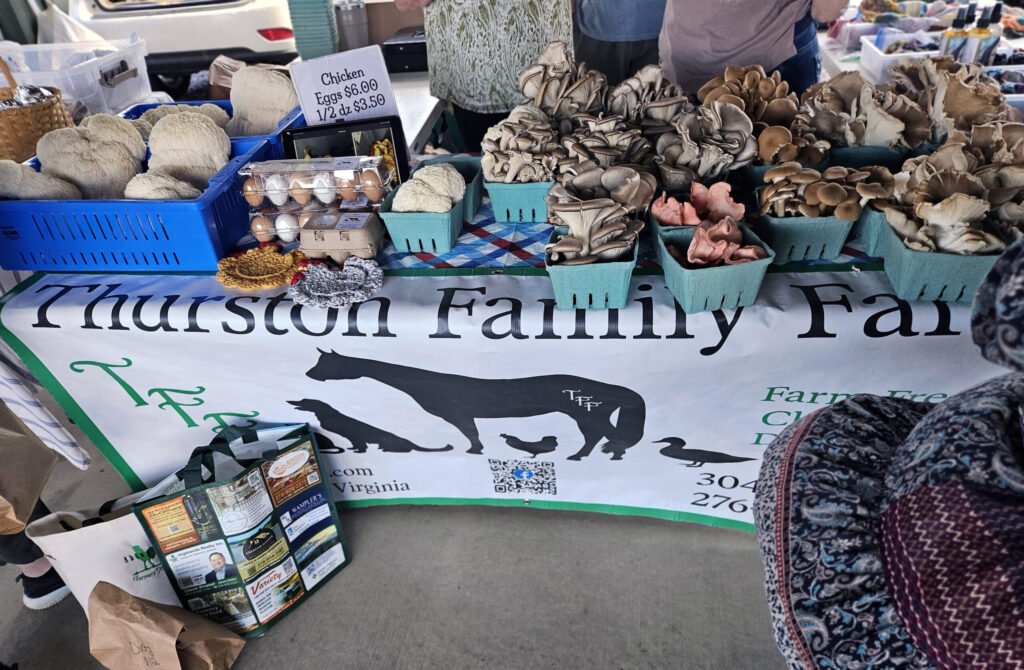
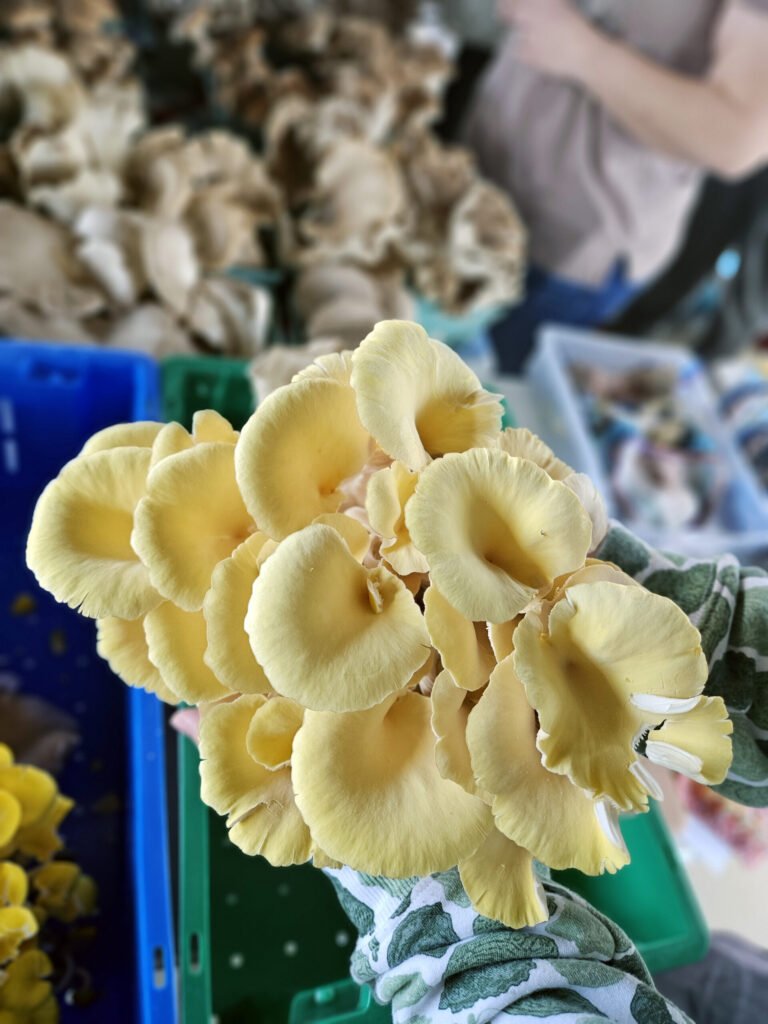
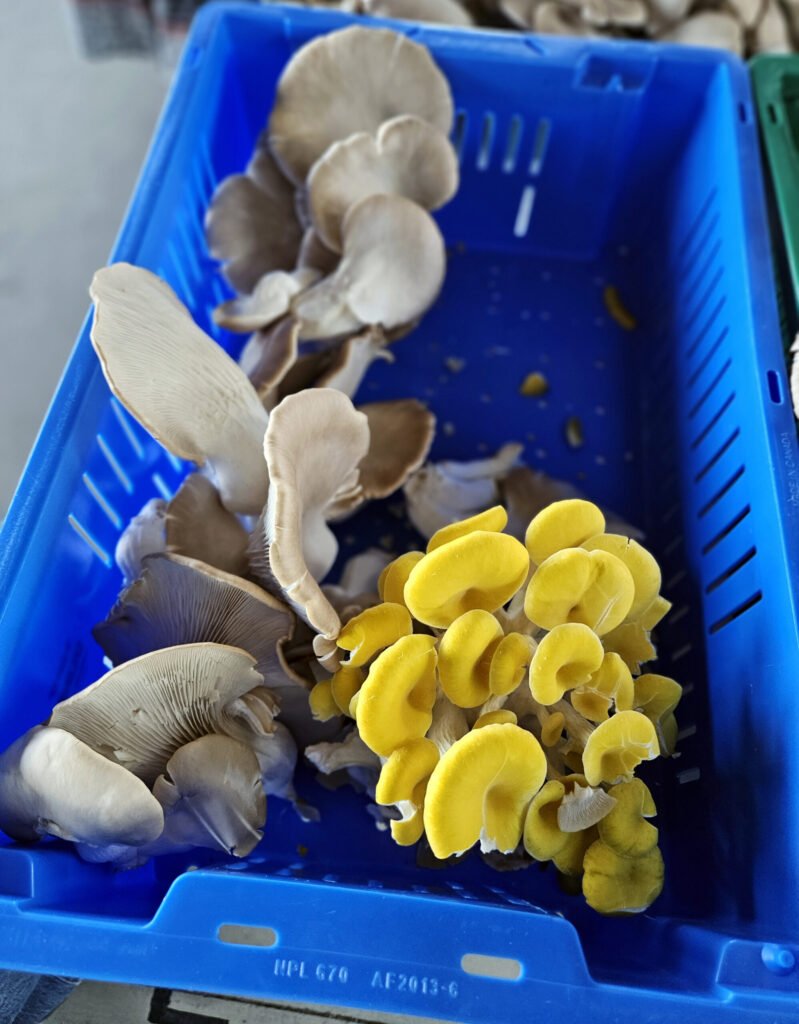
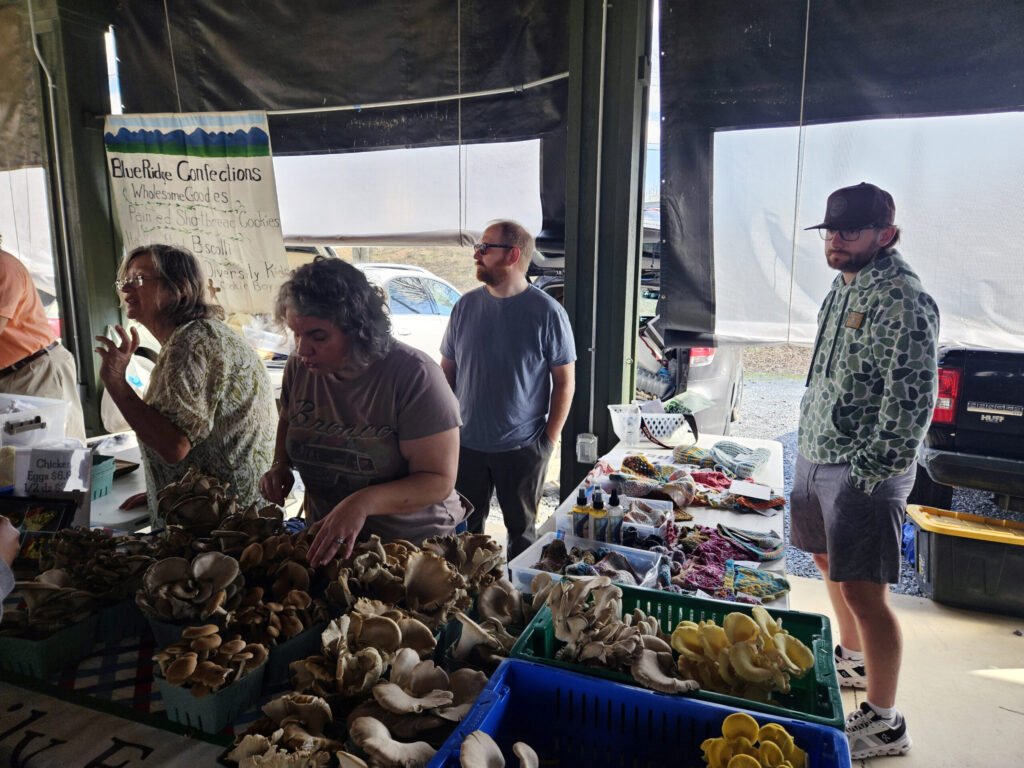
As I walked through the Abingdon Farmers Market in early March, looking for a particular farmer to interview, I completely forgot my goal when I was drawn to the vivid fungi at the Thurston Family Farm booth. The colors and textures—Golden Oyster mushrooms’ bright yellow and Blue Oyster mushrooms’ complexity—were unexpectedly beautiful, like flowers. Each mushroom seemed to have its own story, personality, flavor, and value, just as people do.
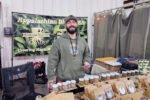
Thurston Family Farm is rooted in North Tazewell, Virginia, where the family raises chickens and ducks, but these stunning mushrooms fruit in a home-built environment right here in Abingdon. Intrigued by the pristine quality of the harvest, I stopped to speak with Christopher Thurston, the biologist-turned-farmer who grows these beautiful things. His story is nothing short of fascinating.

A Pandemic Pivot Turned Passion Project
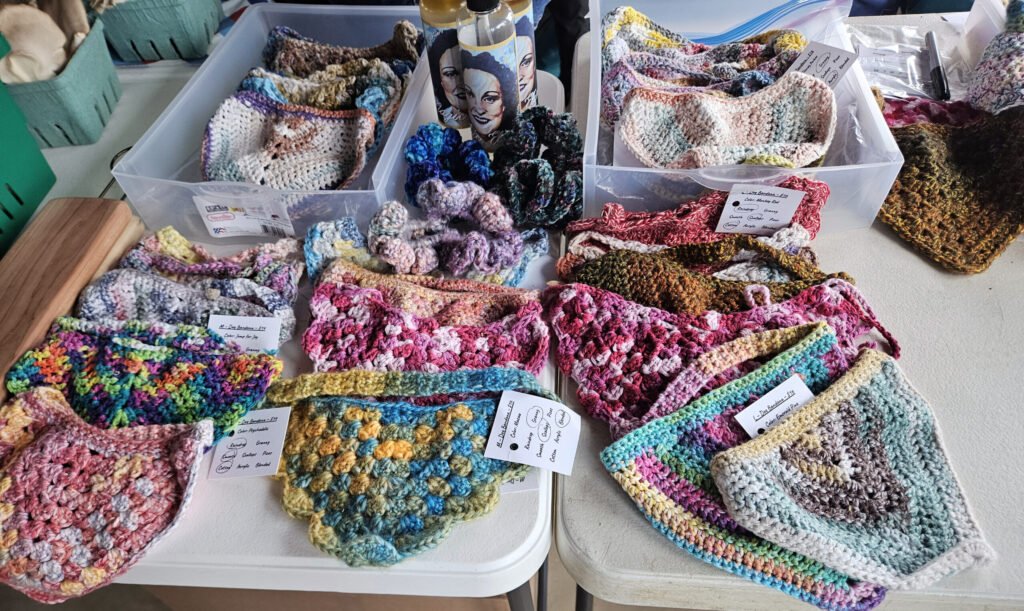
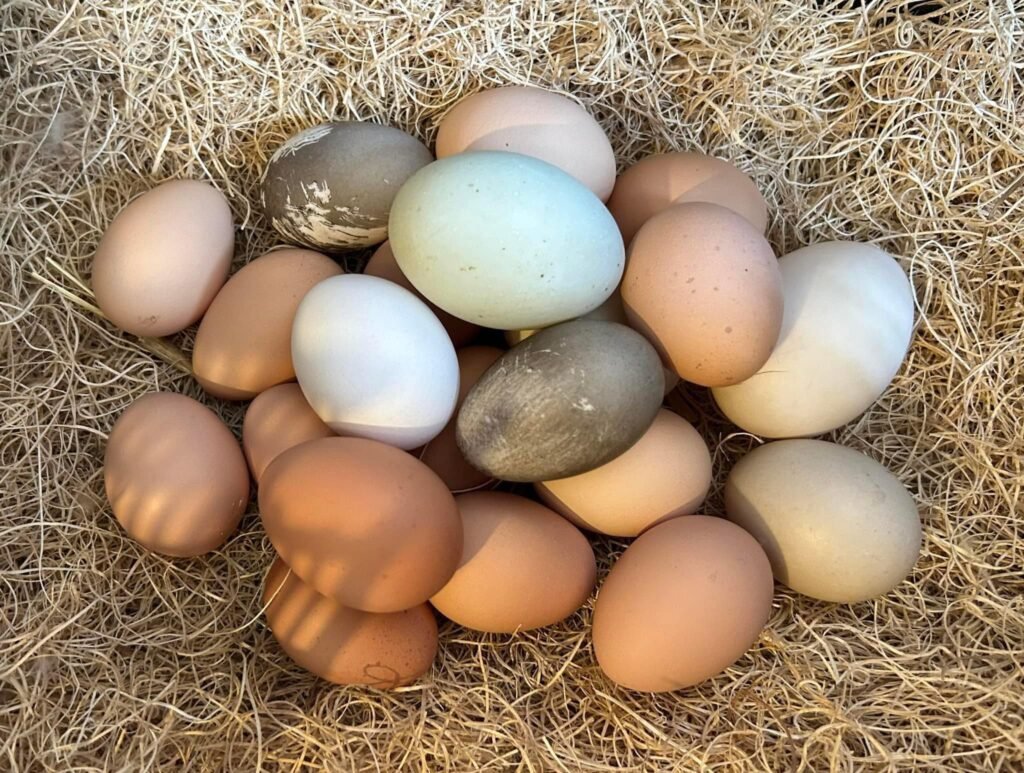
Thurston Family Farm began when Christopher’s mother, Emily, a former pharmacist, decided to raise chickens after a difficult period during the pandemic. His sister soon added ducks and knitting throws to diversify their offerings. Yet, they still sought something more.
With a biology degree and a passion for gourmet cooking, Christopher became frustrated by the limited quality of fresh mushrooms—often dehydrated or grown on questionable substrates—available in stores. He began cultivating his own, and what started as a small experiment is now a thriving local business in its second year.
The Science of the Basement Harvest
Christopher doesn’t just grow mushrooms; he engineers the perfect environment for them. Because he refuses to rely on the unpredictable supply chains of large commercial operations, he controls every variable from a highly efficient footprint in his Abingdon basement.
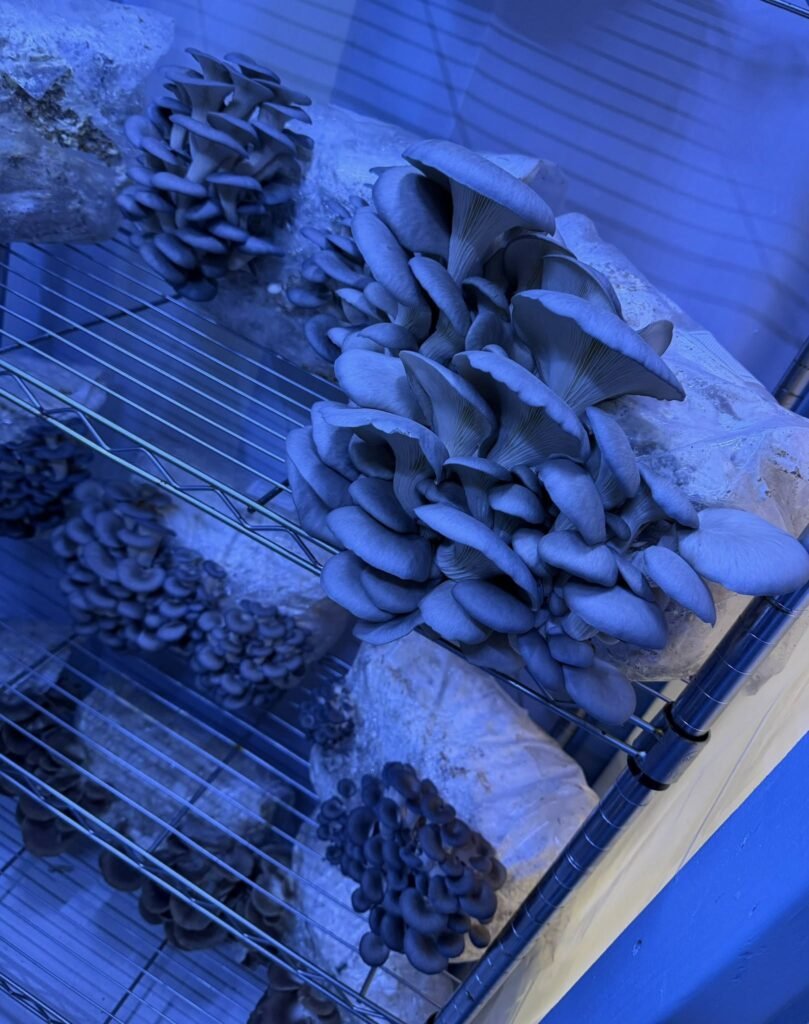
The fruiting chamber sits entirely detached from the house walls—a smart two-by-four structure designed to prevent moisture from seeping into the home and causing mold. Inside this sterile haven, mushrooms grow on five-to-seven-pound blocks of sawdust inoculated with grain spawn. Christopher pays close attention to the sawdust source, ensuring it is entirely free of chemical treatments. The blocks sit in a dark room for six weeks before they are moved to the fruiting chamber, where the magic happens over a 12-hour light cycle.
The climate control is a marvel of DIY ingenuity. “We know they’re breathing,” Christopher explains. “They’re moving at 800 parts per million CO2.” An automated fan monitors the air; the moment the CO2 level exceeds 750 parts per million, it kicks on, cycling fresh air back into the chamber.
Humidity is equally critical. The Thurstons built a custom humidifier using a Home Depot tote, an ultrasonic pond fogger, and a UV sterilizing light from an aquarium filter to keep the water pristine. Automated sensors keep the humidity perfectly balanced, holding it around 82.5% before letting it drop to 68% and cycling back up. Two weeks after entering this meticulously managed chamber, the mushrooms are ready for the market.
A Palette of Flavors and Health Benefits
The Appalachian Highlands region is a fantastic place to grow and forage fungi, but having access to fresh, safely cultivated gourmet varieties year-round is a distinct luxury. The Thurston Family Farm booth displays an amazing array of culinary mushrooms, each offering unique flavor and nutritional profiles:
- Golden Oyster: These bright, delicate yellow clusters look like coral and offer a slightly nutty, citrusy flavor. They cook quickly and make a stunning, vibrant garnish for stir-fries and seafood dishes. Nutritionally, they are packed with antioxidants and essential amino acids.
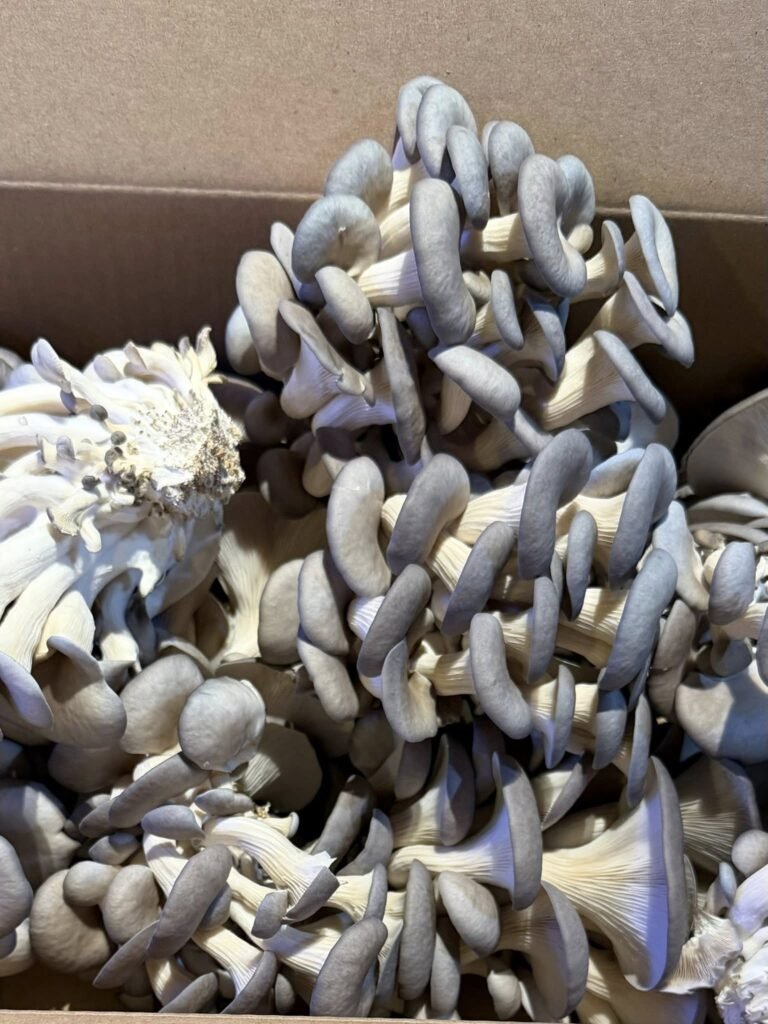
- Blue Oyster: Visually striking with a slightly chewy, meaty texture, Blue Oysters bring a robust, earthy umami flavor to the table. They hold up beautifully when roasted or tossed into hearty pastas and soups. They are an excellent source of B vitamins, protein, and essential minerals like iron and zinc.
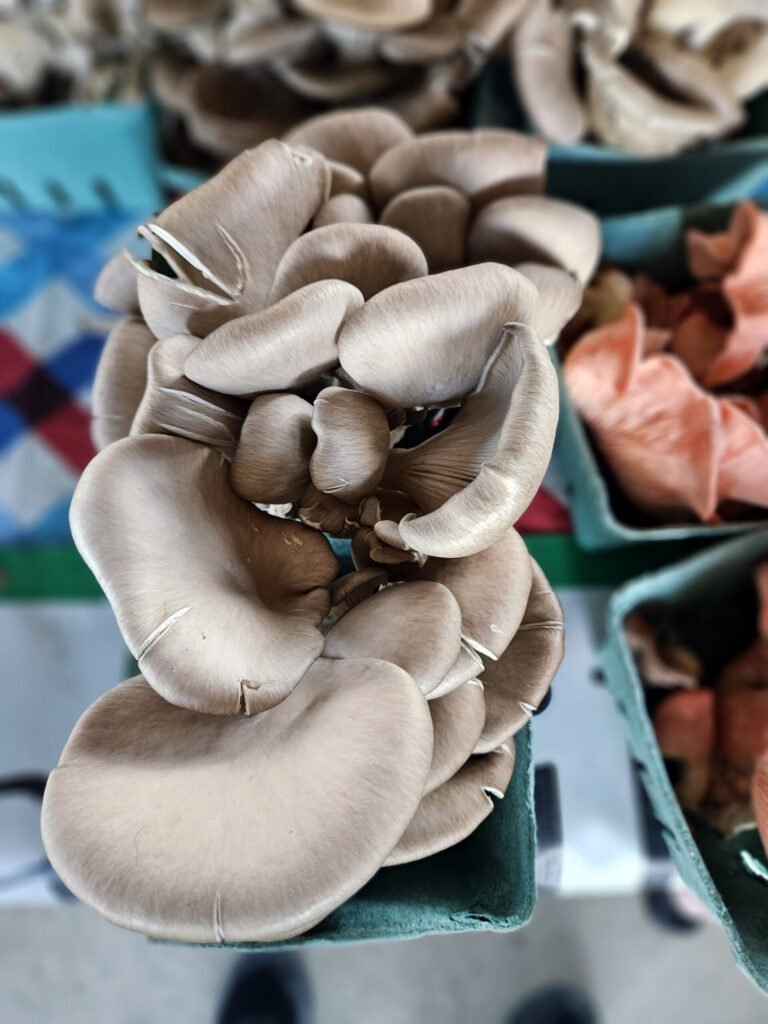
- Grey Oyster: The classic workhorse of the gourmet mushroom world. Grey Oysters have a mild, earthy flavor that absorbs sauces effortlessly and a velvety texture. As with their colorful cousins, they are loaded with beta-glucans, which are known to help boost the immune system and support heart health.
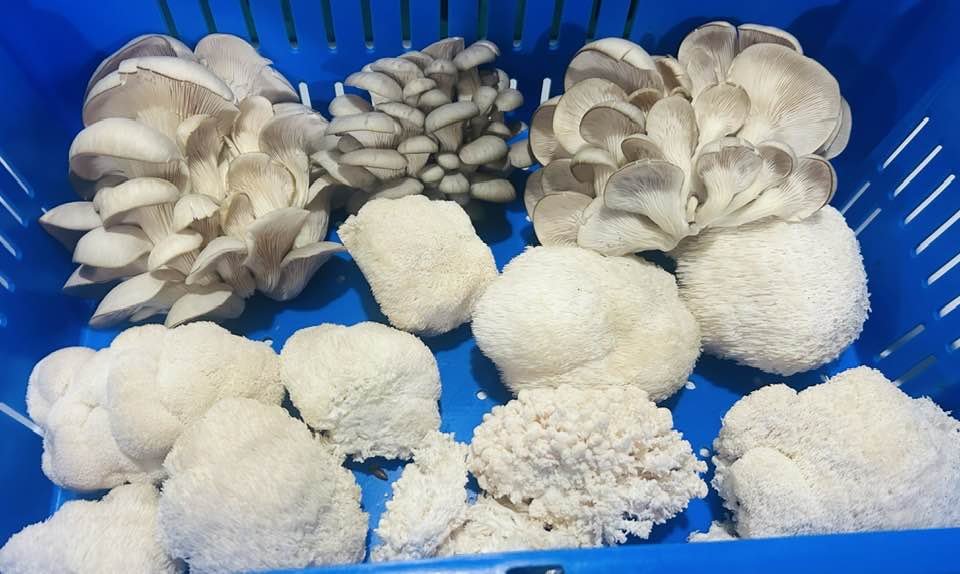
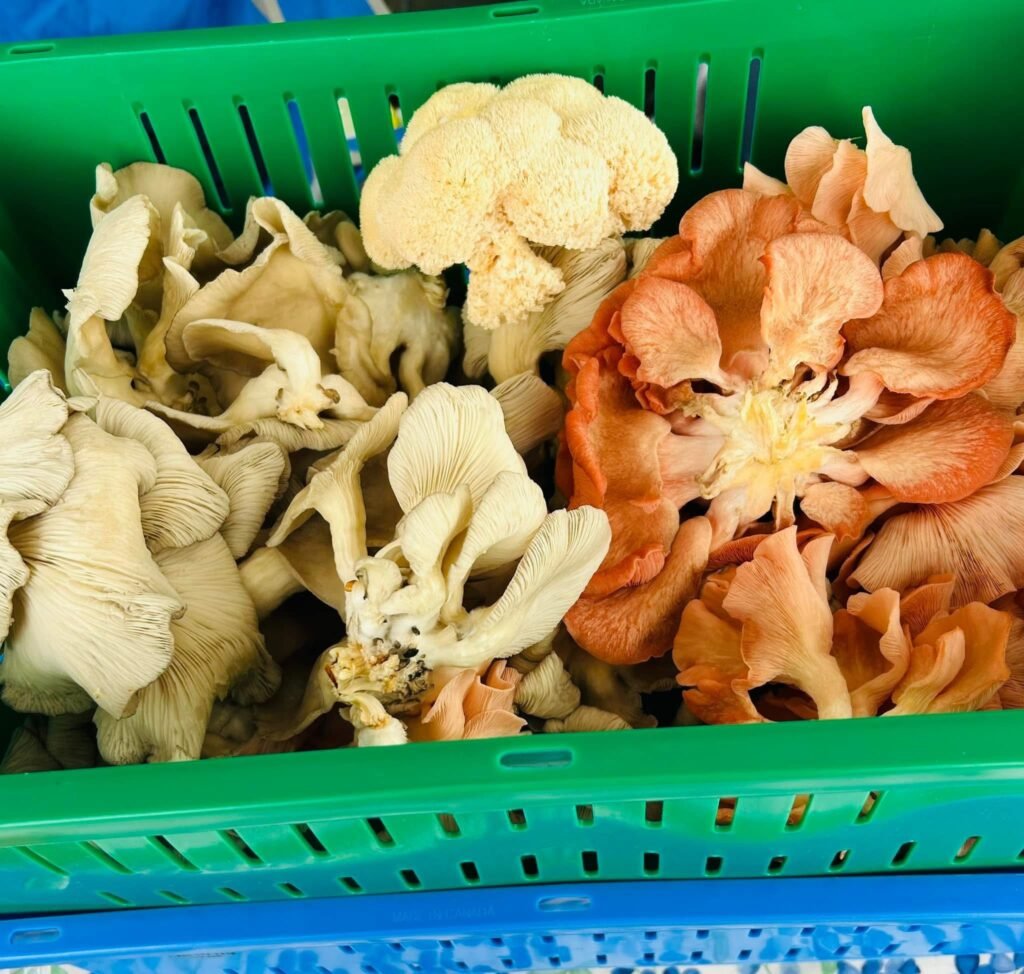
- Lion’s Mane: Looks more like a white pom-pom than a mushroom, it is known for its dense texture and flavor reminiscent of sweet crab or lobster. It is a great vegetarian seafood alternative and is celebrated for its potential neurological benefits, as it contains compounds linked to cognitive support and joint health.
Cultivating Community
As we stood talking, Christopher’s wife, Virginia, and his mother-in-law managed the booth. The Thurstons rarely miss a weekend at the Abingdon Farmers Market. For Christopher, the market is about more than just selling out of his harvest; it is about building a sustainable, local food system.
“We are very blessed in this town,” Christopher says, noting that shoppers can easily buy a week’s worth of groceries—from microgreens to crisp local apples—without ever setting foot in a commercial grocery store. “When you eat from here, you eat healthier. It’s better for sustainability. It’s a week old when you lay hands on it at the grocery store at best. For us, some of these we picked this morning. You’re not going to get fresher than that.”
In a world increasingly disconnected from its food sources, Thurston Family Farm shows the importance of local agriculture. Thanks to a bit of biology, a lot of patience, and a well-managed basement, Abingdon locals can enjoy fresh fungi every Saturday.