


Fields of Uncertainty
American agriculture encounters pressure from two primary sources: international conflict, which raises input costs, and domestic political gridlock, which interrupts administrative support for conventional farmers. By examining how global tensions disrupt input markets and how policy stalemates impact federal assistance, this article will explore the resulting vulnerabilities in global supply chains and assess how local, regenerative food systems demonstrate greater resilience under these conditions.
The global shockwave: Geopolitics and the price of growth
Tensions in the Middle East have sent immediate shock waves through global agricultural input markets just as U.S. farmers prepare for spring planting.
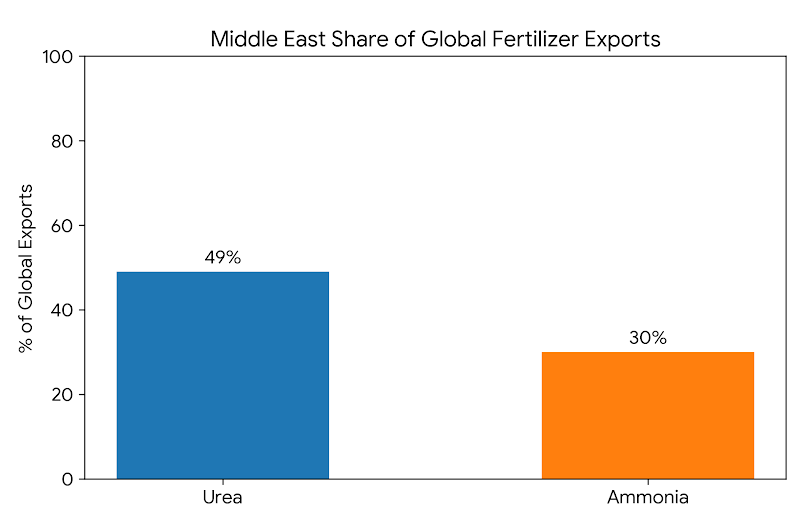
The conflict in Iran directly threatens the Strait of Hormuz, a vital shipping corridor transporting about 20 million barrels of oil per day and much of the world’s fertilizer. The Middle East accounts for 49% of global urea exports and 30% of global ammonia exports. Josh Linville, vice president of fertilizer at StoneX Group, told AgWeb, “If tensions escalate and shipping companies refuse to move vessels through the region, fertilizer supply chains could face serious disruptions.”
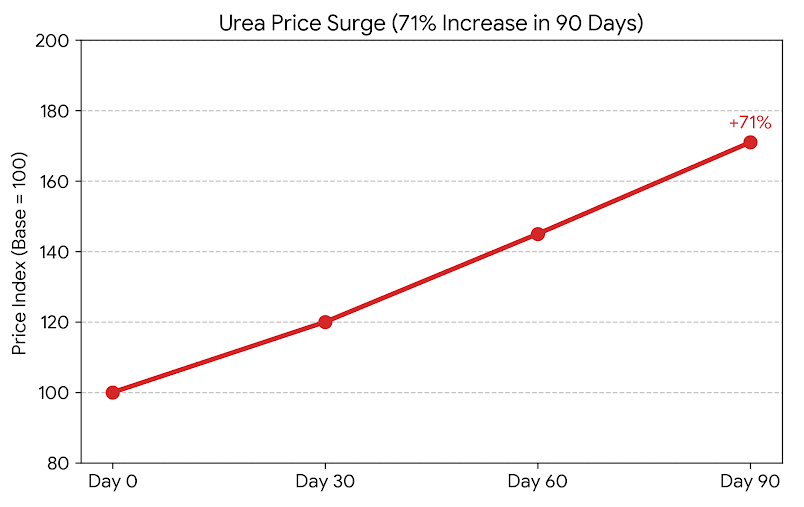
This uncertainty sharply increased input costs; urea prices rose 71% in 90 days. As energy is essential for fertilizer production and transport, disruptions in the Persian Gulf further heighten price volatility in the sector.
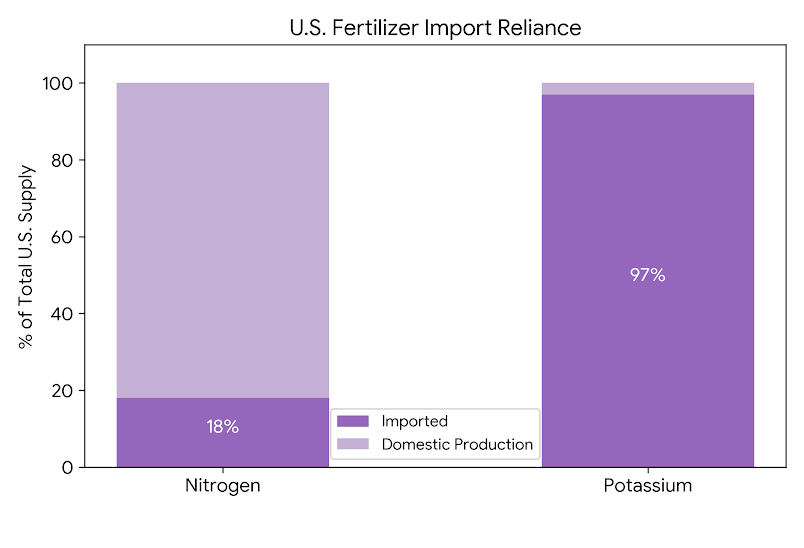
For large-scale conventional farmers, this price shock is especially damaging. Although the United States produces some fertilizer, it is a net importer, sourcing about 18% of its nitrogen and 97% of its potassium from abroad. Global benchmark markets set domestic prices, so American farmers feel the full effect of these upheavals regardless of where their fertilizer originates.
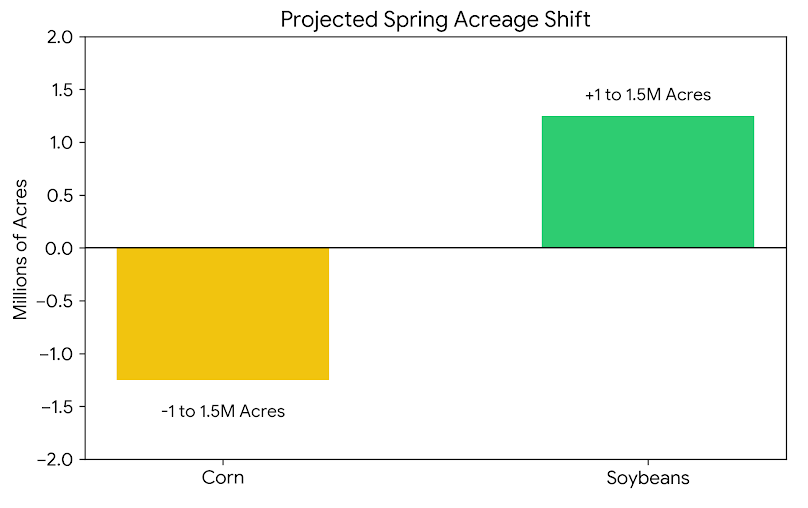
Under financial pressure, large farms are changing planting plans. Analysts say 1 million to 1.5 million acres will shift from nitrogen-heavy corn to soybeans this spring. Soybeans, which fix nitrogen and need less synthetic fertilizer, offer temporary financial relief for big farms.
The domestic standstill: Shutdowns and severed safety nets
Domestic political gridlock adds to global supply chain volatility. A government shutdown removes the administrative support systems that conventional farmers depend on to manage unpredictable international markets.
Frozen capital and closed doors
When federal agencies halt, local Farm Service Agency offices close. This stalls critical operating loans just when farmers need capital for high-priced inputs. “At the core of the impact on agriculture is FSA,” said Harrison Pittman, director of the National Agricultural Law Center at the University of Arkansas. Without the FSA, farmers cannot certify acreage or finalize lender agreements. “The situation with lenders is already dicey; this shutdown doesn’t help at all.”
Emily Buckman, director of government relations for the American Farm Bureau Federation, explained the severity of the situation to “Ohio Ag Connection”: “About 50% of USDA’s employees have been furloughed, so there will be no administering of CRP payments, ARC-PLC payments or disaster assistance payments.”
Blind Spots in the Commodity Market
A shutdown halts USDA market reports, forcing commodity farmers to make pricing and marketing decisions without key information. Disaster relief payments, conservation program funding, and tariff mitigation programs also stall, compounding economic pressure on heavily leveraged farms.
The local shield: Insulation through regeneration
Amid international conflict and shutdowns, an alternative agricultural model shows greater resilience than conventional industrial farming. Structural advantages insulate small, sustainable, organic, and regenerative farms from these crises, creating a buffer for both farmers and consumers.
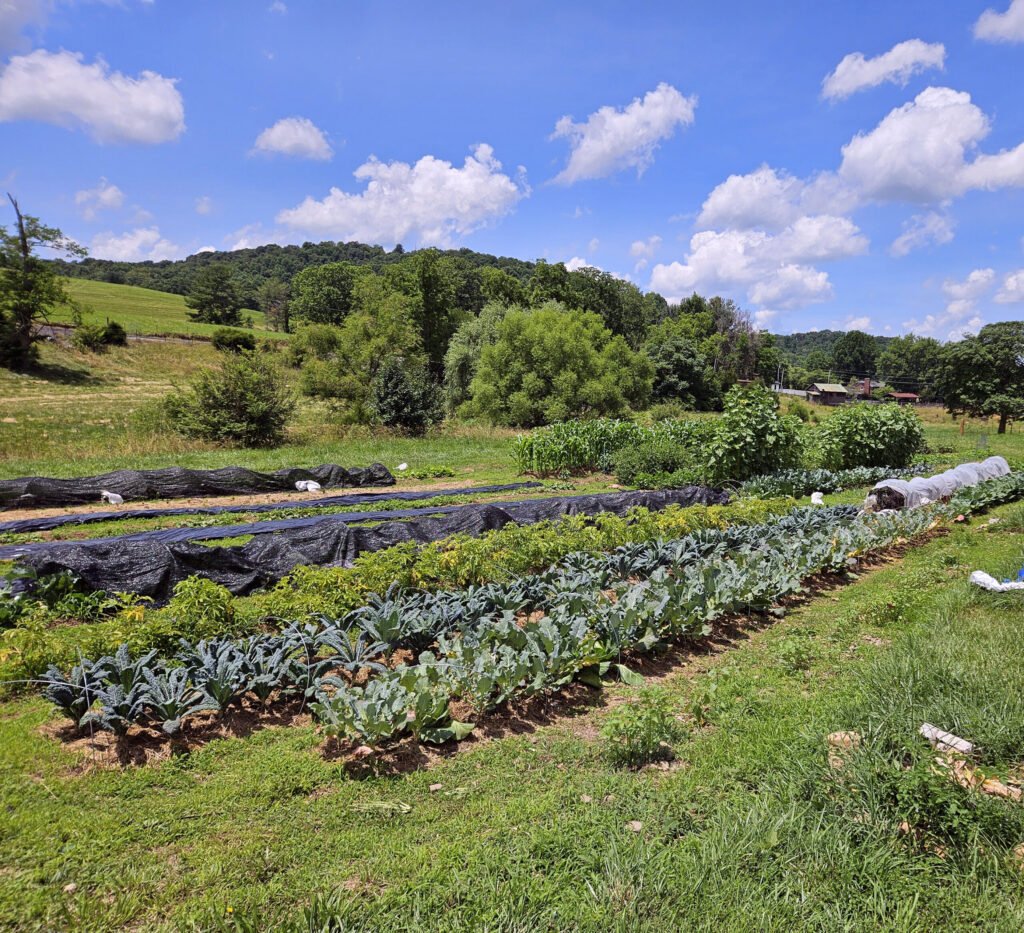
This resilience comes through decoupling from volatile global supply chains. Rather than depending on natural-gas-derived synthetic fertilizers transported via contested international routes, regenerative farms preserve soil fertility on-farm through biological methods such as compost, animal manure, cover cropping, and diverse crop rotations. As a result, a 71% increase in global urea prices has little impact on their financial stability.
Jason Neff, director of the Sustainability Innovation Lab at Colorado, explained the dynamic to “The Organic & Non-GMO Report”: “If you can drop the fertilization, while maintaining the yields that we need and the economic outcomes that farmers want, then why not, right? That’s a win-win.”
Bypassing the Federal Bottleneck
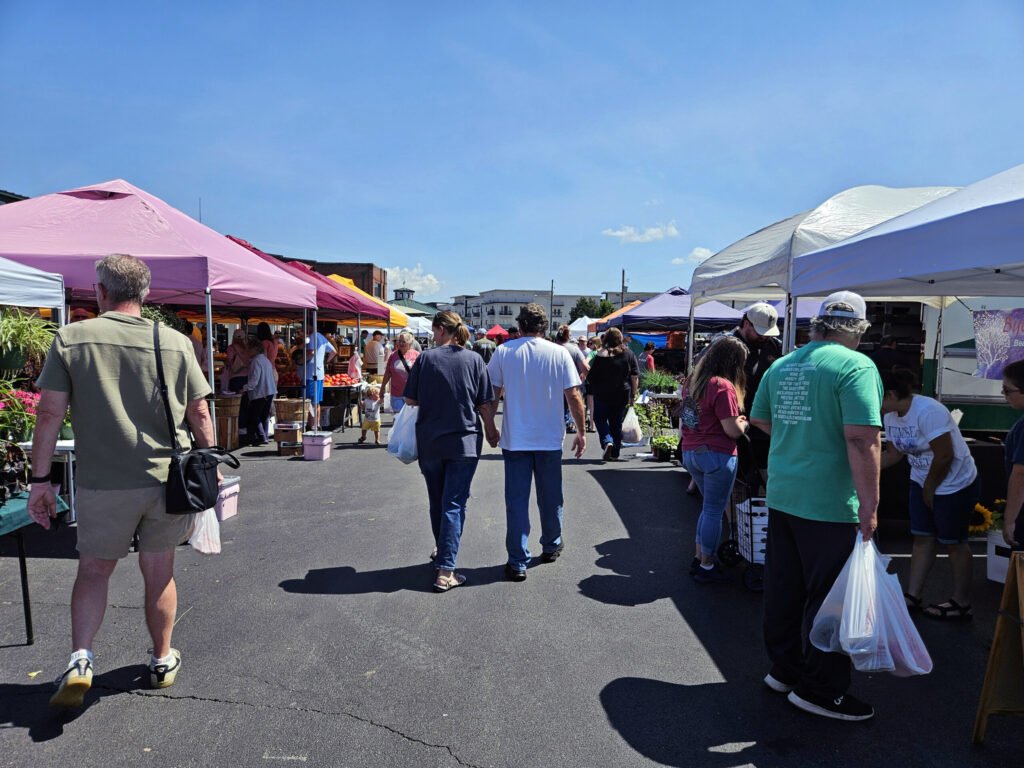
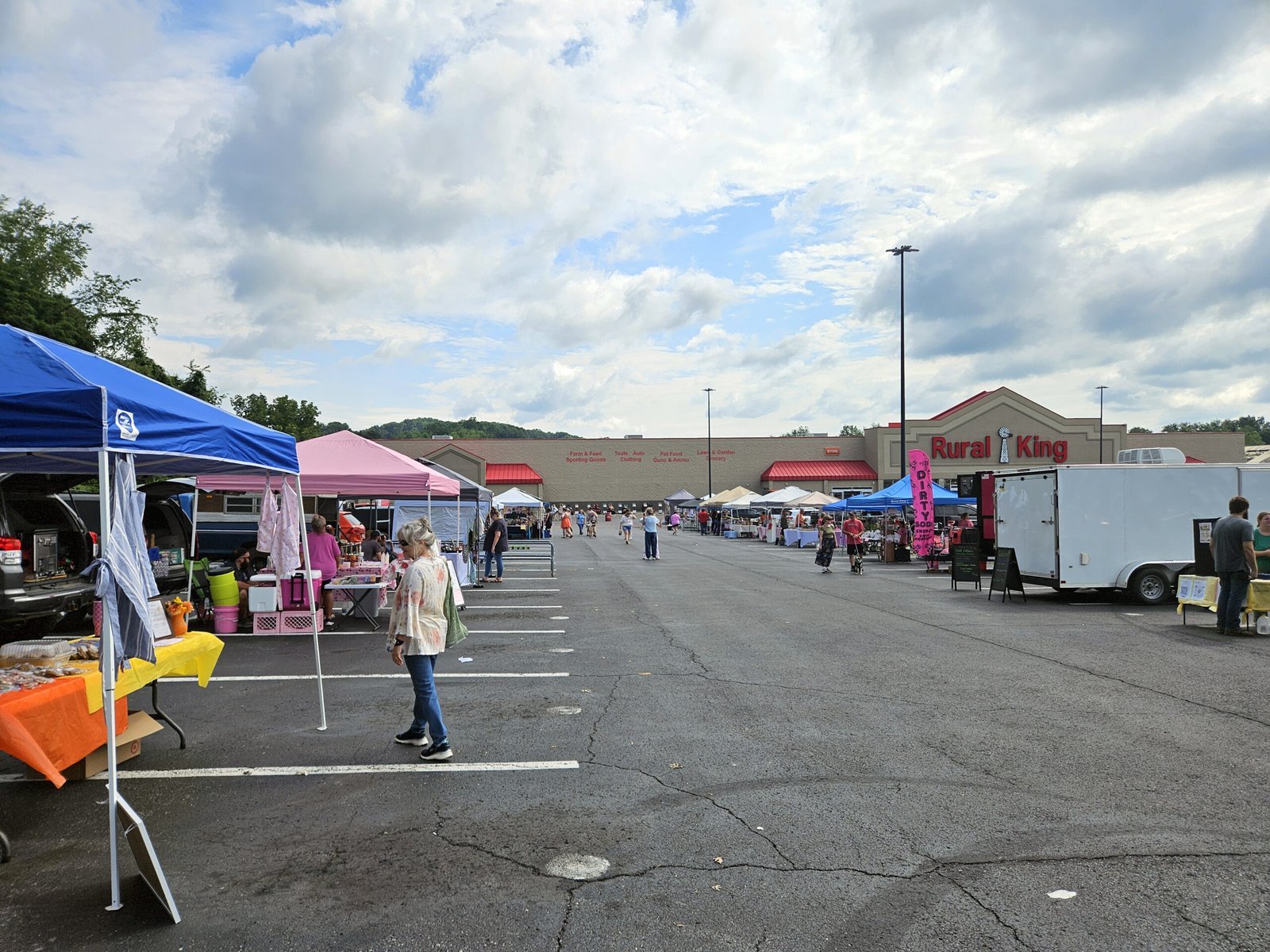
Moreover, these localized food systems largely avoid the fallout from a government shutdown. Small-scale, direct-to-consumer farms typically depend less on federal commodity subsidies or massive FSA operating loans to stay afloat. Their revenue streams—driven by Community Supported Agriculture shares, local farmers markets, and direct sales to regional restaurants—completely bypass the frozen federal apparatus.

Stable Prices for Local Consumers
Consumers who participate in these local food economies directly benefit from this stability. In the conventional model, global transport costs, crude oil price spikes, and commodity index speculation drive fluctuations in grocery store prices.
In a local food economy, small farmers set prices based on fixed, localized production costs. Consequently, buyers experience dramatically less price volatility at the neighborhood farm stand than at the conventional supermarket during global crises. Rob Myers, director of the University of Missouri Center for Regenerative Agriculture, pointed out the end goal of these localized systems in an article for the “Soil Health Nexus”: “Our goal is to help farmers with different practices that will make their farms more resilient.”
A Blueprint for Long-Term Resilience
No farm is entirely insulated from external economic pressures, as increases in fuel and labor costs inevitably affect all agricultural operations. However, current research and observable trends indicate that local, biological agriculture—rooted in strong community relationships and diversified, regenerative practices—substantially decreases the risks posed by global shocks and domestic policy instability. These systems, though not completely exempt from broader market influences, demonstrate greater adaptive capacity by reducing dependence on unpredictable international supply chains and on centralized government assistance.
By directly addressing the vulnerabilities exposed in conventional farming by both geopolitical conflict and domestic gridlock, community-based regenerative agriculture not only provides immediate stability for producers and consumers but also synthesizes a model for long-term resilience and food system autonomy. In this way, supporting such localized approaches presents a strategic response to today’s challenges and a foundation for an increasingly sustainable agricultural future.










Leave a Reply