Home / General / The Beautiful Mystery of Haint Blue Painted Porch Ceilings

The Beautiful Mystery of Haint Blue Painted Porch Ceilings

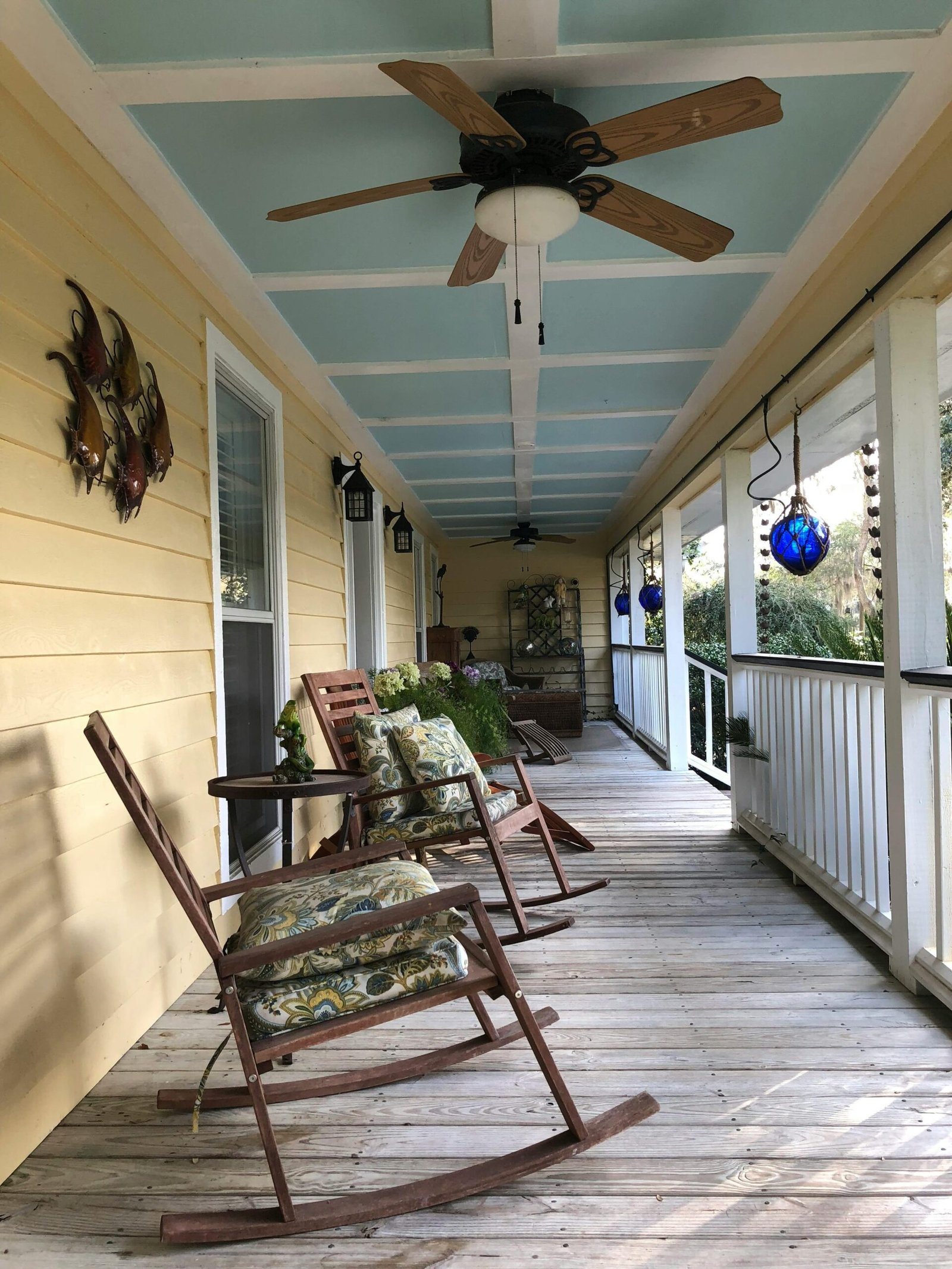
Porch with rocking chairs and a Haint Blue Ceiling Photo by Jose-Cruz

A Surprising Solution for Bugs

I drew up a rough sketch of the landscape design as they were talking about paint colors for the porch. “I’m worried about bugs. Is there anything you can do that repels them?” The homeowner asked.

“Yeah, actually. On almost all of our projects, we use Haint Blue for the ceiling. That alone cuts the bugs way down, and of course, we’ll install a fan…” Replied the designer.
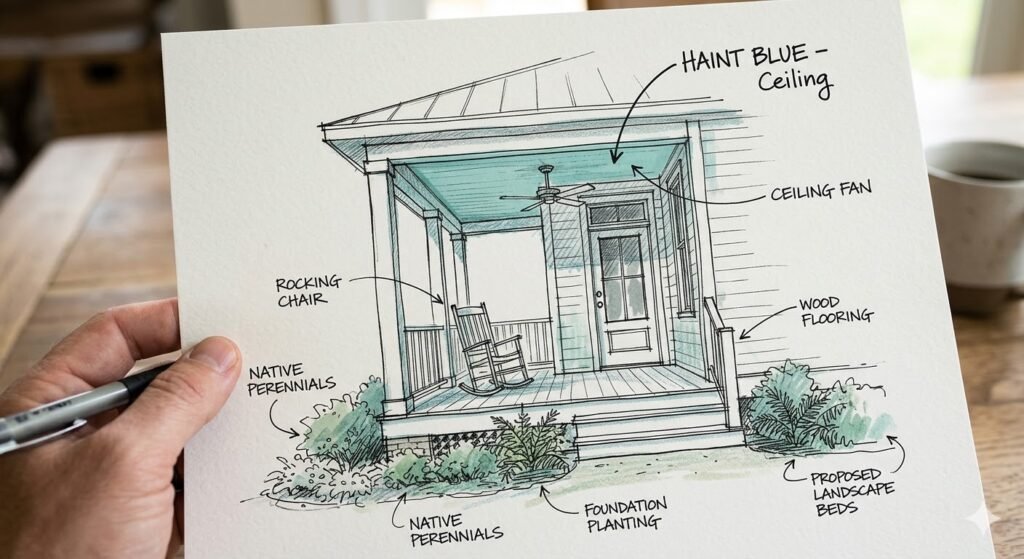
Designer Sketch of the Porch of an Appalachian home
Designer Sketch of the Porch of an Appalachian home Illustration

She was right. In the 6 months I’d worked there, the company had used the light blue-green many times, as part of standard procedure. I’d never seen it used that way in the West. Could a paint color really repel bugs? I decided I’d Google it when I got home.

Uncovering Appalachian Superstitions

Settling into the papasan chair by the glass porch doors, I set up my iPad. “Haint Blue porches,” I typed. A list of southern superstitions popped up. Ah, of course! I’m learning just how ingrained these old superstitions are, especially here among the mountain farmers, where anything and everything is tried to ensure a good harvest.

Appalachian culture is a beautifully woven tapestry of mixed traditions. Indigenous peoples, African Americans, Scots, Irishmen, Dutch, and English settlers have all contributed their colorful, essential threads.
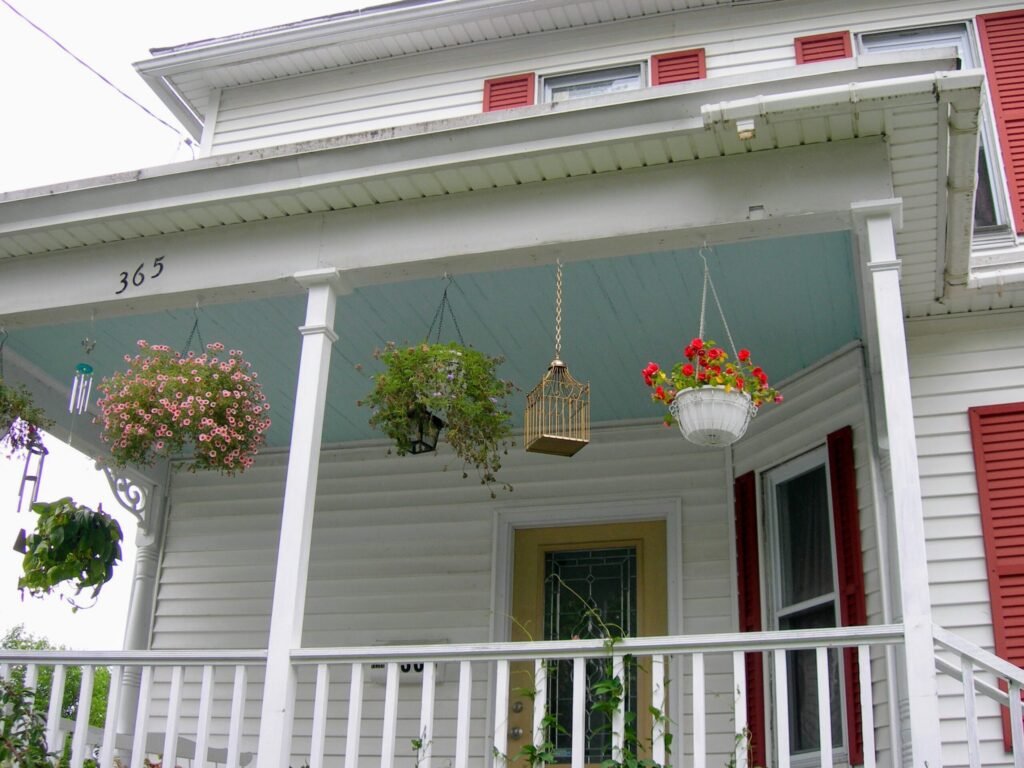
Haint blue Victorian porch ceiling-By Lake Lou.jpg
Haint blue Victorian porch ceiling By Lake Lou

Tricking the Restless Spirits

The superstition surrounding painting porch ceilings blue originates in the Gullah Geechee culture. The Geechee believed that Haints—malicious, restless spirits—haunted the living and caused illness and other misfortune. They were hard to ward off and impossible to contain, but it was believed they could not cross through water.

The Geechee tricked the Haints by painting their porches, doors, and window frames blue to mimic water and halt their pursuers. This practice followed them to the southern coasts of the United States in the 1800s, and has charmed its way further inland, picking up admirers as it went.
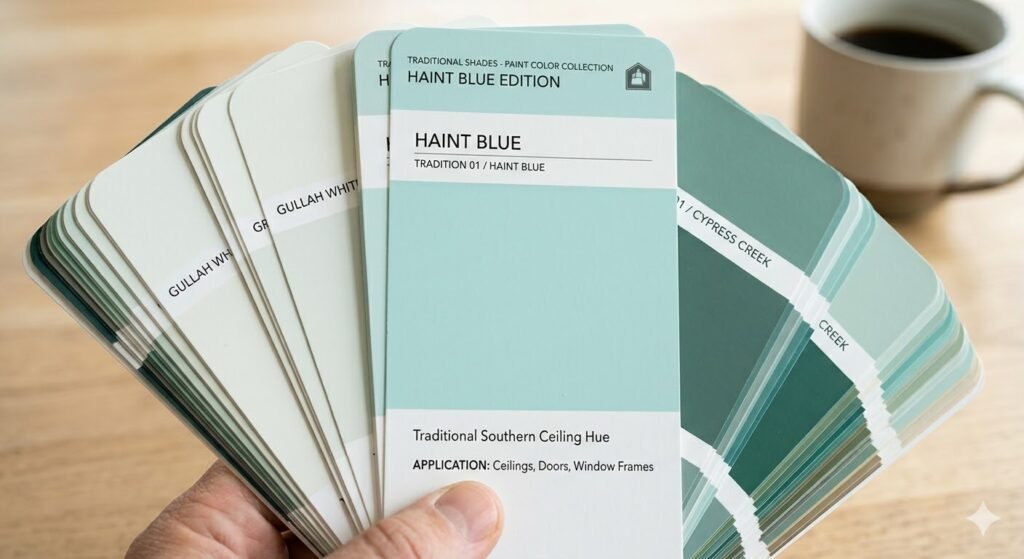
Pantone Color book describing haint Blue
Pantone Color book describing Haint Blue Illustration

A Beautiful Tradition Lives On

In the tapestry of tradition, this thread mixed with that, and here we are two hundred years later, painting our porches Haint Blue to keep the bugs away.

Smiling, I finished up the sketch I’d begun earlier, labeling the ceiling color “Haint Blue”. Does it work? I don’t know, but it’s sure a beautiful color to look up at from the seat of a rocker on a restful front porch.

author avatar
Kathryn Jacobson
Kathryn, Nate, and their three children moved from Utah to Virginia in 2016, seeking new work opportunities. Though their roots remain in the sandy rocks there, they fell in love with the lush valley and its generous people and settled into its giving soil.

Leave a Reply

Your email address will not be published. Required fields are marked *

Two Story House with blue porch ceiling Photo by Photo by Comstock Images
Two Story House with blue porch ceiling Photo by Comstock Images

The Science Behind the Superstition: Does Haint Blue Actually Repel Bugs?

In the story, the designer notes that painting a ceiling Haint Blue reduces insect infestations. While the Gullah Geechee originally used the color to mimic water and block restless spirits from entering the home, there is actually scientific evidence supporting its bug-repelling reputation.

The Lye Factor

In the 1800s, commercial exterior paints did not exist. Instead, people mixed their own "milk paint" using milk, lime, earth pigments, and lye. Lye acts as a natural, highly effective insecticide. While homeowners thought they were warding off ghosts, the lye in the blue paint was actively altering the surface's pH, keeping spiders, wasps, and mosquitoes from settling there.

The "Sky Illusion"

Even without the chemical deterrent of lye, the color itself plays a psychological trick on insects. Wasps, hornets, and spiders instinctively seek out solid, protective overhangs to build their nests. Many entomologists and painters theorize that the pale blue ceiling tricks these insects into thinking they are looking at the open sky, prompting them to fly elsewhere in search of shelter.

A Modern Solution

Today's exterior paints are completely lye-free. However, the tradition lives on with a modern twist. By pairing a Haint Blue ceiling with a mechanical ceiling fan, the resulting downdraft creates a physical barrier that weak-flying insects—like mosquitoes—simply cannot fly through.

Bottle Tree - Photo by Kevin Wise

Cobalt Glass and Captured Spirits: The Magic of Bottle Trees

If you look out from a traditional Southern porch into the garden, you might spot the striking silhouette of a bottle tree. Often constructed from the bare, twisting branches of a dead cedar or a metal frame, these "trees" are capped with brightly colored glass bottles. Much like Haint Blue paint, this tradition traces its roots back to the 9th century in Congo and was eventually brought to the American South by enslaved Africans.

Bottle Tree in a Cemetery - Photo by Natalie Maynor

The belief holds that malicious spirits, or haints, are mesmerized by the reflective colors of glass—especially cobalt blue, which is closely tied to the protective nature of Haint Blue. Drawn to the glittering glass in the dark, the spirits fly inside the bottles and become trapped. If you hear the wind blowing across the open mouths of the bottles at night, folklore says it is the sound of the haints moaning in confusion. Once the morning sun rises, the dawn's intense heat and light destroy the spirits within, protecting the home for another day. Today, bottle trees endure as a vibrant, beloved staple of Southern folk art.

Woman sweeping porch - By Yaroslav Shuraev
Woman sweeping porch - Photo by Yaroslav Shuraev

Sweeping Away Misfortune: The Rules of the Porch Broom

On a traditional porch, a broom is never just a tool for clearing dirt and leaves; it is an instrument for managing the home's spiritual energy. Because the porch serves as the main entryway, sweeping is bound by deeply ingrained superstitions meant to keep bad luck firmly on the outside.

Never Sweep After Dark

It is widely believed that sweeping your porch after the sun goes down sweeps away your family's accumulated good luck for the day. Worse, the scratching sound of the bristles in the dark is said to wake up resting spirits.

Sweep Out, Never In

You must always sweep dirt outward, starting from the front door and pushing toward the steps. This physically and symbolically pushes negative energy, bad luck, and unwanted guests off your property. Sweeping inward invites misfortune across your threshold.

New House, New Broom.

If you are lucky enough to move to a new home with a beautiful new porch, you must leave your old broom behind. Southern folklore dictates that an old broom holds onto the dirt and negative energy of your past; bringing it into a fresh space brings all your old troubles right along with it.

Buy Local Banner