

I heard Bill Vicars’ apple butter machine before I saw it.
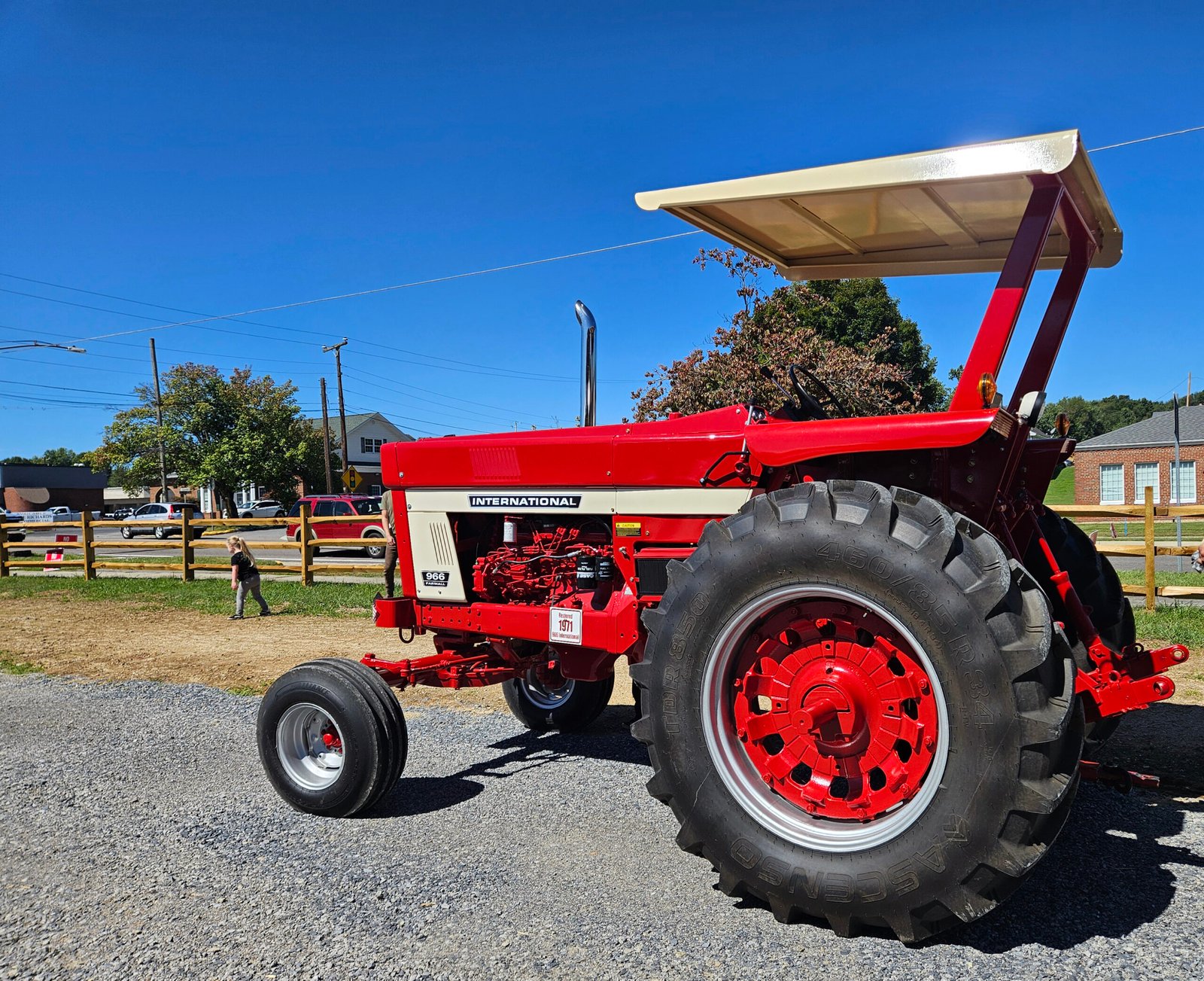
I had been standing near an antique 1971 International Farmall 966 tractor outside the new Lewis Family Country Market in Chilhowie when an odd mechanical rhythm caught my attention. The store was celebrating its opening during the 72nd Annual Chilhowie Community Apple Festival, and the parking lot was already crowded with visitors, vendors, and vehicles.
But somewhere around the side of the building, an old engine was making a sound I couldn’t quite place.
It had some of the uneven rhythm of a Harley-Davidson at idle — a snort, a sharp slap-like pop, then a few softer mechanical breaths before another pop.
I had to find out what it was.
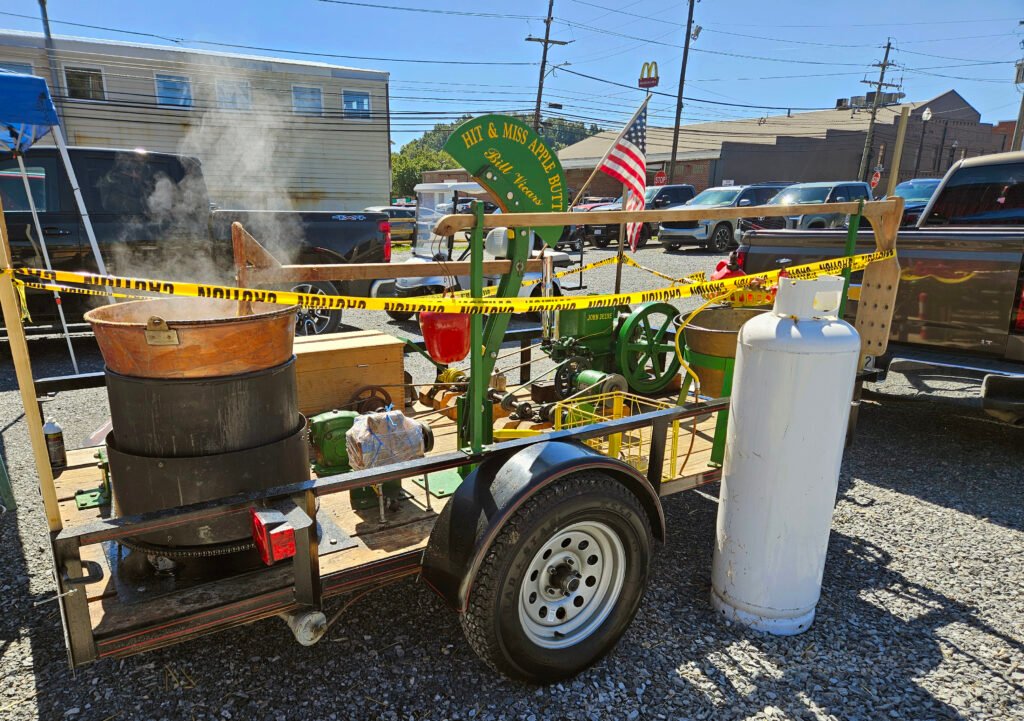
Around the corner sat a trailer carrying one of the most interesting pieces of machinery I had seen in a long time.
A large copper kettle slowly turned above a propane burner. A long wooden beam moved back and forth over the kettle, driving a stirrer through a steaming batch of apple butter. Chains ran from shafts to gearboxes and from one mechanism to another.
At the other end sat a small green John Deere engine, chugging away at an easy pace.
The entire machine had been built for one purpose: stirring apple butter.
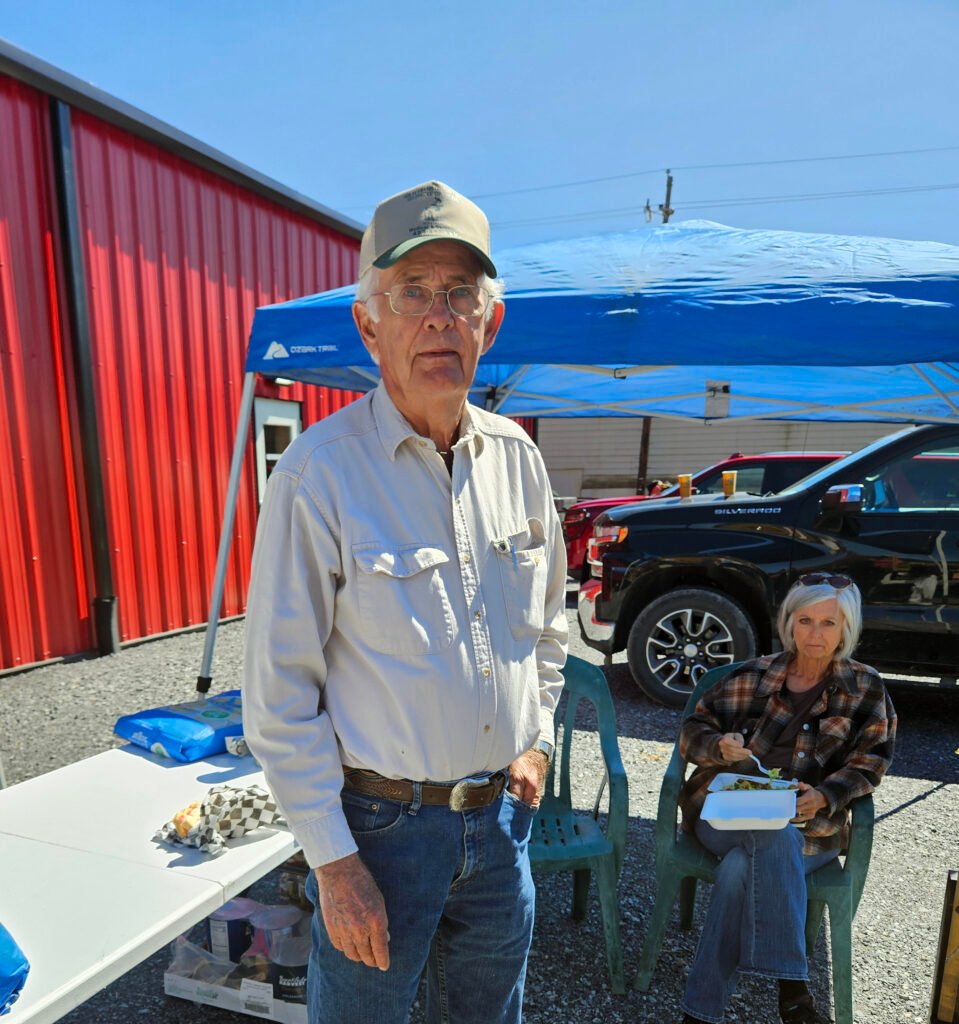
And the man who built it was Bill Vicars.
Five Hours of Stirring Apple Butter Was Enough
Vicars said the idea began about 10 years ago, when he and a friend were making apple butter the old-fashioned way.
They spent about five hours standing in the sun, stirring the kettle back and forth.
“And the whole time I was running through my head how I’m going to make one that’s mechanical,” Vicars said.
That winter, he went to his shop and built one.
I asked whether he had an engineering background.
“No,” he said.
That simple answer somehow made the machine even more interesting.
Vicars didn’t start with a set of engineering drawings or a commercially manufactured apple-butter system. He had a problem he wanted to solve, a collection of mechanical components and enough experience with old machinery to work out a solution.
A 90-Year-Old Engine Goes Back to Work
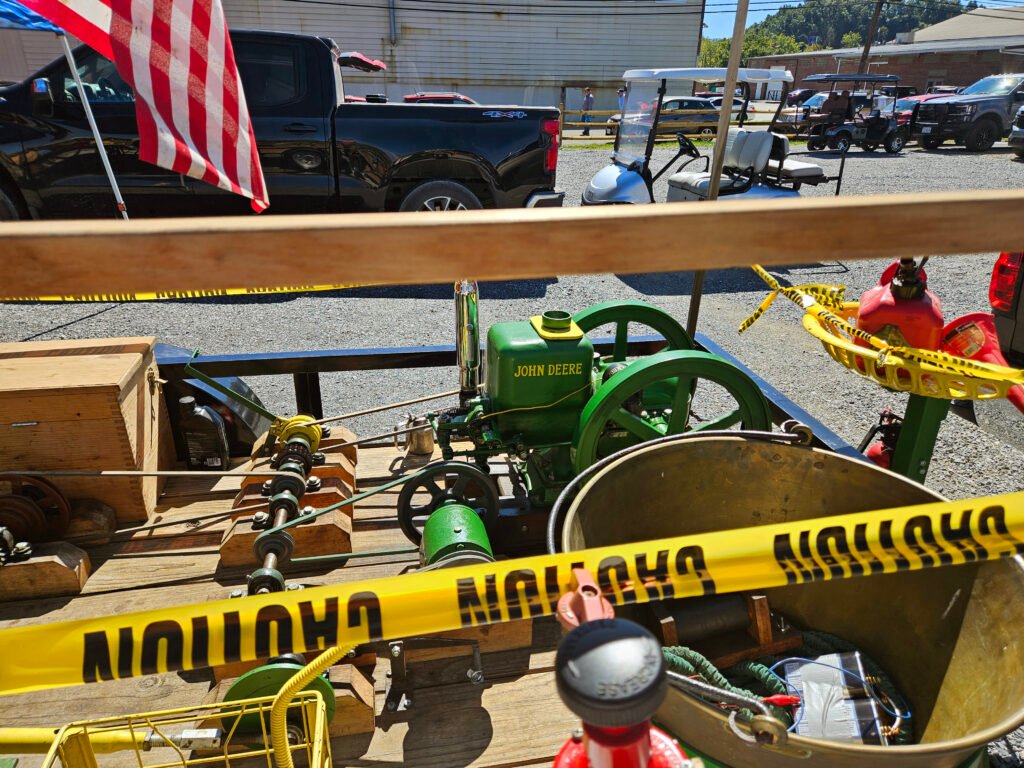
The power source is a 1936 John Deere 1½-horsepower stationary engine.
“The little engine is 90 years old,” Vicars said.
Instead of using the engine simply to turn one shaft, Vicars sends its power through a series of gearboxes and chains that slow everything to the speeds he needs.
The stirrer moves back and forth 12 times each minute.
The kettle makes one complete revolution every 45 seconds.
Both movements are important.
If the kettle stayed still, Vicars explained, the stirrer would continue following the same path through the apple butter. Rotating the kettle continually brings another section of the mixture beneath the stirrer and helps keep apple butter from sticking to the sides.
A crank linkage converts the rotating motion of the drivetrain into the back-and-forth movement of the wooden stirring beam.
The result is almost hypnotic to watch.
The engine fires and coasts. Chains move over sprockets. Shafts turn. The long beam sweeps in one direction, then the other, while the copper kettle slowly revolves beneath it.
And through it all comes the smell of cooking apples.
Old Farm Equipment Finds Another Job
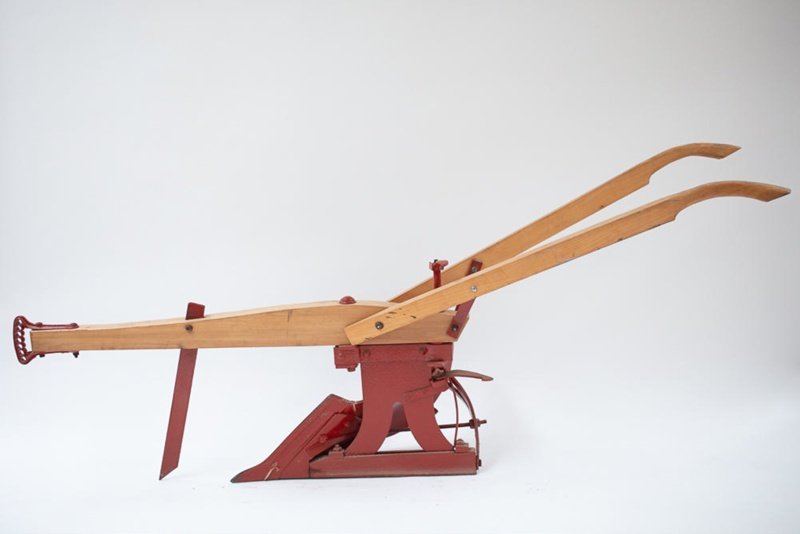
Even the long wooden beam moving the stirrer has an agricultural past.
Vicars said it came from a hillside plow.
Those plows were designed for working sloped ground. At the end of a pass, the farmer could reverse the plow so the soil continued turning in the proper direction while working back across the hillside.
Vicars found another use for part of one.
“And that’s what the beam is all about,” he said.
The machine is full of that kind of mechanical reuse — older equipment and simple components working together in a completely different job.
There is room for another kettle, too.
Vicars pointed toward a second vessel at the front of the trailer and said he could install another burner and make two batches at once if he wanted.
For the demonstration in Chilhowie, though, one kettle was plenty.
It takes about five hours to complete a batch.
Vicars said the batch cooking that afternoon was the 31st he had made using the little John Deere engine.
More Than One Antique Engine
The apple butter machine is only one part of Vicars’ interest in old stationary engines.
He is known locally for demonstrating antique engines and has shown them at the Russell County Fair. Videos posted in the Facebook group Vintage Hit and Miss Engine Demonstrations show Vicars explaining the machinery to visitors, including a group of teenage boys he invited to try starting one of the engines themselves.
In the video, Vicars explains what is happening mechanically while the boys take turns struggling with the starting crank and the engine’s compression.
The engines shown in those demonstrations aren’t the same John Deere powering his apple butter machine in Chilhowie, but the videos show the same thing I saw that afternoon: Vicars isn’t only interested in keeping old machinery polished and parked.
He likes to make it run.
And he likes showing people how it works.
One “Apple” Isn’t an Apple
Not every part of the machine is mechanical.
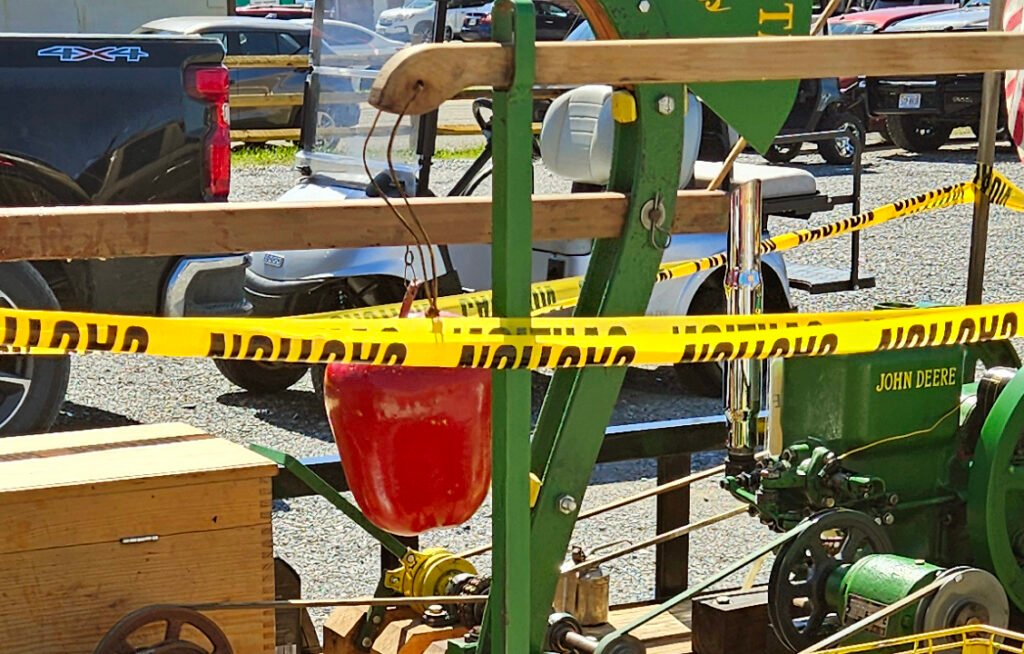
A large red object hanging near the kettle looks, appropriately enough, like an apple.
It isn’t.
“It looks like an apple,” Vicars said. “But it’s a gourd.”
He painted it himself.
An American flag flies above the machine.
Occasionally, another visitor needs attention.
As we talked beside the kettle, bees were clearly interested in what was cooking.
I asked Vicars whether he had to pick them out from time to time.
“They really like that,” he said.
It was difficult to blame them.
The sweet smell of hot apples hung around the trailer while the kettle continued its slow rotation.
The Answer Was Still Running
Beside us, the 90-year-old John Deere kept up its peculiar rhythm.
Fire.
Coast.
Another pop.
The stirrer moved slowly across the kettle. The kettle turned beneath it. Chains traveled around sprockets and shafts kept rotating, all at speeds Vicars had worked out in his shop years earlier.
Ten years before, he had spent five hours standing in the sun stirring apple butter by hand and thinking there had to be another way.
That afternoon in Chilhowie, his answer was still running.
Front Page











Leave a Reply