

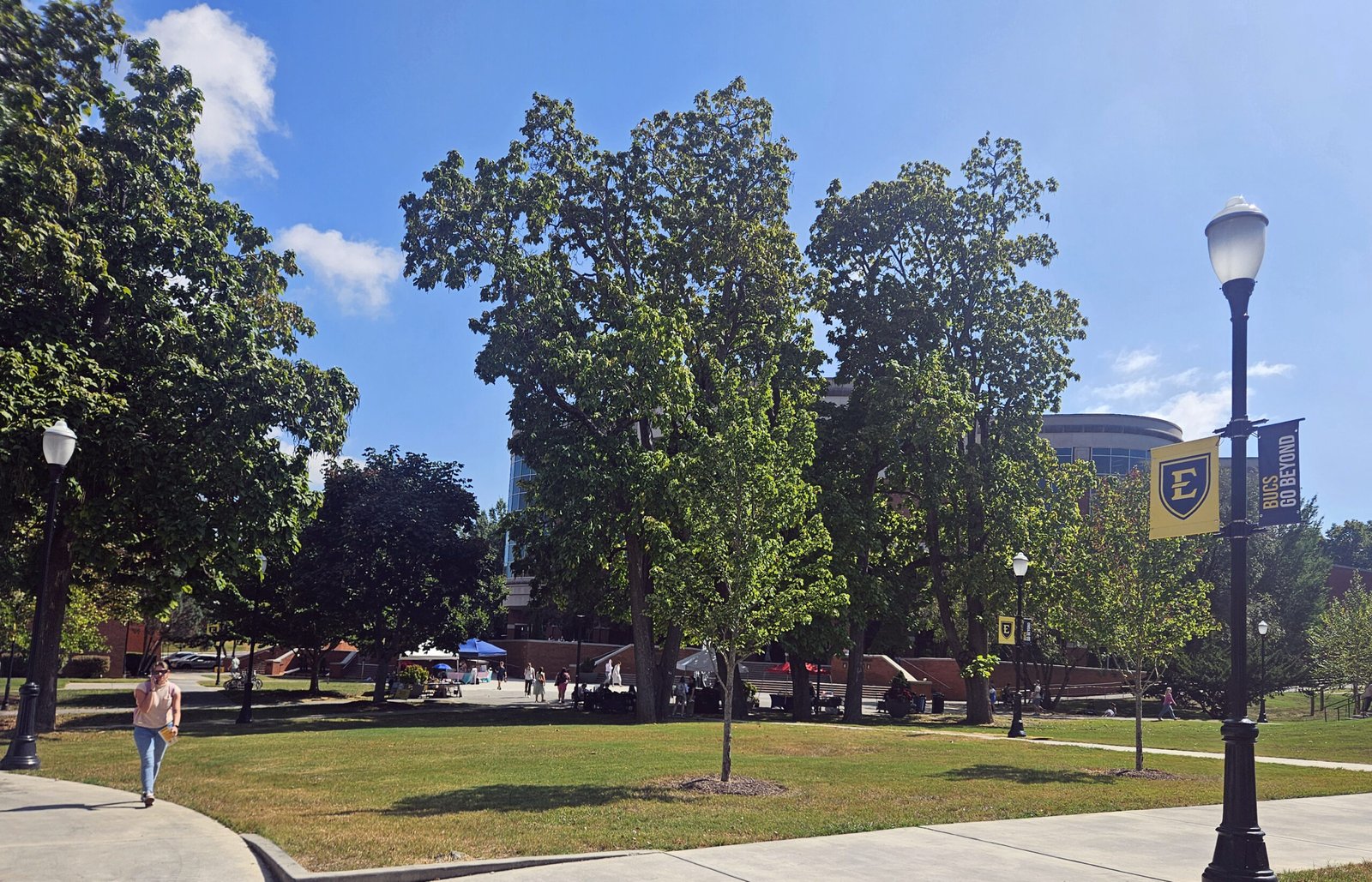
Thursday was not a particularly busy day at the ETSU Farmers Market.
Only a handful of vendors had set up on September 17 at Borchuck Plaza on the East Tennessee State University campus. It was not the kind of market day that showed off the full range of fresh produce, breads, plants, locally produced foods, and handmade goods shoppers can find there during the season.
But the slower pace made something else easier to see: the people behind the market.
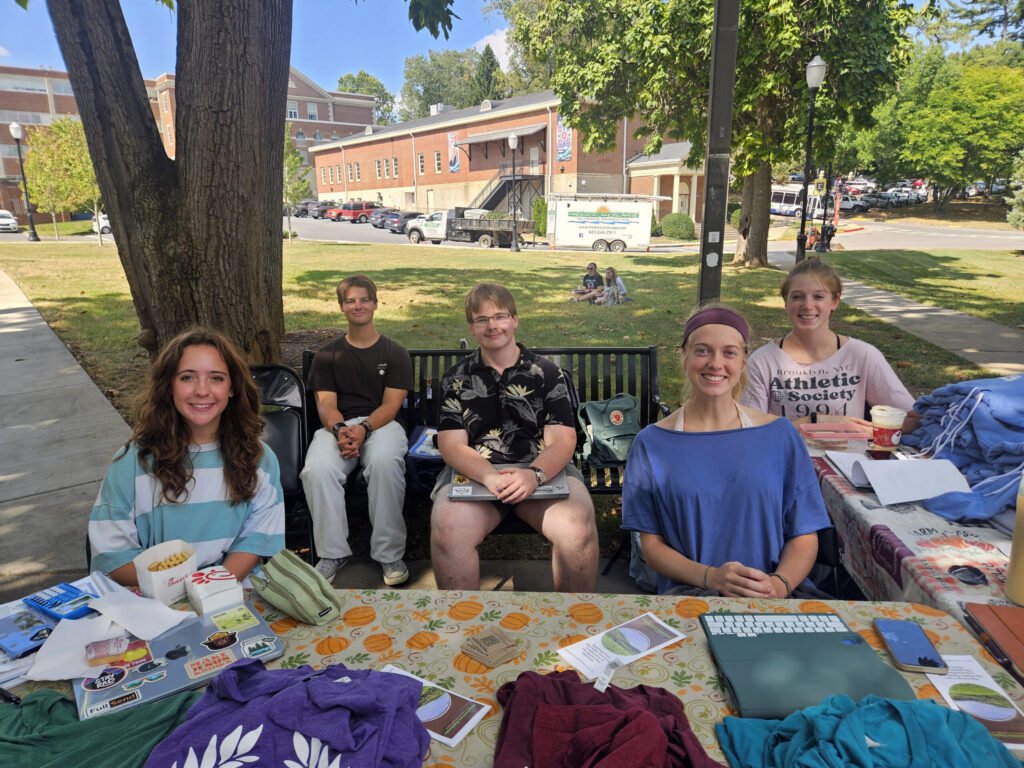
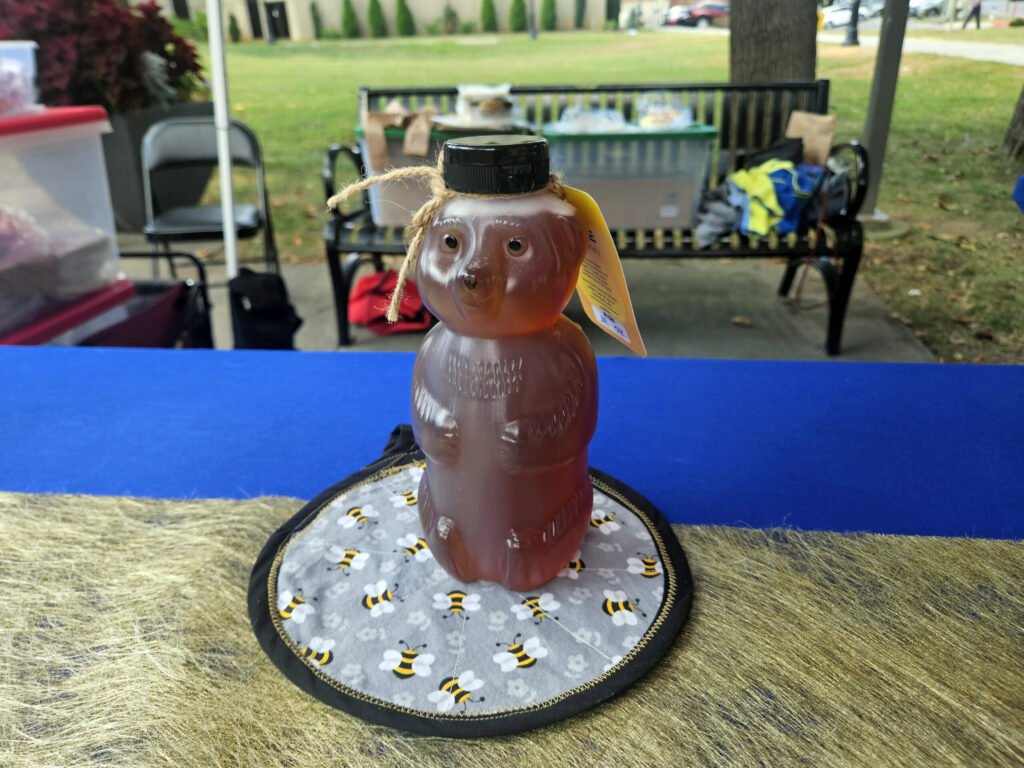
At one booth, a group of ETSU students talked about why they spend part of their week keeping the market running. Nearby, beekeeper Marla Merrick displayed honey and beeswax candles. Baker Walker Powell stood behind a table loaded with croissants and other pastries. Mulberry Mobile Nursery brought plants to the plaza, Early Bird’s Coffee Company served drinks, and Los Tamalitos offered lunch.
Together, their stories help explain why a farmers market has been part of the ETSU campus for more than a decade.
A Market Started by Students
The Farmers Market at ETSU dates to 2012, when graduate students in the College of Public Health established it as a student organization. The students wanted access to healthful, locally produced food on campus during the workweek.
That remains part of its purpose today.
The fall 2026 market runs Thursdays from 10 a.m. to 2 p.m. at Borchuck Plaza. The season began September 10 and will continue through October 29.
The market has also emphasized regional sourcing. Vendors and products come from within a 100-mile radius of campus, keeping the focus on producers and small businesses in the surrounding region.
Its offerings can vary considerably from week to week. Shoppers may find seasonal vegetables, breads and other baked goods, honey, preserves, flowers, plants, beeswax products, handmade goods, and ready-to-eat foods.
September 17 simply happened to be one of the quieter Thursdays.
Students Keep the Market Moving
Student involvement isn’t just part of the market’s history. Students continue to handle much of the work behind it.
Several members of the current market team serve through ETSU’s Academic Performance Scholarship program, which provides students with opportunities to work in campus positions while completing scholarship service requirements.
Their academic interests vary widely.
Josie Emmert, the market’s vice president, studies early childhood development. Jack Pray studies finance, while Cohen Bruce studies chemistry. Marley Whitaker and market President Ari Beziat are also part of the student team.
Their reasons for choosing the farmers market are just as varied.
Whitaker said farming was already familiar territory.
“I’ve kind of always worked on different farms around the local area,” she said. “So I just thought it’d be a fun place to be, just to hang out and talk to people and see local vendors.”
Bruce also grew up around agriculture.
“I also grew up on a farm and have done a lot of farm work all my life,” he said.
For Pray, the attraction was community.
“Community is, like, one of the most important things to me,” he said.
The market’s location helps make that possible. Borchuck Plaza sits in a heavily traveled section of campus between the D.P. Culp Student Center, Charles C. Sherrod Library, and Reece Museum.
“We get to see almost the entire student body every Thursday,” Pray said.
Beziat had a different reason for getting involved.
“I chose the Farmers Market because our mission statement is to connect the students on campus with the surrounding community of Johnson City,” he said. “And I was new to the area and wanted to get involved.”
He has now worked with the market for four years and gradually moved into the president’s role.
Emmert’s route was less deliberate, and perhaps more typical of college life.
She applied for several available campus positions connected with her scholarship and ended up at the farmers market. Now in her second year with the market, she joined the board and helps collect fees and handle other behind-the-scenes responsibilities.
Together, the students do much of the work shoppers never see.
Bees, Honey and Something to Mother
A few tables away, Marla Merrick had a much different story about how she found her way into agriculture.
Merrick owns Marla’s Bee Happy Apiary, a 40-acre operation between Johnson City and Jonesborough.
She was introduced to beekeeping during a transition in her family life.
“In 2013, all my kids had left home, so I still needed something to mother,” Merrick said. “So we got bees, and we got chickens.”
The two ventures did not prove equally cooperative.
“The bees have done really well, very, very well,” she said. “But the chickens were a constant struggle with the predators.”
Merrick now manages more than 20 hives spread among several apiaries. She avoids synthetic chemicals in her hives and frame storage and has built an operation centered on honey, bees, and beeswax products.
At ETSU, she showed what happens after the honey harvest.
Merrick processes beeswax from her hives and uses silicone molds to form candles in a variety of shapes. She pointed out that the yellow wax in her products comes from her own bees, although she also uses purchased white wax for some pieces.
She sells processed beeswax as well.
Merrick said beeswax historically had tremendous value beyond candle making.
“The colonists brought bees over to America mainly for the beeswax,” she said. “Of course, honey was useful, but beeswax had so many uses.”
At her booth, shoppers could ask Merrick how she made her products and hear the story directly from the person who produced them—an experience grocery aisles rarely offer.
Building Community Around Bread
Walker Powell’s path to the farmers market started with bread.
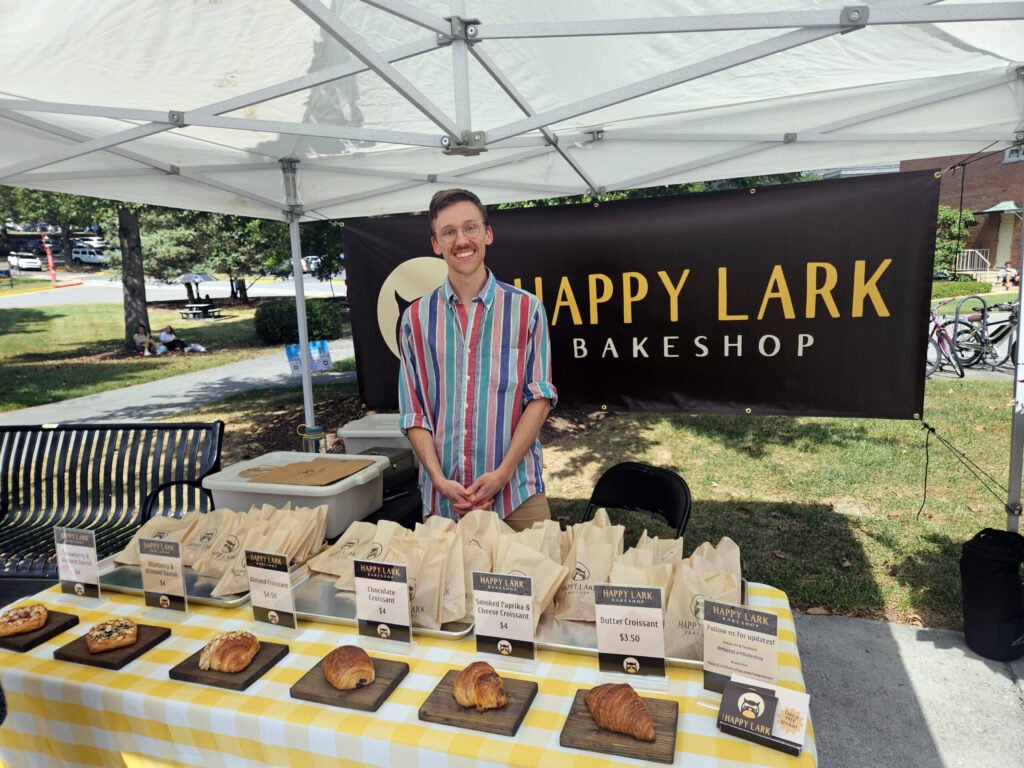
Powell operates Happy Lark Bakeshop with his wife, Olivia. The Johnson City microbakery specializes in sourdough breads and laminated pastries, though its rotating menu changes with each bake.
On September 17, however, croissants were the stars of the table.
The table held chocolate croissants, almond croissants, and several other varieties. Happy Lark also regularly produces sourdough and other baked goods, but this Thursday offered a particularly impressive selection of laminated pastries.
Powell said his interest in baking grew during his undergraduate years.
“I just started realizing I could connect a lot of different communities over bread and baked goods,” he said.
After graduating, he worked at Evergreen Butcher + Baker in Atlanta, where he credits his mentors with deepening his appreciation for the craft.
Powell is now a student at Emmanuel Christian Seminary at Milligan, adding another dimension to his fascination with bread.
He acknowledged plenty of symbolism.
“Yeah, there’s a lot of rich imagery there,” Powell said.
Happy Lark sells at different markets during the year and also offers periodic pickup orders from the couple’s home bakery.
And yes, the croissants deserve a mention.
During the interview, I sampled one while the recorder was still running.
Powell laughed.
“I hope you can hear crunching in the background,” he said.
You could.
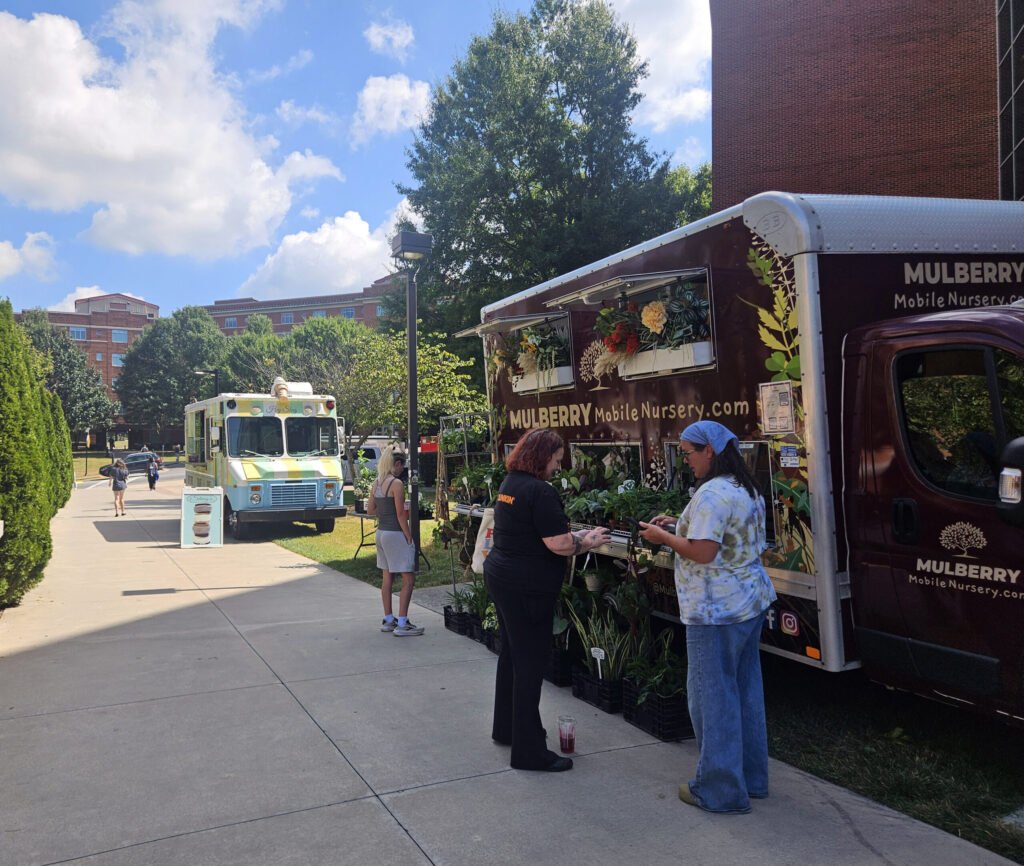
Plants, Coffee and Lunch on the Plaza at the ETSU Farmers Market
Also on hand September 17 were Mulberry Mobile Nursery and Early Bird’s Coffee Company.
Mulberry owner Jen Moody Larsen operates a mobile plant shop from a converted 12-foot box truck. Larsen has more than 25 years of experience in the Johnson City plant industry and has developed a particular interest in native plants and sustainable landscaping.
The mobile nursery carries locally grown native plants along with houseplants, seasonal plants, and gardening supplies. Instead of operating from a traditional storefront, Larsen takes the nursery directly to farmers markets, neighborhoods, and community events.
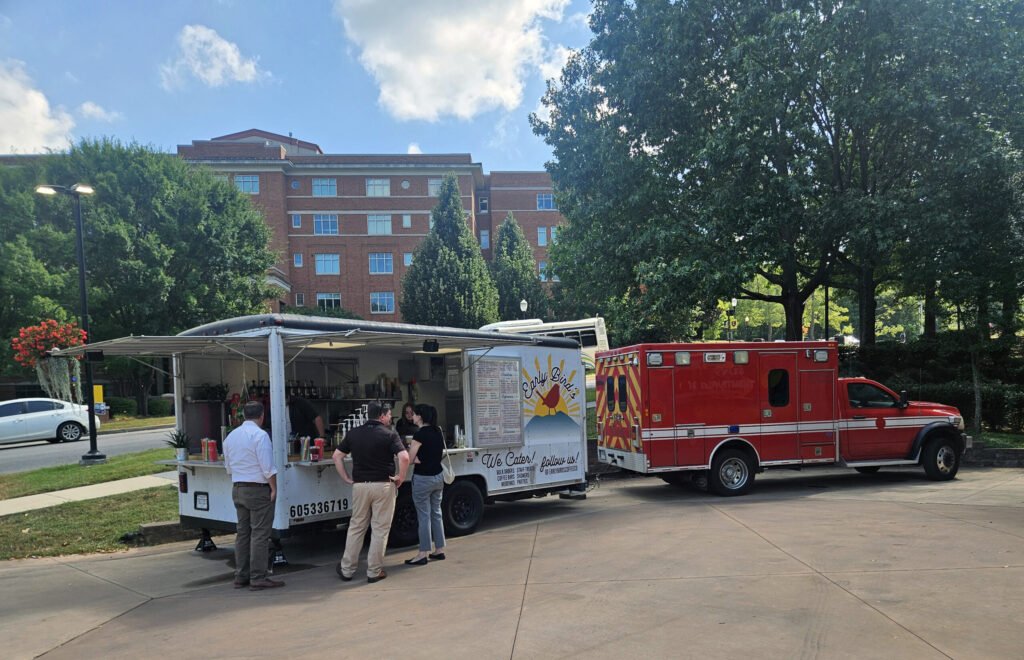
Early Bird’s Coffee Company brought another type of mobile business to Borchuck Plaza.
The Kingsport-based company also operates an espresso cart and coffee catering service throughout the Tri-Cities. Its menu includes hot and iced espresso drinks, teas, smoothies, and other beverages, making it a natural fit for a market surrounded by students moving between classes.
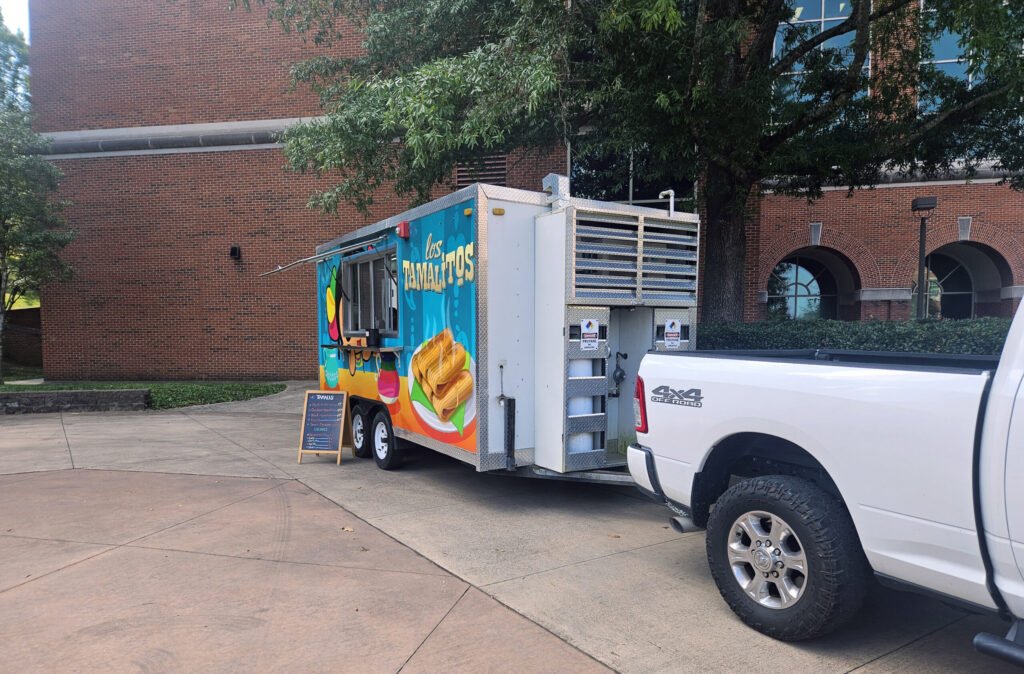
Ready-to-eat food also had a place at the market.
Los Tamalitos was among the food vendors during the September 17 visit. The pork tamale with red sauce reminded me that investigating a farmers market sometimes requires more than interviewing people.
Sometimes the reporting demands lunch.
It was worth it.
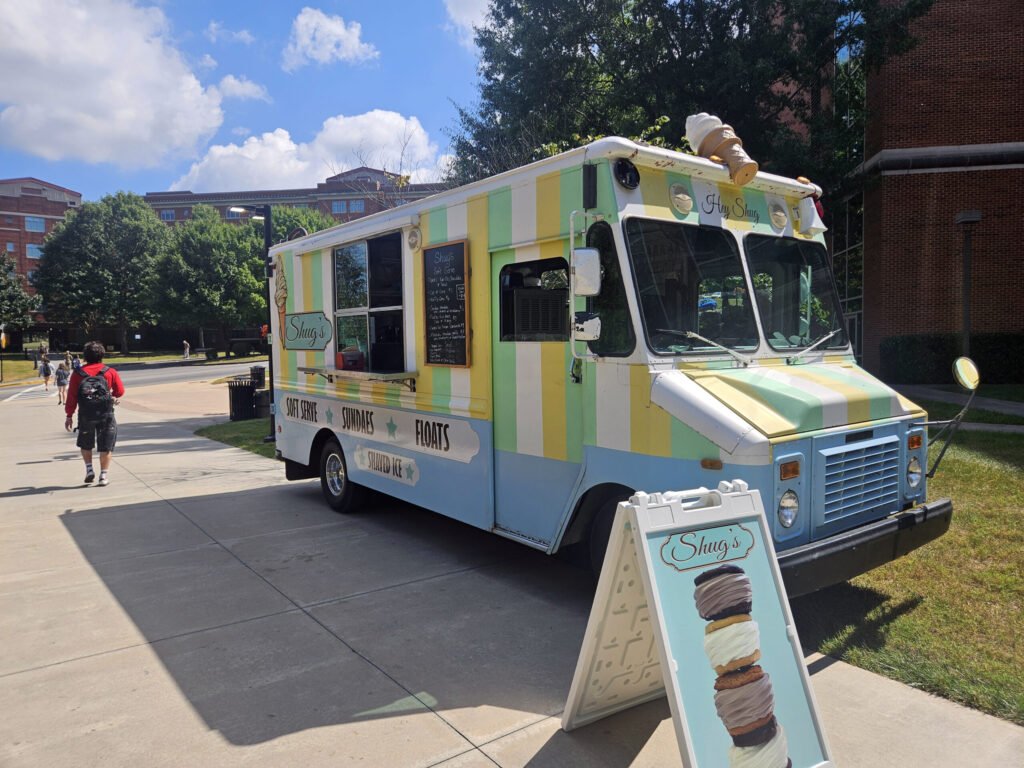
More Than One Kind of Local Connection
The mix on September 17 showed what the ETSU Farmers Market looks like, even on a slow day.
A beekeeper brought honey and candles made with wax from her hives. A baker brought croissants and a story about connecting people through food. A mobile nursery brought plants. A regional coffee company served drinks. A tamale vendor provided lunch.
On other Thursdays, fresh produce, sourdough, and other locally produced foods may broaden that selection.
What appears at the market can change with the season, vendor schedules, and the rhythms of small-scale agriculture and food production.
The people behind those products, however, are central to what the market is designed to connect with the ETSU campus.
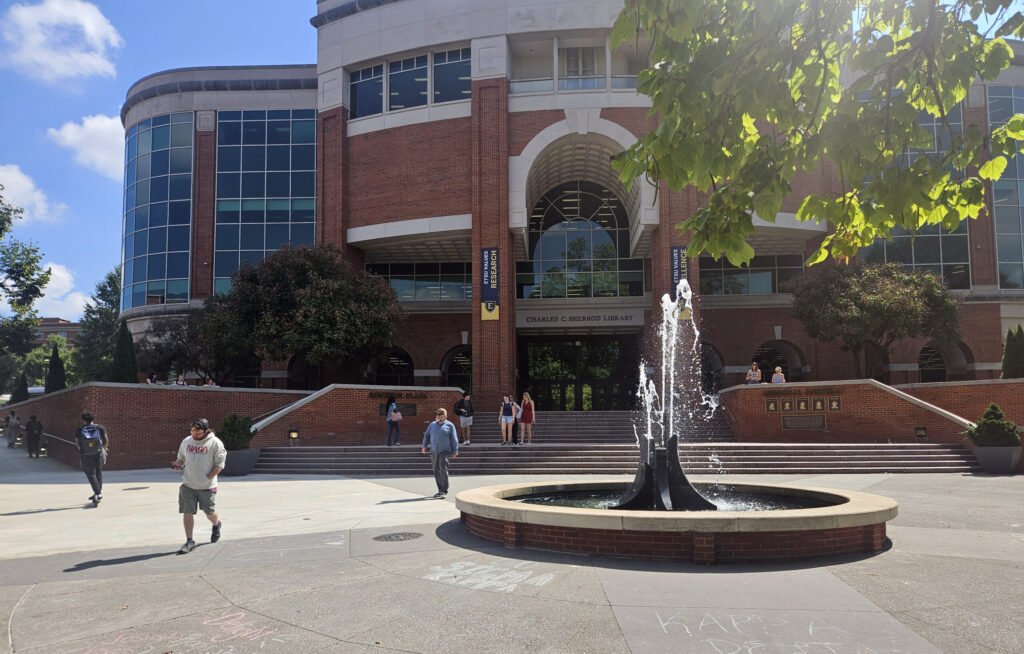
ETSU Farmers Market, Between Campus and Community
The ETSU Farmers Market does not try to compete with the region’s larger weekend markets. Its weekday schedule puts local producers where thousands of students, faculty, and staff already spend their day.
That was part of the idea when students created the market in 2012.
Fourteen years later, students are still doing much of the work.
Whitaker and Bruce bring personal connections to farming. Pray sees the market as a way to build community. Emmert handles the behind-the-scenes work that keeps it functioning. And Beziat, who arrived at ETSU looking for a way to become part of Johnson City, now leads an organization whose stated purpose is to create exactly that connection.
There may not have been much produce on the tables September 17, but the connection Beziat described was easy to find.
If You Go to the ETSU Farmers Market
What: ETSU Farmers Market
When: Thursdays, 10 a.m.-2 p.m.
Fall 2026 season: Sept. 10-October 29
Where: Borchuck Plaza, East Tennessee State University, between the D.P. Culp Student Center, Charles C. Sherrod Library, and Reece Museum
A note about parking: If you haven’t been on the ETSU campus before, give yourself a few extra minutes. Borchuck Plaza isn’t difficult to find once you’re close, but the campus roads and reserved parking lots can be confusing. Watch the signs and use visitor or metered parking.
Front Page










Leave a Reply