

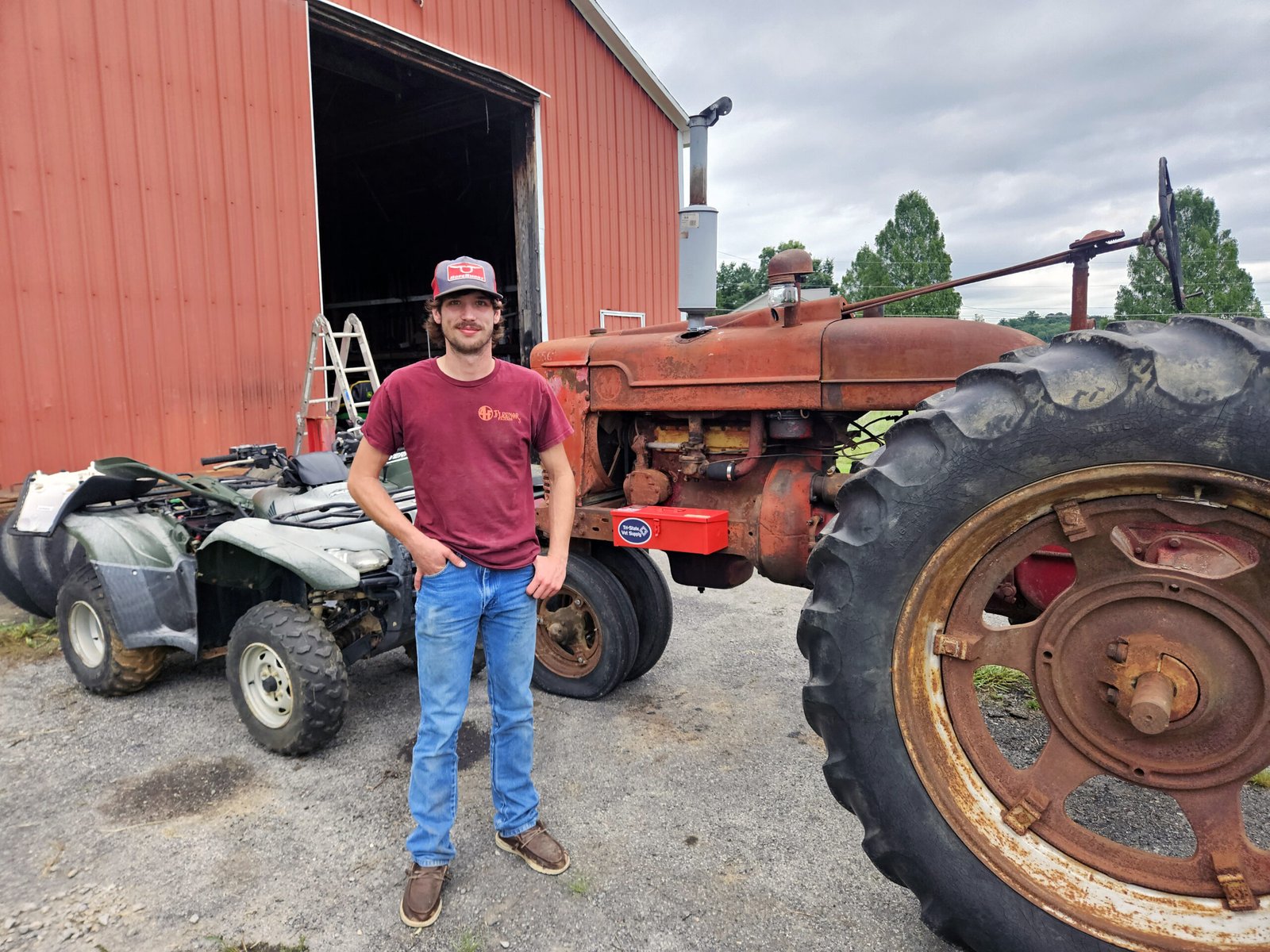
At 23, Jackson Fleenor is preserving more than antique tractors. Without setting out to do so, he is also keeping alive the stories of the people, farms, and families that came with them.
By the time we reached the barn door, we still did not know what Jackson Fleenor meant when he invited us to “come see my stuff.”
My wife and I had gone to a large yard sale on Friday, July 24, after seeing it advertised by our friend Sabrina Fleenor. Sabrina and her husband, Keith, own Washington County Meat Packing Company and Fleenor Farms. We thought we were making a social visit, supporting friends and perhaps looking through a few tables of things for sale.
Only after we arrived did we realize the yard sale was being held at the home of their son, Jackson, and his wife, Keelie.
We were preparing to leave when Jackson invited us toward the barn.
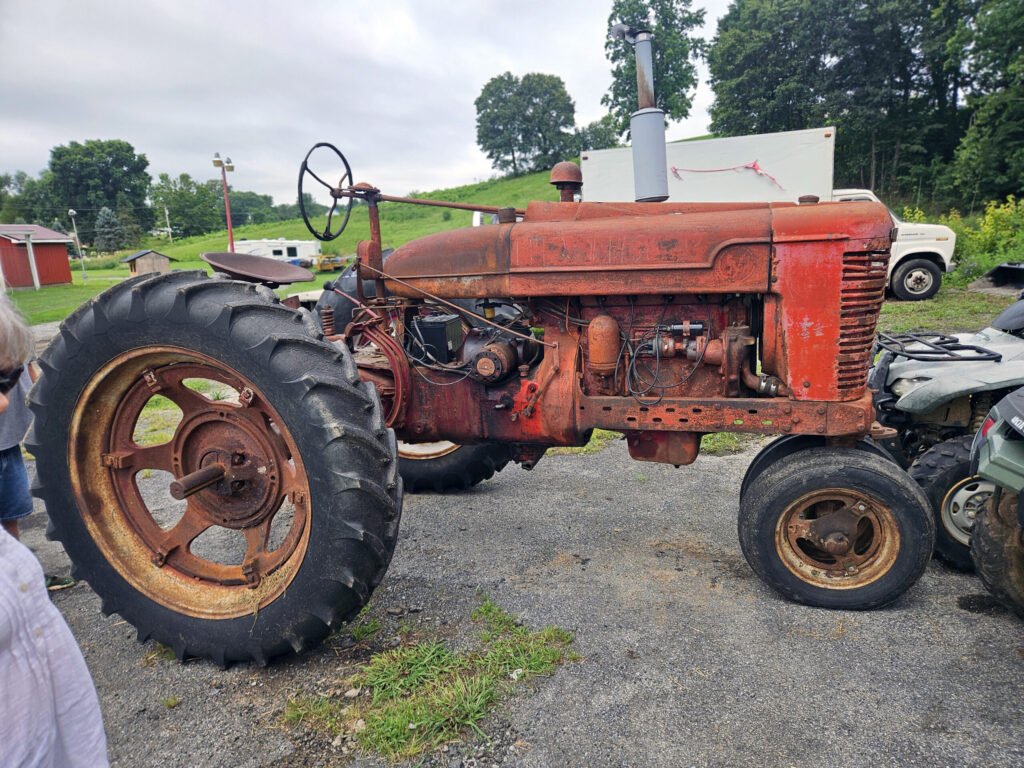
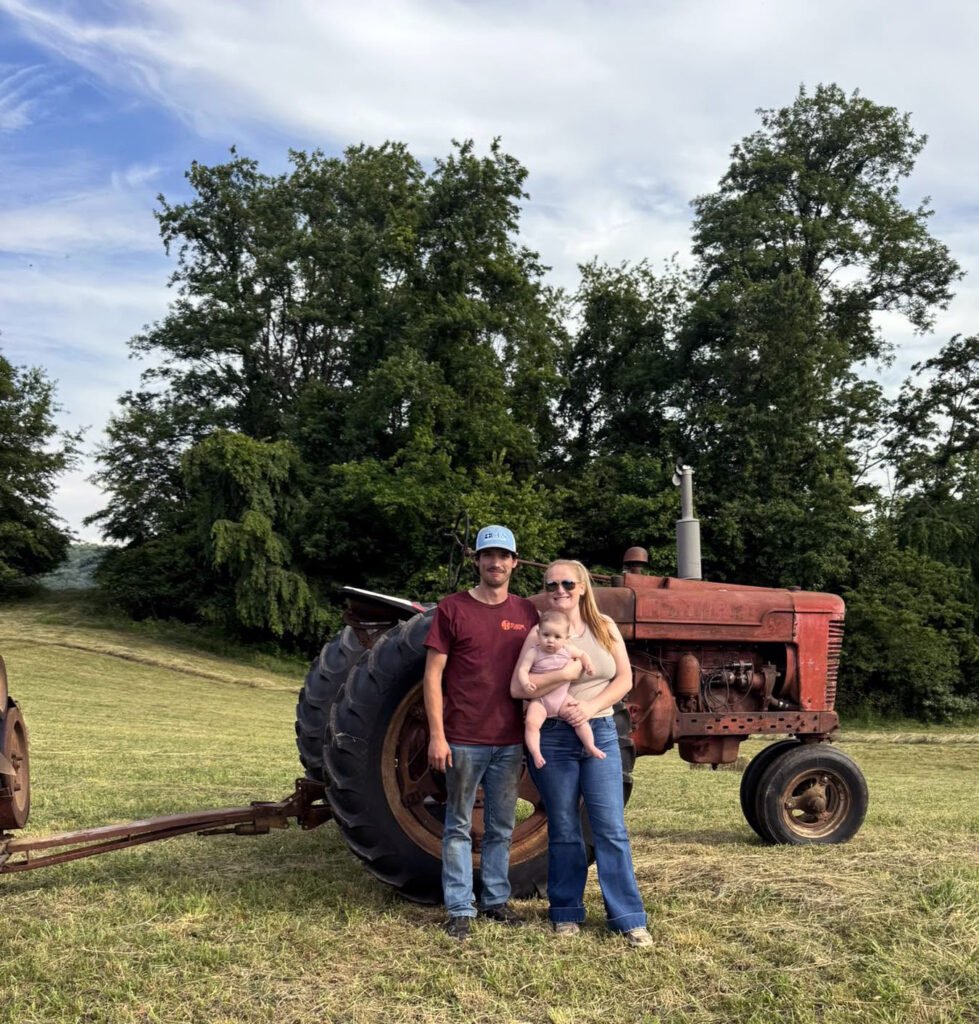
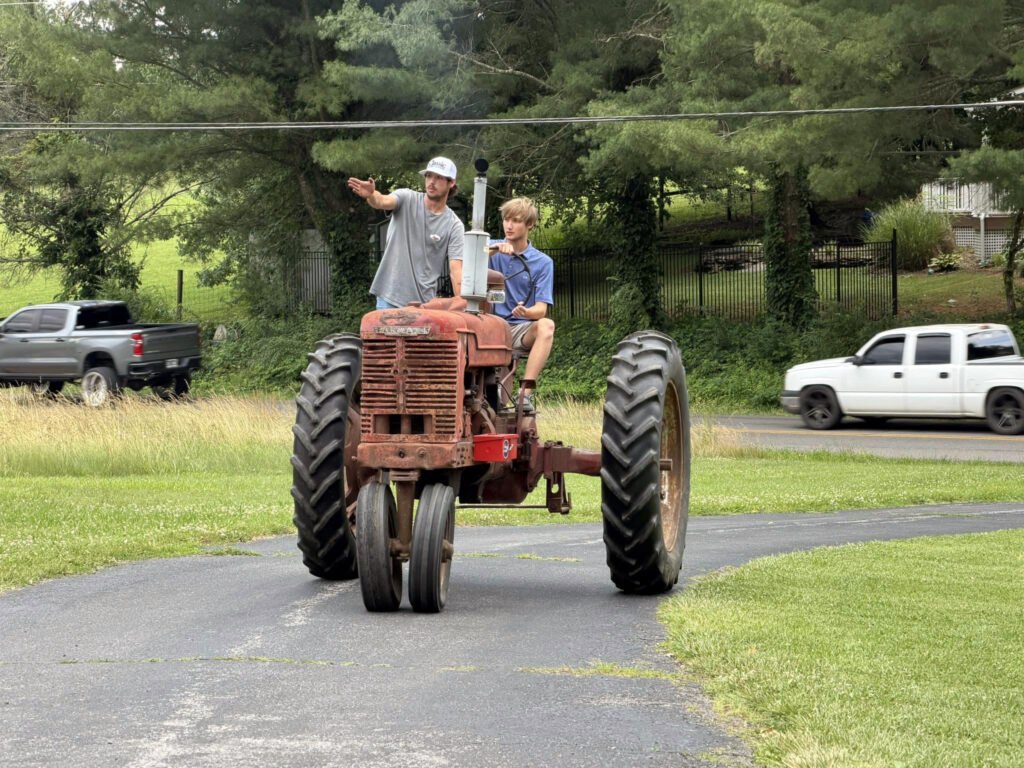
A Farmall M stood just outside, restored to running condition and large enough to attract attention on its own. Then we stepped inside.
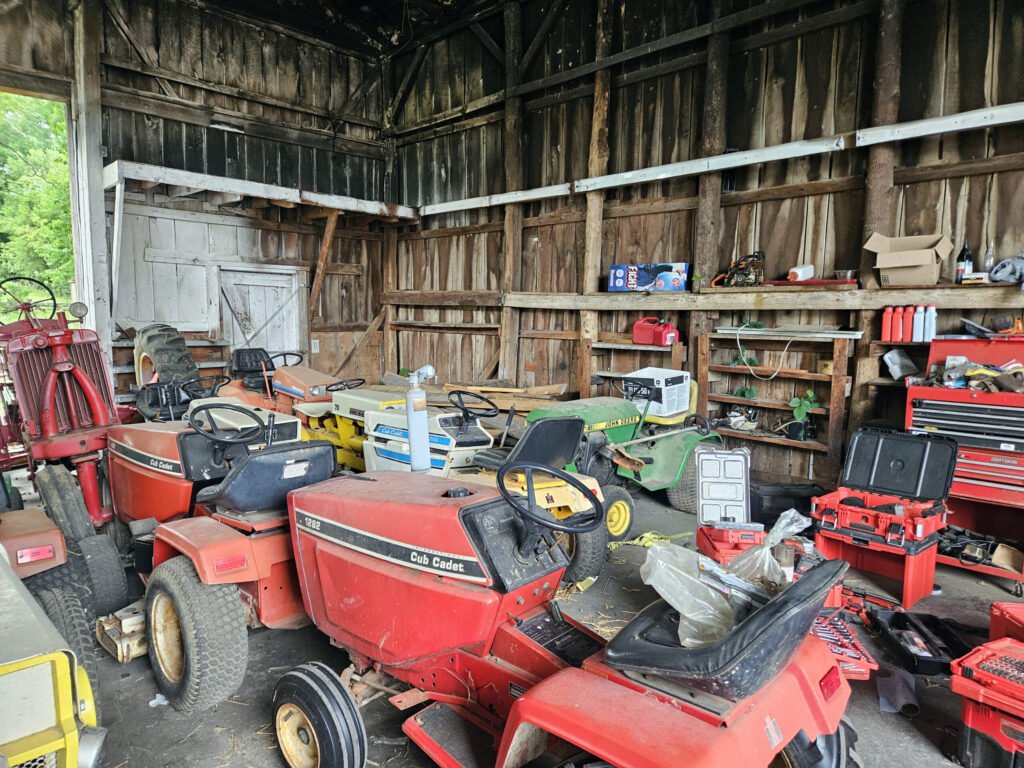
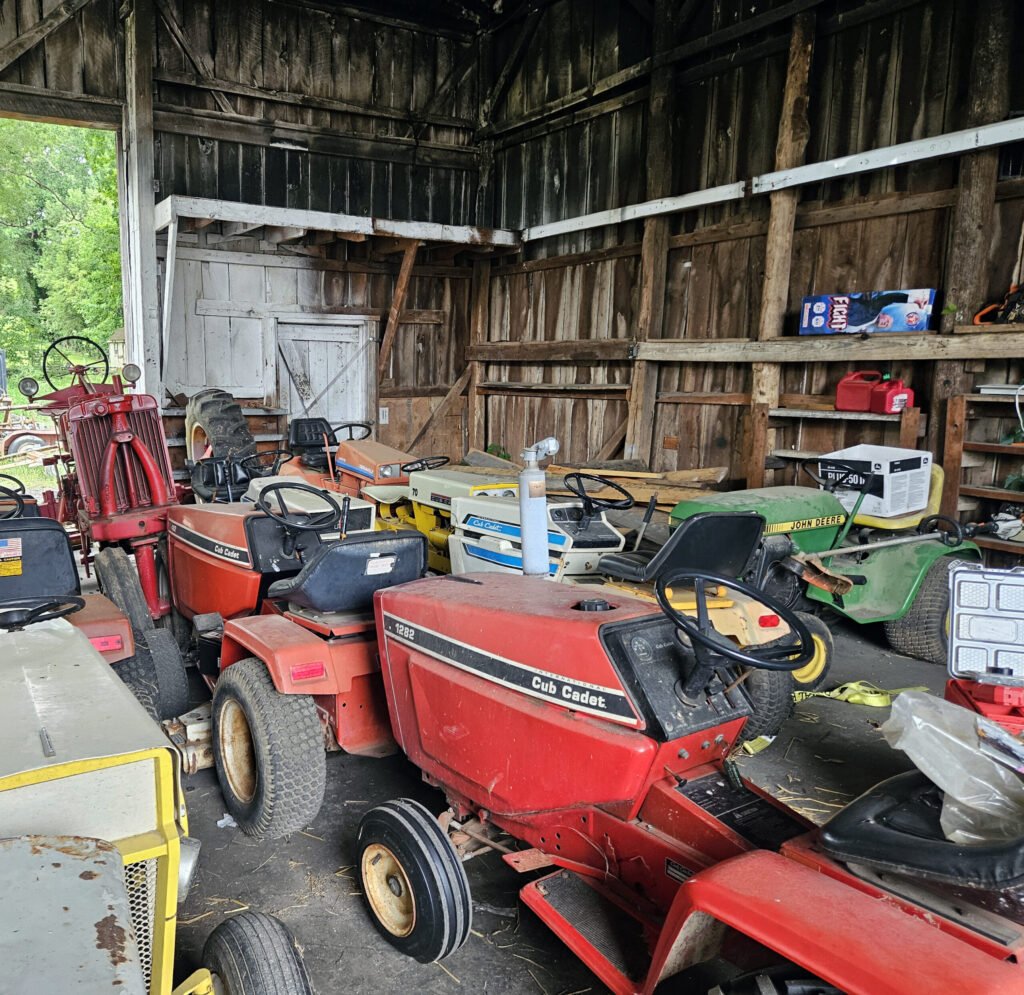
The barn was crowded with tractors.
There were Farmalls and garden tractors, machines in running condition and others waiting for parts or repairs. Some looked nearly complete. Others were missing tires, seats, or pieces of sheet metal. Attachments and mechanical components occupied the spaces between them.
The initial surprise was the collection itself.
Then Jackson started talking.
He moved from one tractor to another, identifying models, pointing out unusual features, and explaining how each machine worked. He spoke with the confidence of someone who had spent decades repairing old equipment.
Jackson is 23.
He began collecting and working on tractors when he was 16.
“I told the old man the other day,” Jackson said, “he asked me how many tractors I had, and I said, ‘Well, I’ve got the whole letter series, but they’re all—only one of them runs.’”
The older collector was not discouraged.
“You’ve got a good start,” he told Jackson. “I didn’t start buying these things till I was 40 years old.”
The tractors were interesting. Jackson’s understanding of them was remarkable.
But it was the stories that kept us in the barn.
“I Got Something You Need”
Jackson does not simply point to a tractor and name its model. He tells you where it came from, who owned it, and what happened before it reached his barn.
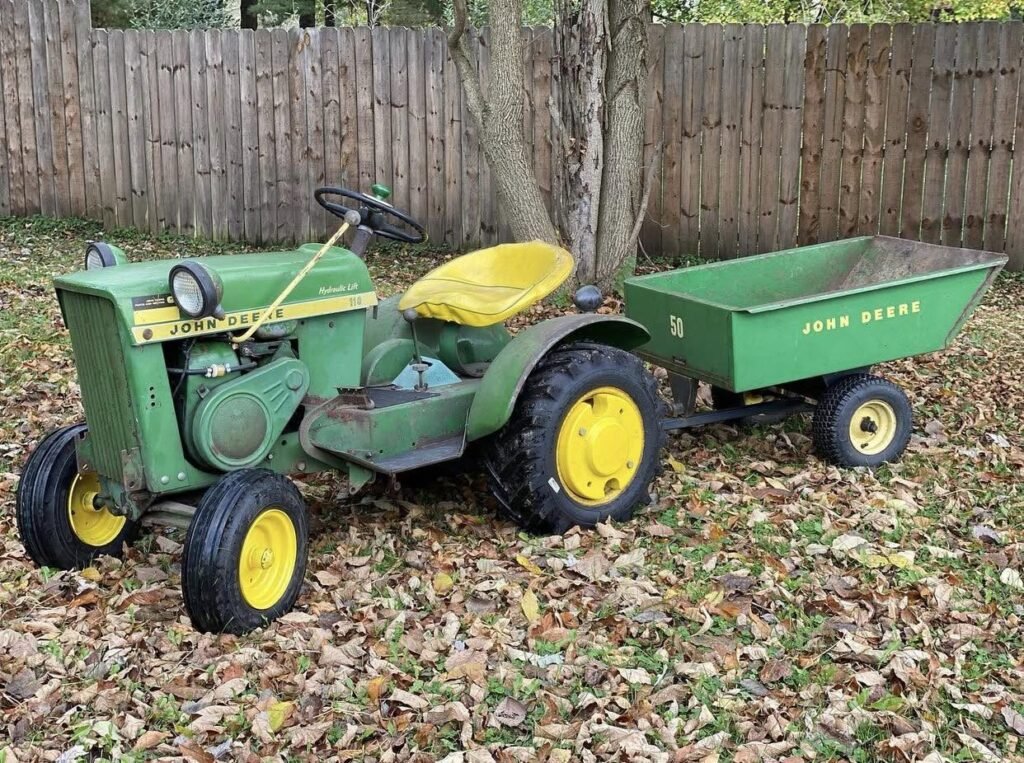
He stopped beside an early John Deere 110 garden tractor with rounded rear fenders.
“This is a cool story,” he said.
An older man in Mendota who had known Jackson’s Papaw stopped him at the stockyard one day.
“I got something you need,” the man told him.
“What is it?” Jackson asked.
“It’s a 110.”
“Round fender, square fender?”
“Round fender.”
“I’ll be there tomorrow.”
The owner wanted about $750. Jackson wanted the tractor but hoped to buy it for $500, so he asked his Papaw to go with him.
The offer was refused.
Jackson and his Papaw talked with the owner, but $500 still would not buy it. Eventually, his Papaw told Jackson they were leaving. They climbed back into the truck and shut the doors.
Then the seller began waving.
Jackson’s Papaw opened the truck door again.
“He wants it,” he told the man. “You ought to sell it to him for $500. We ain’t going to do nothing with it. We ain’t trying to make money off of it. He just wants it to have.”
The owner gave in.
“Well, I guess I can do it,” he said.
Jackson got his round-fender 110.
He tells the story in motion, acting out each side of the conversation. Even though the tractor is sitting in front of you—and therefore you already know the negotiation ended successfully—he builds the account around the refusals, the retreat to the truck, and the last-minute change of heart.
He does not say, “I bought this tractor from a man in Mendota.”
He takes you with him to buy it.
“I Aggravated That Dude”
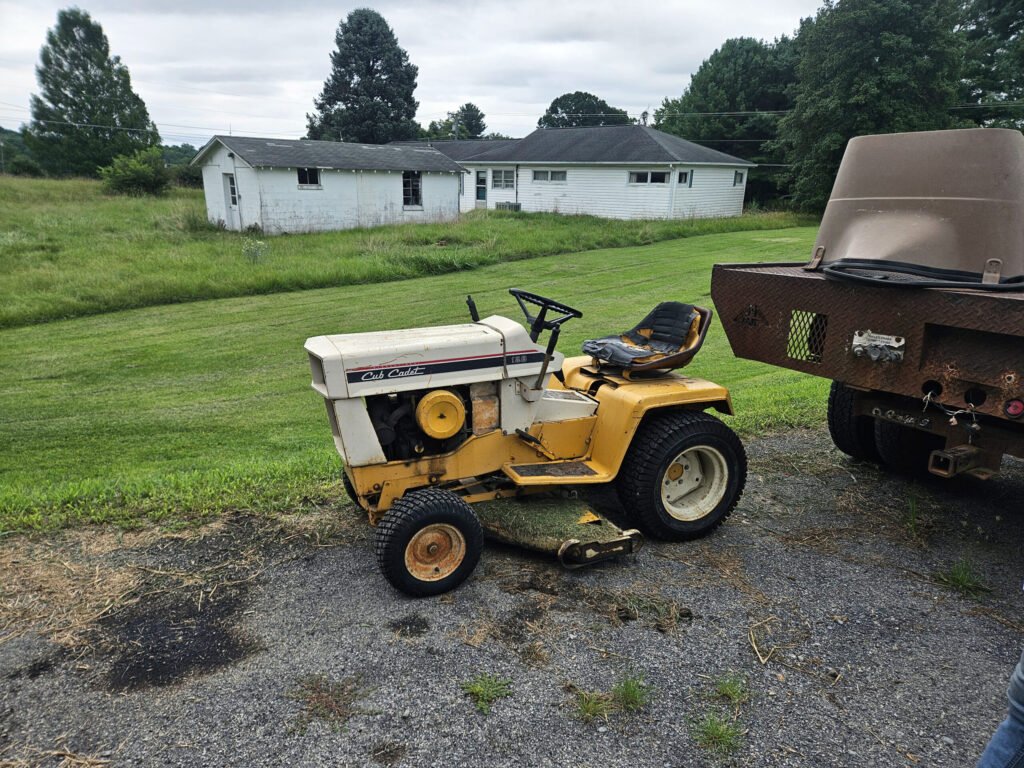
Another Cub had spent its entire working life on the same farm. Jackson had wanted it for a long time, but the owner would not sell.
“I aggravated that dude, and he would not sell it,” Jackson said.
One day, the man approached him.
“I’m going to sell that tractor,” he said. “What’ll you give me for it?”
Jackson offered $600.
The man was preparing to leave town. He told Jackson not to worry about the money immediately but to take the tractor home that day.
Jackson did.
The owner was gone longer than expected, and some time passed before Jackson saw him again. When he finally caught up with him, Jackson did not have the money in his pocket. He asked his mother for cash from a drawer and went back to settle the debt.
He held out the money.
“What’s that for?” the man asked.
“That tractor.”
“Well, I tell you what,” the owner said. “You put that money back in your pocket. You can just have it.”
The tractor had remained on one farm for its entire life. When it finally left, it went to a young man who had been persistent enough to keep asking for it and interested enough to care what happened to it.
That pattern repeats throughout Jackson’s collection.
The tractors come with previous owners, family connections, negotiations and memories. Some were bought in Kentucky. Some came from neighbors. One was connected to a farm where his Papaw once plowed tobacco. Another arrived with records documenting nearly every service and repair performed on it.
Jackson said he once had about 40 tractors. He eventually sold the ones that did not hold much meaning for him.
“Everything in here has a story or something that goes with it,” he said.
That may be the most important thing to understand about the barn.
It is not filled merely with tractors Jackson managed to acquire.
It is filled with the ones whose stories he decided to keep.
Two Tractors Become One
The stories do not replace Jackson’s mechanical knowledge. They run alongside it.
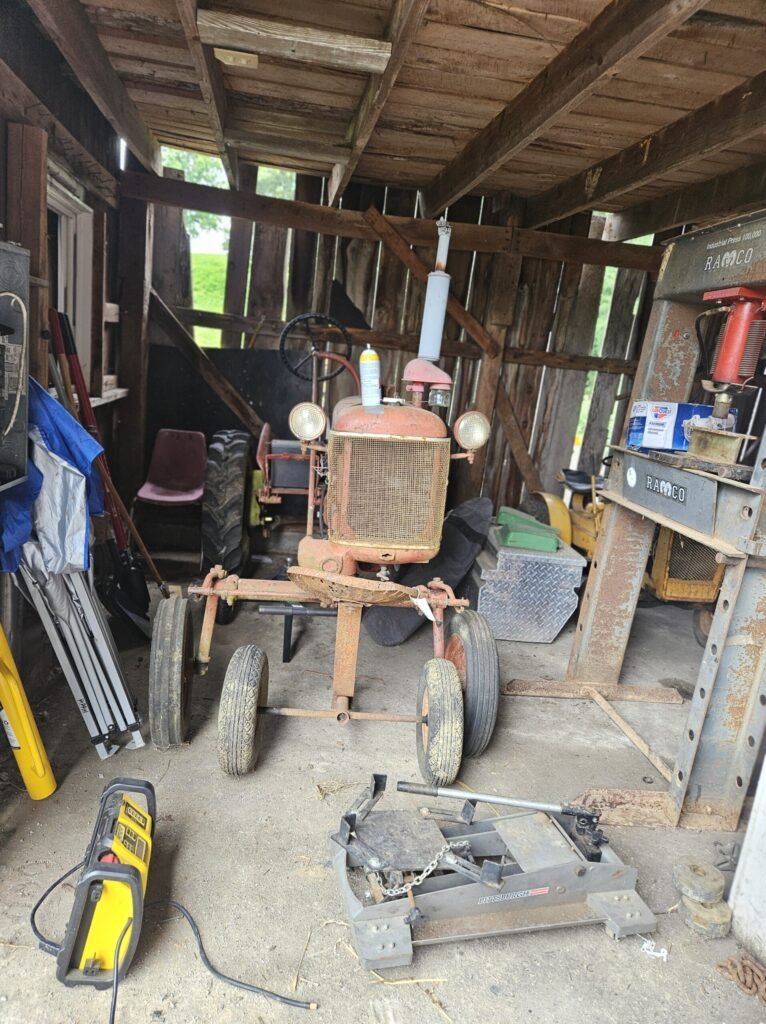
He pointed to one tractor without rear tires and explained what had happened.
Farmers once added calcium chloride solution to tractor tires for weight and traction. When the inner tubes leaked, the corrosive solution could reach the steel rims and destroy them.
“The calcium, it would rust the rims out,” Jackson said. “So, it rusted the rims out.”
Another tractor he found had new tires but little else worth saving.
“I told my dad, I said, ‘Well, let’s buy this one too, and we’ll just take two and make one.'”
That sentence says as much about Jackson as it does about the tractors.
A damaged machine is not necessarily finished. It may be waiting for the right part, even if that part is still attached to another damaged machine.
Nearby, Jackson showed us a tractor capable of running on gasoline, kerosene, or distillate, a lower-grade petroleum fuel once used in farm equipment.
He pointed to a set of shutters at the front.
“When you run it on the distillate, you close them shutters up to keep the engine temperature up,” he explained. “The distillate won’t run unless the motor’s real hot.”
Without pausing, he moved into fuel octane, vaporization, and engine temperature. The explanation was detailed, but it did not sound like a prepared lecture. It was simply what Jackson saw when he looked at the shutters.
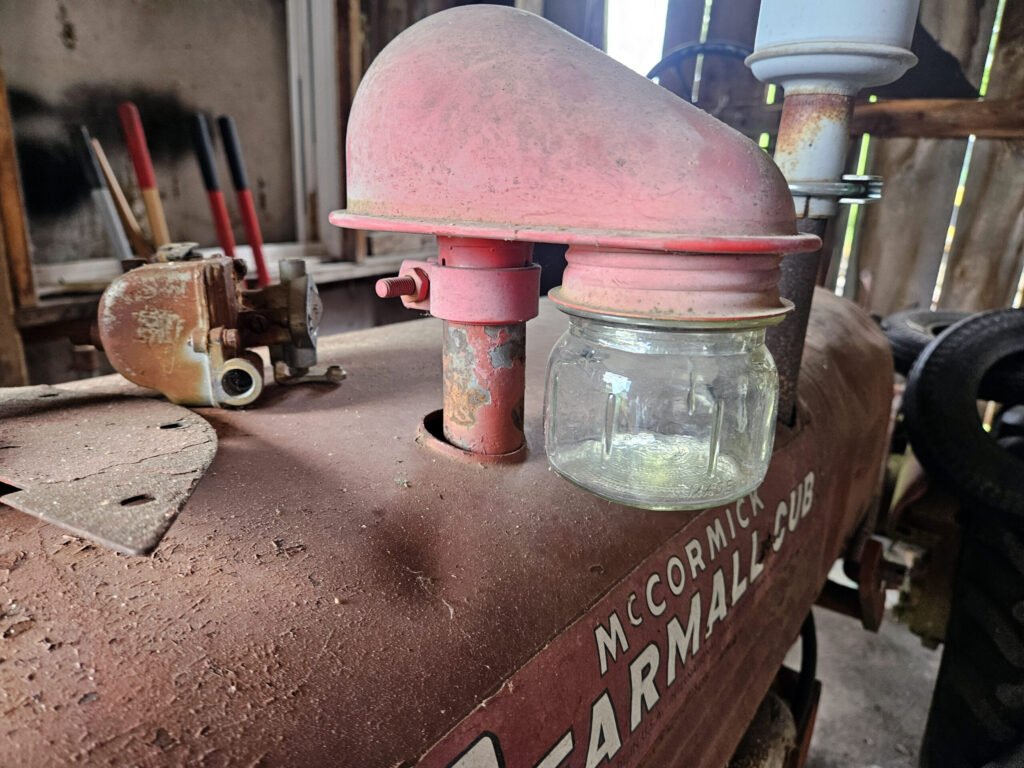
At another tractor, he explained an oil-bath air cleaner and a Donaldson pre-cleaner. The intake system trapped dust before it could enter the engine. The clear jar at the top also offered tractor collectors an opportunity for a joke.
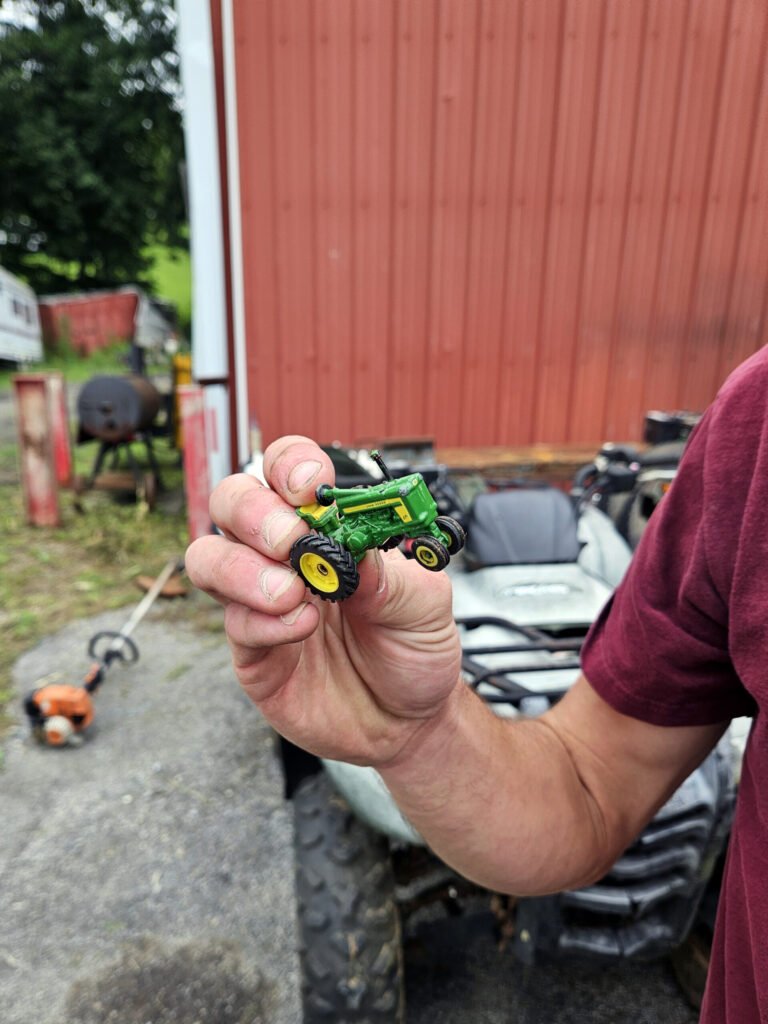
At shows, an International Harvester owner might put a tiny John Deere, Case, Allis-Chalmers or Massey Ferguson tractor in the jar.
“If you’re an IH guy, you put your competitors,” Jackson said.
His Farmall M pulls enough air through the system to send the toy tractor circling around inside the jar while the engine runs.
Mechanical history, practical engineering and good-natured brand rivalry all fit into the same explanation.
A Repair Recorded in Polaroids
One Farmall Cub came to Jackson through relatives near the Virginia-Maryland border.
The tractor included a scraper blade, an original plow and a Mott flail mower. It also came with an unusually complete written history.
The previous owner had recorded service work in the manual. When he disassembled the hydraulic pump sometime in the 1980s, he took Polaroid photographs showing how it went back together and stored the pictures with the records.
“He had wrote down anything he’d ever done to it, and the year and the date and everything,” Jackson said.
There was a problem, however. Coolant was getting into the oil.
The cause might have been as simple as a failed head gasket. It could also have been a cracked head or engine block.
Jackson bought it and took it directly to the garage.
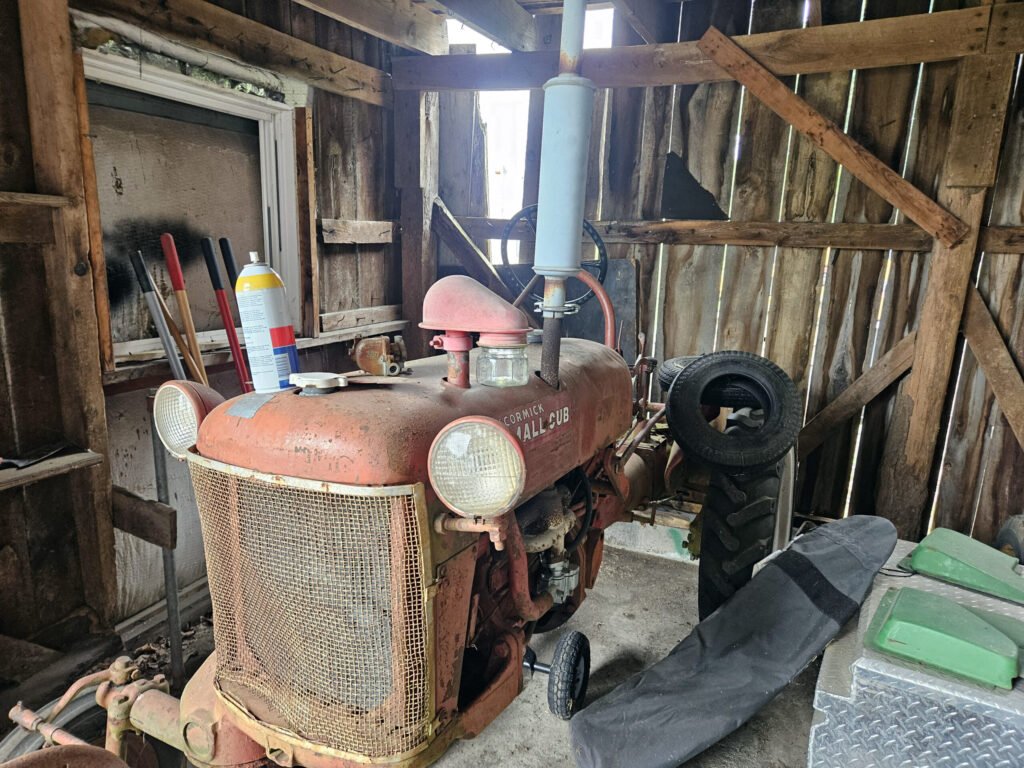
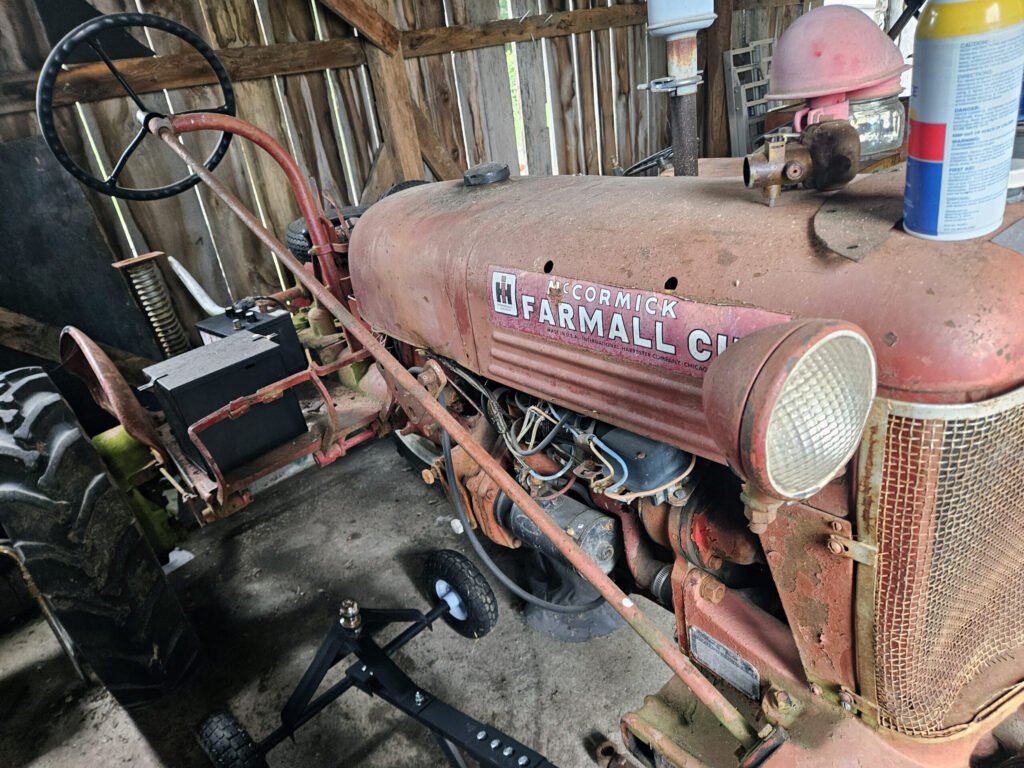
He removed the head and discovered that the gasket was the problem. Since he already had much of the engine apart, he ordered a full gasket kit and replaced several other gaskets and seals.
He tells what followed as a rapid series of actions.
The tractor came apart on Saturday. He ordered parts Sunday. On Monday, he cleaned the engine and flushed out the water. The parts arrived Wednesday. He installed the head gasket, reassembled the engine, and rebuilt the carburetor.
It fired.
There is no dramatic pause in Jackson’s account. No long celebration.
The tractor had a problem. He found it. He fixed it.
Then he moved on to what it needed next.
“Figure It Out”
Jackson learned much of his early restoration work from an agricultural teacher who was also an International Harvester enthusiast.
The teacher brought tractors into the school shop and showed his students what needed to be done. He did not do the work for them.
“He wasn’t one of these that would hold your hand,” Jackson said. “It was like, ‘This is what you do. I’m going to show you how to do it. Figure it out.'”
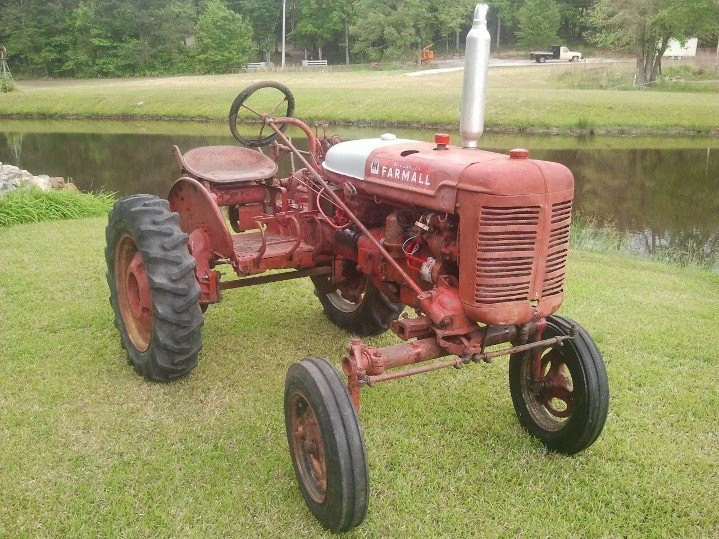
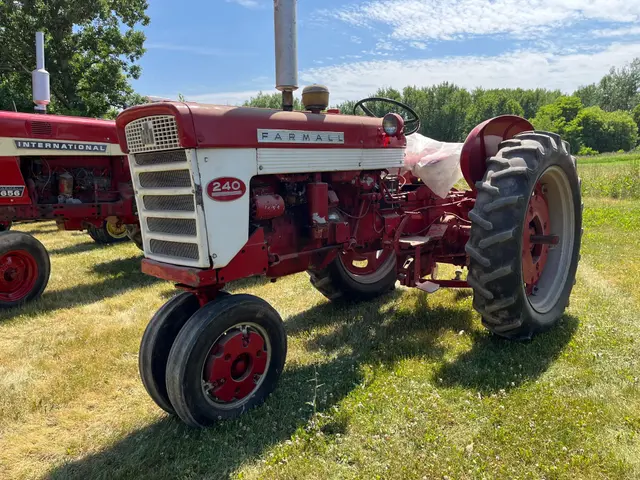
The students rewired tractors, rebuilt engines and restored machines that included a Farmall 240, Super A and 140.
The lessons were practical. A student could not learn to rebuild an engine by watching someone else hold the wrench.
Jackson carried that approach into his own barn. He learns by examining, disassembling, repairing, and sometimes combining what remains of two machines.
His collection is not a row of polished objects that no one is allowed to touch. It is a working education in the machinery that powered farms before he was born.
“Yeah, a Little Bit”
The collection would be an ambitious undertaking even if it were Jackson’s only occupation.
It is not.
Jackson works at Washington County Meat Packing Company, where he cuts meat, makes sausage, cleans and packages products. He raises cattle that supply the family business.
He and Keelie are also new parents. Their daughter, LeDoux, was born in fall 2025 and was named for Chris LeDoux, the country singer and rodeo cowboy who won the 1976 world championship in bareback riding.
The name is appropriate.
Jackson competes in team roping, ranch rodeos and bull riding. When asked about rodeo, he initially answered with characteristic understatement.
“Yeah, a little bit.”
A little bit includes traveling to events in places such as Castlewood, St. Paul and Morristown.
This year, he also bought a rake, tedder and square baler and began putting up hay. His family had previously purchased its hay, but Jackson already liked running equipment and decided to begin producing it himself.
“So, I do that too,” he said. “That money feeds this and all my other stuff.”
He indicated the tractors.
Restoration is mostly winter work.
“In the summertime, it’s hay baling, and team roping, and ranch rodeos, and bull riding and stuff like that,” he said.
He listed those activities with the same ease he used to describe rebuilding an engine.
The Shape of a Story
The Appalachian Mountains have a well-documented storytelling tradition. The American Folklife Center at the Library of Congress preserves collections of tales, family stories, legends and oral histories from communities throughout the region. A short drive from Southwest Virginia, Jonesborough, Tennessee, has hosted the National Storytelling Festival since 1973.
Jackson is not standing beneath a festival tent telling a Jack tale. He is not presenting himself as a folklorist or professional storyteller.
He is standing in his barn talking about tractors.
Still, the familiar tools of oral storytelling are there.
He begins with an invitation: “This is a cool story.”
Jackson introduces characters through dialogue. He withholds the outcome even when the tractor sitting beside him has already revealed it. He notices the detail that makes a person memorable and the line of conversation that gives a story its turn.
His sentences are connected with “well,” “so,” “and” and “then.” One thought catches the next before the previous sentence has completely ended. The effect is not polished or rehearsed. It is momentum.
The mechanical details do not interrupt the stories. They are part of them.
A leaking head gasket leads to a box of Polaroids taken decades earlier. A rusted wheel leads to a lesson about calcium chloride. A round fender leads to a negotiation in Mendota. A tractor that once plowed tobacco leads back to his Papaw.
Jackson also uses the language of the place where he grew up.
He does not repeatedly pester a man to sell a tractor. He “aggravates” him.
A useful part is “of some account.”
His grandparents are Papaw and Mamaw. A tractor may be identified by its model number one moment and become “this one here” the next.
Those expressions give his stories flavor, but dialect alone does not make someone a storyteller.
Jackson understands where the story lives.
It does not reside only in the year, model, or serial number. It lies in who owned the machine, where it worked, why someone refused to sell it, and what finally changed his mind.
What Remains in the Barn
Jackson Fleenor is unusual.
Few people his age can explain an early diesel starting system, rebuild an antique tractor engine, cut meat, make sausage, raise cattle, bale hay, and compete in rodeos while beginning life as a husband and father.
But he is not merely an exception to the culture around him.
He is also a product of it.
His knowledge came through family members, teachers, farmers, mechanics, and people willing to let a determined teenager stand in a shop and figure things out. His tractors came through trades, sales, persistence, friendships, and the trust of older owners who believed he would take care of them.
The stories came with the machines.
Jackson is rightfully proud of what he knows and what he has restored. What he may not recognize is the other thing he does each time he walks someone through the barn.
He keeps the former owners present.
He keeps the old farms on the map.
He keeps the negotiations, repairs, jokes and family memories in circulation.
He once owned about 40 tractors. Then he sold the ones that did not mean much to him.
What remains is not necessarily the most valuable collection he could have assembled.
It is the collection with the best stories.
Jackson stepped toward another tractor.
“This is a cool story, too,” he said.















Leave a Reply