

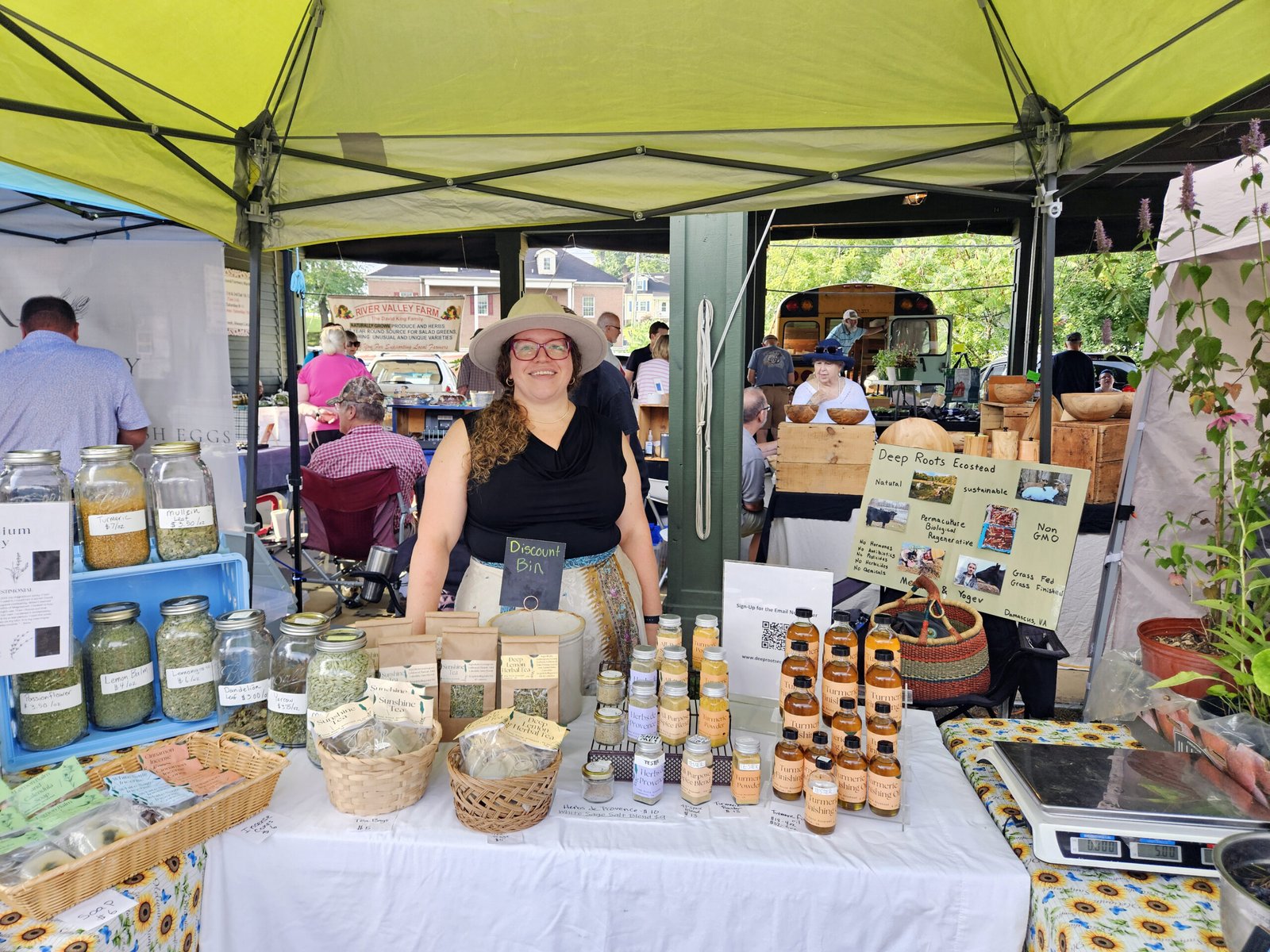
Most of the herbs grown at Deep Roots Ecostead occupy less than an acre of the nearly 10-acre farm. The rest of the property serves largely as pasture for goats that help manage vegetation and contribute manure to the farm’s soil-building efforts.
From the cultivated ground, Megan Boissiere and Yogev Von Kundra produce turmeric, medicinal and culinary herbs, seasonal vegetables, and many of the ingredients used in the farm’s small-batch products.
The arrangement reflects the idea behind an ecostead: a homestead organized around responsible land management, greater self-sufficiency, and a closer relationship among food production, household needs, and community life.
At Deep Roots, those elements come together through herbs, livestock, handcrafted products, educational programs, and direct sales at regional farmers markets.
A Change in Direction
Boissiere, a Certified Herbalist and educator, began teaching herself about herbs roughly a decade ago.
At the time, she was building a career in corporate finance. After five years in the field, she decided that independent study would not take her as far as she wanted to go.
“I came to a point where I realized that, in order to really move further, I needed to go to school,” Boissiere said.
She left finance and enrolled at the Colorado School of Clinical Herbalism, where she earned an Herbalism Certification and specialized in flower essence therapy.
“I changed the whole trajectory of my life,” she said.
Boissiere has been creating herbal products since 2017. Her education prepared her to work with herbs, but learning to grow them successfully required field experience.
She credits Von Kundra’s mother, who had already spent more than a decade growing herbs, with helping her understand the cultivation side of the work.
The rest has come through observation, experimentation, and learning which plants are best suited to the farm.
“Just through practice and seeing what wants to grow for us on our land,” Boissiere said. “I’m trying a lot, putting a lot out there and just seeing what stays, what I’d like to grow and what I’d like to harvest.”
Von Kundra manages much of the farming at Deep Roots, tending the land and applying regenerative farming principles across its growing areas, pasture, and livestock.
From Seed to Bottle
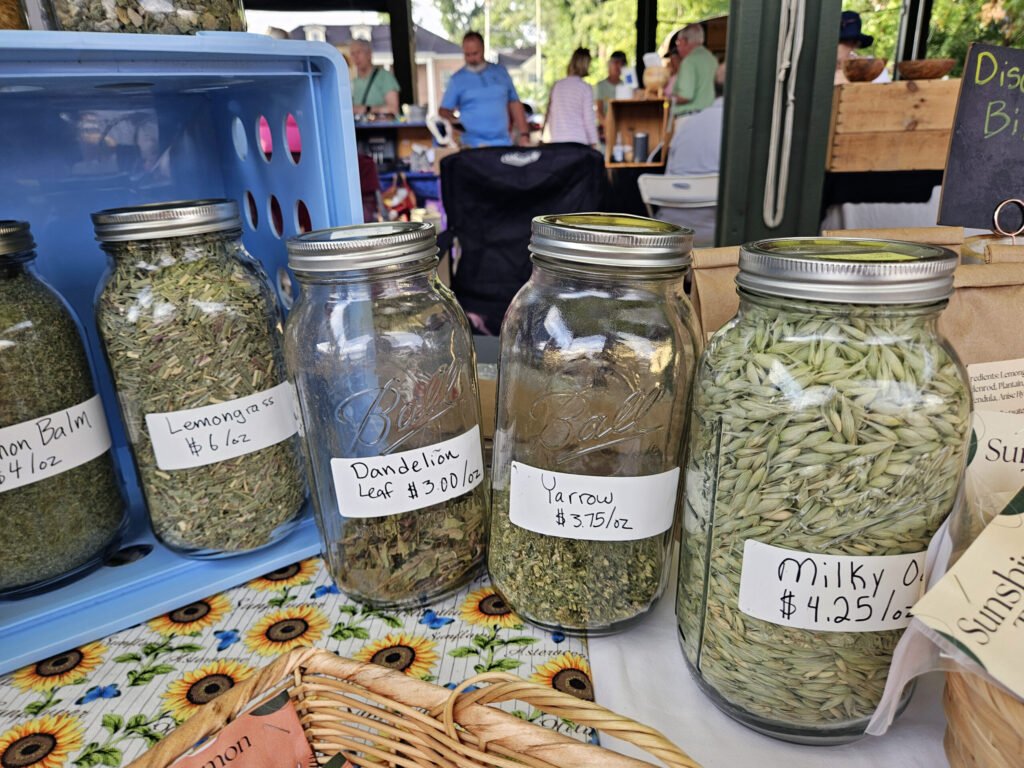
Boissiere describes the farm’s approach as “seed to bottle.” Deep Roots grows, harvests, and processes many of the herbs used in its finished products rather than relying entirely on ingredients grown elsewhere.
“We focus on growing medicinal herbs and seed-to-bottle herbal products,” she said. “We’re creating our medicines with the herbs that we grow because it’s going to be the freshest and the most potent.”
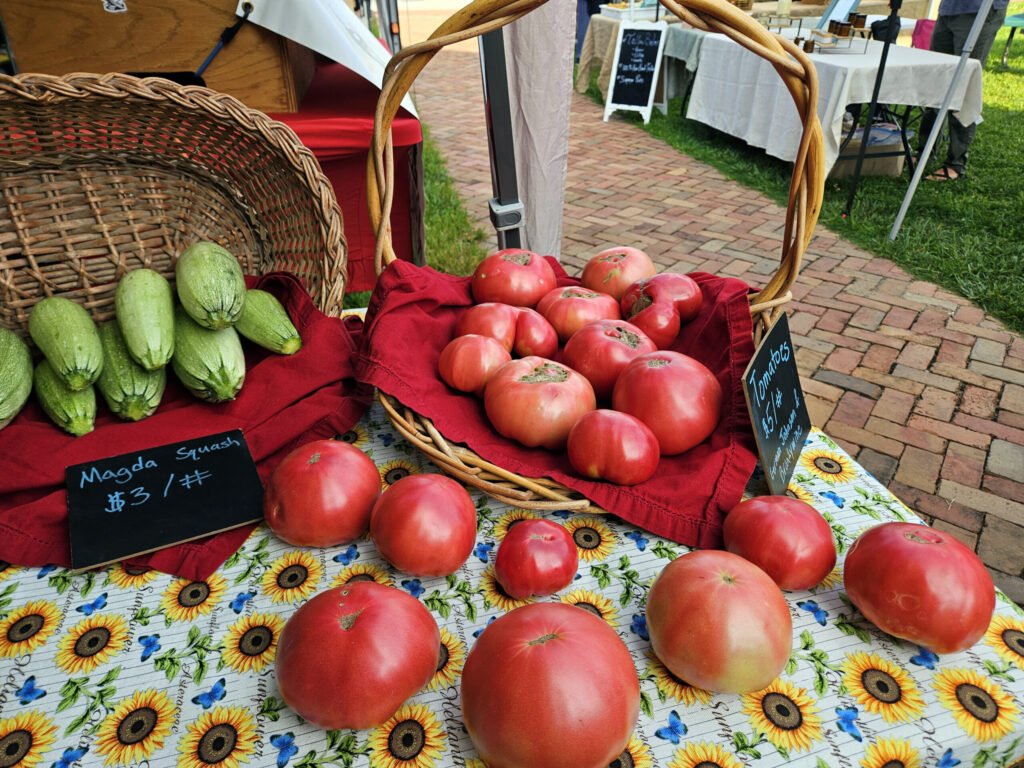
The farm produces seasonal vegetables, berries, asparagus, leafy greens, ginger, and a variety of medicinal and culinary herbs. Its largest crop is turmeric.
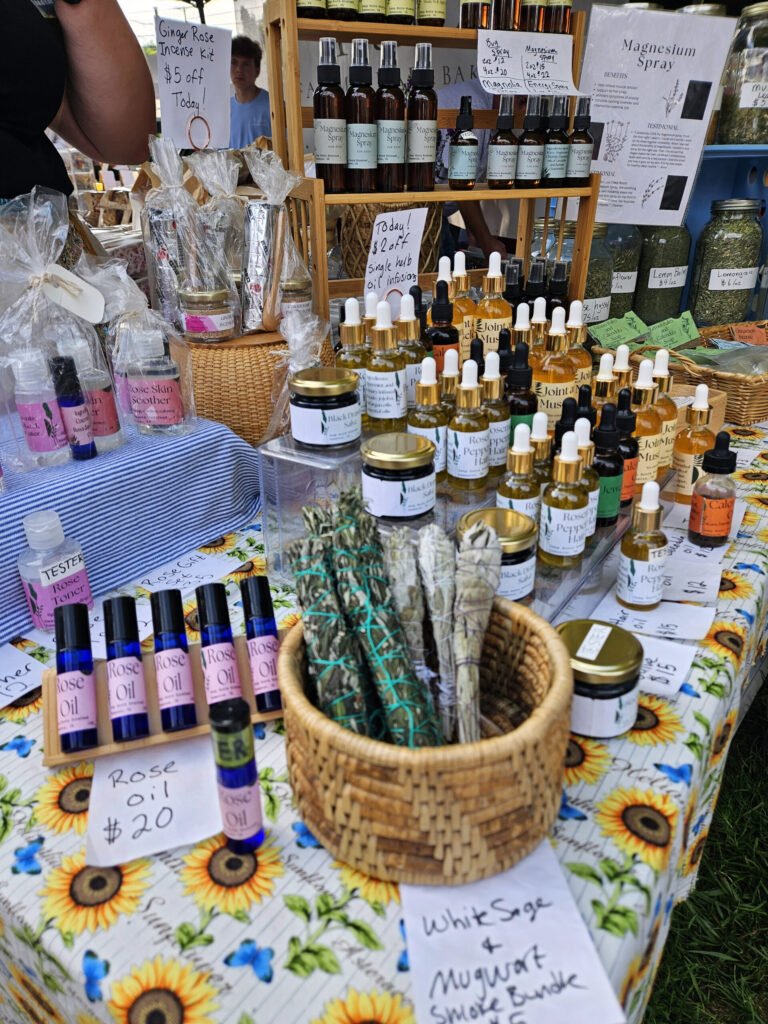
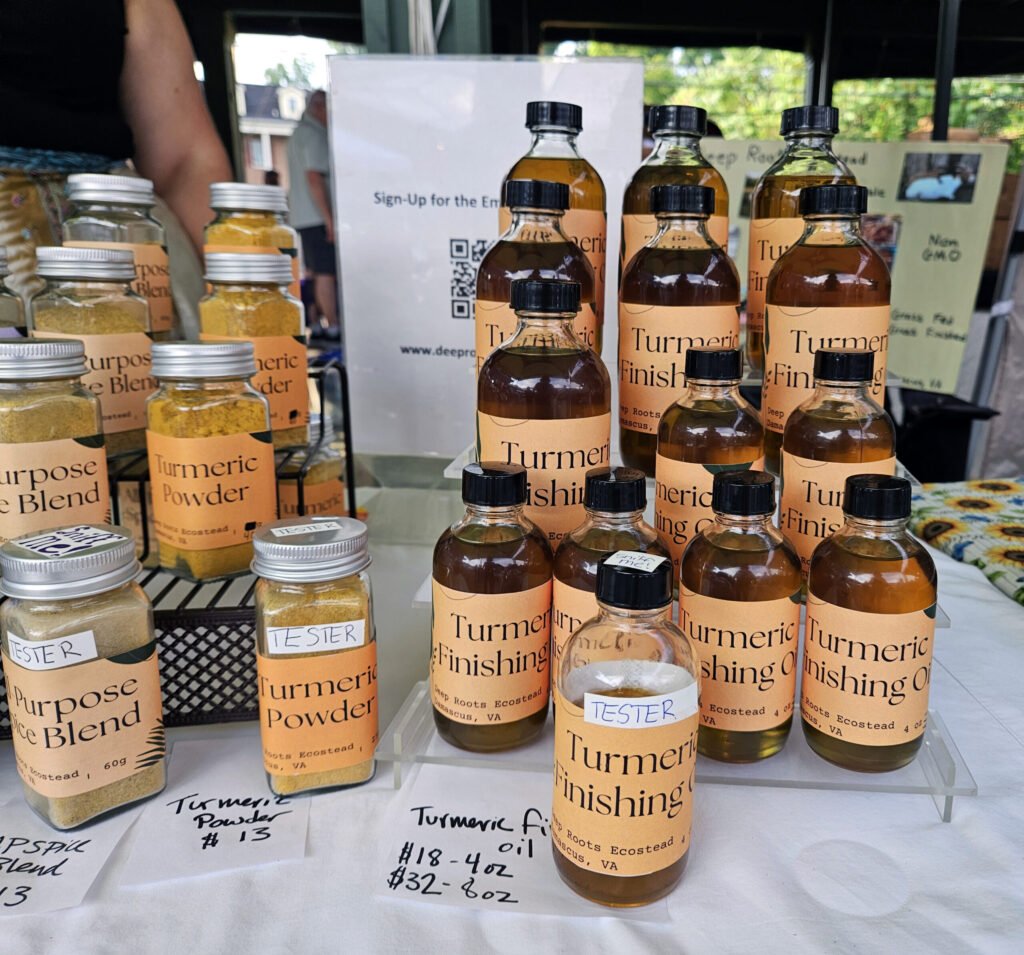
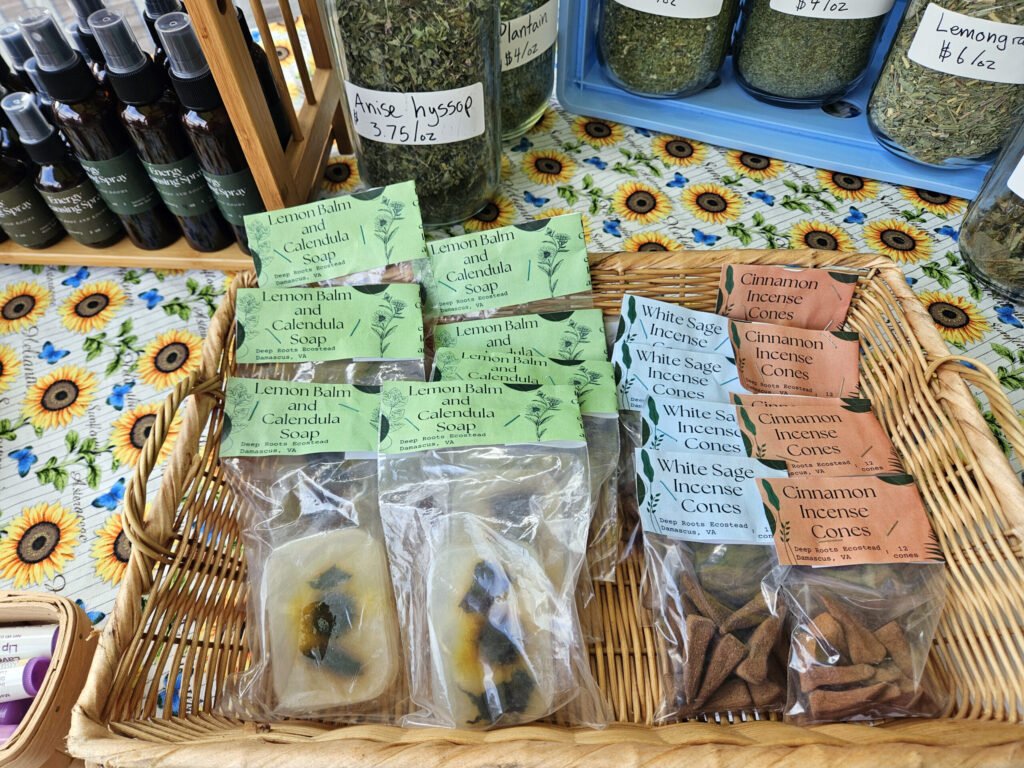
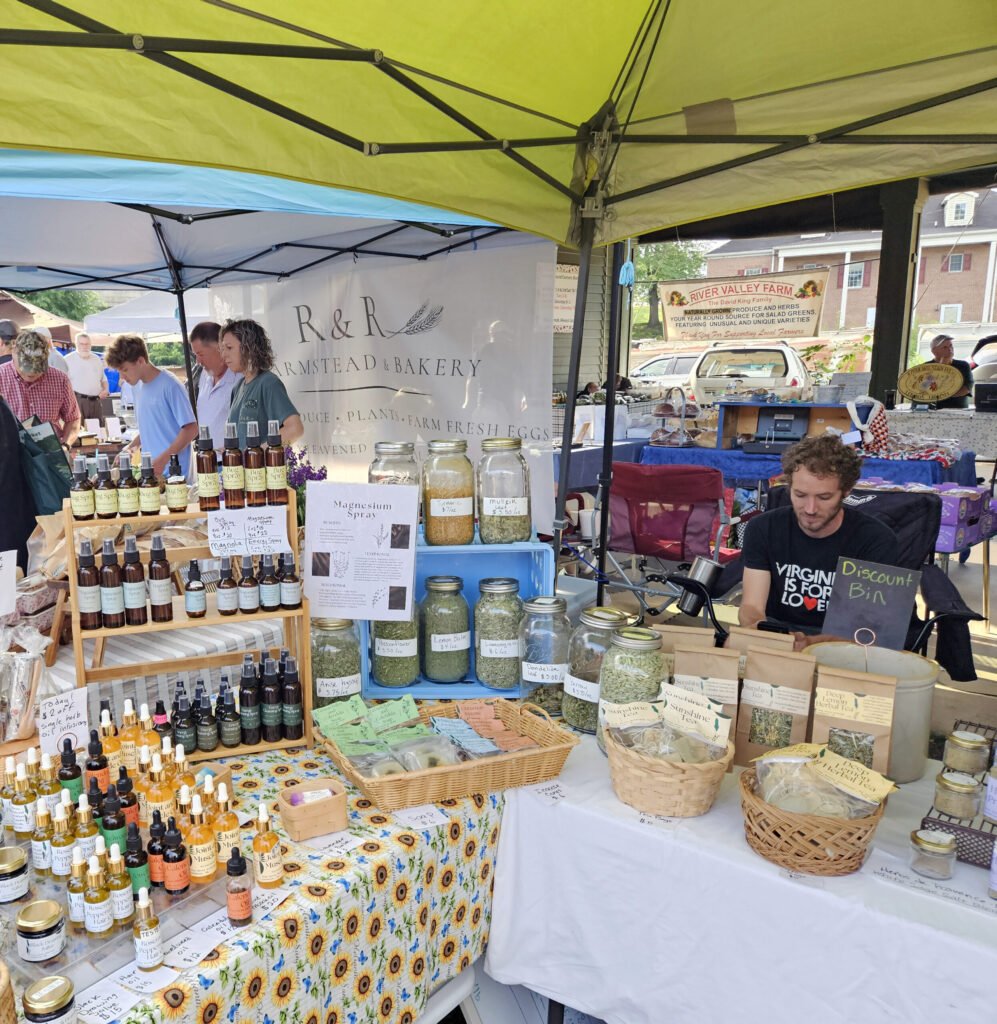
Deep Roots uses turmeric in several forms, including powder, culinary finishing oil, and preparations intended for topical use. The farm’s broader product line includes herbal teas, spice blends, soaps, lip balms, salves, sprays, hair and beard oils, skin care products, and oils made for use on joints and muscles.
The availability of some products changes with the growing season and the farm’s harvest.
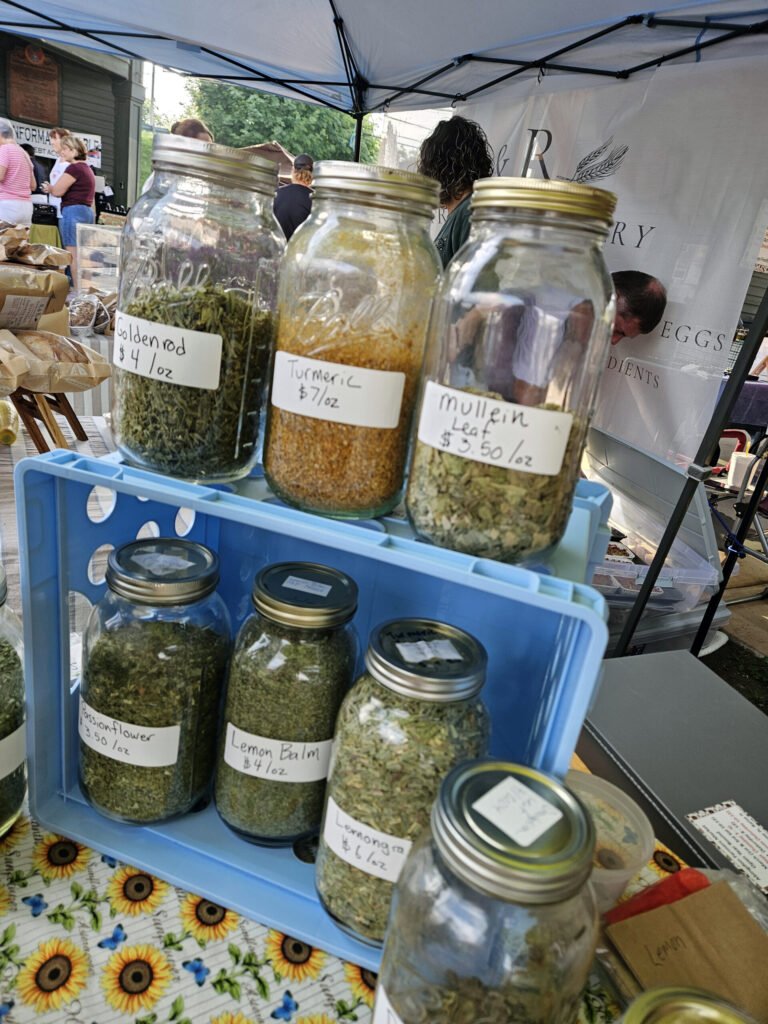
Boissiere also works with plants that many people encounter as roadside growth or common weeds. Goldenrod, for example, appears in several of her tea blends.
The yellow flowers emerge in late summer and fall, often alongside ragweed and purple ironweed. Because goldenrod blooms during ragweed season, it is sometimes blamed for seasonal allergies even though its heavier pollen is not easily carried by the wind.
Boissiere values the plant for both its traditional herbal uses and its aroma.
“It has a really honey smell,” she said. “I use it in most of my tea blends as a gentle detoxifier.”
She also described goldenrod as an herb traditionally associated with kidney and urinary support. As with other herbal products, those descriptions reflect herbal practice and are not a substitute for individualized medical care.
Goats and the Growing Ground
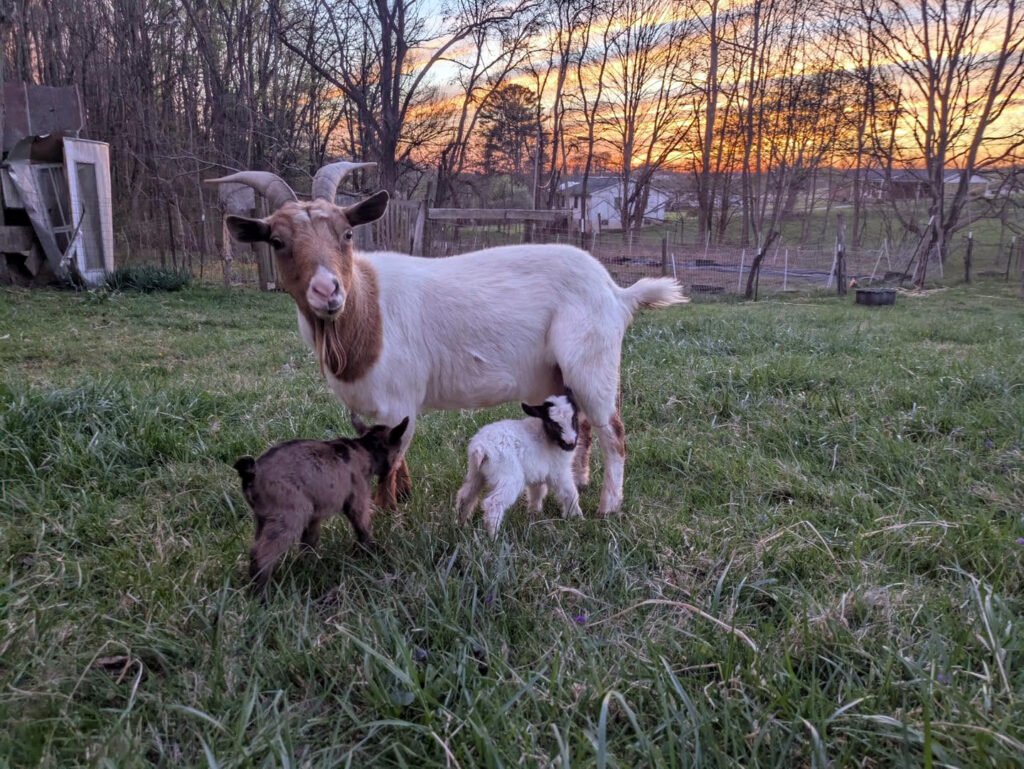
At the time of the interview, Deep Roots had 36 goats, although the farm had recently sold several animals at auction.
The herd is part of the farm’s effort to manage its land and meet some of the household’s needs. The goats graze on acreage not devoted to herb production, helping to control vegetation throughout the pasture.
“They support us in managing the land,” Boissiere said.
The farm breeds the goats, sells some, and harvests others for its own use.
The animals also contribute to the farm’s fertility system. Manure is deposited as the goats move through the pasture, and some is collected for use in the growing areas.
Before fall, the farmers apply it around the herb beds, where it can break down, returning organic matter and nutrients to the soil.
“It’s all about the full circle of soil health,” Boissiere said.
Deep Roots places long-term soil health at the center of its farming approach. The farm uses perennial plantings and cultivation methods that avoid conventional tilling, reducing unnecessary disturbance of the growing ground.
Together, the pasture, livestock, and cultivated areas function as related parts of the farm rather than as separate enterprises.
Herbalism in Appalachia
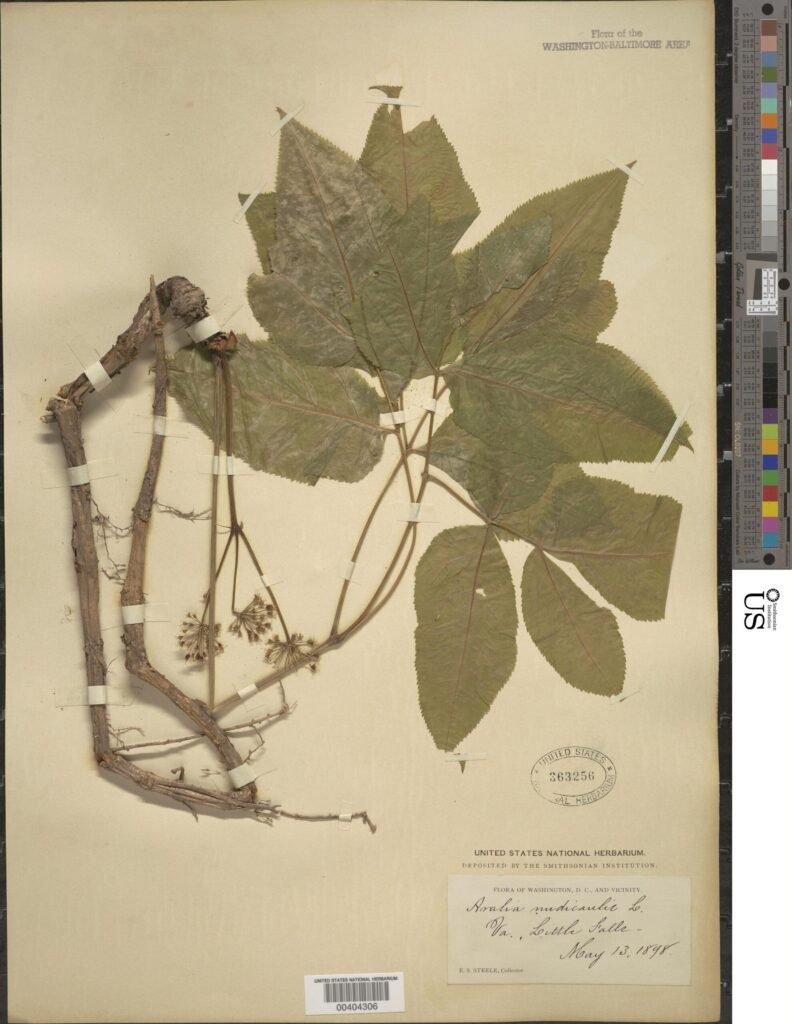
Deep Roots operates in a region where plants have long been used for food, household remedies, and trade.
Appalachian herbal traditions developed from several sources, including Indigenous plant knowledge, European folk practices, and traditions maintained by African and African American communities.
In rural areas where physicians and pharmacies were difficult to reach, families often relied on plants they could grow, gather, or obtain locally.
Knowledge was commonly passed through families and communities rather than through formal schools. Midwives, household healers, and other practitioners used herbs alongside religious belief, practical experience, and inherited custom.
Boissiere did not come to herbalism through a family tradition of Appalachian folk healing. Her route was contemporary: self-study, formal education, mentorship, and practical experience growing plants on the farm.
Deep Roots nevertheless operates within the same landscape that shaped earlier generations of plant knowledge. Its work represents one way herbalism continues to evolve as formal instruction, small-scale agriculture, traditional uses, and modern consumer products meet.
Teaching Beyond the Farm
Education has become another part of the Deep Roots operation.
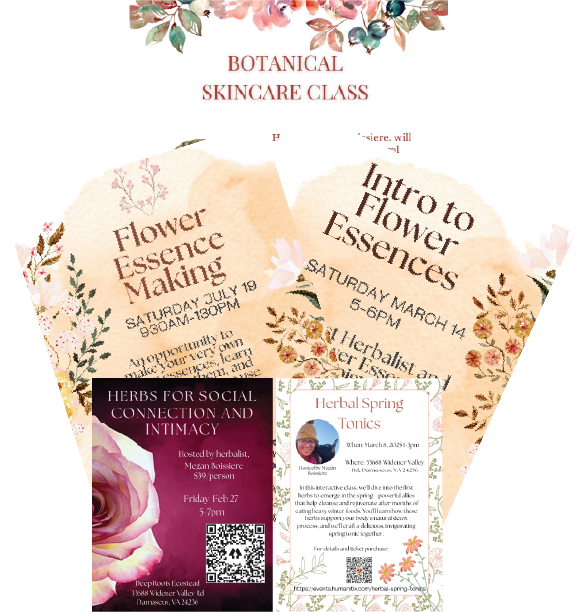
Boissiere and Von Kundra host small, hands-on classes at the farm on subjects including tinctures, flower essences, botanical skin care, herbal cooking, tea blending, and herbal mocktails.
Some programs explore herbs associated with relaxation and nervous-system support. Others focus on preparing a specific plant or creating something participants can take home.
Classes also introduce visitors to the land where some of the ingredients are grown. Farm programs commonly include time with the goats, connecting the educational experience to the broader operation rather than limiting it to a classroom demonstration.
That connection is important to Boissiere’s approach. The finished product is only one part of the story. The plant must first be selected, grown, harvested, and processed, and each stage can affect the final result.
From the Farm to the Market
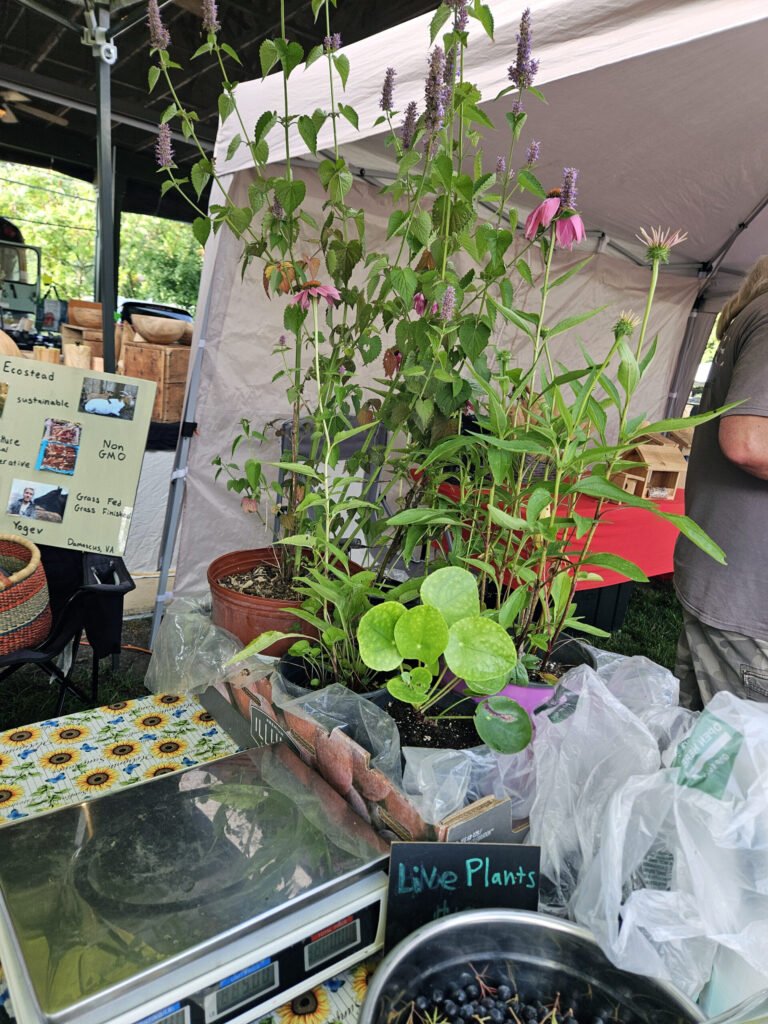
Deep Roots sells its products directly to customers at farmers markets, festivals, and community events throughout Southwest Virginia.
The farm regularly appears at the Damascus and Abingdon farmers markets, as well as at events such as the Virginia Highlands Festival, Big Jake’s Appalachian Flower Festival, the Virginia Highlands Community College Holistic Health Fair, and seasonal celebrations in Damascus.
Direct sales allow customers to ask how a product was made, where its primary herbs were grown, and how Boissiere uses it in her own herbal practice.
Direct sales give the farmers immediate feedback. Customers often return for their favorite teas and salves, ask when sold-out products will be available again, and suggest items they would like to see offered.
For Deep Roots, the work remains experimental. Formal education provides a foundation, but the farm itself remains a teacher.
Some plants thrive. Others fail. Weather changes, markets shift, and the needs of the soil and animals do not always follow a business plan.
Boissiere’s method is to plant, observe, and learn from what remains.
She puts possibilities into the ground and waits to see what wants to grow.











Leave a Reply