

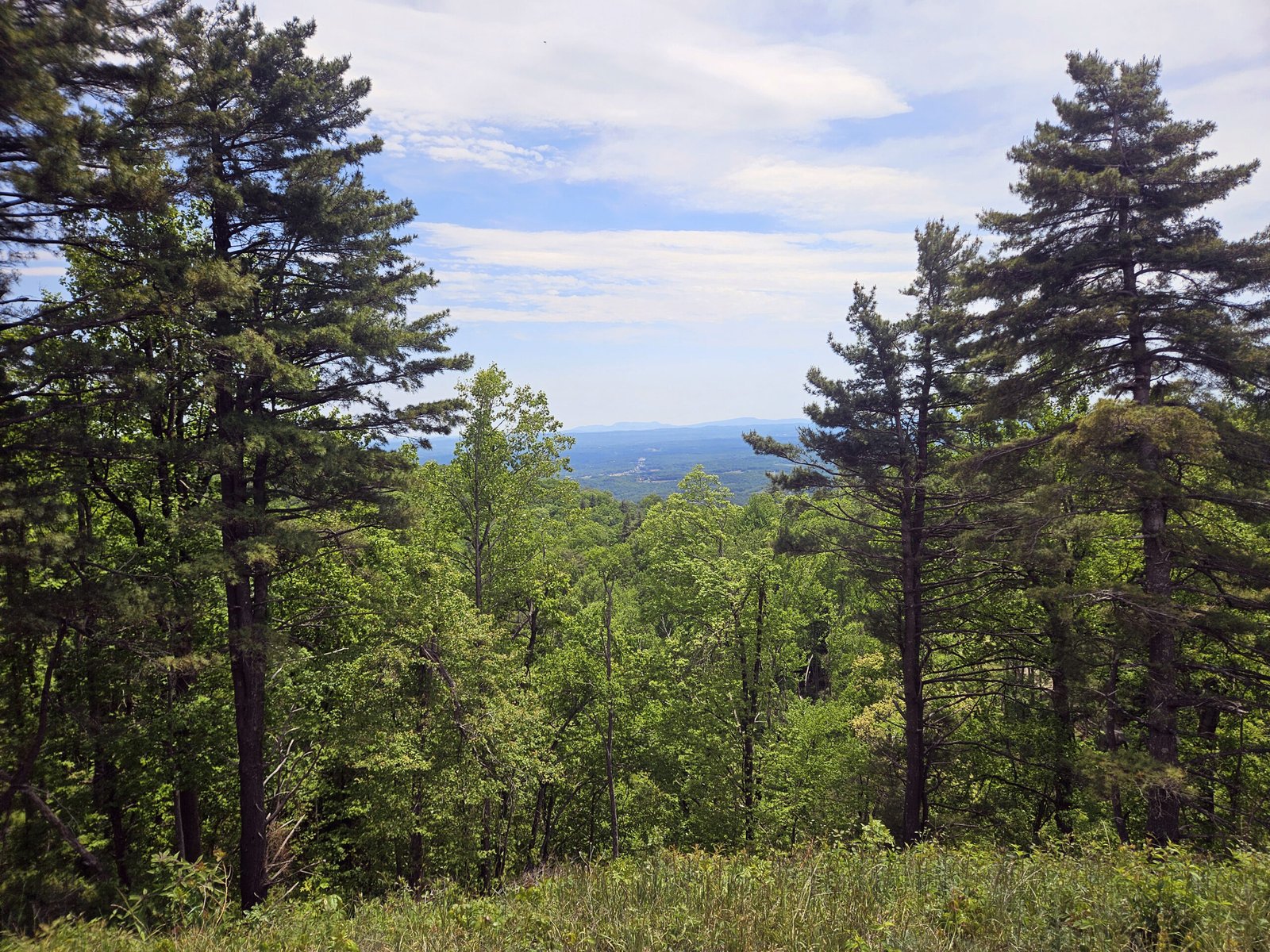
The road into Mount Airy does part of the storytelling before you ever reach town.
Come down through the Blue Ridge Parkway toward Fancy Gap, and the trip turns into a long, winding introduction: deep woods, pastureland, grazing cattle, old barns, and ridgelines that keep opening up around the next bend. By the time the Parkway lets out near Fancy Gap, Mount Airy, North Carolina, is only a few miles away, but the drive has already made the point. This is still farming country.
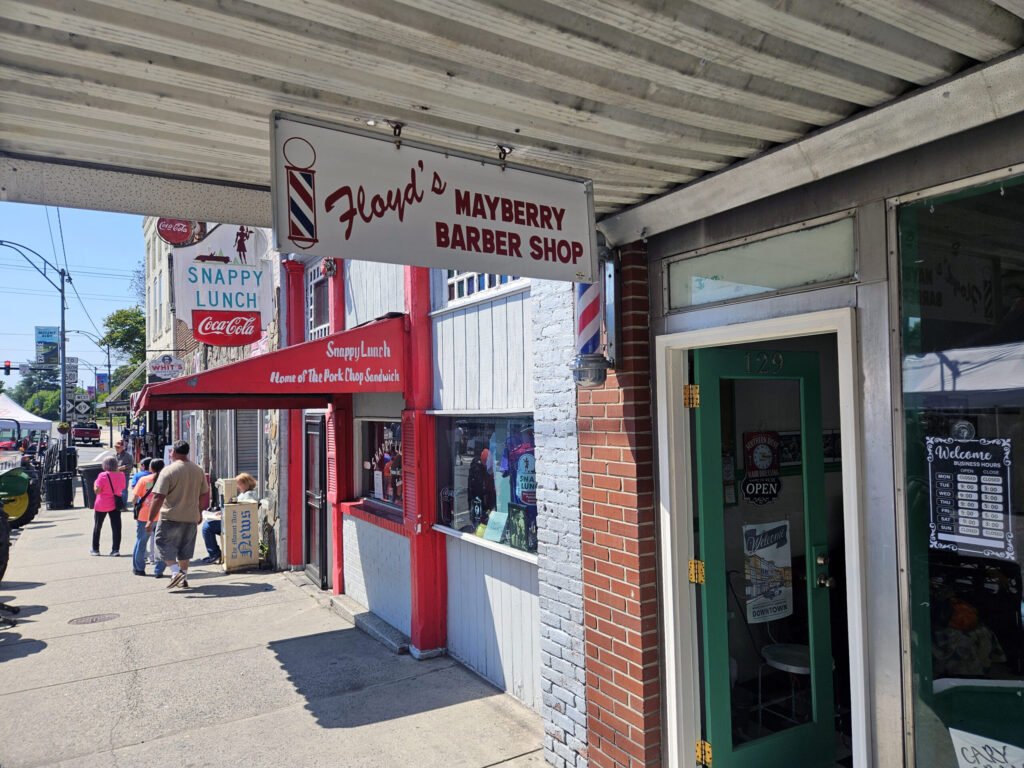
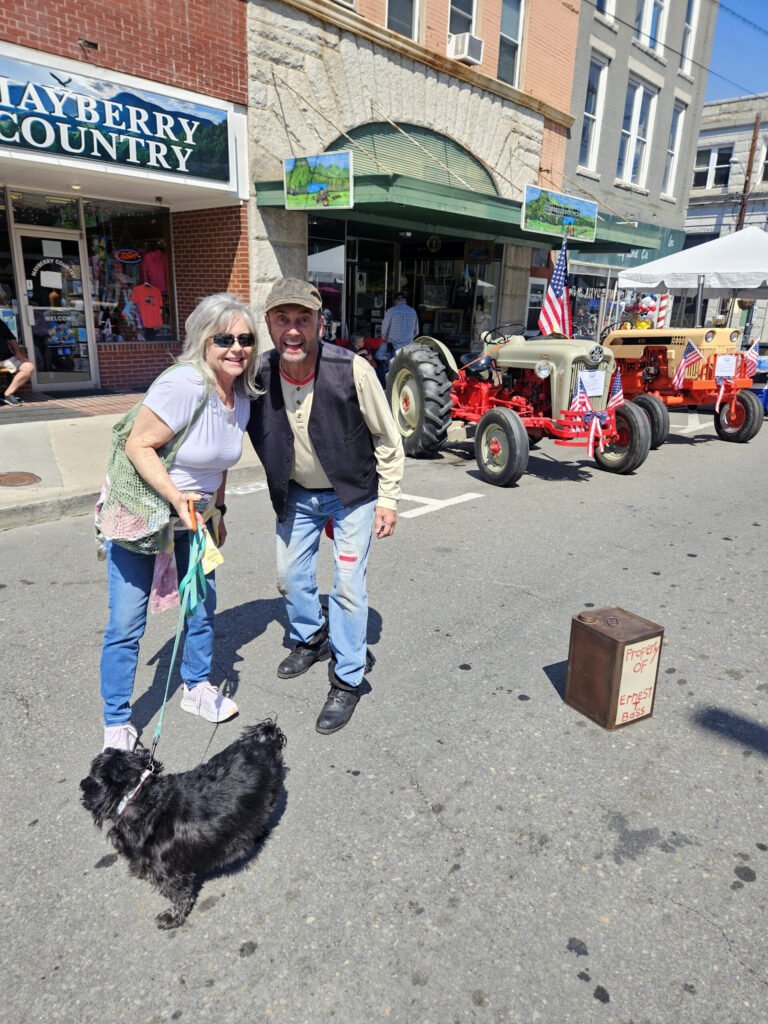
Mount Airy is best known, of course, as Andy Griffith’s hometown and the real-life inspiration for Mayberry. The town embraces that history with a wink and a smile. On Main Street, visitors can stop by Floyd’s Barber Shop, see the courthouse and jail, or take a ride in a vintage Ford Galaxie police cruiser. It is not unusual to spot a Barney Fife or Ernest T. Bass impersonator working the sidewalk, greeting visitors as if the whole place has slipped cheerfully out of black-and-white television.
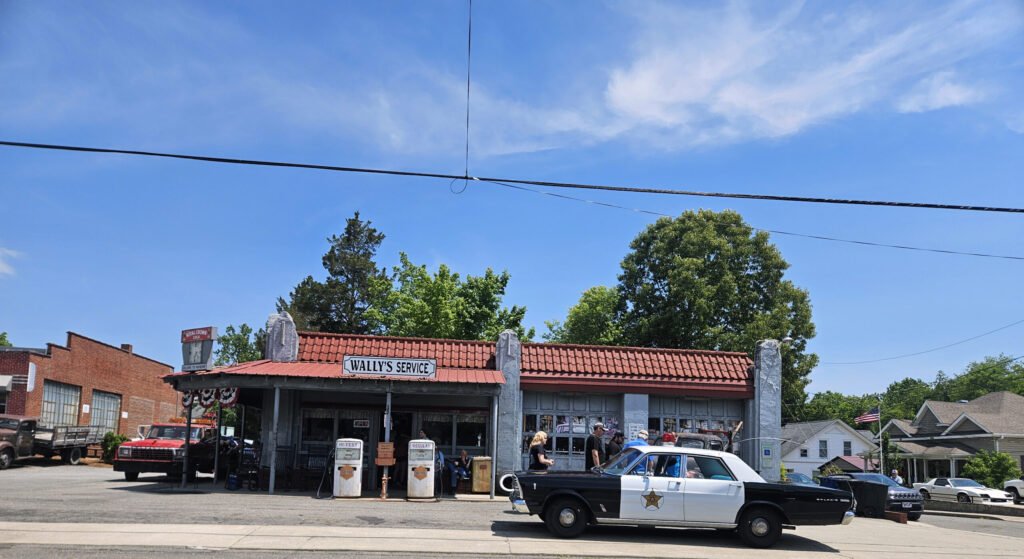
But Mount Airy is not frozen in reruns.
The town, home to roughly 10,600 residents, has a deeper story than its television fame. Its early economy was built on furniture manufacturing, textile mills, tobacco farming, and the granite industry connected to the nearby Flat Rock quarry. As traditional manufacturing changed, Mount Airy changed with it. Today, the local economy includes healthcare, specialized manufacturing, tourism, and a renewed interest in regional agriculture. The surrounding Yadkin Valley wine region, local farms, food producers, and farm-to-table businesses have helped give the area fresh energy.
That mix — Mayberry nostalgia, working agriculture, small-town pride, and a downtown that still knows how to gather a crowd — is what makes the Mount Airy Farm Fest feel so natural here.
A Street Festival with Dirt Under Its Fingernails
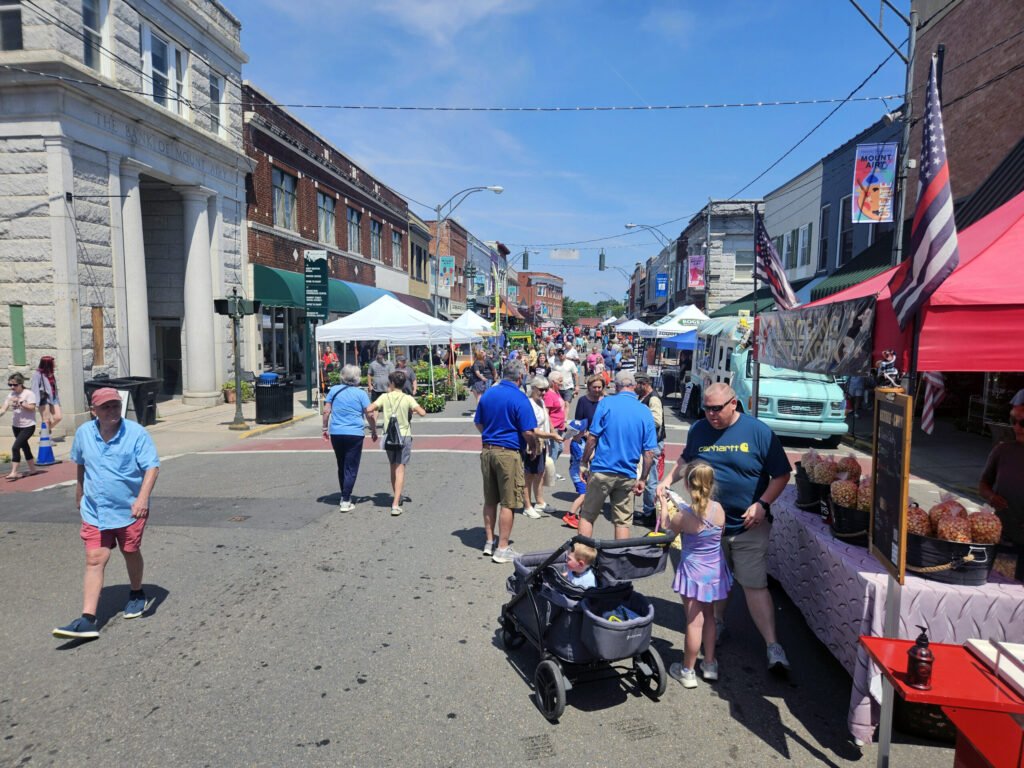
The Mount Airy Farm Festival turns downtown into a celebration of tractors, crafts, food, farm life, and local know-how. With the main downtown streets blocked off, the festival spreads through the heart of town instead of being tucked away in a field or fairground. That matters. The tractors, vendors, dogs, families, food trucks, and storefronts all share the same space.
Arriving on Friday means catching one of the best parts of the weekend: the tractor parade. Machines of every size, age, color, and condition roll through town, some polished like showpieces and others wearing their years honestly. A few have the kind of cough, rattle, and mechanical bark that make people turn their heads before the tractor even comes into view.
Then come the children.
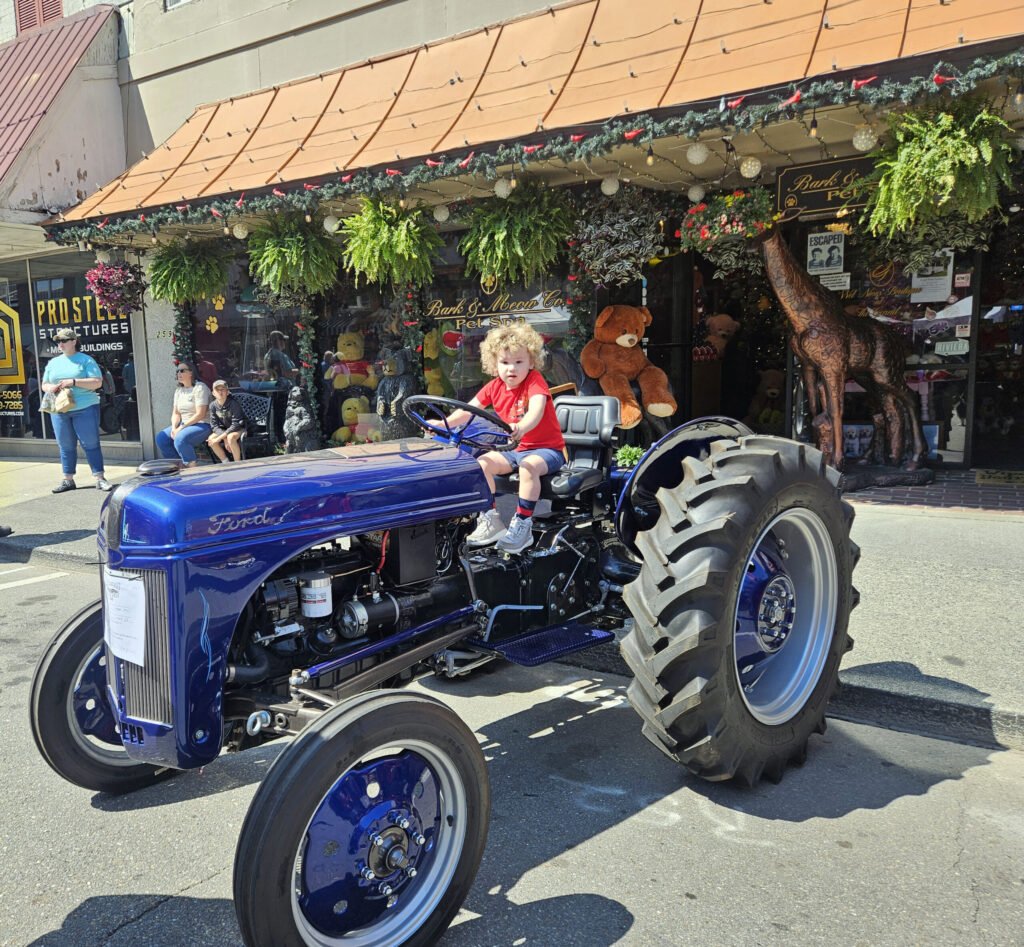
The kids’ parade may be the sincerest part of the whole event. Children ride toy tractors, bikes, little cars, and anything else small enough to count. Adults point. Parents wave. Kids grin like they are driving the grand marshal’s car in a national parade. It is hard to imagine a more fitting opening act for a farm festival in Mount Airy.
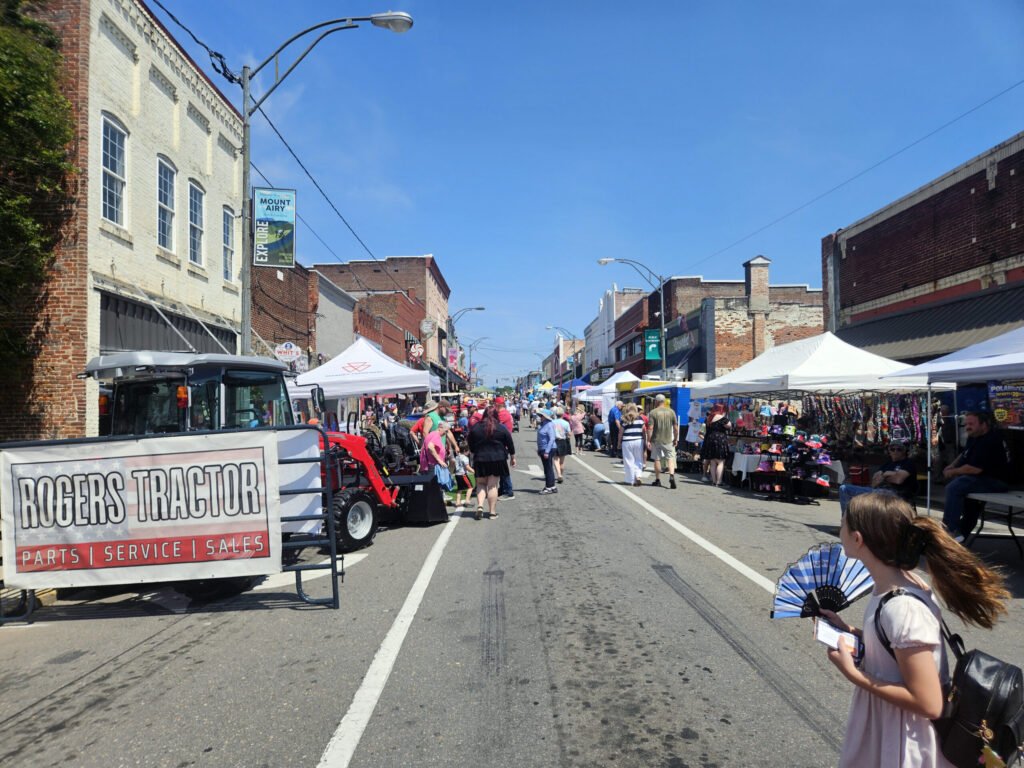
By Saturday, Main Street is full. The crowd moves slowly from booth to booth, sometimes guided less by a plan than by the smell of kettle corn, pretzels, pizza, donuts, or whatever is cooking a few steps ahead. It is the kind of festival where you stop for one thing, get distracted by another, and end up talking to someone about bees, quilts, tractors, or dog treats.
Makers, Beekeepers, Quilters, and Local Crafts
The vendor lineup gave the festival much of its personality. This was not just a row of generic tents. Many booths reflected the skills, hobbies, and small businesses that help hold a rural community together.
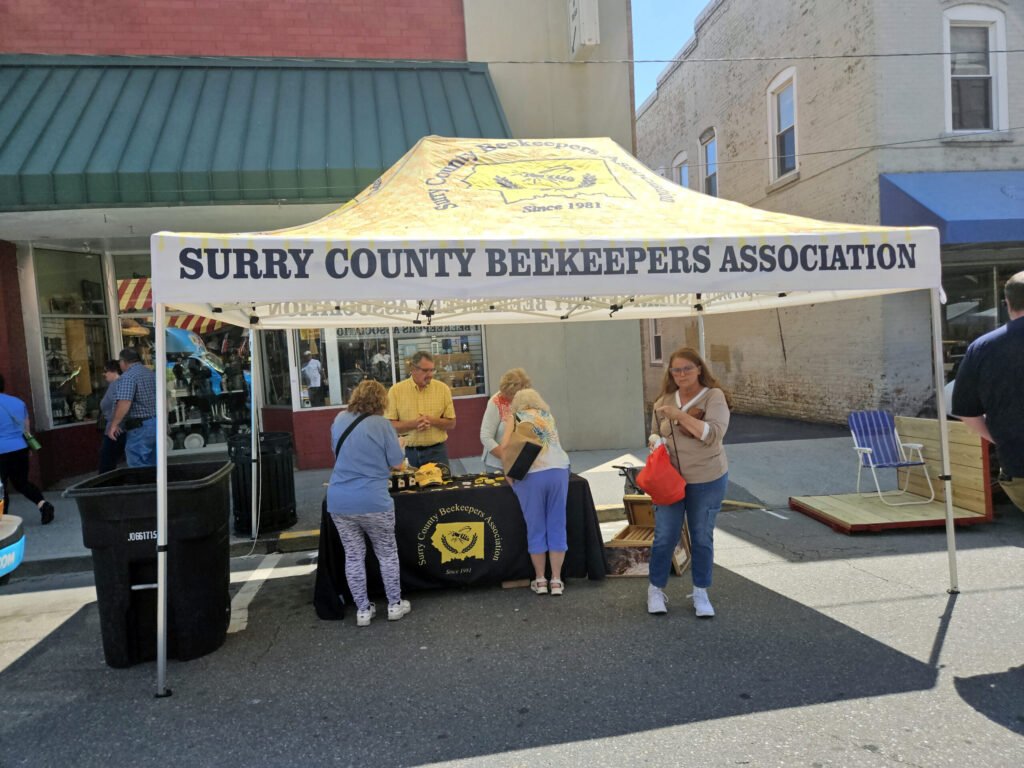
The Surry County Beekeepers Association was there educating visitors about pollinators and the role bees play in local agriculture. At a farm festival, that kind of booth feels less like an add-on and more like a reminder: no bees, no harvest.
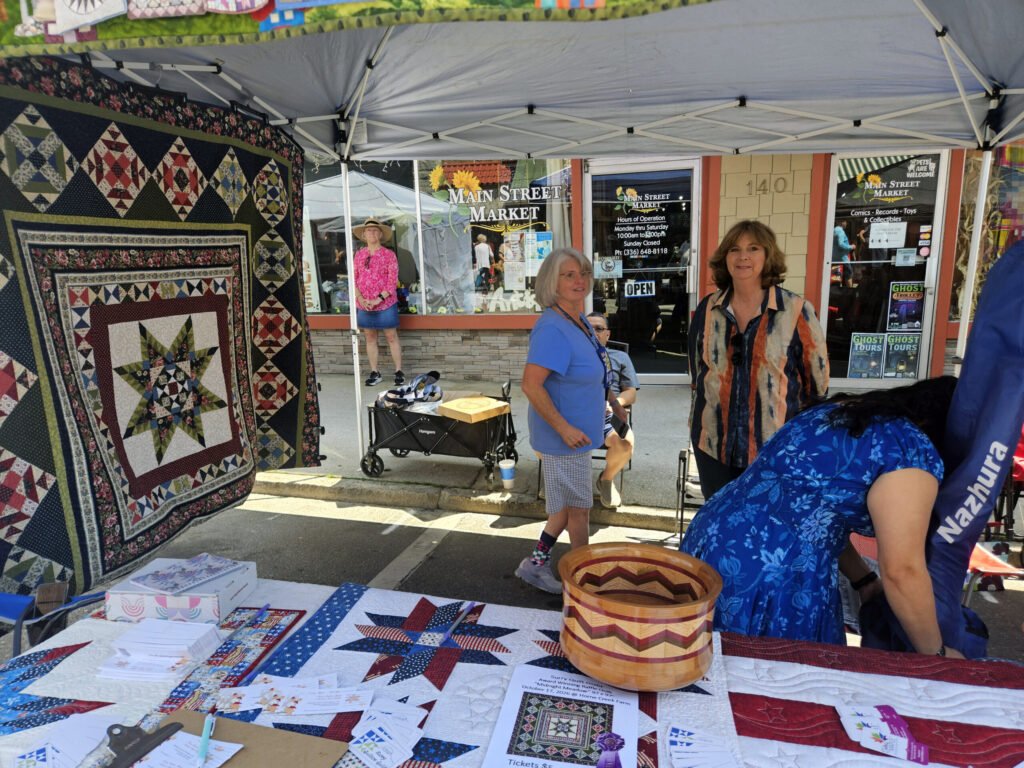
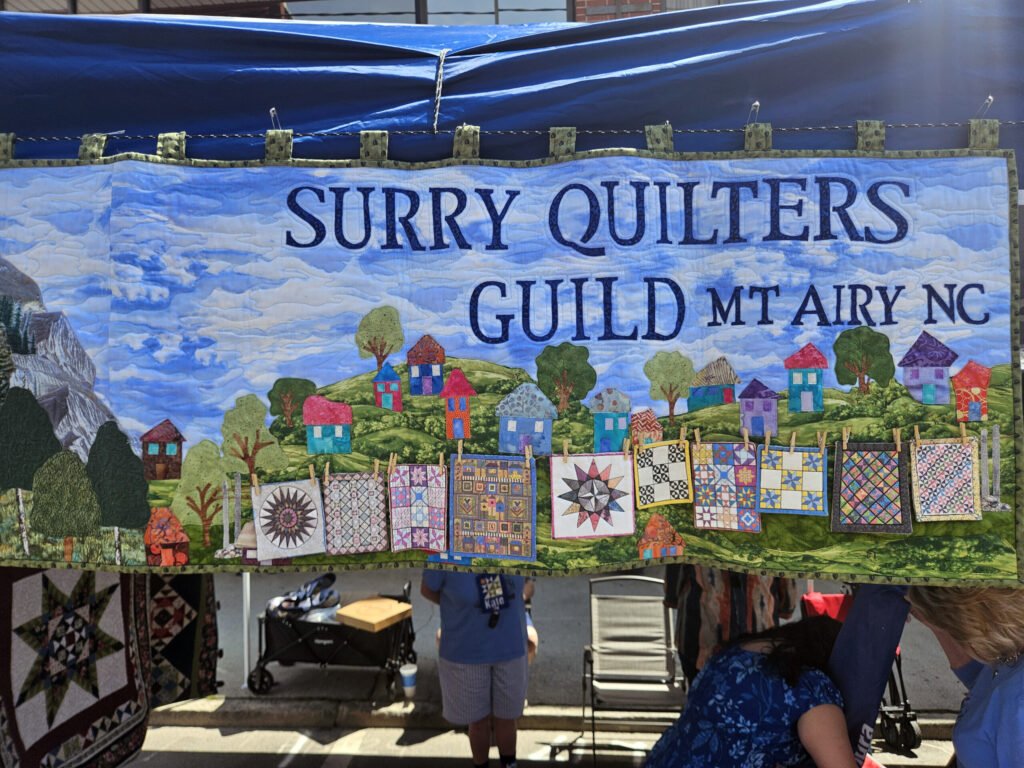
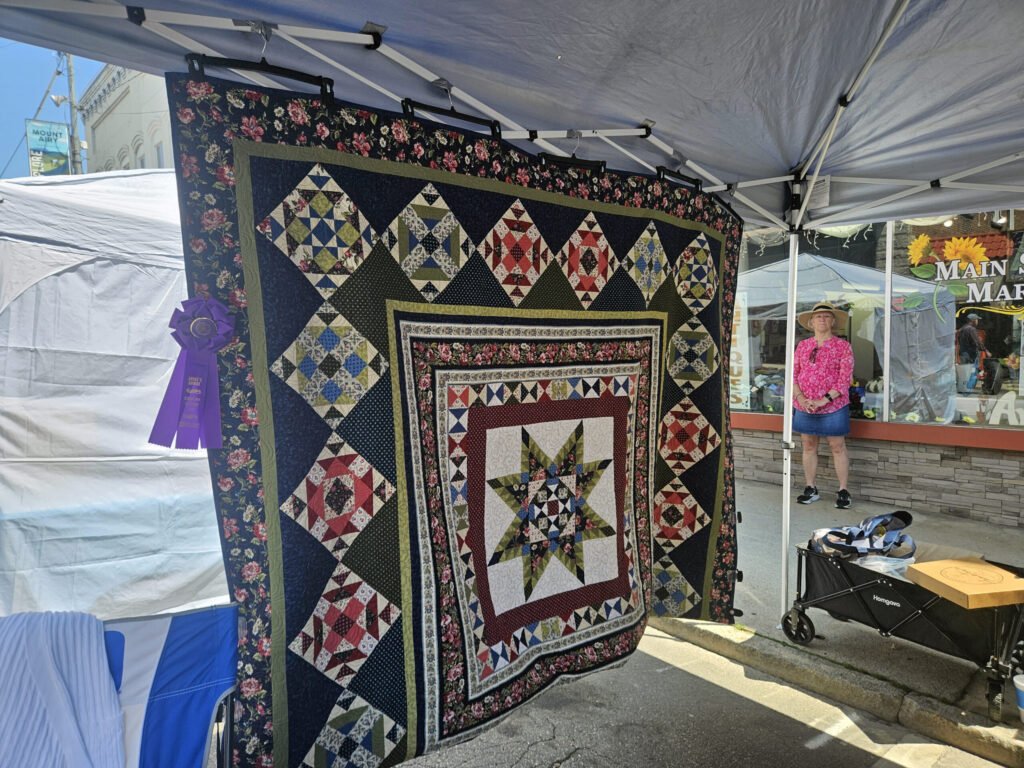
Surry Quilters Guild displayed beautifully made quilts, the kind that stop people, not because they are flashy, but because the work is so precise. The guild is also active beyond display events, donating to community causes and contributing to the Quilts of Valor Foundation, which presents handmade quilts to service members as an expression of thanks.
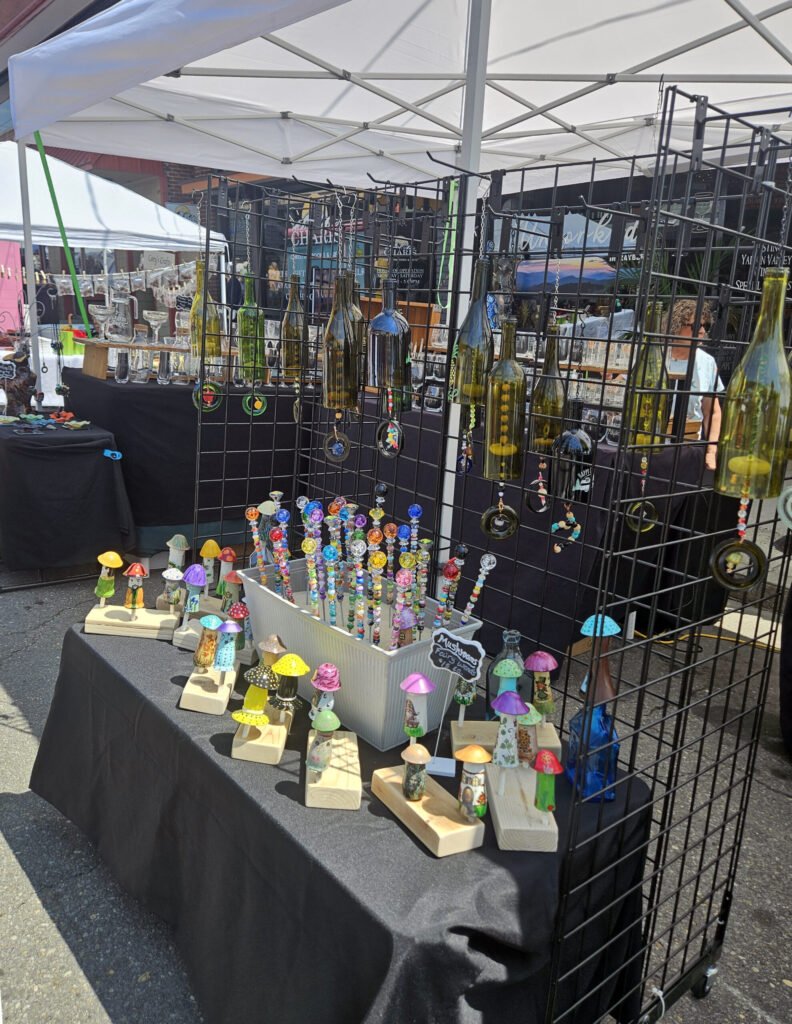
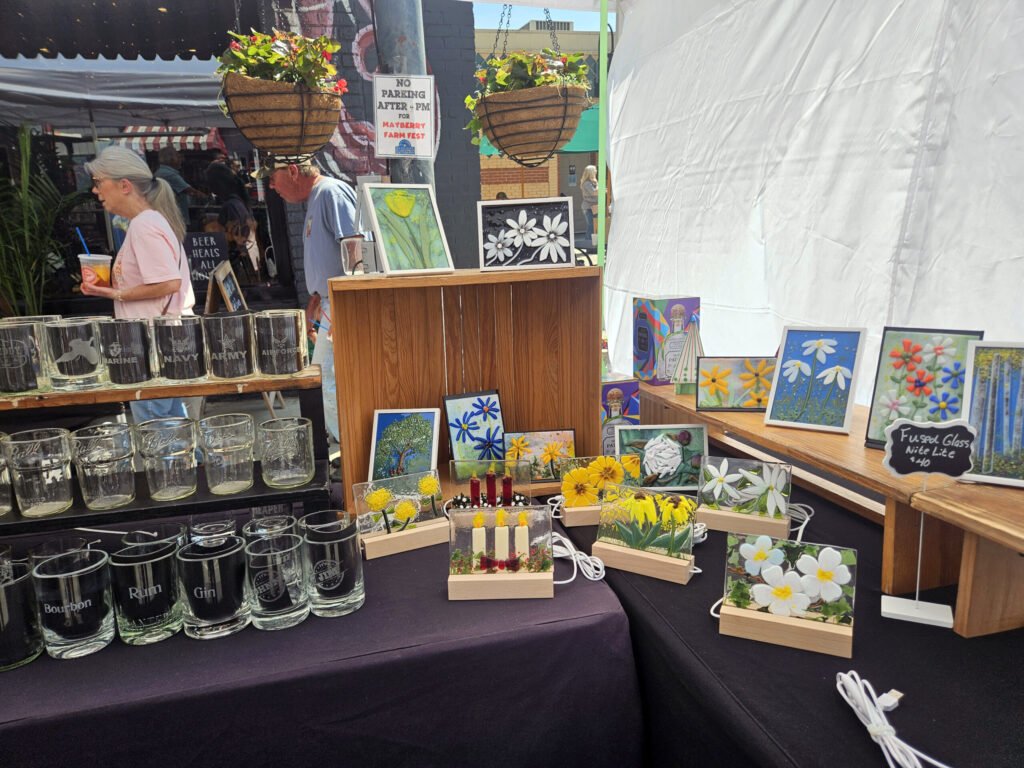
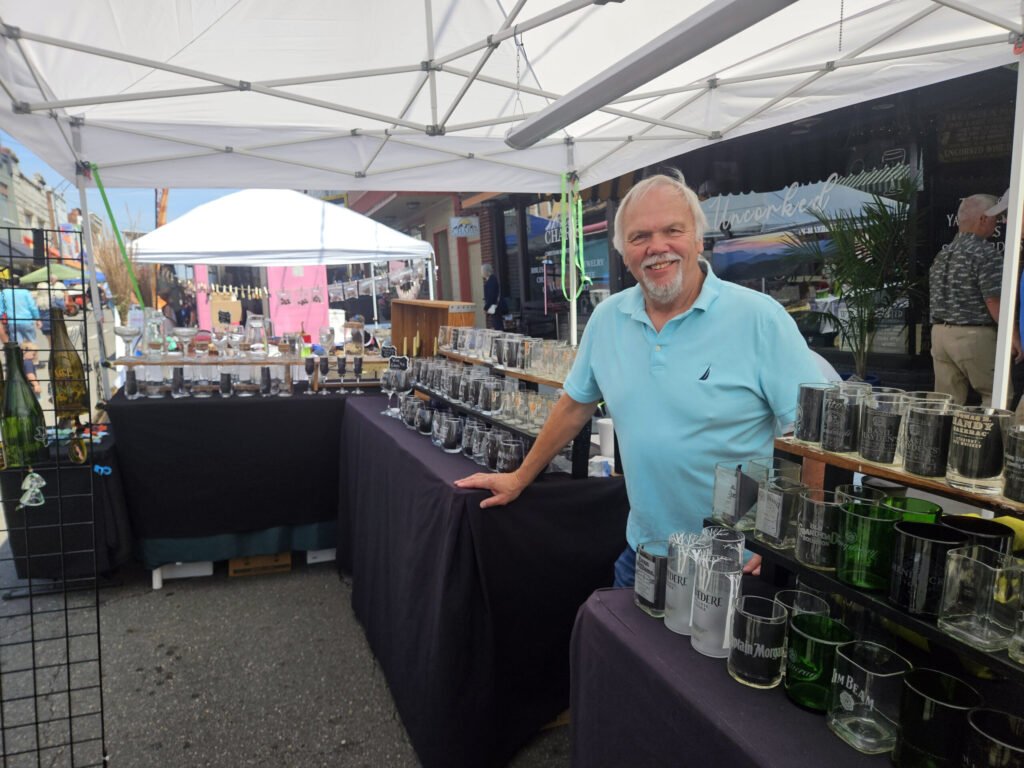
Old World Glass Studio, from nearby Pinnacle, brought pieces by Lane and Cheryl, including tumblers made from repurposed bottles, bottle wind chimes, and stained-glass work. Their booth had the satisfying feel of a craft that still depends on patience, eye, and hand.
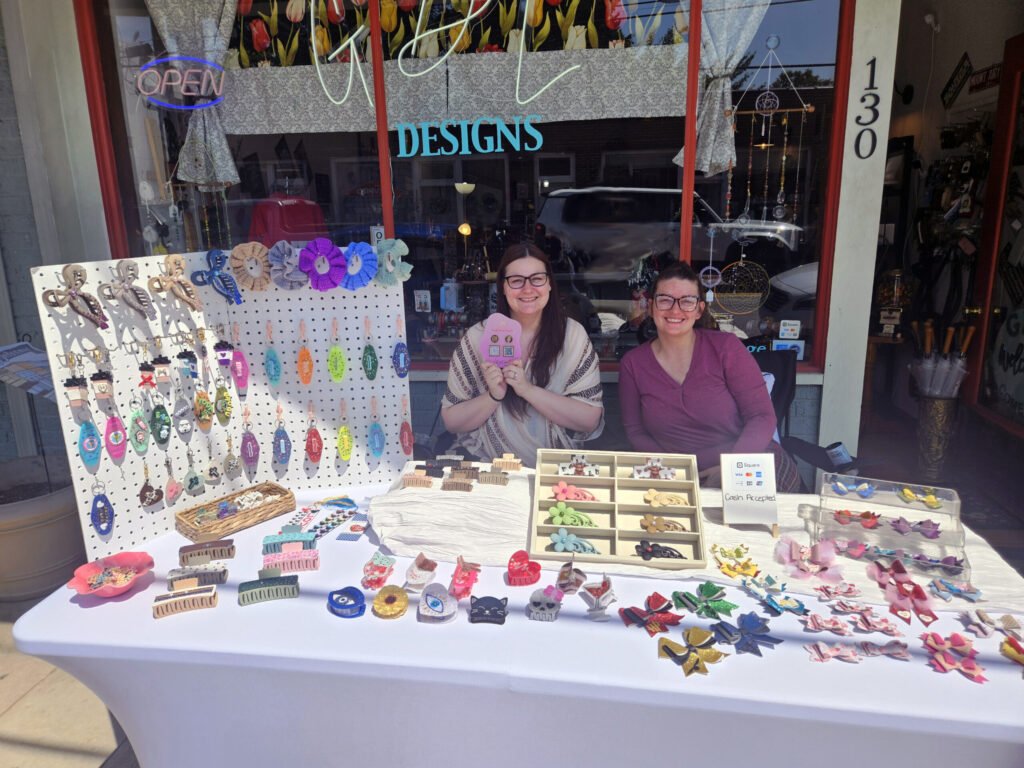
Crafted At Dawn, set up near GDL Designs on West Pine Street, offered a brighter, pop-culture-flavored contrast: faux-leather bows, decorated claw clips, and accessories with a playful, handmade edge.
Food, naturally, was everywhere. A-Maze-ing Kettle Corn and Fresh Pretzels covered the classic festival-snack territory. Strange Trip Pizza and Krazy Lemon & Donuts kept people moving with heavier fuel and sugar. Zocalo Sweets, Freeze Dried Candy, and Lolly and Pop’s Sweet Shop on Wheels made sure nobody with a sweet tooth had much chance of escaping untouched.
For a town its size, Mount Airy has a stronger food culture than a first-time visitor might expect. Many restaurants and food businesses lean into local sourcing, and the festival reflected that same interest in regional flavor and small producers.
The Dapper Hound and a Local-First Approach
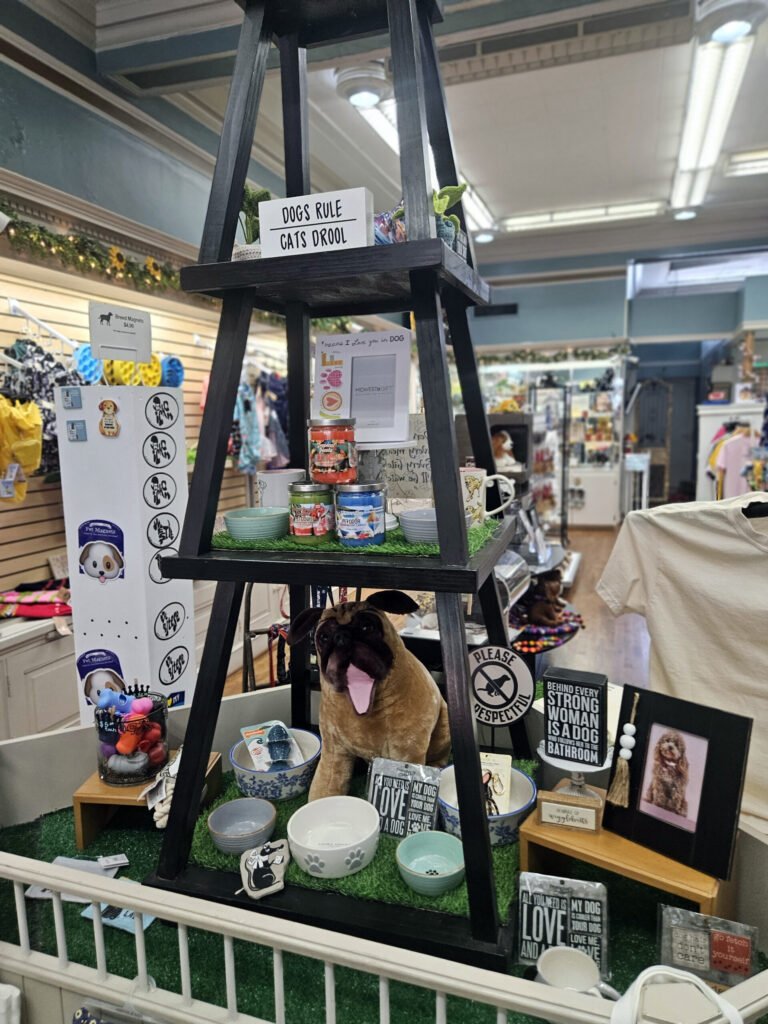
Tucked among the downtown activity is The Dapper Hound, a local pet supply store that fits neatly into the festival’s broader theme of quality, stewardship, and knowing where things come from.
Cary Cann, whose wife Roxane has owned the shop for the last four of its eleven years in business, described the store’s philosophy plainly.
“We try to keep products as local as possible,” he said. “And if we have to go a little further than that, as minimal ingredients as possible.”
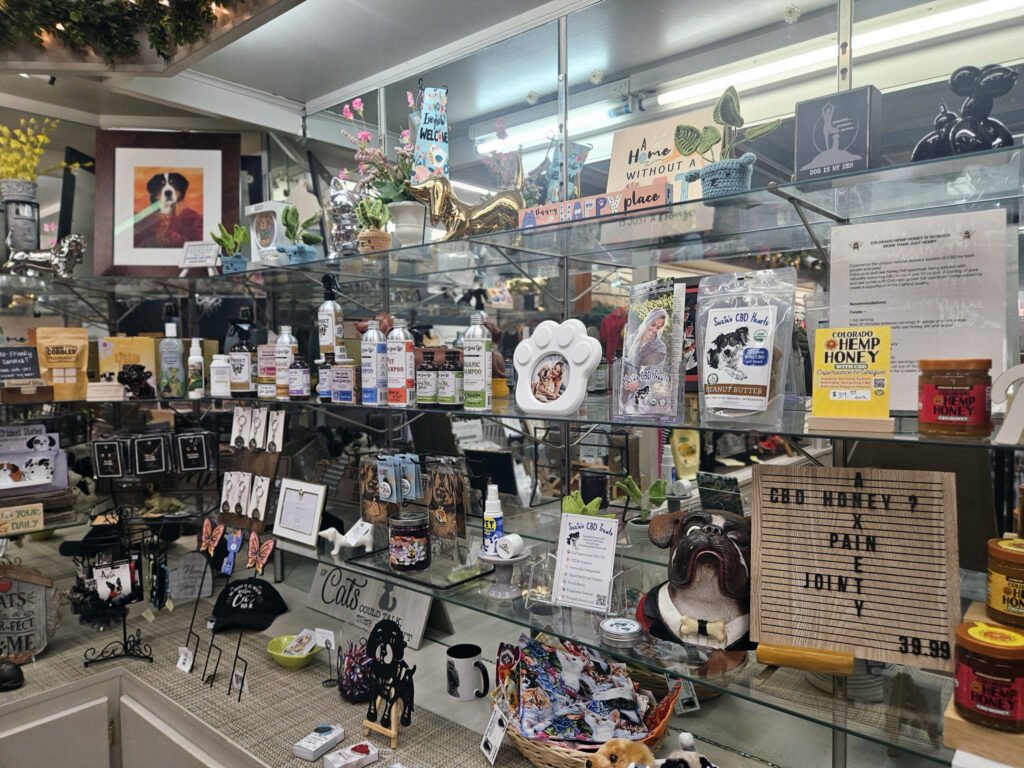
That approach shows on the shelves. The Dapper Hound focuses on pet products with simple ingredient lists, natural materials, and practical use for active dogs. The shop gets its name from a previous owner, but its current mascot is a real dog named Victor, whose dapper image appears on the store’s stickers and branding.
For dogs like our dogs, Daisy and Scruffy, who were with us on this trip, the store carries a variety of chews and treats designed to keep them busy, engaged, and well supplied.
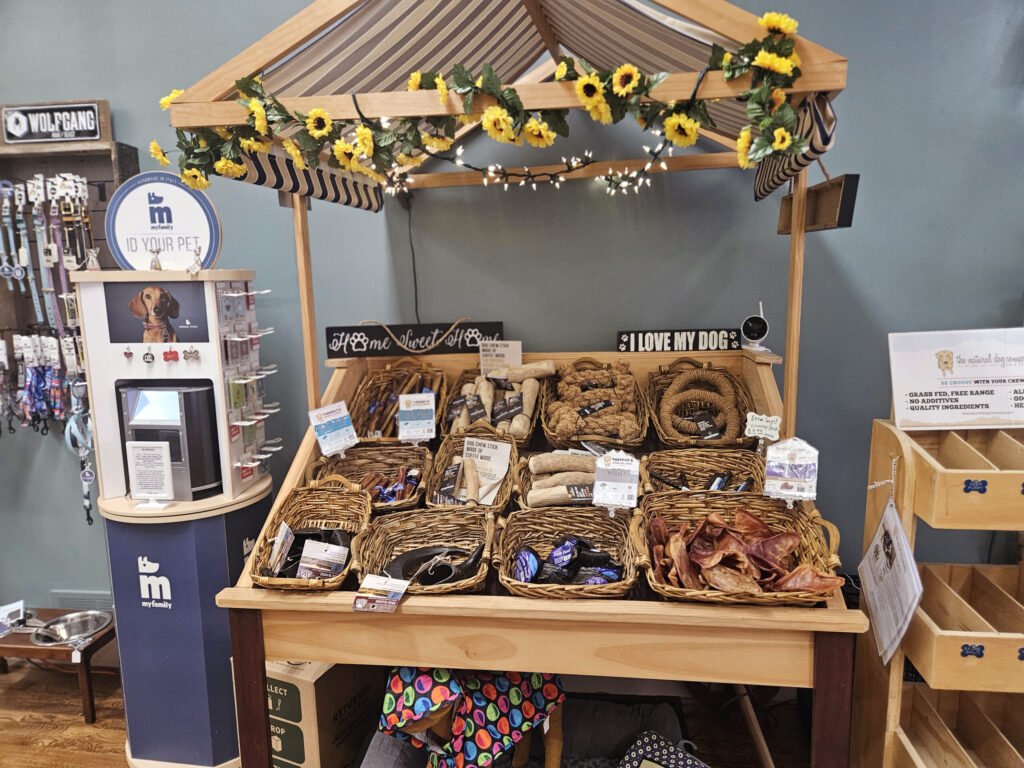
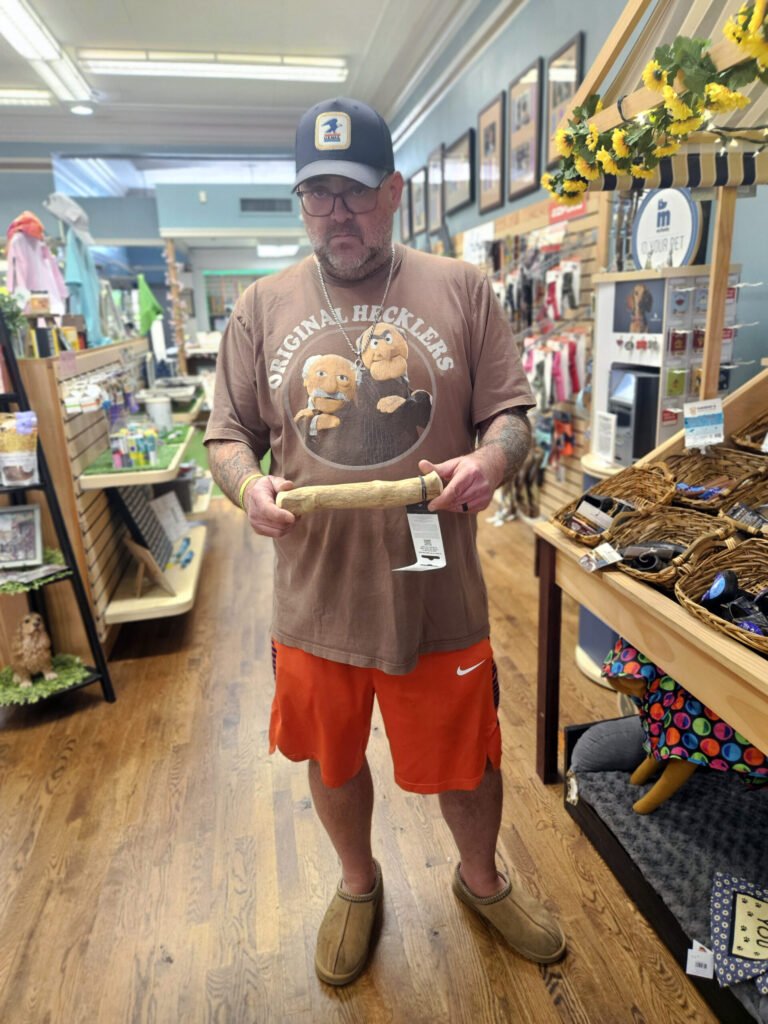
Among the bestsellers are Canophera Coffee Wood Chews, an all-natural chew made from the caffeine-free wood of the coffee tree. They are marketed as vegan, sustainable, untreated, zero-calorie chews that help support dental hygiene as the wood releases small fibers during chewing.
The shop also carries natural animal chews, including hooves, bully sticks, pig ears, and duck rolls. These give heavy chewers simple, additive-free options.
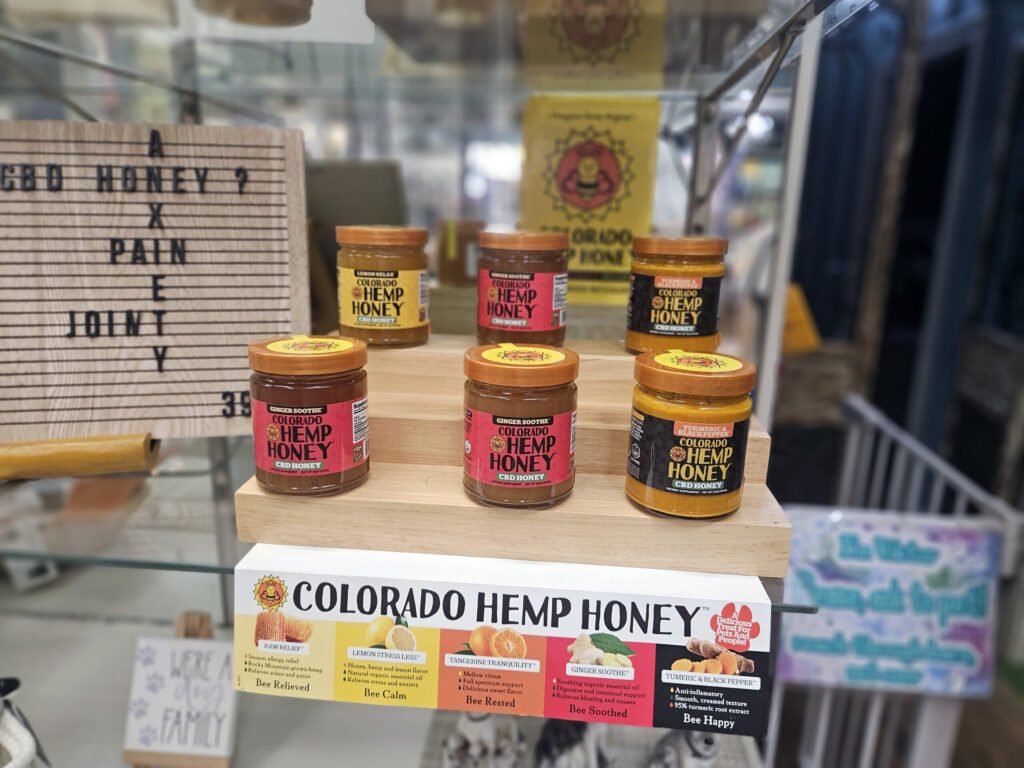
Another notable product line is Colorado Hemp Honey, which combines raw honey with ingredients such as ginger, tangerine, turmeric, and black pepper. These blends are marketed for pets as supportive options for issues such as stress, discomfort, inflammation, and nausea, though, as with any wellness product, pet owners should use judgment and consult a veterinarian when needed.
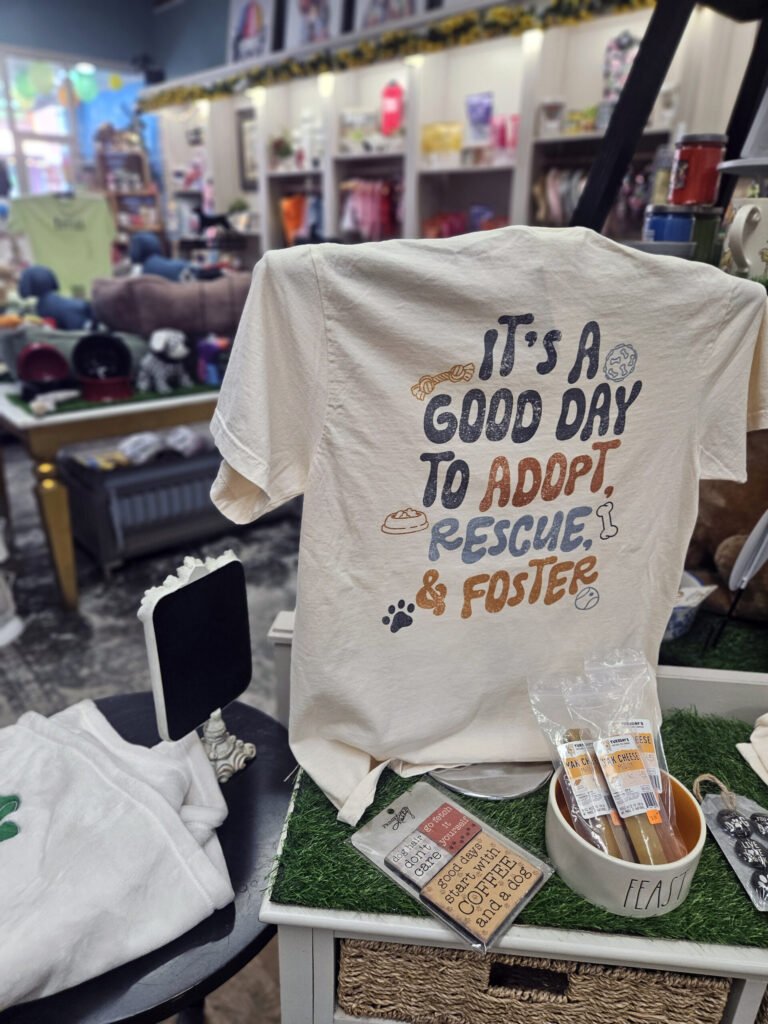
Beyond food and chews, The Dapper Hound stocks organic pet shampoos, harnesses, collars, tennis balls, cleanup supplies, and pet-themed shirts. It is the sort of store that makes sense in a town where local sourcing is not just a restaurant phrase but part of the way many businesses explain themselves.
The Tractors Steal the Show
For the agrarian crowd, the tractor show was the main event.
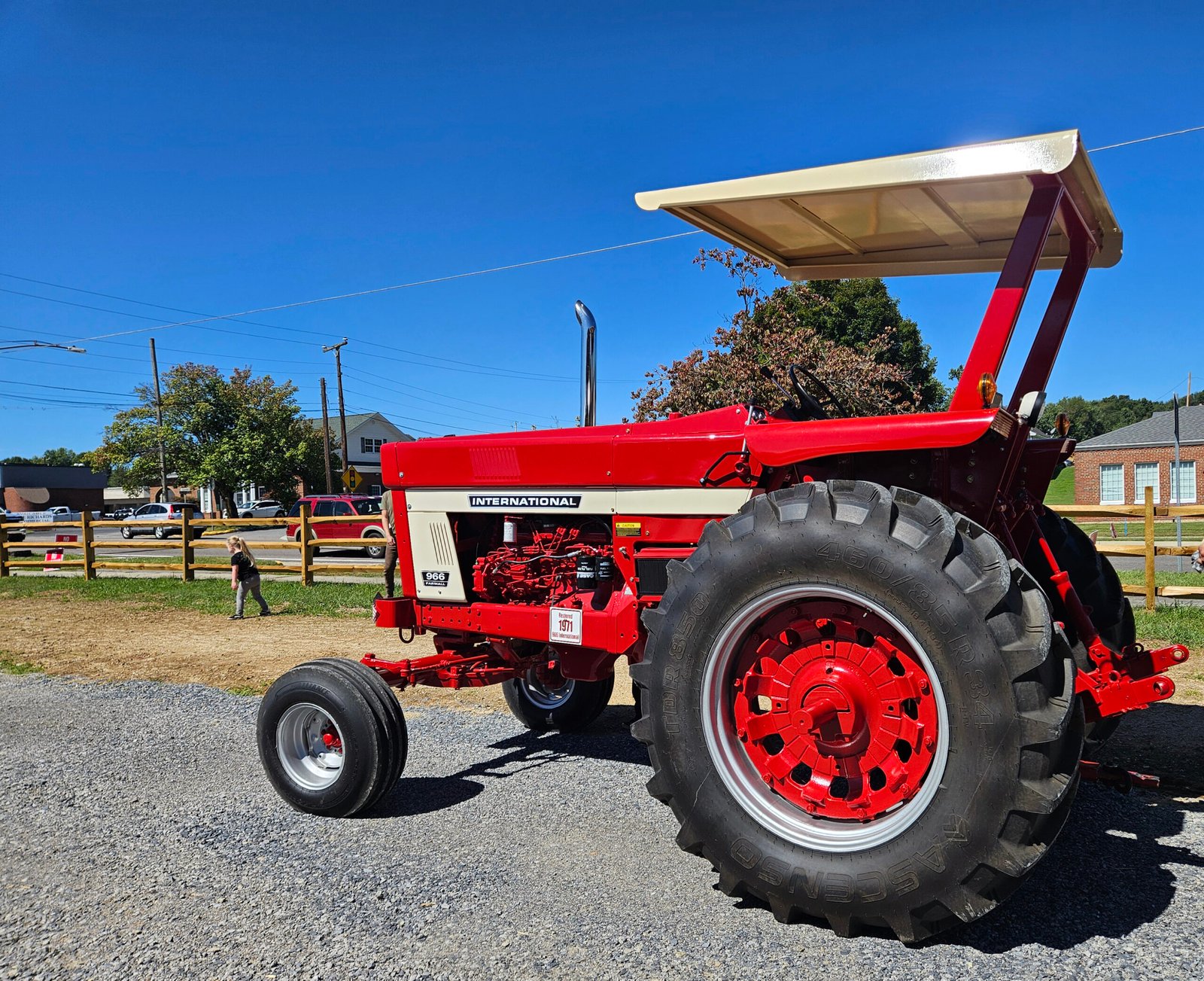
Parked along the street between vendor tents were machines from different decades, makers, purposes, and ages. Some looked carefully restored. Others looked like they had earned every dent. Together, they told a mechanical history of American farming more effectively than any signboard could have.
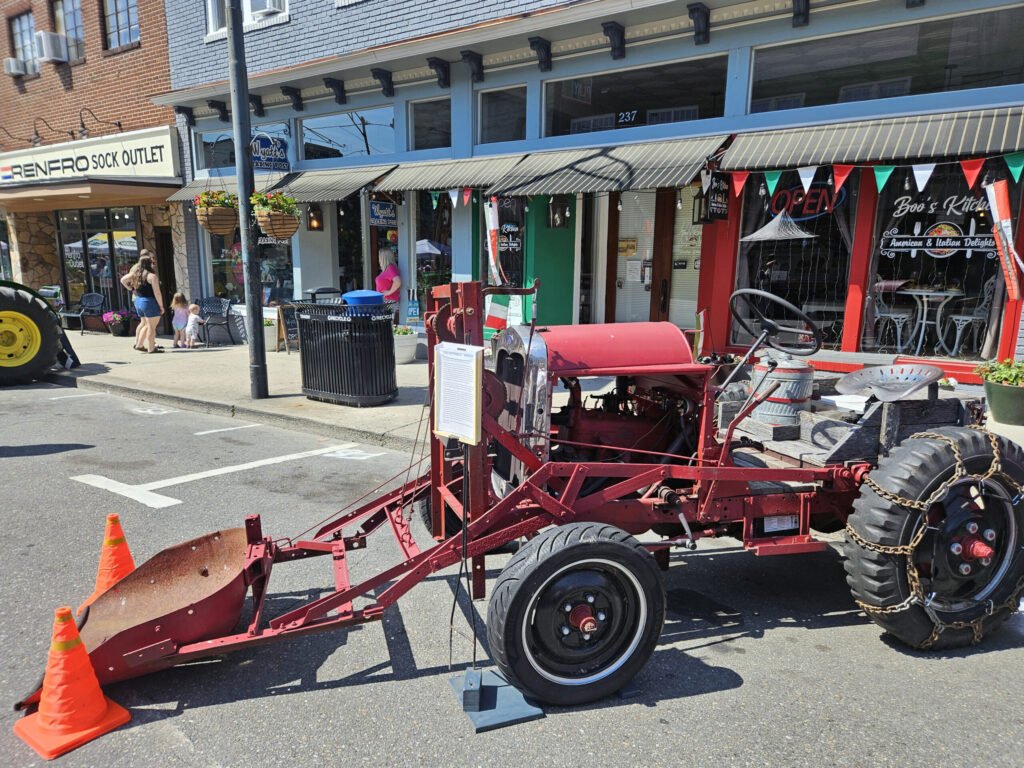
The 1930 Ford Model AA “Doodlebug” had the rough, improvised character of a machine built to solve problems rather than impress anyone. It looked like something from an agrarian version of Mad Max, all utility and stubbornness.
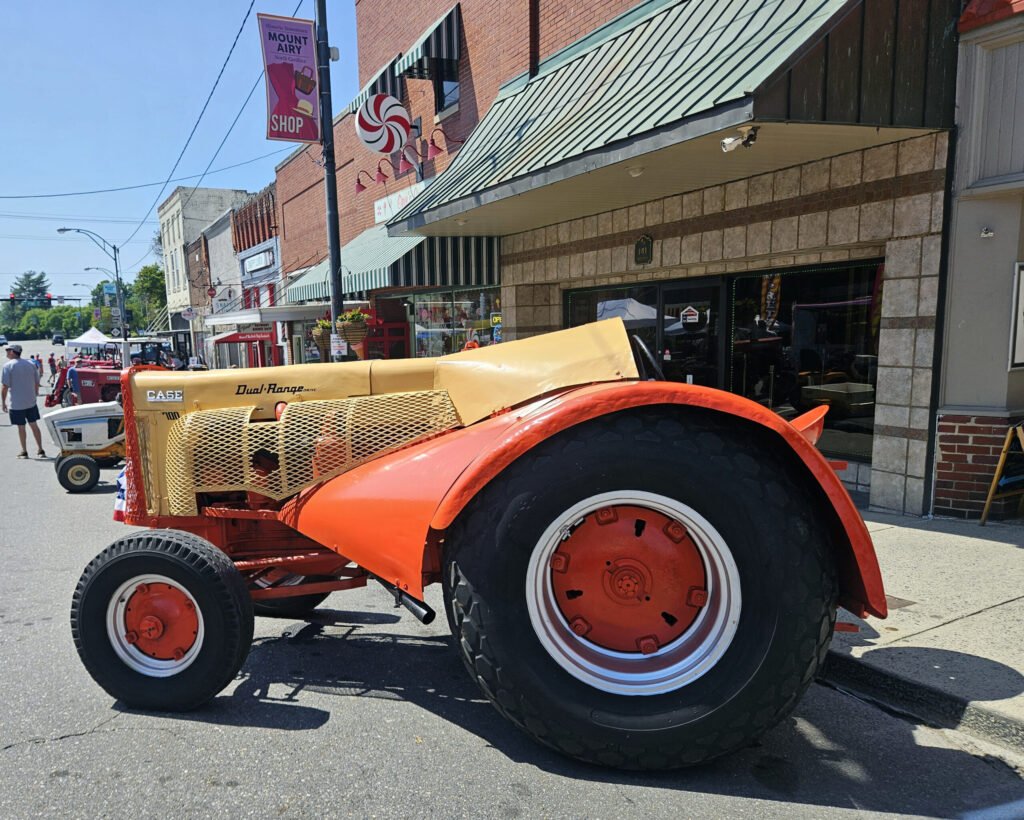
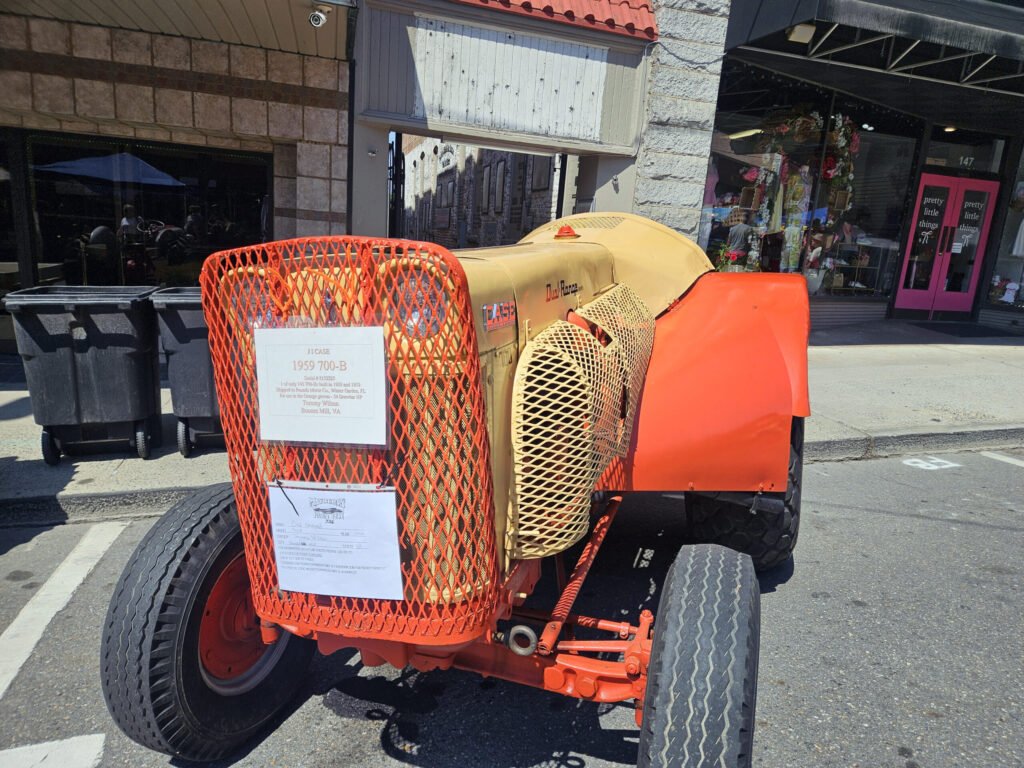
A 1959 Case Orchard Model 700-B brought a different kind of presence, low and rugged, with a stance that made you imagine driving it into combat. It is built like some kind of war machine.
Then there were the pretty ones.
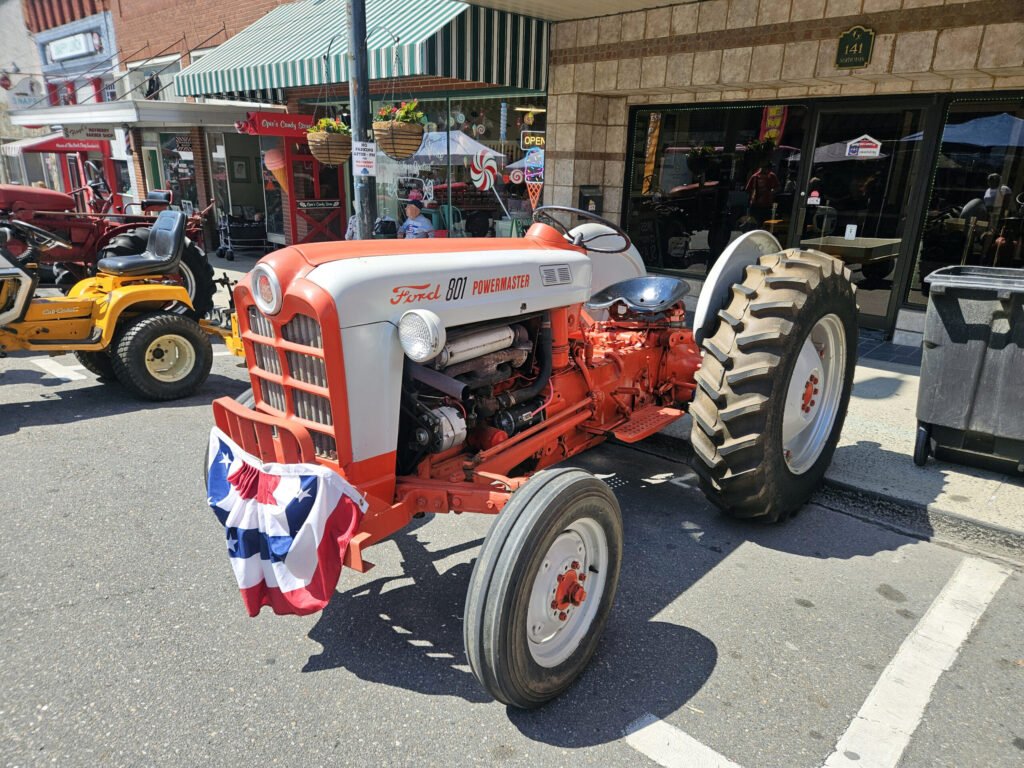
The Ford 801 Powermaster was, plainly, a handsome tractor. Its curved sheet metal and classic two-tone paint gave it a confidence that modern machinery rarely bothers with. The Massey Ferguson 50, with its fire-engine red body and exposed engine, leaned the other direction: less elegance, more muscle.
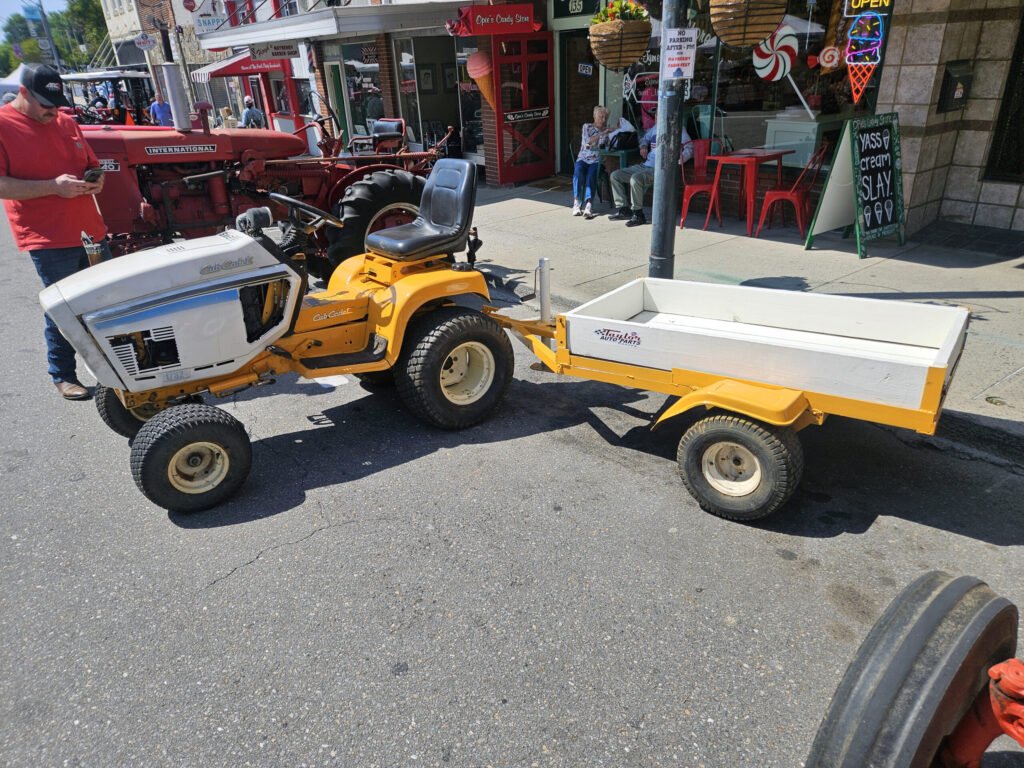
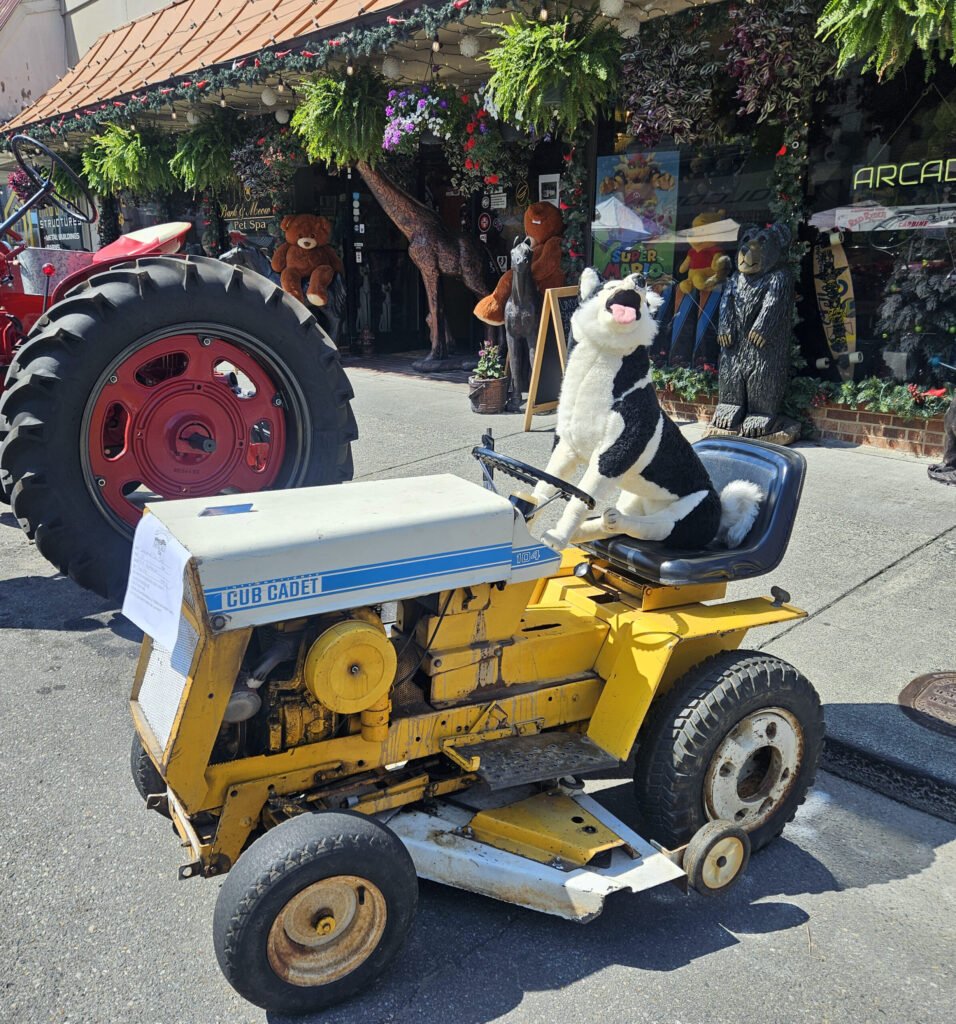
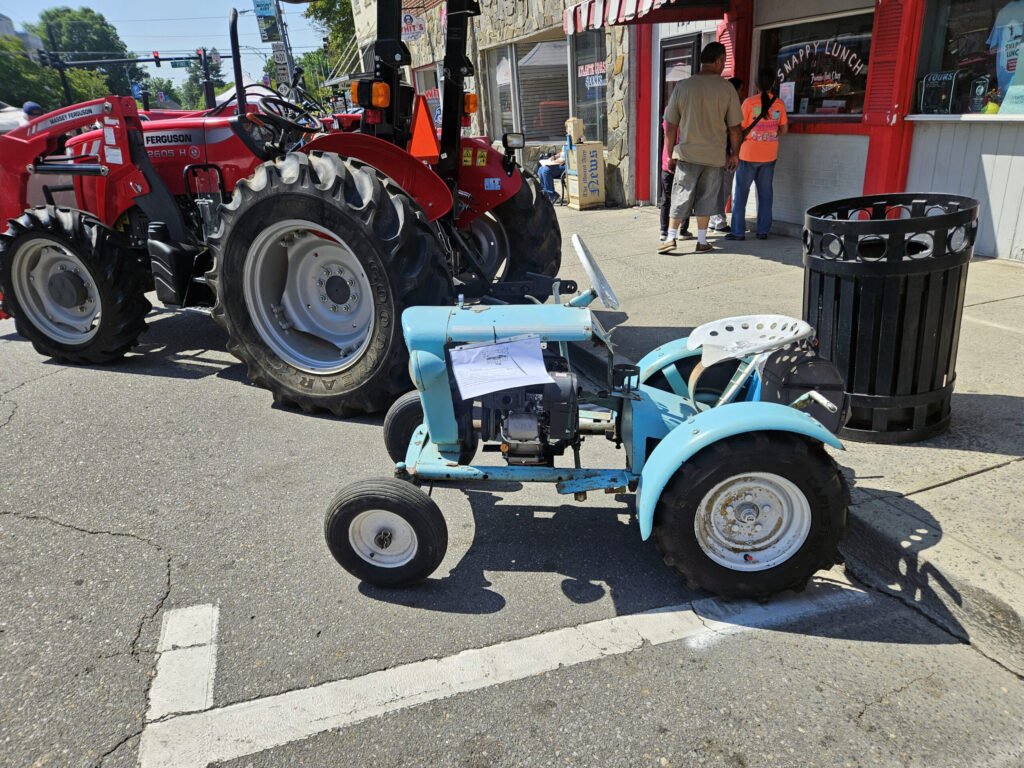
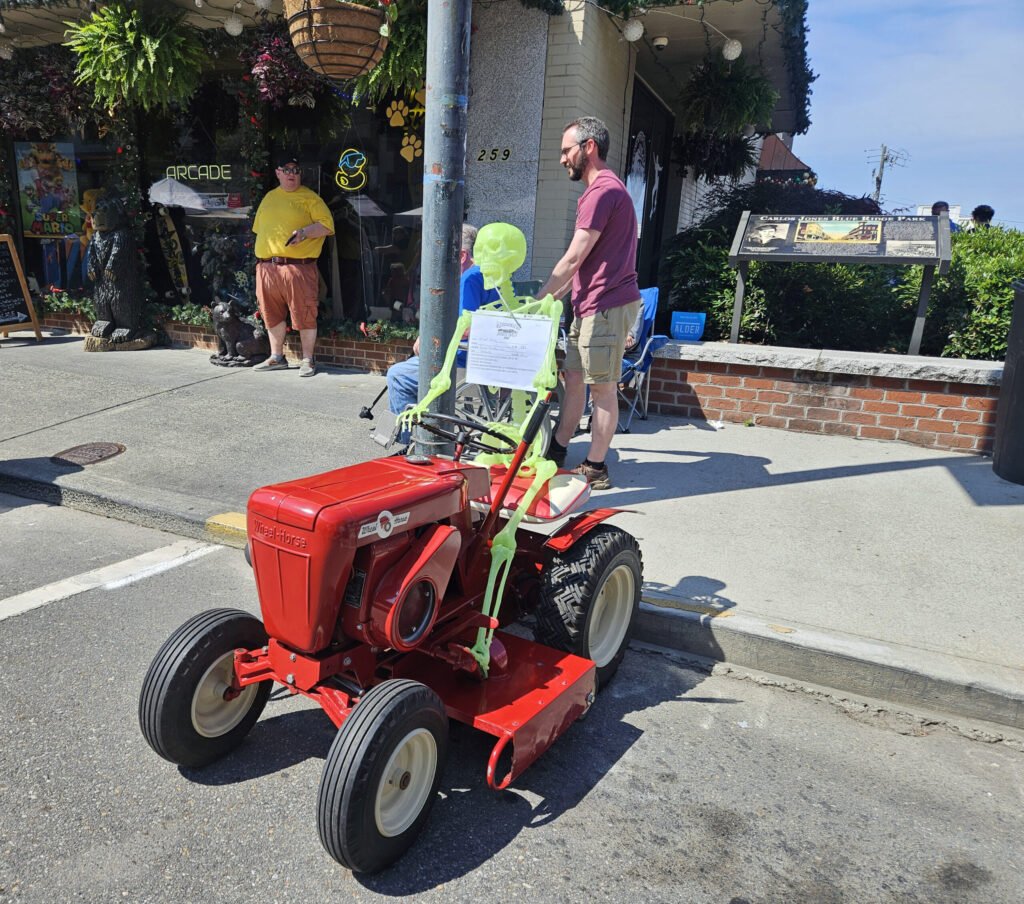
The mini tractors held their own, too. Vintage Cub Cadets and a 1961 Wheel Horse, originally designed for lawn and estate care, had a smaller but no less loyal following. They sat near the larger field machines like younger cousins at a family reunion — smaller, maybe, but still proud of the name.
Other notable machines on display included a 1954 International Harvester Super C, a 1936 John Deere, a 1958 John Deere Model 620, a Case 470, and a 1946 John Deere Model LA.
Part of the pleasure of a tractor show is that the machines invite conversation. People do not just look at them. They compare them, remember them, correct each other, ask questions, and tell stories about fathers, grandfathers, farms, gardens, and long-gone equipment that somehow still lives in family memory.
Mayberry, Machinery, and Memory
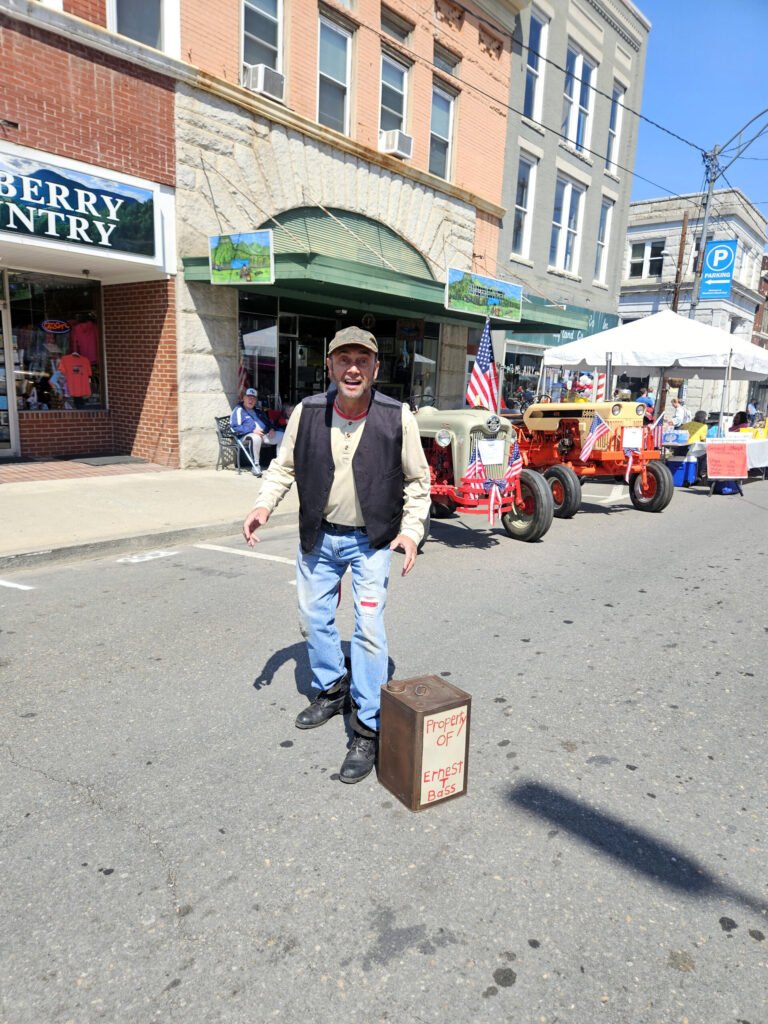
As if the tractors, crafts, food, and local shops were not enough, Ernest T. Bass eventually appeared, wandering the streets with that slightly unhinged grin that makes him look as if he has either just caused trouble or is actively looking for some.
That was the moment the whole festival seemed to explain itself.
Mount Airy does not separate its nostalgia from its working life. The Mayberry identity is there, and the town clearly enjoys it. But beside the vintage police cars and familiar characters, there are beekeepers talking pollinator health, quilters preserving handmade traditions, small businesses promoting local goods, food vendors feeding a packed Main Street, and tractors lined up like a rolling history of American farm work.
The Mount Airy Farm Fest is more than a downtown block party. It is a reminder that agriculture is not just part of the area’s past. It is still visible, still celebrated, and still tied to the way the community sees itself.
By the end of the day, with the smell of kettle corn in the air, old tractors shining in the street, and Ernest T. Bass grinning his way through the crowd, Mount Airy felt like exactly what it is: a town where Mayberry and machinery can share the same road.









Leave a Reply