

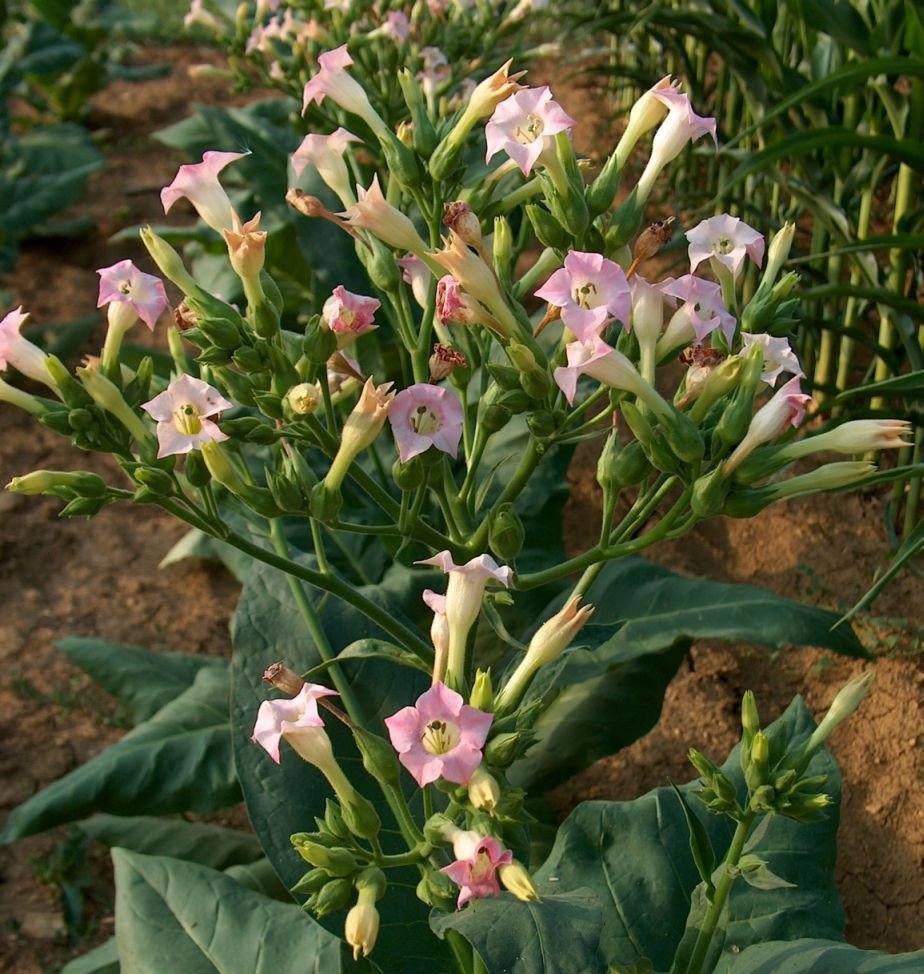
On a breezy Saturday at the Lebanon, Virginia, Farmers Market, the story of tobacco’s long decline did not begin in a museum, an archive, or an abandoned warehouse.
It began at a farm table.
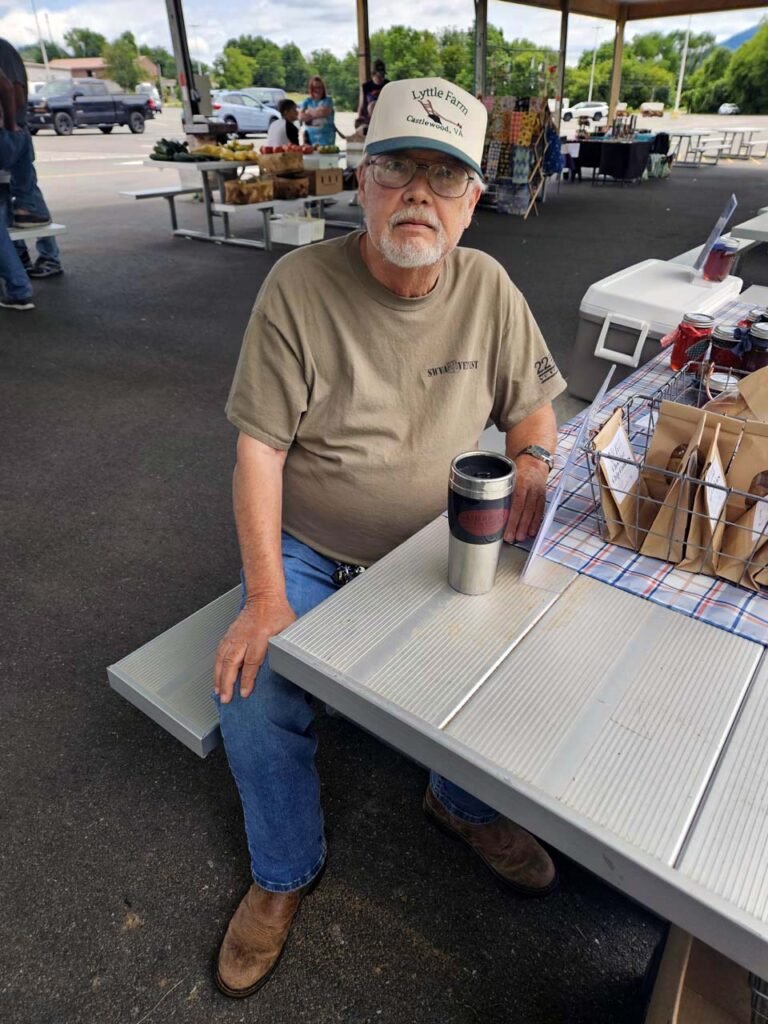
Travis and Shiloh Brooks were selling homemade goods: fresh bread, cookies, honey, and the promise of grass-fed beef and lamb to come. Travis wore a cap embroidered with the name of the place behind it all: Lyttle Farm of Copper Ridge.
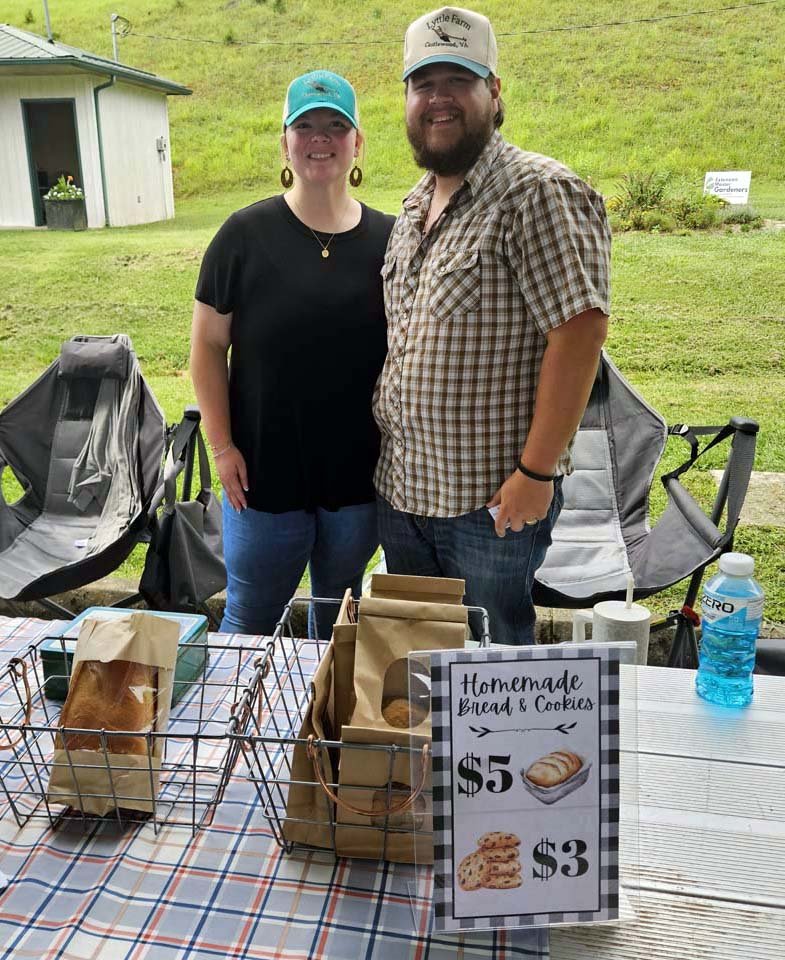
The farm, formally The Lyttle Farm of Copper Ridge in Castlewood, Virginia, is not a new venture trying to invent a rural identity. Instead, the Lyttle family has worked this Virginia Century Farm for generations, operating on Copper Ridge since 1898. For much of that history, Shiloh said, her family grew tobacco.
That one fact connects the farm to a much larger regional story. Across Virginia, North Carolina, and the Appalachian Highlands, tobacco once served as more than a crop. It shaped the calendar, delivered the paycheck, supported the warehouse system, carried family inheritance, and, for many small farms, offered one of the few agricultural products valuable enough to support a household on limited acreage.
Today, tobacco no longer holds the same place. However, not all the farms have disappeared. Some families have shifted into hay, cattle, vegetables, poultry, vineyards, agritourism, or off-farm income. Others have sold or rented out their land. Still others, including Lyttle Farm of Copper Ridge in Virginia and Butterfield Farm in Telford, Tennessee, point to another path: farmers are turning former tobacco ground into a more diversified, local, and soil-conscious farm economy.
A Crop That Organized Rural Life
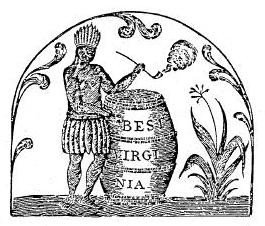
Tobacco shaped Virginia and North Carolina for more than three centuries.
In colonial Virginia, tobacco became one of the defining export crops of the region. It was labor-intensive, land-hungry, and deeply tied to slavery, credit, trade, and plantation agriculture. Farmers cleared land, planted tobacco, harvested it by hand, and cured it for sale into distant markets.
Over time, different tobacco regions developed different identities. Bright-leaf tobacco became closely associated with the Piedmont of North Carolina and Virginia, including Caswell County, North Carolina, and Danville, Virginia. Burley tobacco became more common in the mountain and upper South regions, including parts of Appalachia.
The Bright Leaf
The bright-leaf story is often traced to Caswell County, near the Virginia line. According to historical accounts, an enslaved man named Stephen, owned by Abisha Slade, helped discover a method for curing tobacco in the 1830s that produced a lighter, golden leaf. The process was later refined into flue-curing, which used heat without exposing the leaf directly to smoke.
That mattered because bright-leaf tobacco fit the growing cigarette market. Thin, sandy Piedmont soils, less suited to other crops, could produce the lighter leaf buyers wanted. Towns such as Danville and Durham grew into tobacco centers, with warehouses, auction floors, processing plants, and fortunes tied to the leaf.
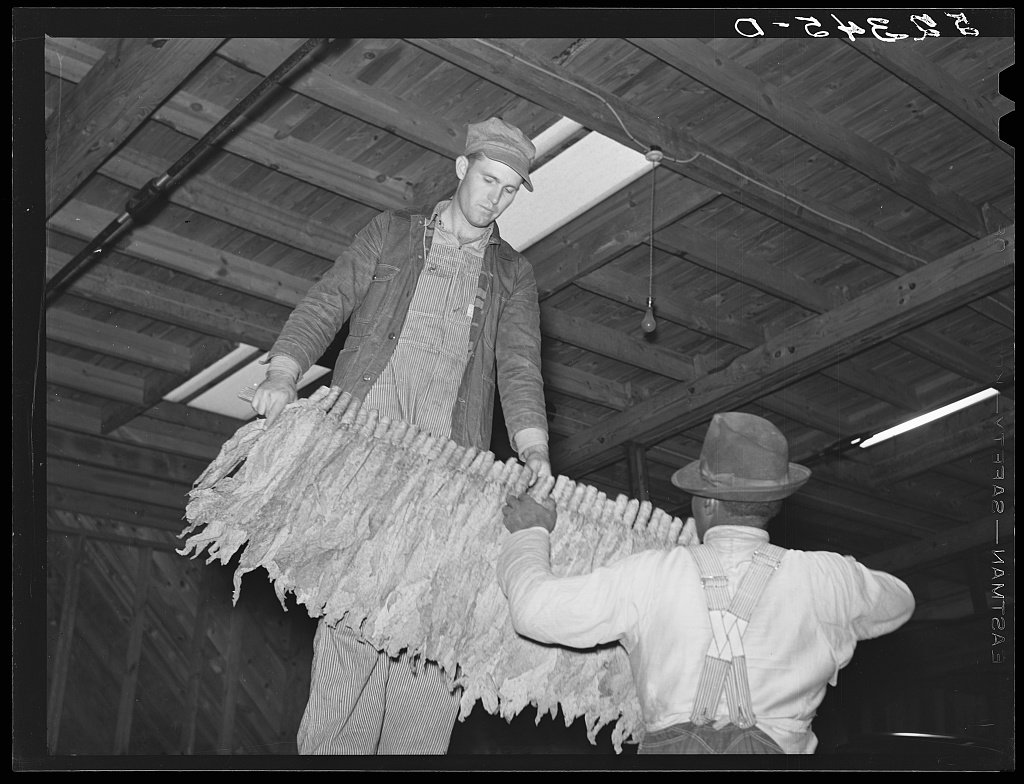
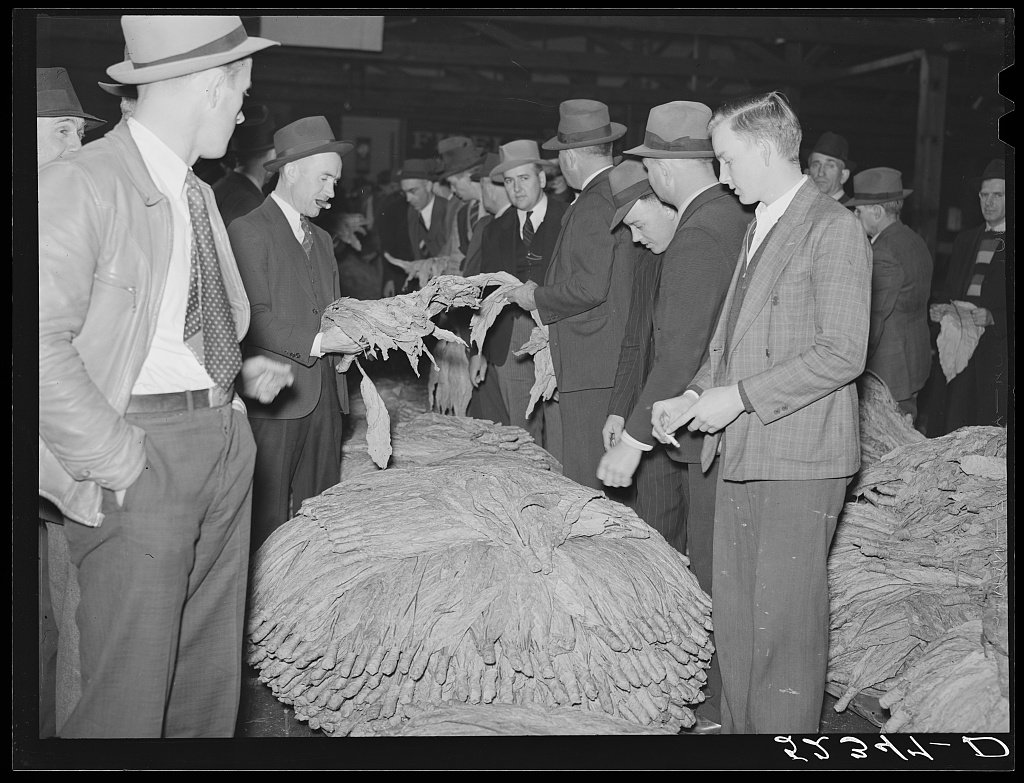
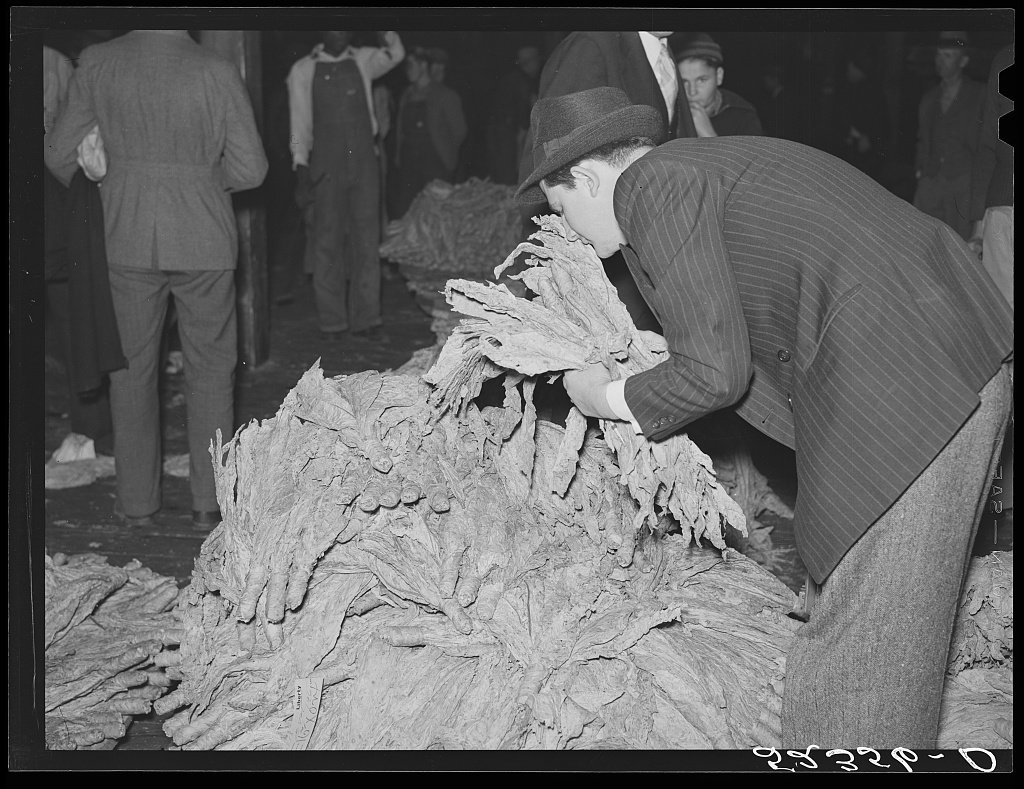
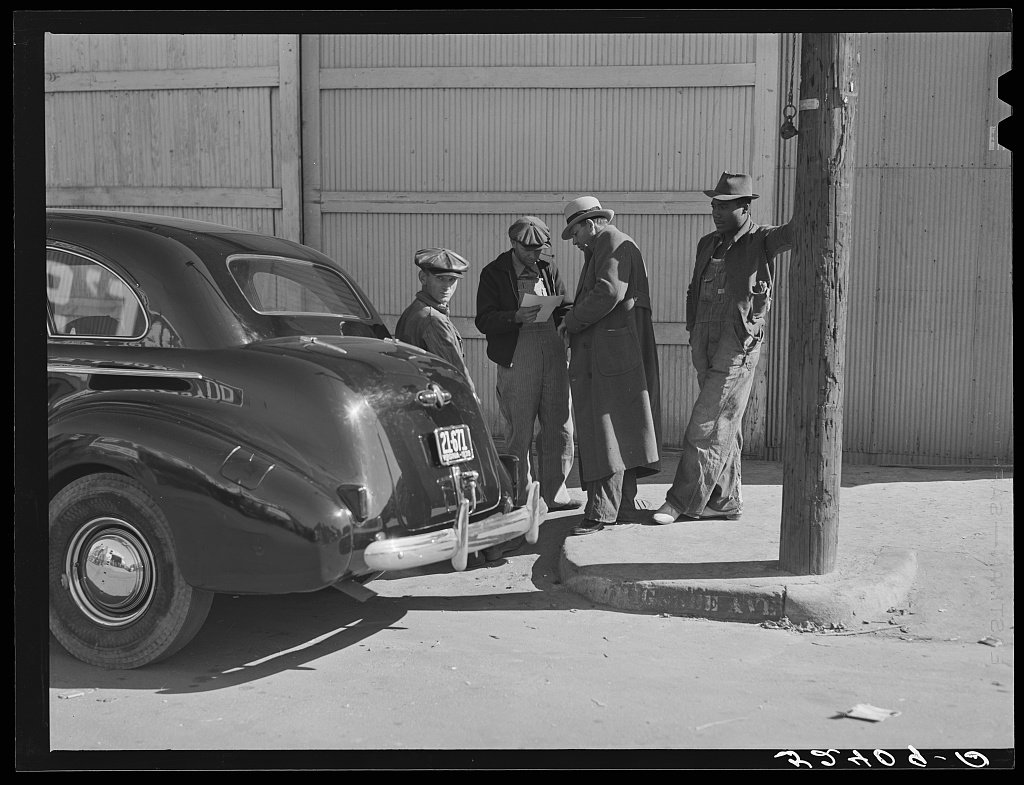
By the 20th century, tobacco was not merely a crop. It was an annual financial event. Families measured the year-round planting, topping, suckering, harvesting, curing, grading, and selling. In many communities, the tobacco warehouse served almost like a seasonal bank. When the crop sold, money moved through feed stores, equipment dealers, grocery stores, churches, and Main Street businesses.
The work was hard. Leaves were harvested as they ripened. Curing requires attention and experience. After curing, the brittle leaves had to be brought back into condition, graded, and prepared for market. Older farmers remember the smell of curing barns, the heat, the dust, and the nervous hope that the crop would bring enough to carry the family another year.
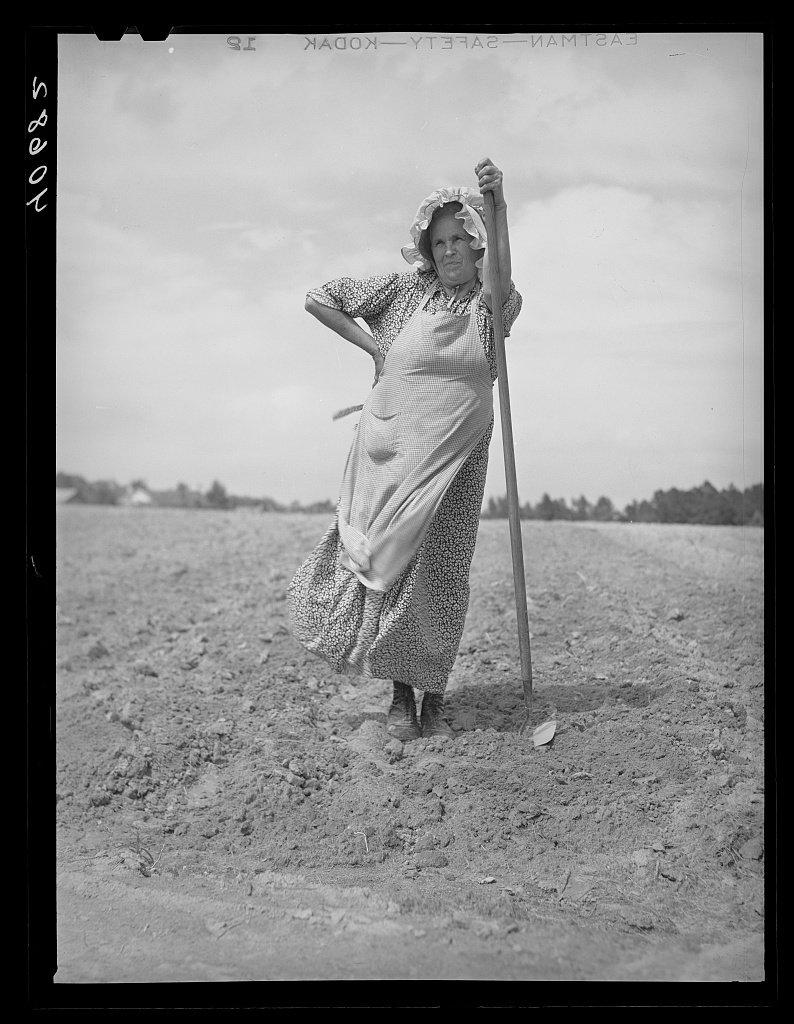
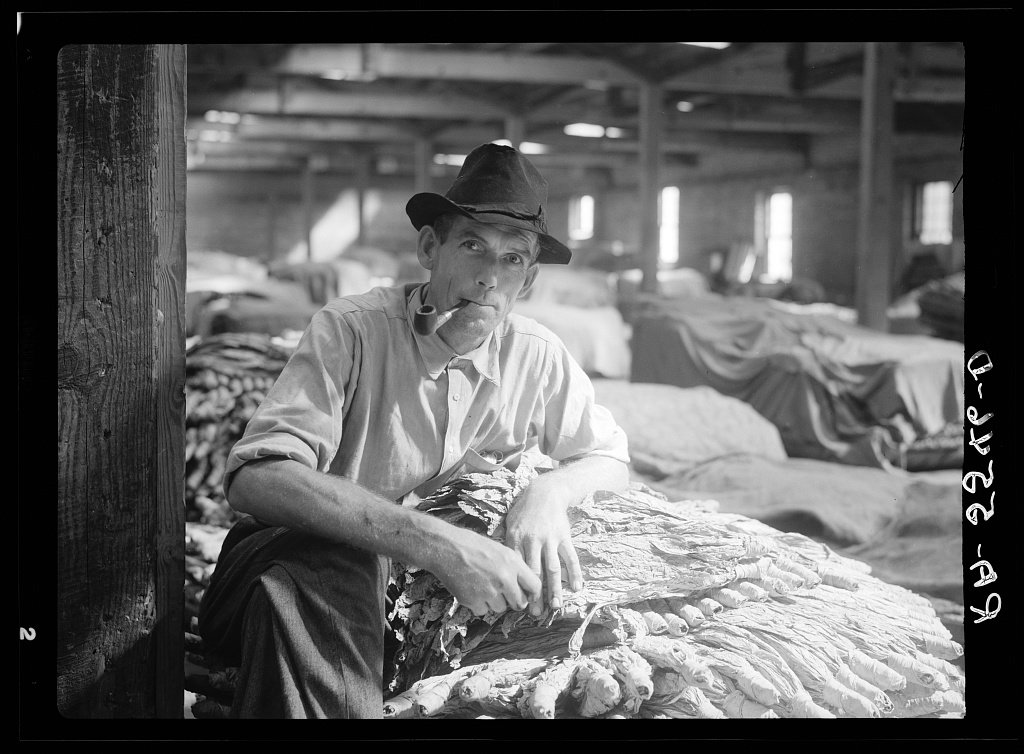
On US 15 about five miles northeast of Durham North Carolina 1940 May Delano Jack 1914 1997
The Quota Years
In 1938, the federal government created a tobacco quota and price-support system intended to stabilize supply and protect prices. The system limited how much tobacco could be grown and marketed, with quotas tied to the land. In exchange, growers had access to a price-support structure that helped shield small farmers from the full force of market swings.
For many small farms, especially in hill country where large-scale mechanized commodity farming was difficult, tobacco was one of the few crops that could generate meaningful income on limited acreage.
That system did not make tobacco farming easy, but it did make it more predictable. A family with a small tobacco allotment could count on a market, a price structure, and a place to sell.
That began to change in the late 20th century. Smoking rates declined. Health concerns and litigation reshaped the industry. Cigarette companies increasingly looked to foreign tobacco. U.S. leaf became more expensive compared with tobacco grown elsewhere. Quotas shrank, and the system that had once stabilized farm income became less secure.
The major turning point came with the Fair and Equitable Tobacco Reform Act of 2004, commonly known as the tobacco buyout. The law ended federal tobacco marketing quotas and price-support loans after the 2004 crop year and created transition payments for quota holders and producers from 2005 through 2014.
For tobacco families, the buyout was both an ending and a decision point.
At Lyttle Farm of Copper Ridge, Jim Lyttle was growing tobacco when that decision point arrived.
“They took away our price supports,” Lyttle said, “so we just took our buyout and invested.”
A Century Farm Turns Toward Livestock
The investment changed the direction of the farm.
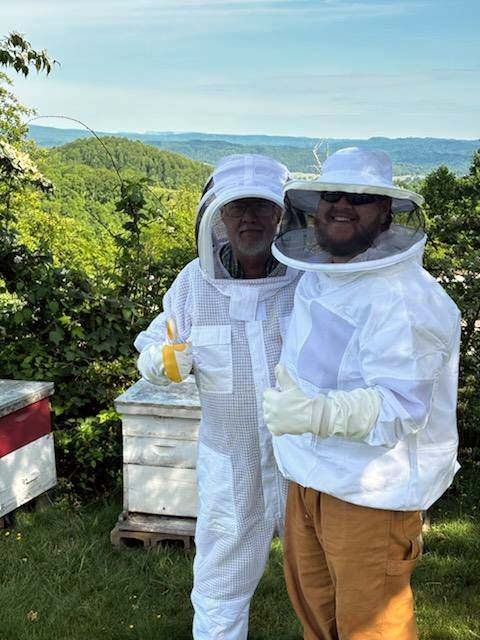
“We’re now into sheep, beef, and bees,” Jim said, “and we’ve got three alpacas out there.”
The alpacas are not just ornamental. Jim said they bond with sheep or calves and help drive predators away.
“They bond with the sheep or calves and just drive the predators away,” he said.
The shift into sheep was helped by a market opportunity close to home. Jim said a contract between Food City and the Scott County Hair Sheep Association gave local farmers a ready market for lamb.
“That gave us a ready-made market to go into the sheep and lamb business,” he said.
That contract eventually ended when the company found cheaper lamb from New Zealand and Australia, but the Lyttles kept looking for markets. Jim said lamb still has demand, including among Muslim and Jewish customers who require animals to meet specific standards for halal or kosher processing.
“They’re specific,” he said. “It has to be without blemish.”
That detail matters because it shows the post-tobacco transition was not simply a matter of choosing a new crop. Tobacco had a built-in marketing structure: quotas, warehouses, auctions, and buyers. Once that system was gone, farmers had to find or build new markets themselves.
For the Lyttle family, that has meant direct sales, local food, livestock, honey, and a renewed push by the next generation.
Shiloh, Jim’s daughter, has been farming her whole life. Travis Brooks, her husband, married into the family and has been farming for five years. Together, they represent what Jim hopes will be the farm’s future.
“It’s a big family thing,” Travis said. “We try to keep it within the family.”
Shiloh said the farm had taken a brief break because of family and health issues, but the family was getting back into it.
“We’re really getting back into it,” she said.
Her message to customers is simple.
“Shop local, you know, support local,” Shiloh said. “It matters what you feed into your body, and supporting your neighbor is always the best way to do it.”
That is a very different sales model from tobacco. Tobacco was grown locally but sold into a national and global industry. The farmer’s customer was not usually the neighbor down the road. Today, for many diversified farms, the neighbor is the customer.
Not One Replacement, but Many
The post-tobacco story can be tempting to tell too neatly: tobacco disappeared, regenerative agriculture arrived, and the land healed.
The truth is more complicated.
Across Virginia, North Carolina, Tennessee, and the broader Appalachian Highlands, tobacco’s decline did not produce a single replacement crop. Some land went into hay. Farmers expanded beef cattle. Others tried vegetables, berries, nursery crops, vineyards, or poultry. People rented land to neighbors. Some left farming. Some sold land for development. Others continued growing tobacco under contract in a more consolidated and mechanized industry.
Regenerative agriculture is part of the story, but it is not the whole story.
What tobacco’s decline did do was force families to reconsider what their land could do, who their customers were, and whether the next generation could afford to stay in agriculture.
Jim Lyttle worries about that future. He has watched farmers age, children leave farms, and developers offer money for land that once supported crops and livestock. But in Travis and Shiloh, he sees a reason for hope.
“I’m very blessed to have a daughter and son-in-law who are interested in taking over,” he said.
That succession piece is central to the tobacco story. The buyout may have ended one system, but the deeper question is whether farm families can build another one strong enough for their children to inherit.
From Tobacco Ground to Moving Animals
At Butterfield Farm in Telford, Tennessee, the story’s geography widens beyond Virginia and North Carolina into the broader Appalachian Highlands.
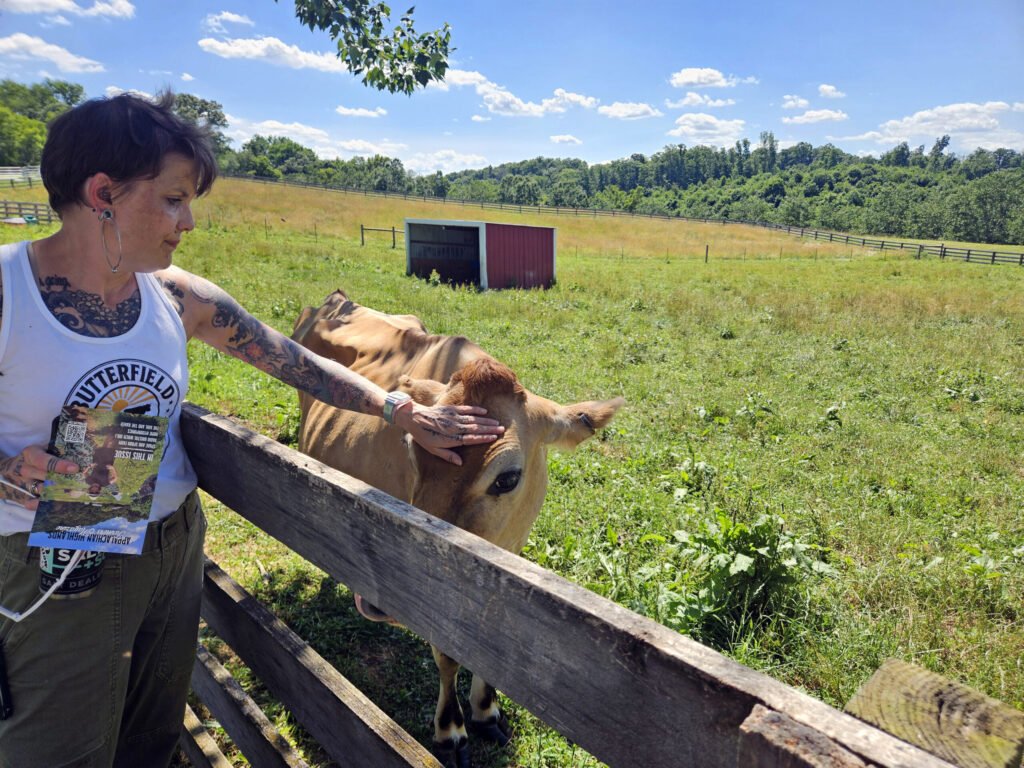
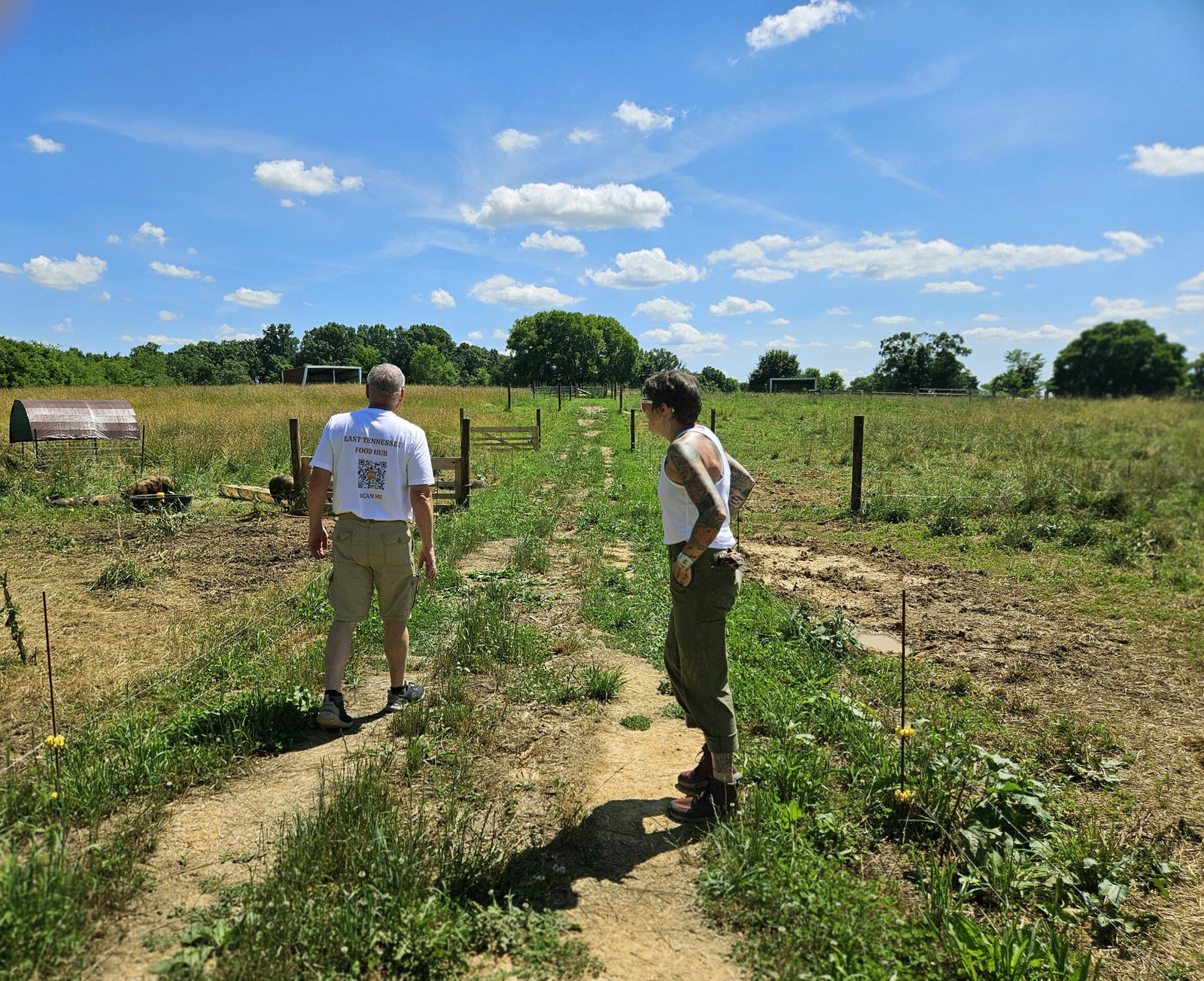
Butterfield Farm covers 117 acres. Abby Terhune farms the property with her husband, Bill. The older part of the farmhouse dates to 1850, and Terhune said the land had once been used for tobacco and later hay. When she arrived five years ago, she saw beauty, but also neglect.
“The land really needed some love,” she said.
That sentence could sound sentimental if it were not followed by the practical details of what love means on a working farm: fencing, water lines, shade, manure, rotation, parasite control, creek protection, and constant adjustment.
Butterfield’s system depends on movement.
“Nobody sits,” Terhune said.
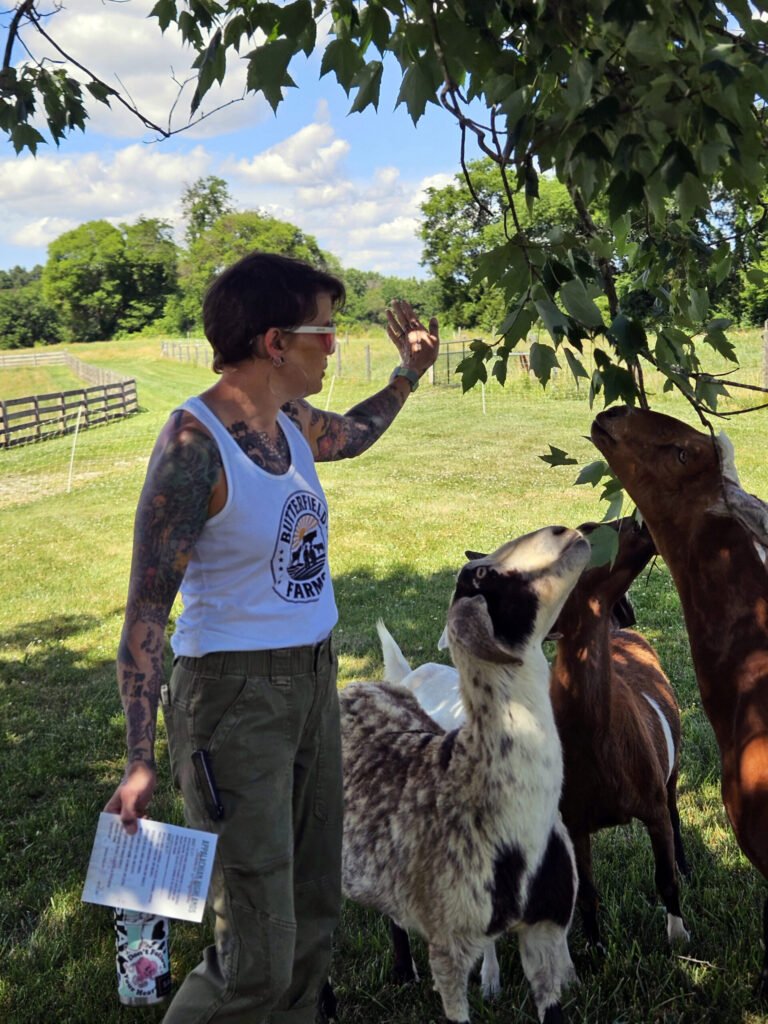
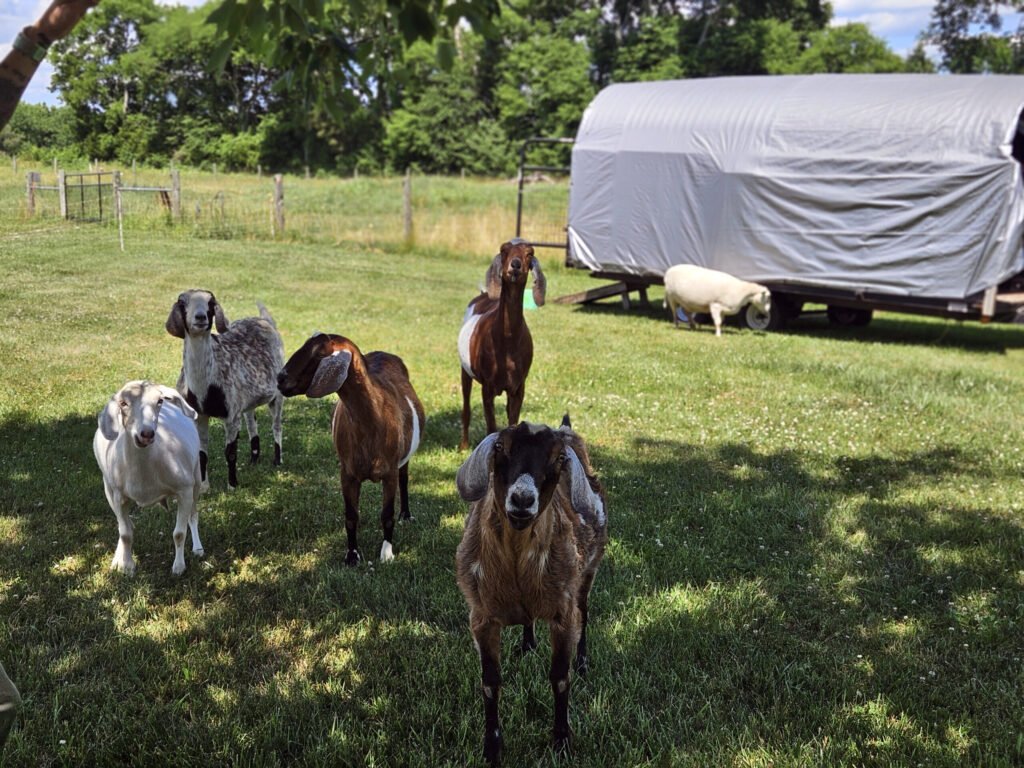
The cows move often, sometimes every day or two in summer. The goats move weekly. The pigs rotate through paddocks. Even the horse and donkey are moved rather than left to wear down one spot.
For Terhune, movement is not just about fresh grass. It is about breaking parasite cycles, spreading manure, giving forage time to recover, and keeping animals from repeatedly damaging the same ground.
“The life cycle of a parasite is 21 days,” she said. “You move them every day. The goats are every week. The cows in the summer are every day or two.”
At the goat fence, Terhune pulled down a tree branch so the goats could strip the leaves. She said the tannins in the leaves can help deter parasites. Nearby, pigs rooted and rested in tall grass and shade. One large pig had settled into a mud wallow. Terhune turned on a hose and called the pigs in for water and a cooling spray.
“We want them to do what pigs do,” she said. “We want them to wallow. We want them to get wet. We want them on grass.”
The pigs are Idaho Pasture Pigs, moved through a paddock system inspired by farmer and author Joel Salatin. The setup allows the animals to disturb the soil, eat forage, fertilize the ground, and move on before they do lasting damage.
Managed poorly, pigs can tear up land. Managed carefully, Terhune sees them as part of the farm’s recovery.
Rebuilding Soil Is Not a Slogan
The word “regenerative” is easy to overuse. At Butterfield Farm, the concept is less a label than a daily chore list.
The farm raises South Poll cattle for beef and A2A2 Jersey cows for family milk and for the pigs’ fermented feed. Terhune said the farm recently processed its first grass-finished beef animals, which took about three years to raise.
“We want slow growth,” she said. “We want the land to be rotated. We need manure.”
For her, livestock production is tied directly to soil recovery.
“You’re not just doing it to raise the meat for the market,” she said. “You’re doing it for the whole cycle. It’s the land. We are replenishing the land.”
That is one of the major differences between the old tobacco model and farms like Butterfield. Tobacco removed nutrients through a single cash crop and required repeated soil disturbance. The damage was not caused by tobacco alone, but by the larger system around it: intensive cultivation, repeated tillage, erosion, nutrient removal, and, in many places, years of limited rotation.
Regenerative systems try to reverse that pattern by keeping animals moving, keeping living roots in the ground, returning manure to pastures, reducing erosion, and building better water management.
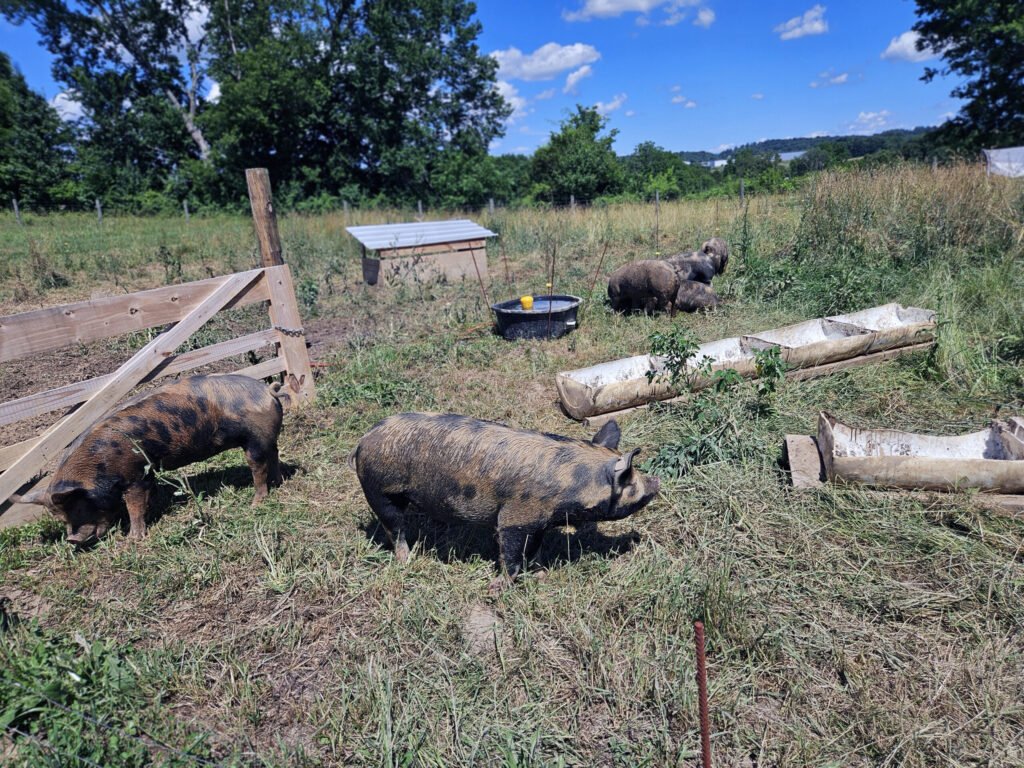
At Butterfield, some of that work is easy to see: goats at the fence, cattle in the shade, pigs in the grass. Some of it is less picturesque but just as important.
One of the farm’s biggest conservation efforts has involved water. Terhune said the farm worked with the Natural Resources Conservation Service on a 3,400-foot creek project that included rock stabilization and water lines to help keep cattle out of the stream. She described it as a $440,000 cost-share project that took about two years.
“They put rock all the way through and across the street,” she said.
The goal is to protect the creek and prevent streambank erosion. Terhune said previous practices had allowed cattle to move in and out of the water, pushing soil back and wearing away farmland.
“We don’t let our cows in the water,” she said.
NRCS also helped with a watering system, and Terhune said the farm received 2,000 feet of water lines.
Those improvements are not as charming as a calf or a wallowing pig, but they are what make the grazing system work. Without water, fencing, and shade, rotation is only an idea. With them, animals can be moved with purpose.
The Hard Part After Tobacco
Even for farms that do pivot, the transition is not easy.
At Butterfield, Terhune is open about what has not worked. Sheep were not a good fit. Goats brought parasite challenges. Jerseys struggle in the summer heat and need shade and water. Pigs are expensive to feed. Grass-finished cattle take years. Mobile shade, fencing, minerals, water lines, and rotation all require money and time.
“We learned a lot of hard lessons,” she said.
That honesty matters. Regenerative farming is sometimes described as a simple cure for damaged land. On an actual farm, it is more like a long apprenticeship with the soil, the animals, and the weather.
Five years in, Terhune said she can see changes.
“It’s been good to be able to see the difference over the last five years,” she said.
What Remains
Across the Appalachian Highlands, old tobacco barns still stand along tree lines and back roads. Some are collapsing. Some have been converted for hay, equipment, or storage. Others remain as reminders of a crop that shaped families, towns, and landscapes.
The tobacco economy was never just about tobacco. It was about land, labor, credit, warehouses, auctions, federal policy, family inheritance, and rural identity. When that system changed, farms had to change with it.
At Lyttle Farm of Copper Ridge, that change meant investing in sheep, beef, bees, and alpacas. It also meant trusting the next generation, with Travis and Shiloh Brooks helping carry a Century Farm into a new market.
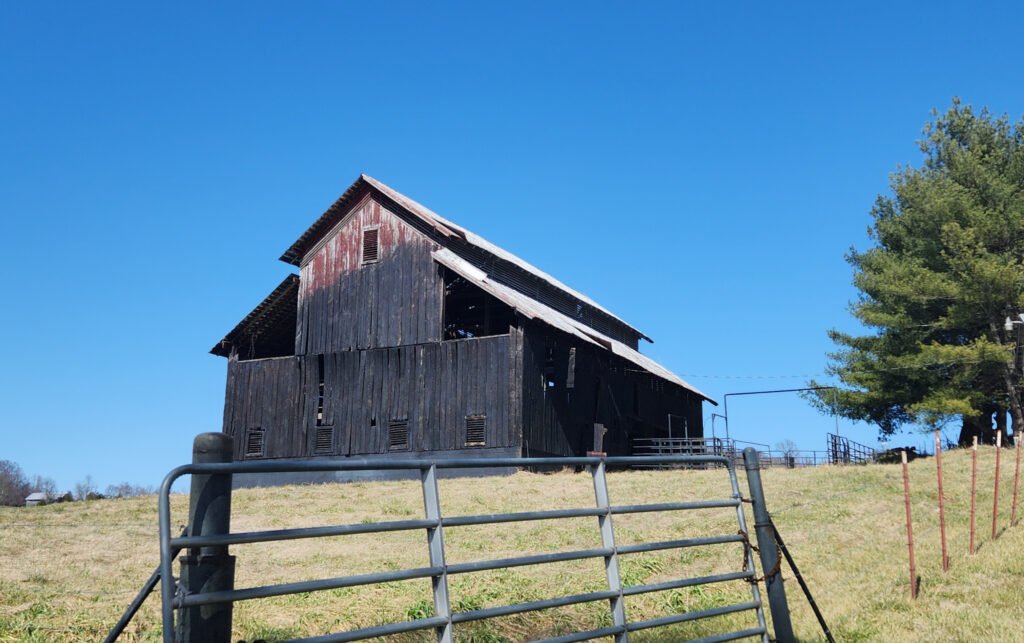
At Butterfield Farm, it means moving animals, protecting a creek, building paddocks, spreading manure, learning from mistakes, and trying to bring neglected land back into balance.
Neither farm erases the tobacco past. Both show that the end of tobacco need not mean the end of farming.
On Copper Ridge, sheep now graze where tobacco once helped support a family. Bees work the fields. Alpacas watch the flock. At Butterfield, Terhune walks a former tobacco-and-hay property with the urgency of someone who sees the land as unfinished work.
The crop that once defined much of the region is no longer the center of the story. But the farms are still here, and in some places, the soil is being asked to grow something tobacco never could: a more local, more diversified future.









Leave a Reply