

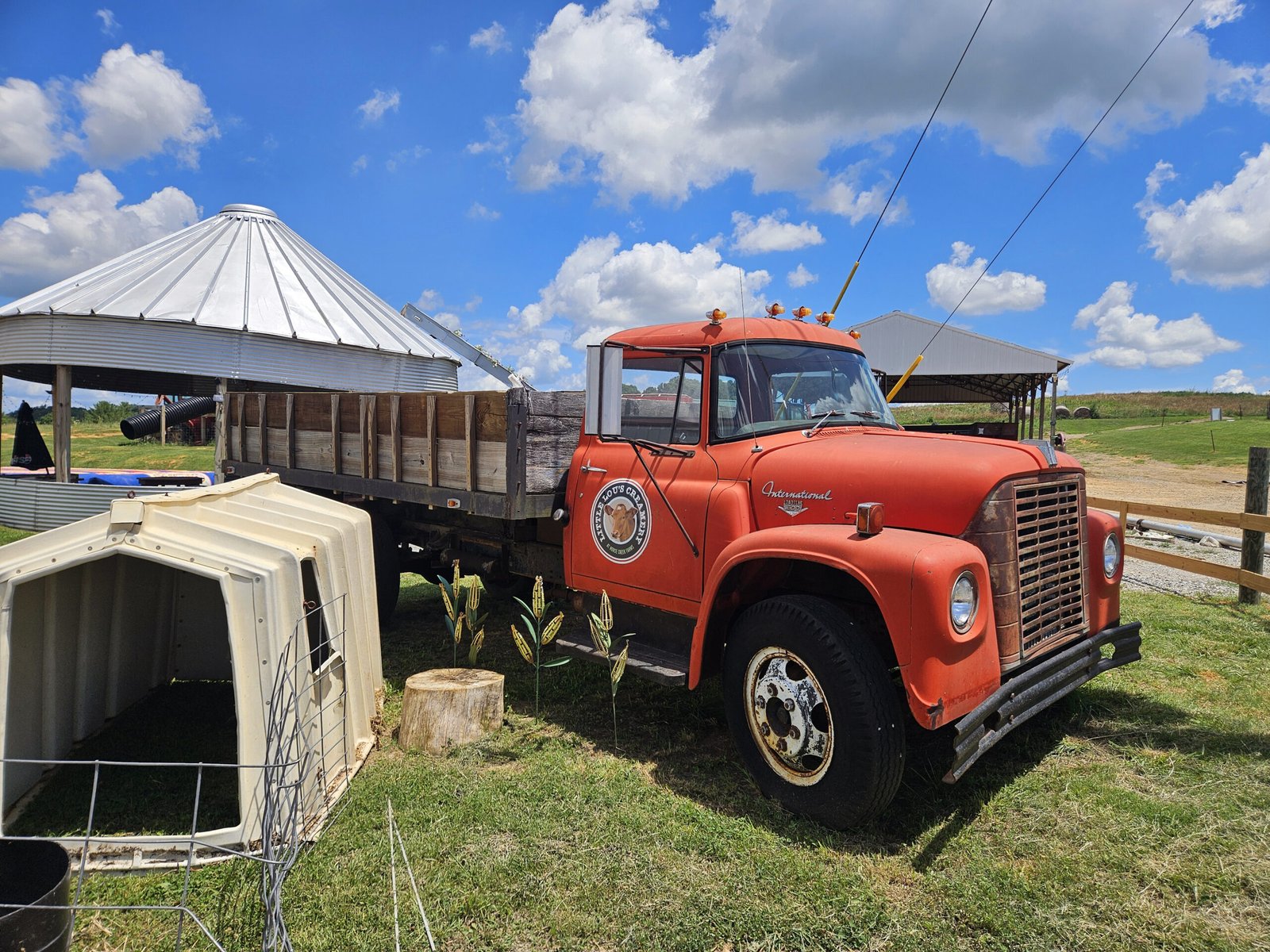
By the time we pulled into Chuckey on June 13, the East Tennessee heat had made the first stop on our Farm Tour route feel like a search for shade. Little Lou’s Creamery answered with cold air, vanilla ice cream, and the smell of fresh waffle cones hitting the press.
My wife and I ordered good, old-fashioned vanilla, and it was immediately clear this was not the mass-manufactured ice cream people buy in giant plastic tubs. It had weight to it. The flavor was clean, rich, and unmistakably dairy-forward — the kind of ice cream that makes you slow down after the first bite.
That richness made more sense later, after Scott Armstrong described the farm’s high-butterfat milk and Emmy Armstrong explained how the creamery fits into the larger local milk system. For now, Horse Creek’s milk is picked up every other day and hauled to Asheville, where it goes into the Laura Lynn label for Ingles. Little Lou’s is using milk under that same label while the family works toward processing and bottling its own milk on the farm.
That is the larger story at Horse Creek Farms: an old dairy trying to build a more direct route to the people who drink its milk, eat its ice cream, and visit the land where both begin.
Horse Creek Farms, which the Armstrong family traces to about 1774, is believed by the family to be Tennessee’s oldest operating dairy farm. But the business operating there is not stuck in the past. The farm is now home to Little Lou’s Creamery, which opened in 2025 and gives visitors a reason to come directly to the property rather than encounter the farm only through a milk label at the grocery store.
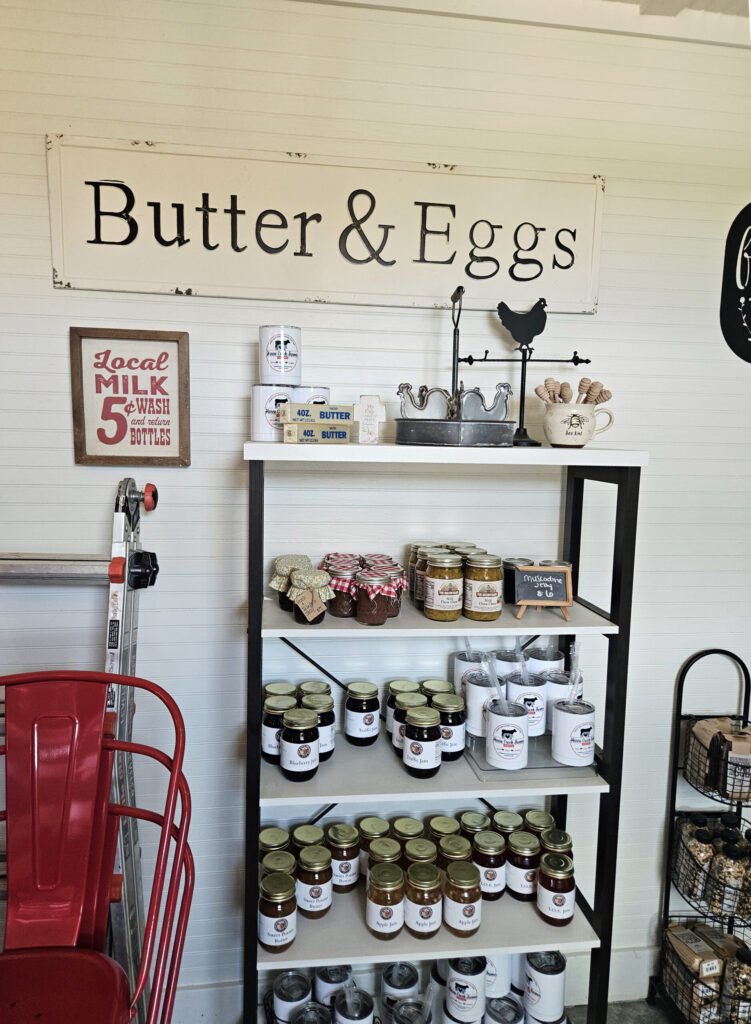
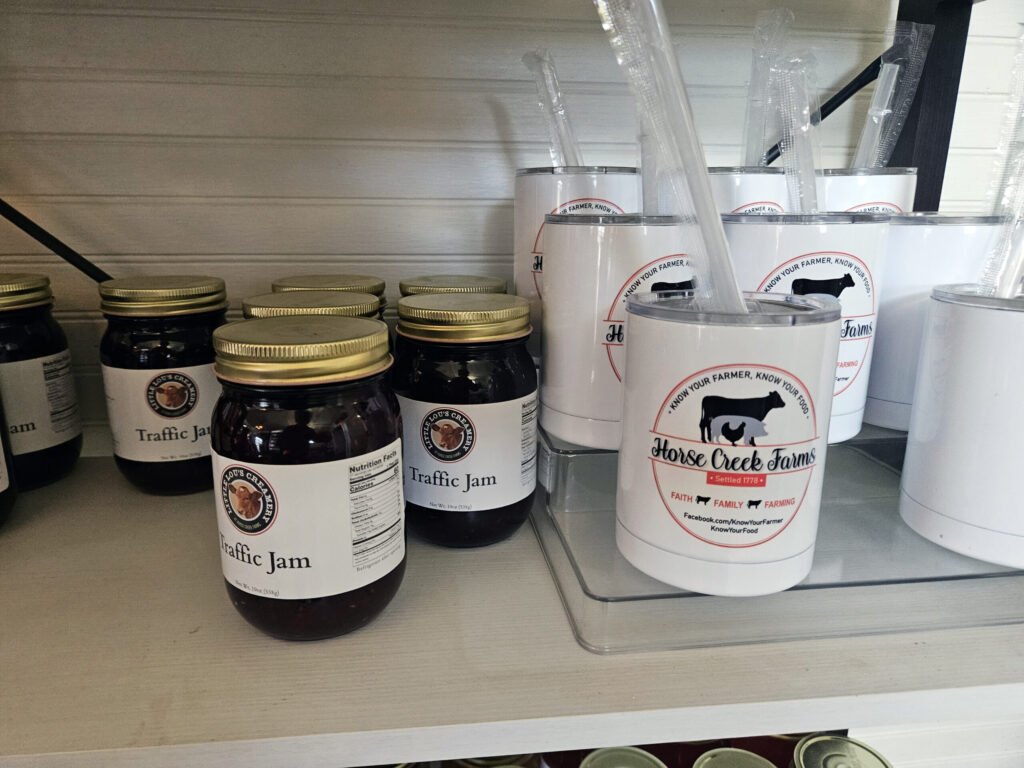
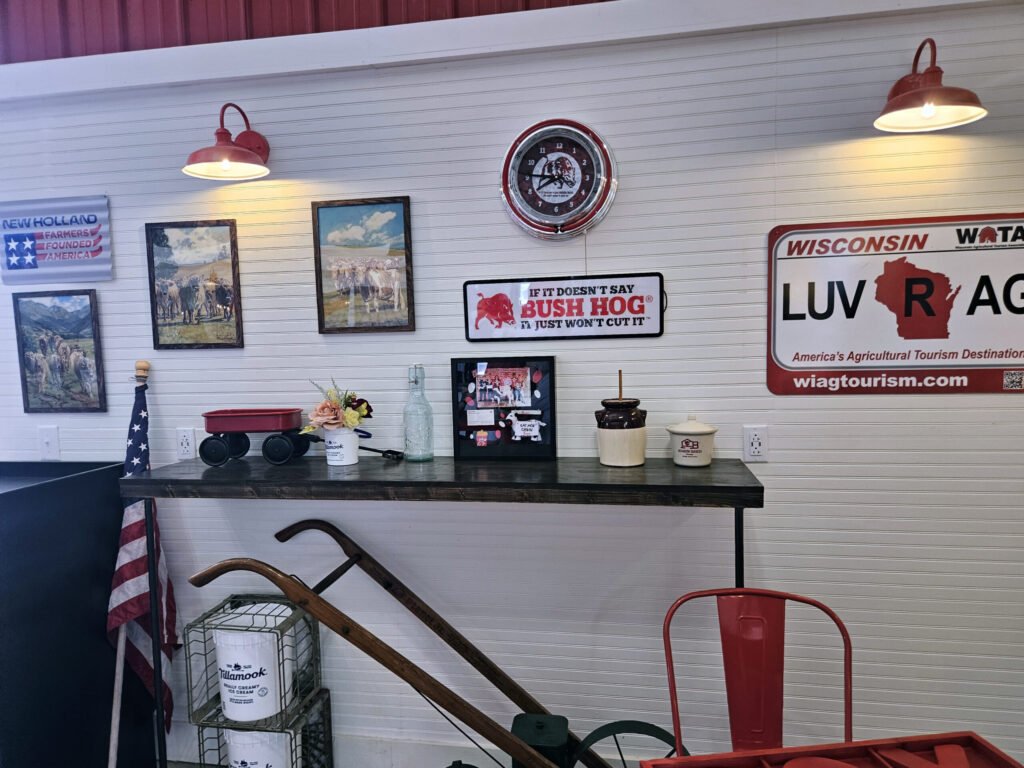
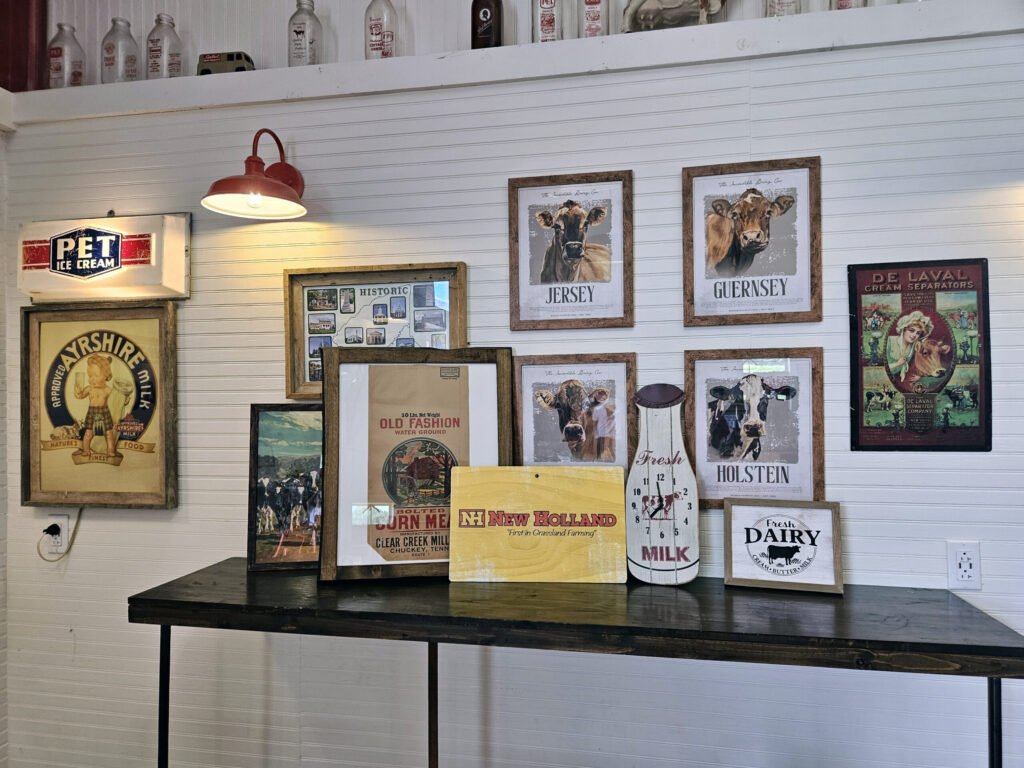
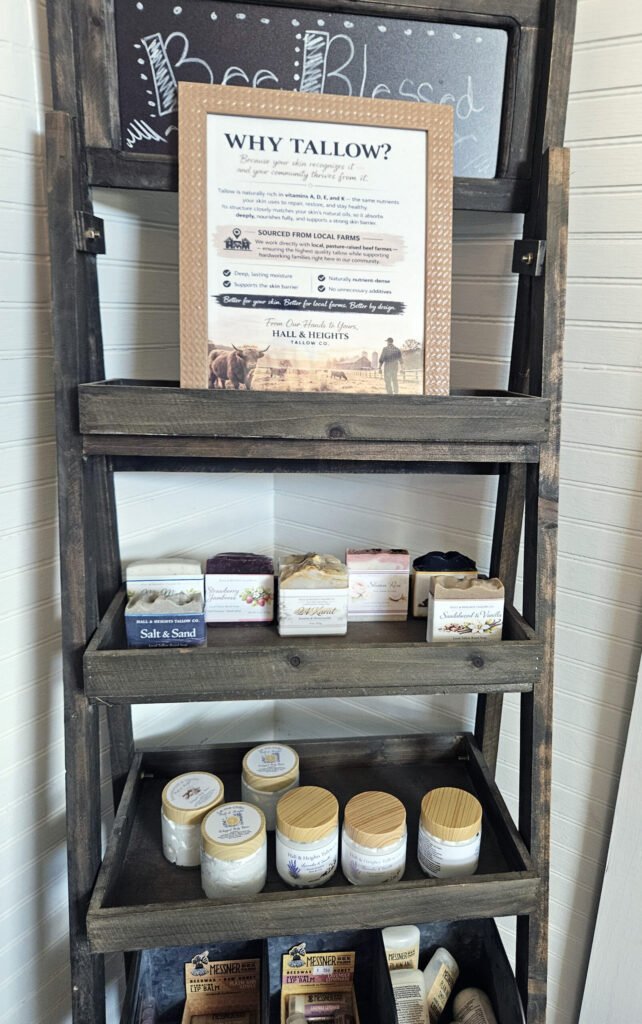
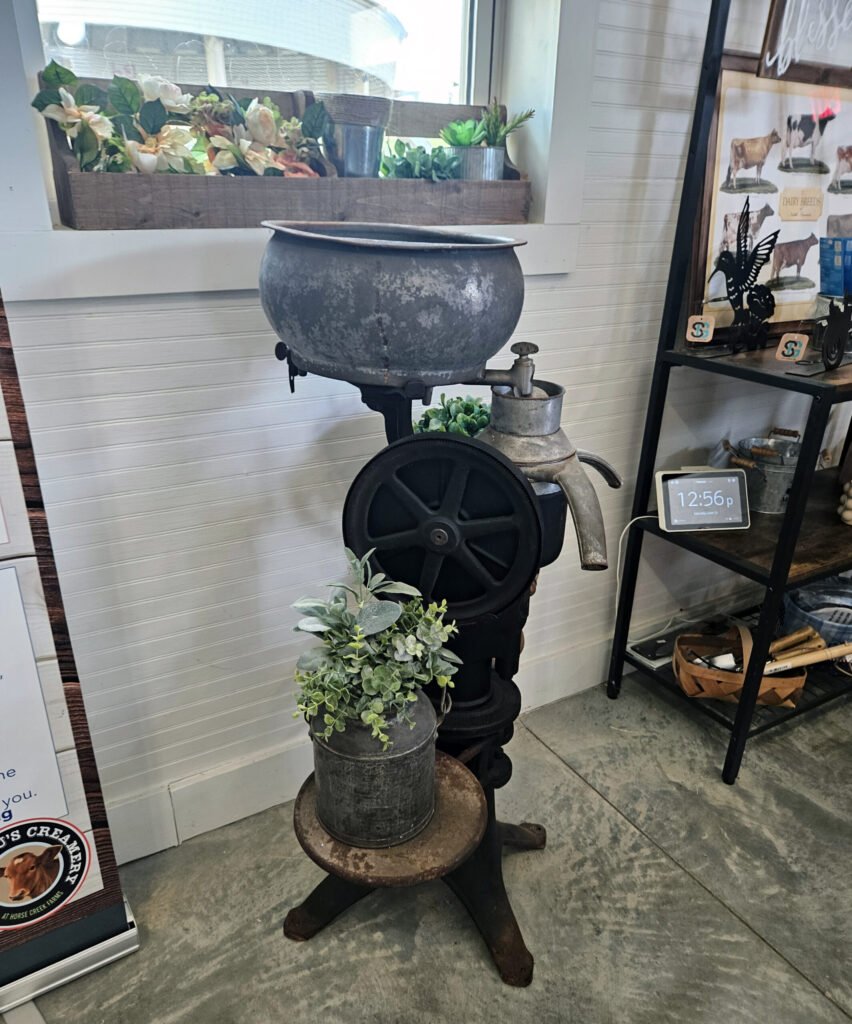
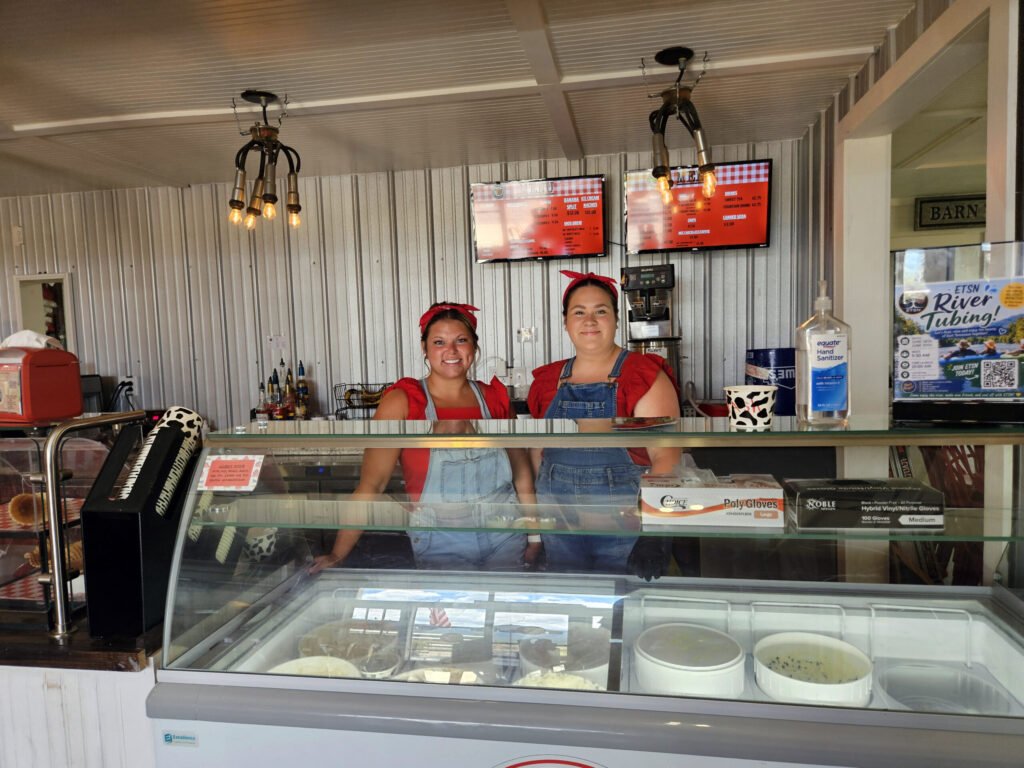
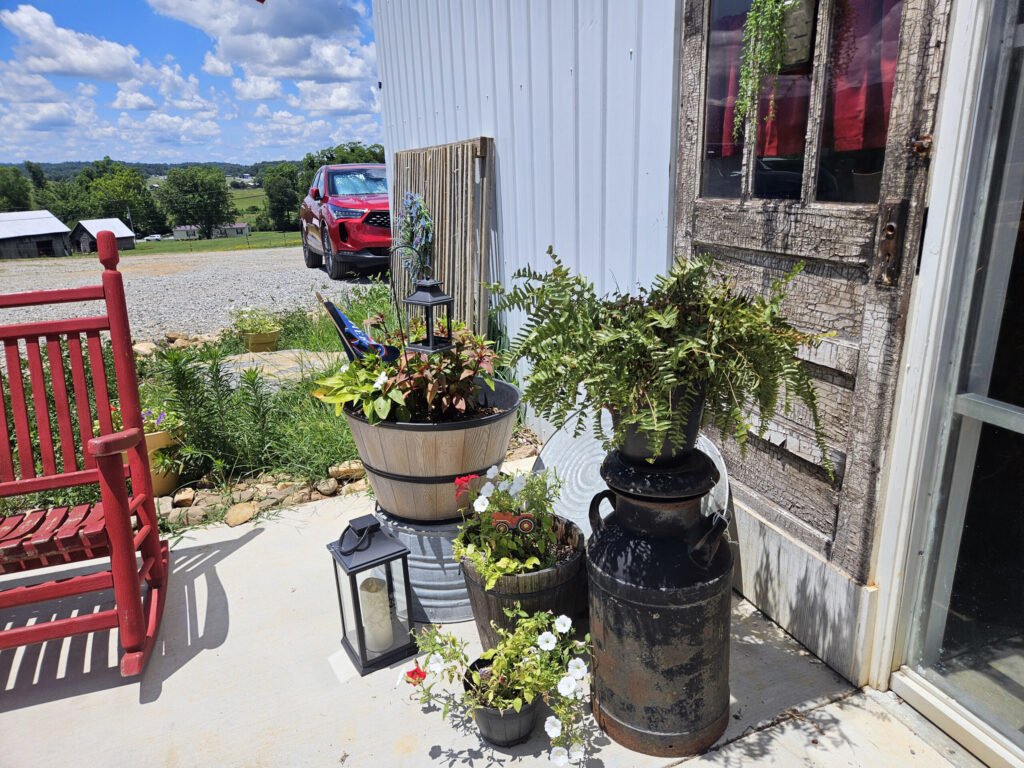
Inside the creamery, the room was bright, clean, and carefully arranged. Vintage dairy signs and old farm pieces decorated the walls without making the place feel cluttered. Behind the counter, Emmy Armstrong moved through the rush with a smile, answering questions while Emma, a young woman from the family’s church, worked nearby in the same red shirt, red bandana, and farm-style uniform.
Then the room changed. A warm, sweet smell filled the air as Emma pressed a fresh waffle cone.
“We try to make everything homemade, from the chicken salad to the potato salad to the pimento,” Emmy said. The creamery also uses regional products, including cheese from Sweetwater Valley.
A New Generation on an Old Farm
Emmy did not grow up expecting to be a dairy farmer. She was born and raised in Akron, Ohio, graduated from Green High School, and later moved to East Tennessee. While studying agriculture at Walters State and working on a farm in Sevierville, she met Scott Armstrong after a piece of equipment broke down and she had to go to the dealership where he worked.
“I never dreamed I would be a dairy farmer,” she said, “but I did always want to live the rural life and raise my kids in the country.”
She and Scott married in 2018. Their daughter Harper was born in 2019, followed by their son Wade in 2021. The name Little Lou reaches across both sides of the family. Emmy was born Emmy Louise and grew up being called Emmy Lou as well. Louise appears in her mother’s and great-grandmother’s names, while Lou and Louise also show up in Scott’s family. Harper became the family’s “Little Lou.”
The Armstrongs took over the dairy in 2021. The creamery came later, first as a place to sell sandwiches and ice cream, and now as a way to make more of the farm’s work visible to customers.
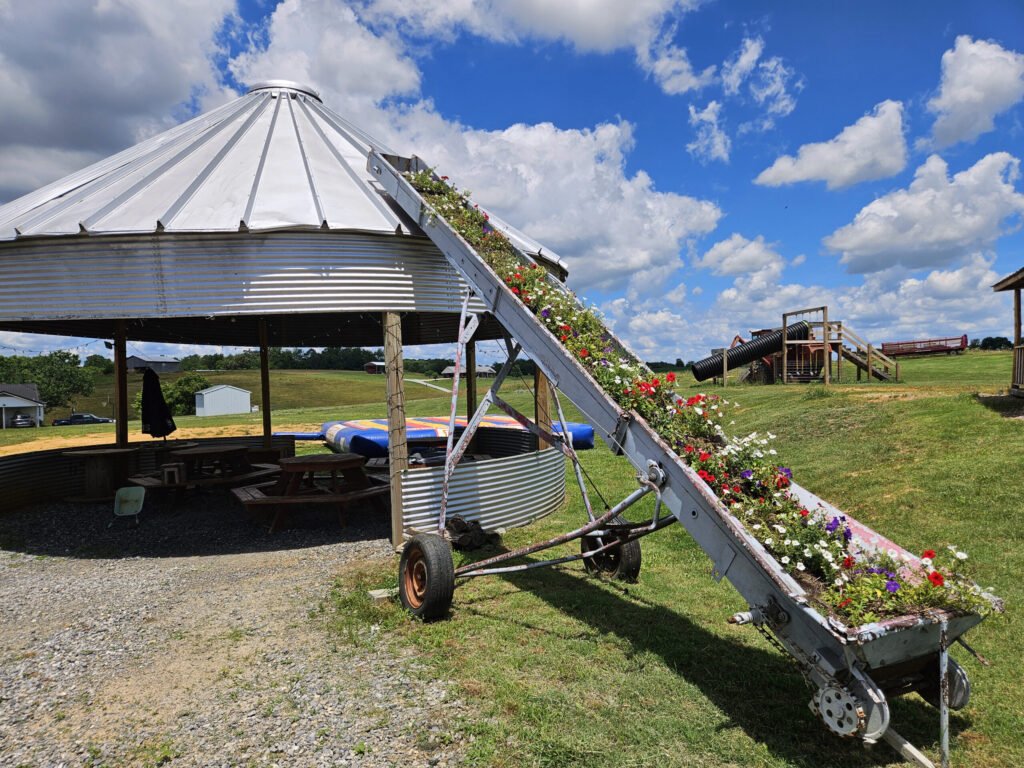
Outside, that blend of farm heritage and practical hospitality shows up everywhere. A large silo has been converted into a covered seating area. An old tractor-pulled conveyor has been turned into a flower bed climbing the side of the silo. Nearby, an old-cabin facade with rocking chairs on the porch gives visitors a place to pause, take a picture, and look out over the fields and neighboring farms.
It was an ideal place to begin the Appalachian RC&D Council’s 2026 Farm Tour. June is National Dairy Month, and Horse Creek offered a clear look at how a dairy farm can connect local food, animal care, land stewardship, and farm economics in one place.
This was not just a stop for ice cream. It was a look at how farms in the region are trying to keep land productive, animals healthy, and customers close enough to understand what goes into their food.
The Farm Behind the Creamery
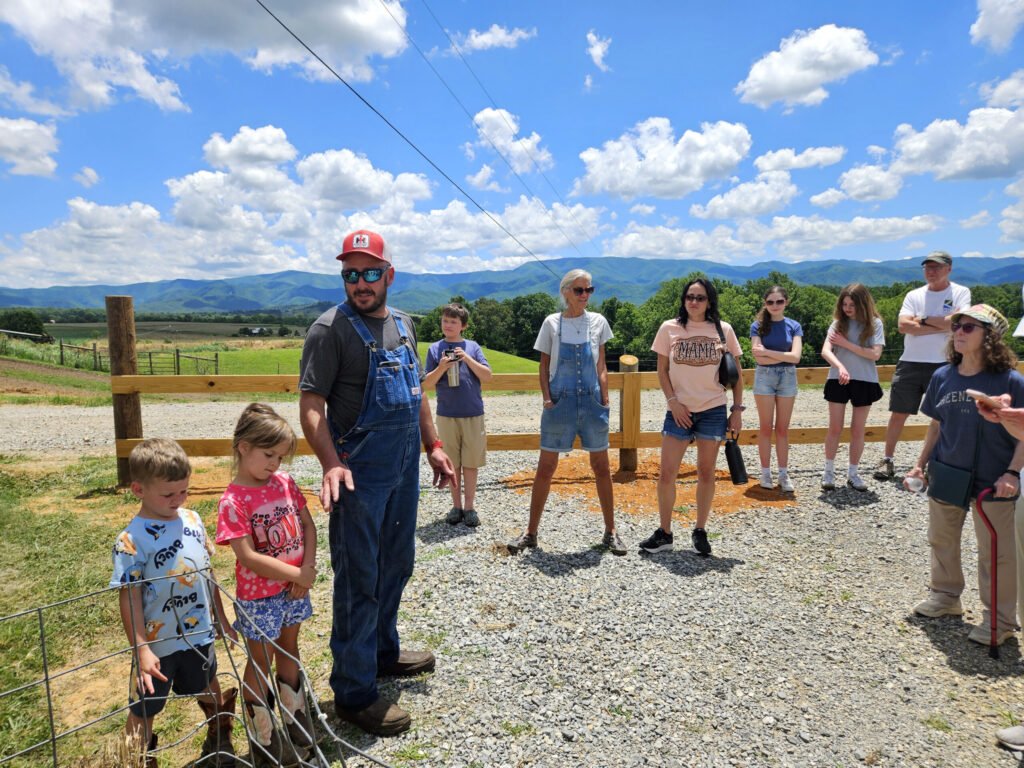
Scott Armstrong started the farm tour quietly, near a calf hutch beside the creamery.
“We thought we’d start with the baby calf,” he said, “because this is where it starts.”
From there, he led us toward the milking parlor and began explaining the farm’s daily rhythm. Horse Creek milks eight cows at a time, twice a day, every day. The work is still very much a family operation.
“My dad’s still around; he’s on the tractor, so he’ll milk if we want to go somewhere,” Scott said. “My 14-year-old does a lot of the milking.”
Because of biosecurity precautions, visitors could not go into the area where the cows are milked, but Scott explained the process from outside. The cows have their own habits and their own order.
“When they come into the barn, there’s an order they come in, and every day it never changes,” he said. “All these cows have names. My kids have spoiled them.”
Scott also described how sharply the dairy landscape has changed. He estimated that Greene County had about 1,100 dairies in the 1970s. Today, he said, only a handful remain across Greene and the surrounding counties.
Horse Creek’s milk leaves the farm every other day. The truck picks up their milk, as well as milk from nearby farms, and hauls it to Asheville for Ingles’ Laura Lynn brand.
“If you’re buying Ingles’ milk, it comes from all the dairies around here,” Scott said.
That regional milk system still matters to the Armstrongs, but they do not want to depend on it entirely. Scott said the family wants to keep shipping milk to Ingles while also bottling some of its own.
“That way, we don’t have all our eggs in one basket,” he said.
That plan received a public boost this year when the Tennessee Department of Agriculture named Little Lou’s Creamery in Greene County a 2026 Agricultural Enterprise Fund recipient in the dairy producer/processor category. The Armstrongs are building toward an on-farm processing and bottling plant, which Scott said they hope to open early next year.
Cows, Butterfat, and a Working Loop
Scott’s tour became most compelling when he began connecting one part of the farm to another. Nothing seemed separate.
The cows eat grass outside, which Scott said helps produce high butterfat. Their butterfat usually runs between 4.9 and 5.5 percent, he said. The farm supplements its feed with corn silage and soybean meal, but even that soybean meal has a larger story to tell.
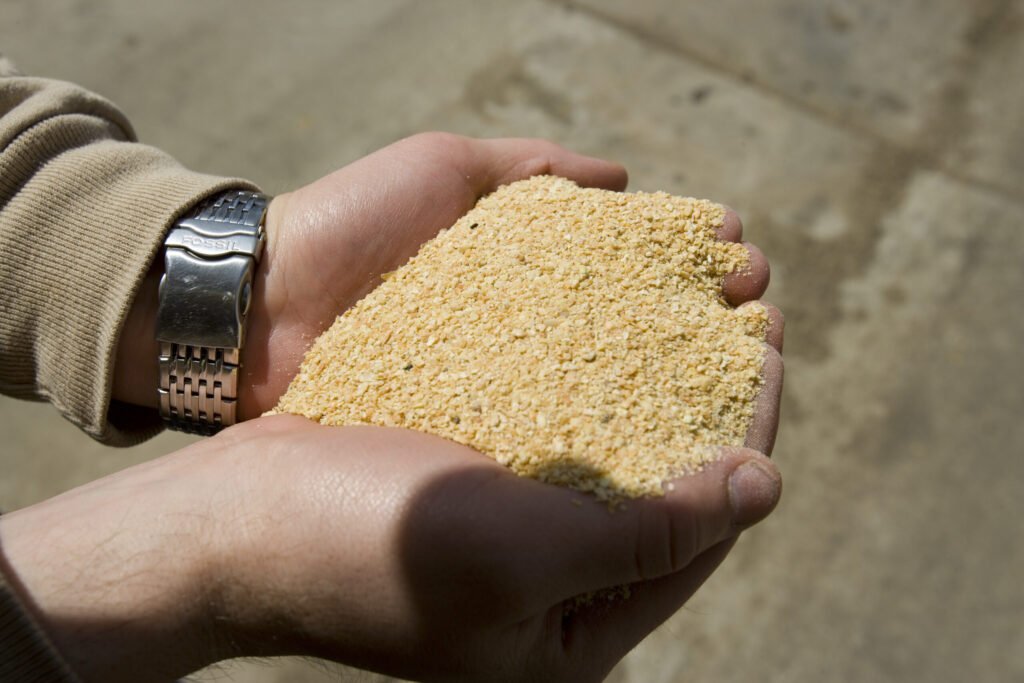
A company in Somerset, Kentucky, makes biodiesel from soybeans. After the oil is extracted for fuel, the soybean meal left behind becomes feed.
“They’re extracting the oil from the beans to make diesel fuel,” Scott said. “So, we’re using every bit of the soybean.”
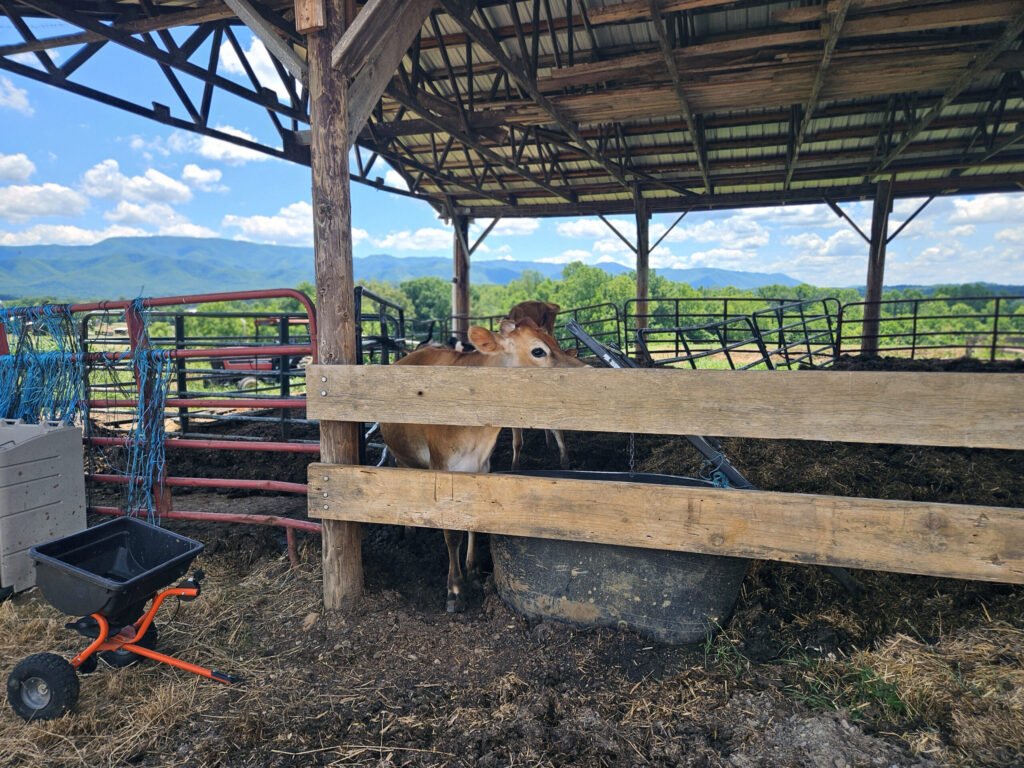
The cows spend part of their time outside grazing and part of their time in the barn. Scott said they like the shade and comfort of the barn, especially in the heat. He also joked that there is a practical reason for bringing them in at night.
“I’m not a shepherd,” he said. “I’m not going to go out at four o’clock in the morning hunting cows.”
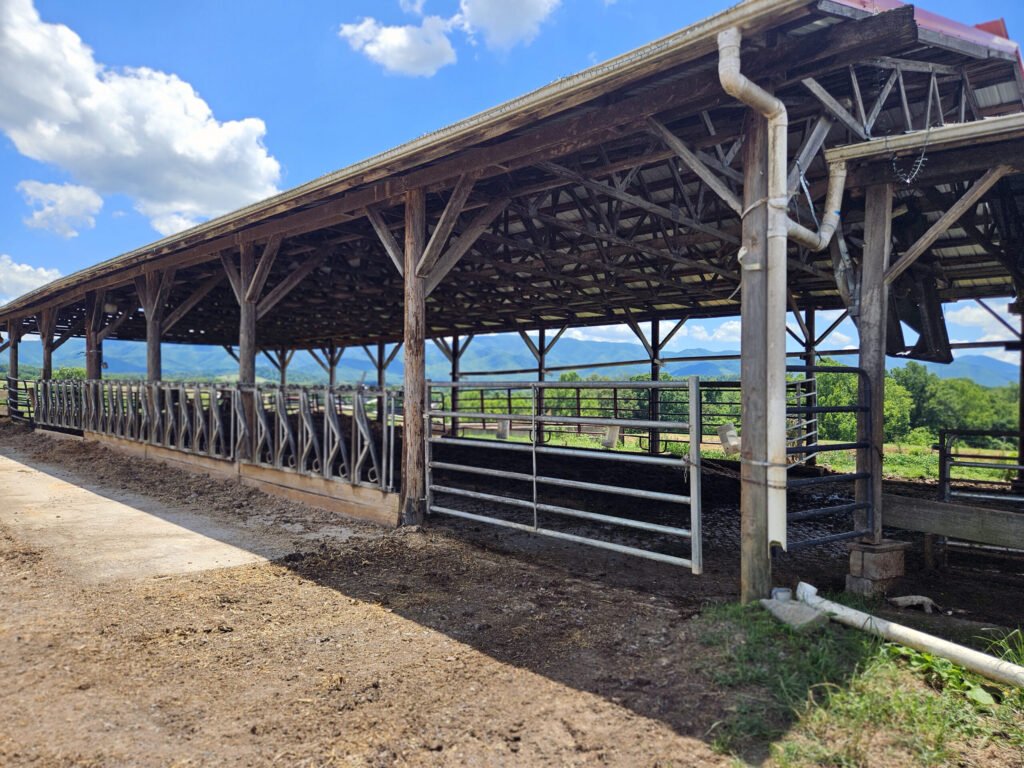
Inside the barn, the cows lie on a deep pack of manure and straw that is tilled to add air and create heat. To someone unfamiliar with the system, it may sound strange at first. Scott explained that the heat cycle kills bacteria.
“About three inches down, that’s going to be about 150 degrees,” he said.
He prefers that system to stalls, which he said can damage cows’ hips or cause them to get hung up. In the pack barn, the cows can lie where they want.
The manure is not treated as waste. The farm scrapes it daily, collects liquid manure and wash water in a pond, and spreads it back onto the fields.
“None of the water we use is wasted,” Scott said. “It’s all going back in the field.”
Then he made the larger point plainly.
“Everybody thinks the farmers out here pollute the environment,” he said. “We’re not going to do that because this is our livelihood. We want to keep the soil healthy, the cows healthy.”
For Scott, animal care and farm economics are not separate issues. He contrasted Horse Creek’s goals with those of larger, high-volume dairy models, where cows may leave the herd after only a few years. At Horse Creek, he said, the goal is different.
“We want these cows to live 12 to 15 years,” he said.
The Cost of Keeping Going
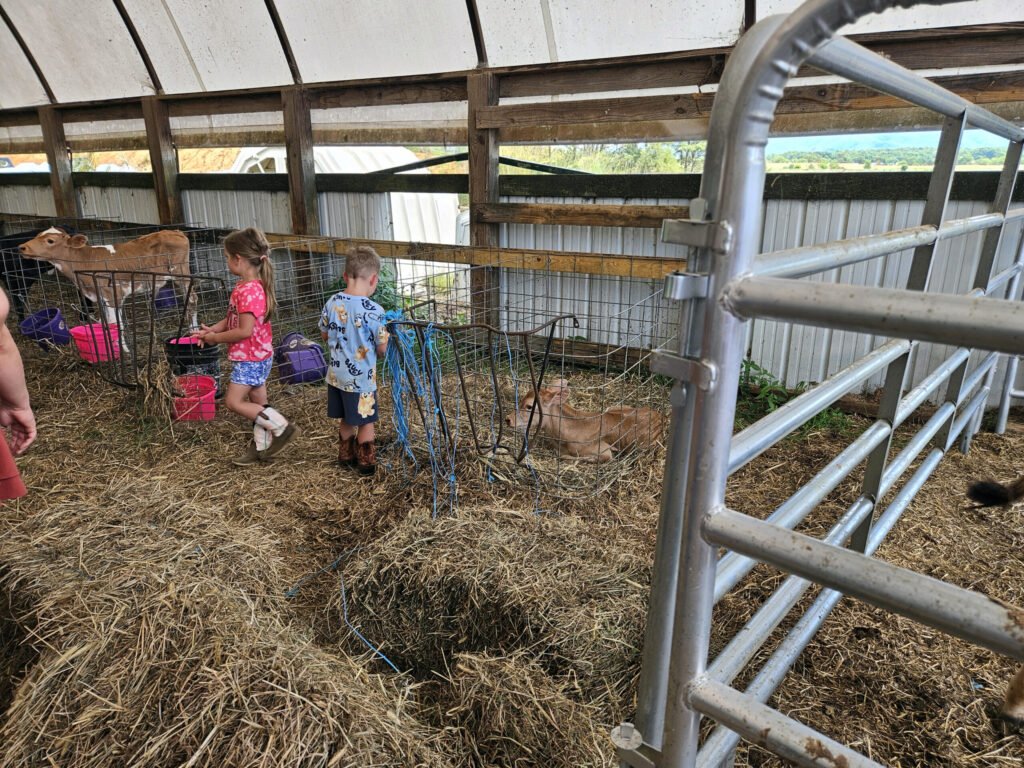
The tour ended near a barn for young calves, where Scott pointed out several breeds and explained how the farm raises replacements for the milking herd. He also spoke candidly about the cost and uncertainty of farming.
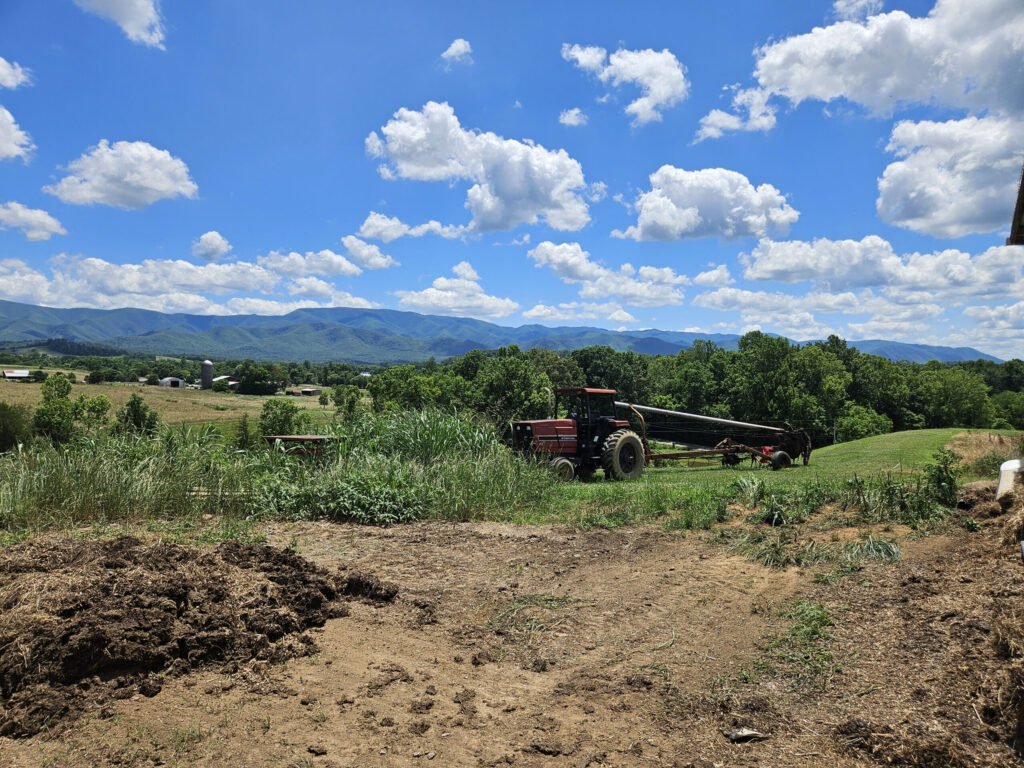
The fields were dry. “We’re not getting any rain,” he said.
He had not planted corn yet because the financial risk was too high without moisture in the ground. “Seed corn is $300 a bag now,” he said. “And fuel is five dollars. It’s just expensive to keep doing this.”
That comment hung over the end of the tour. It was not dramatic or rehearsed. It was simply the reality of running a dairy farm in a changing market, in changing weather, with rising costs and fewer neighboring dairies than there used to be.
But Horse Creek Farms is not trying to survive by nostalgia alone. The farm’s future is being built through practical changes: a creamery that brings customers to the farm, ice cream that captures more value from milk, a planned bottling plant, regional partnerships, careful animal management, and a system that returns nutrients and water to the soil.
The most convincing argument for Horse Creek’s future was not a slogan. It was the loop Scott described as we walked: cows on pasture, soybean meal from biodiesel production, bedding heated by composting manure, wash water returned to the fields, milk shipped into the regional system, and a creamery bringing people back to the source.
The old farm is not being preserved under glass. It is being worked, adapted, and handed forward — one cow, one cone, and one gallon of milk at a time.
Read the rest of the series: 2026 ARC&D Farm Tour Highlights











Leave a Reply