

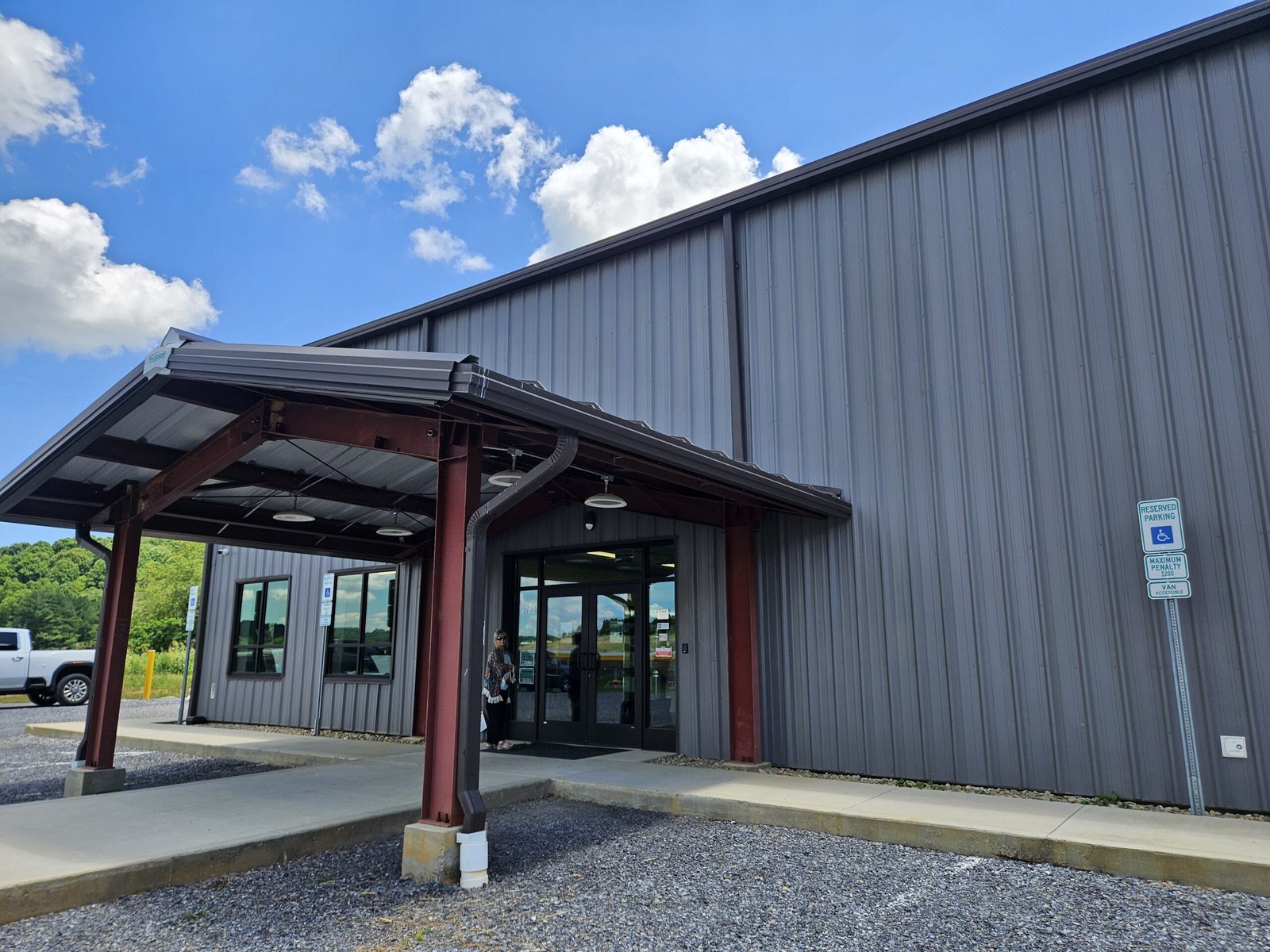
We arrived at the Appalachian Producers Cooperative in Telford in the early afternoon heat, expecting something more obvious. From the road, though, the new building looked almost ordinary — clean, quiet, and easy to miss except for the sign out front.
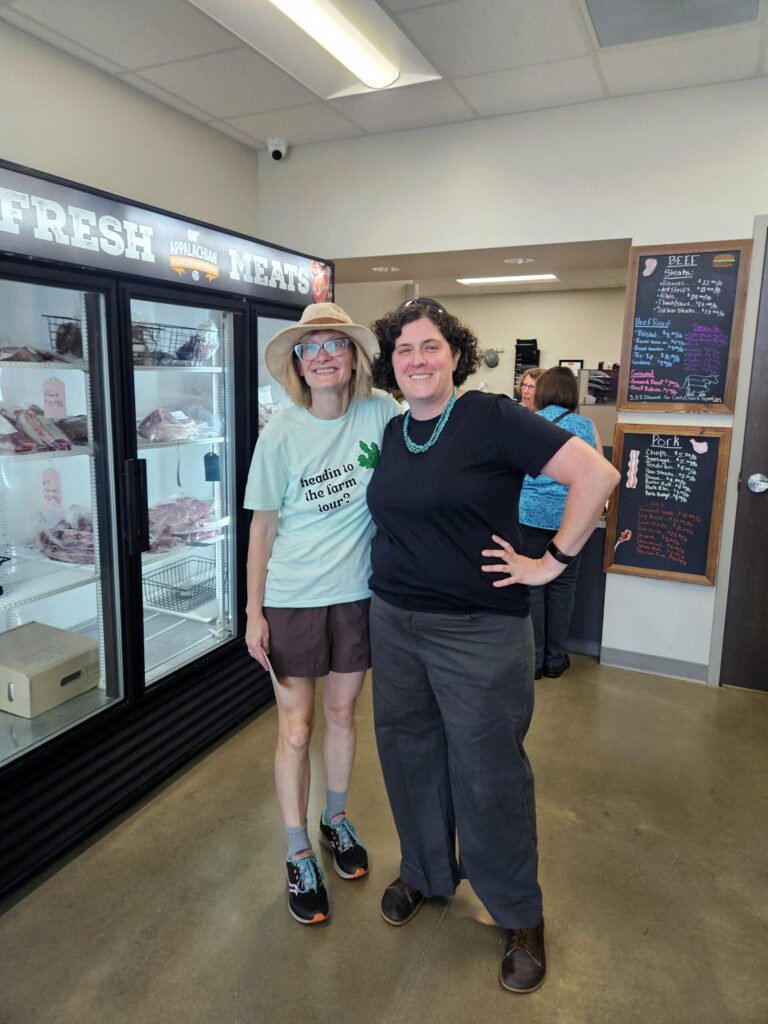
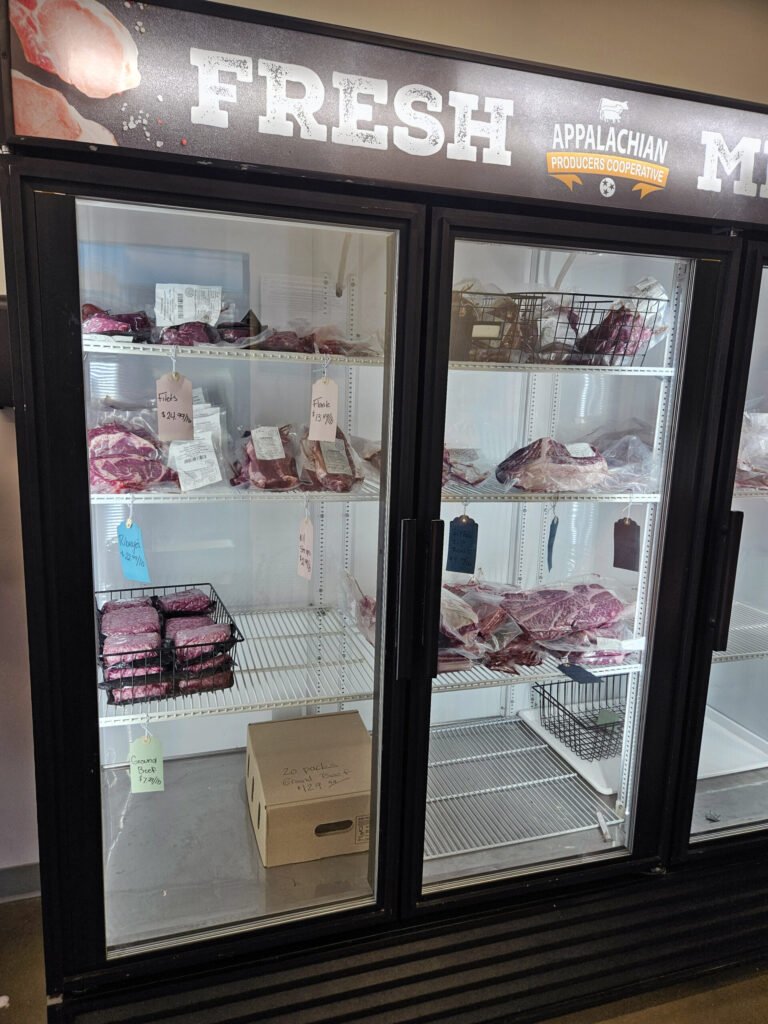
Just inside the entrance, a row of freezers held locally raised meat for retail sale. Beyond that, the building looked like a standard office: reception desk, hallways, doors, and cool air. Then Alexis “Lexy” Close led us past the front office and toward the secure production areas, where the ordinary-looking building gave way to a roughly $10 million meat-processing facility built to solve one of Northeast Tennessee’s most persistent farm problems. Close said she did much of the grant writing for the facility and now handles administrative work, grant reporting, and tours.
Farmers here can raise cattle, hogs, lambs, and goats. For decades, what many of them lacked was a nearby place to get those animals processed, packaged, labeled, and ready for customers.
“We’ve been open for a year this week,” Close said as she led us through the offices. “And it’s the first meat processing facility in Washington County in probably 50 or 60 years.”
The facility began processing animals in 2025, after a project that started in 2021, when a group of farmers approached the Appalachian RC&D Council for help with grant writing and fiscal sponsorship. ARCD says it served as the fiscal sponsor, grant writer, and manager for the Appalachian Producers Cooperative and helped secure $8.6 million in grant funding for the USDA-inspected facility.
That makes APC one of the clearest examples of Appalachian RC&D’s work in local food infrastructure. At this stop on the Farm Tour, the idea of “local food” extended beyond farmers markets, farm stores, and restaurant menus. It became concrete, steel, refrigeration, rail systems, USDA inspection, skilled labor, and a way for local farmers to keep more control over what happens after an animal leaves the pasture.
Why Processing Capacity Matters
Close framed the cooperative as a response to a food-system bottleneck many consumers rarely see. In earlier generations, she said, families in the region could buy milk, meat, produce, butter, and grain through more local systems. But beginning especially in the 1980s and 1990s, agriculture and meat processing consolidated into fewer, larger operations.
USDA’s Economic Research Service reports that the four largest meatpackers handle 85 percent of steer and heifer purchases and 67 percent of hog purchases. The same report notes that meatpacking concentration rose rapidly in the 1980s and 1990s.
Close’s point was not abstract. When major processors are disrupted by COVID, fire, cyberattack, or other failures, the effects move quickly through the food system. During COVID, she said, local farmers were sometimes waiting close to two years to get animals processed.
“I think we all kind of saw the impacts of a highly consolidated food system,” she said.
The Appalachian Producers Cooperative is a regional counterweight to that consolidated system. It is farmer-owned, though farmers do not have to be members to use the facility. Close said the co-op has about 26 or 27 members, but it has already processed animals for a couple of hundred farms. Some producers bring one animal a year. Others bring several each week.
“The vast majority of our business is processing for farmers, so they retain ownership over the end products,” Close said.
That distinction matters. APC is not simply buying animals from farmers and selling meat under its own label. Most of the time, it provides processing services that allow farmers to sell their own beef, pork, lamb, or goat to their customers.
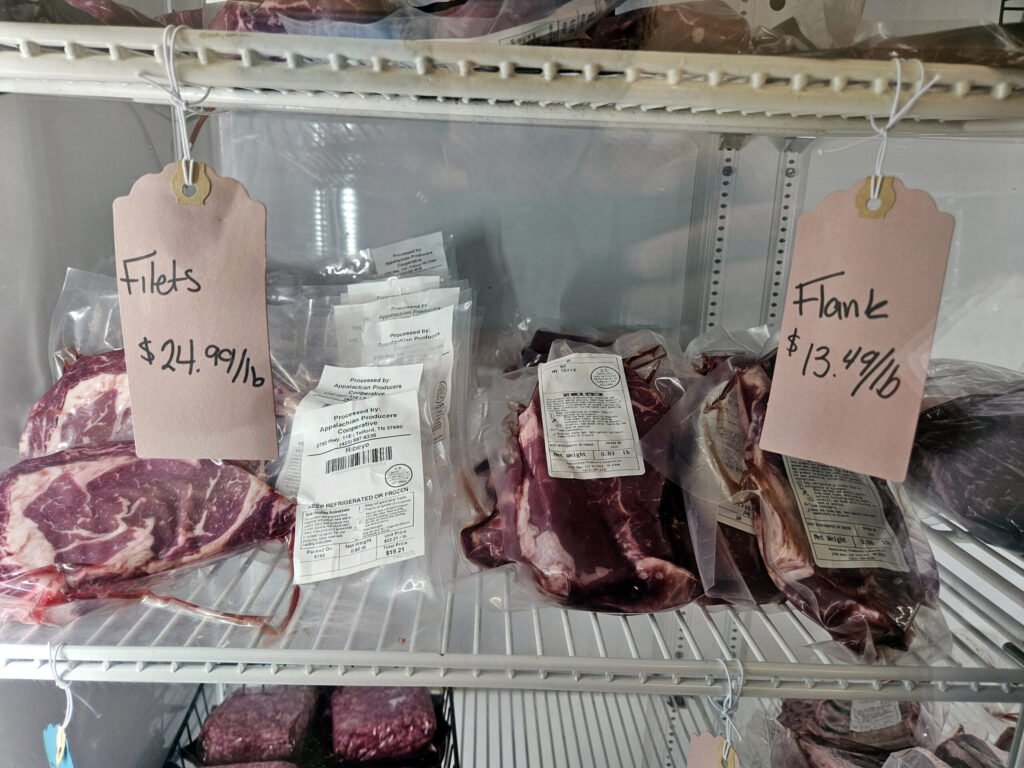
The cooperative has also started experimenting with a small retail program, buying some local animals and selling meat from the freezers near the front door. But Close emphasized that processing for farmers remains the center of the business.
Appalachian RC&D’s Role
The project also helps explain why organizations like Appalachian RC&D matter. Close said she became involved in 2021 while working in nonprofit grant writing. A group of farmers wanted to start a cooperative meat-processing facility and needed help with grant applications and fiscal sponsorship.
“So that’s how I got involved,” she said.
ARCD’s public description of the project matches that account. The organization says it served as fiscal sponsor, grant writer, and manager for APC, helping bring in $8.6 million in grant funding. ARCD also describes its broader infrastructure work as connecting farmers and food entrepreneurs with resources, training, infrastructure, and networks.
In other words, this was not just a private construction project. It was a regional food-infrastructure project built through farmers, public funding, nonprofit support, and local demand for processing capacity.
Low-Stress Handling and Worker Safety
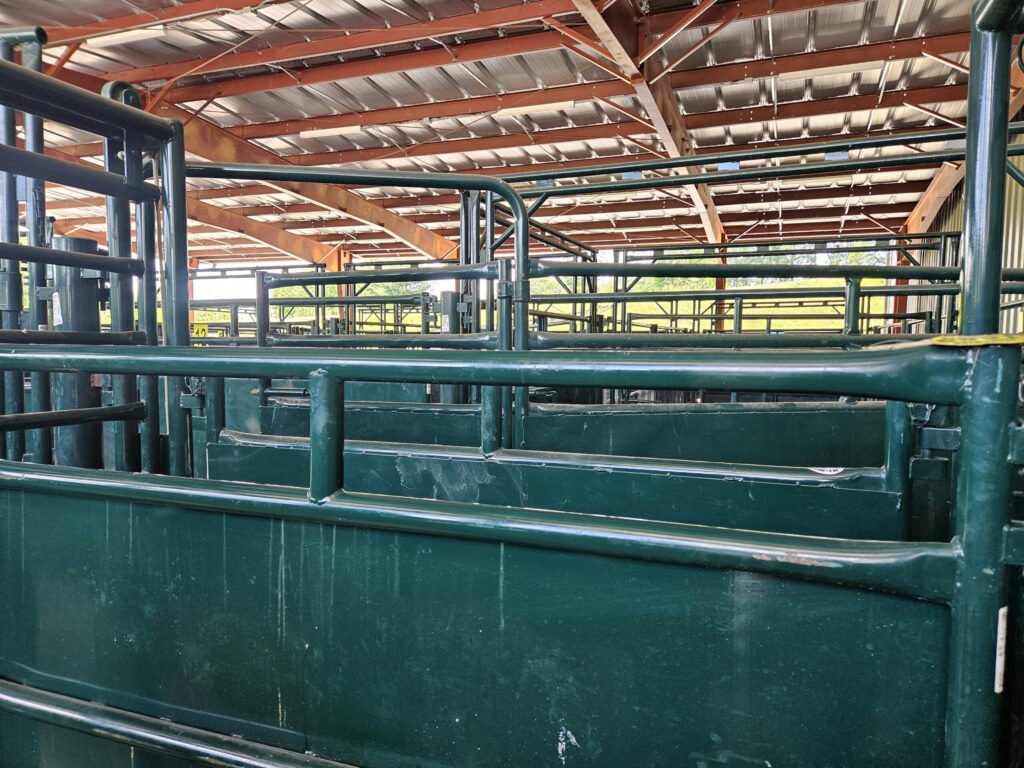
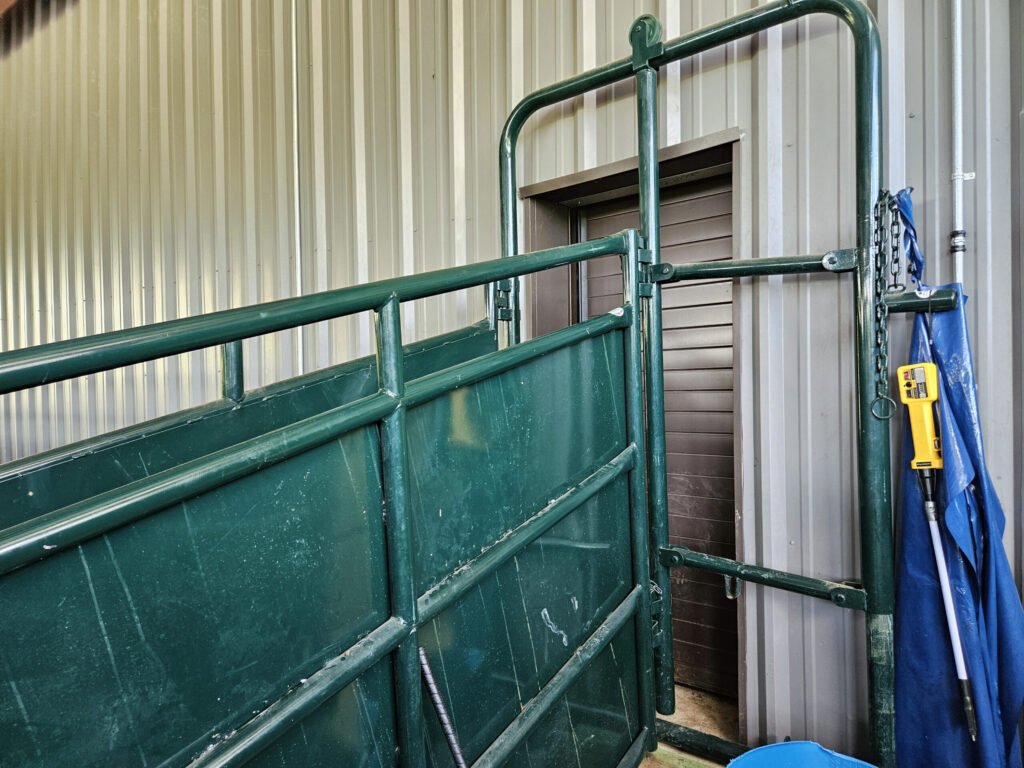
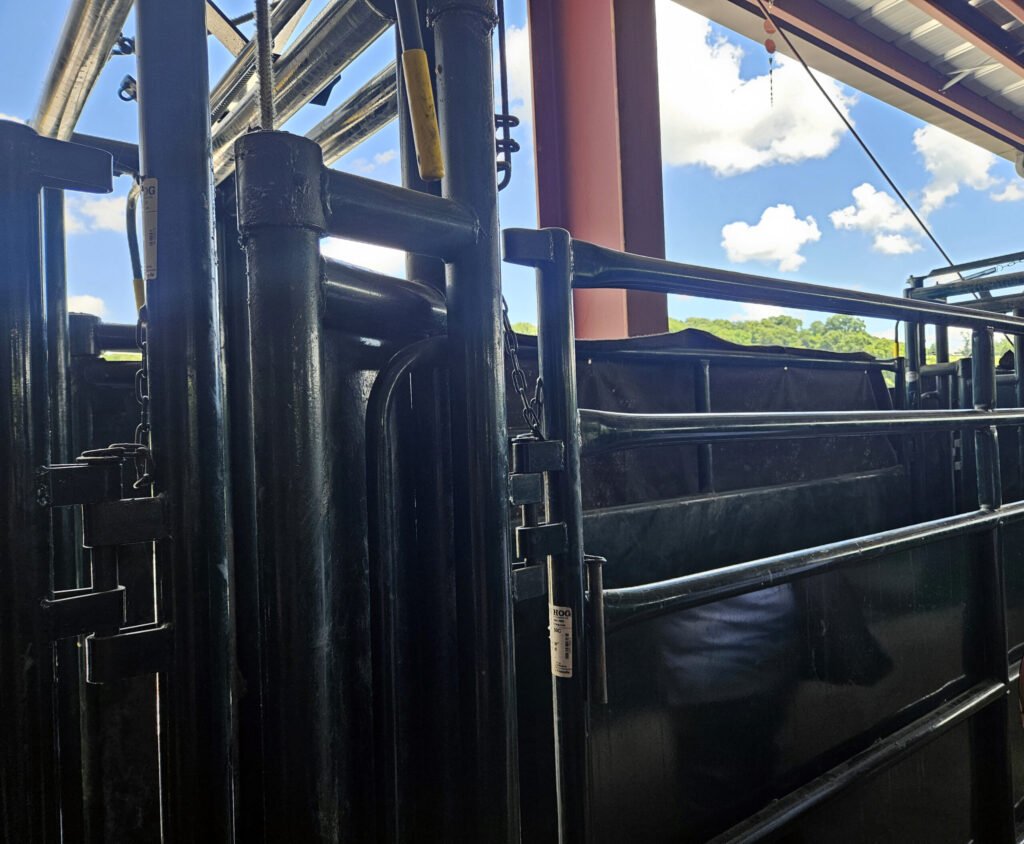
Before we entered the production areas, Close stopped near the animal holding pens and explained how the facility was designed around low-stress animal handling.
Temple Grandin did not design the facility herself, Close said, but APC based the pens on Grandin-inspired principles: limited sight distance, fewer distractions, and doors that swing both directions so workers can move animals without constantly entering the pens.
“They can gently move them along with the doors,” Close said.
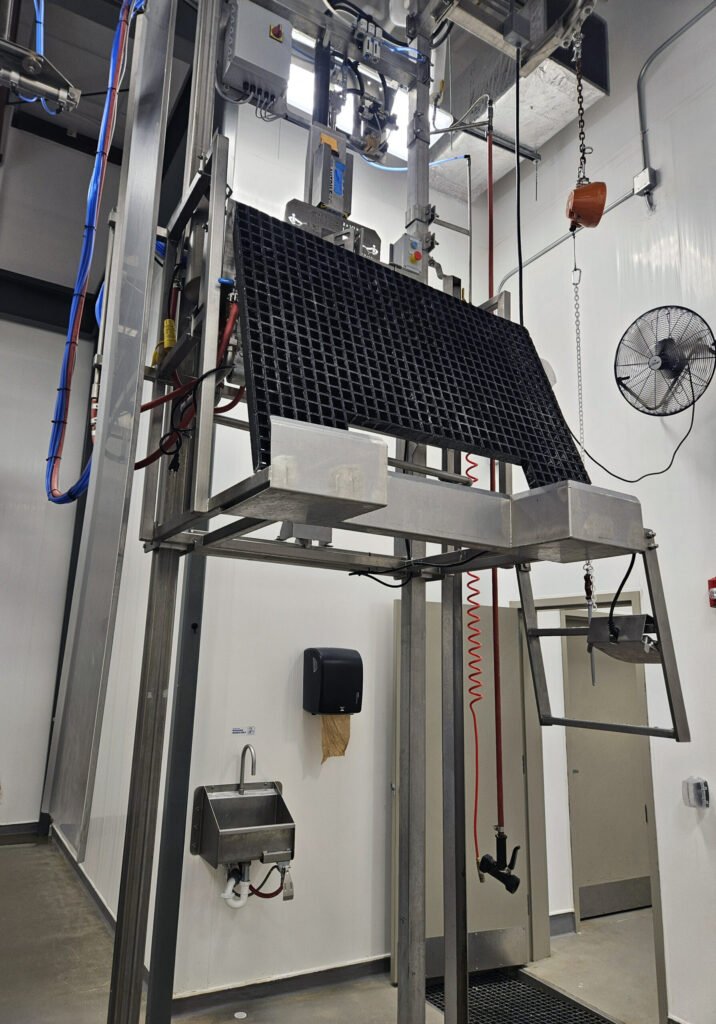
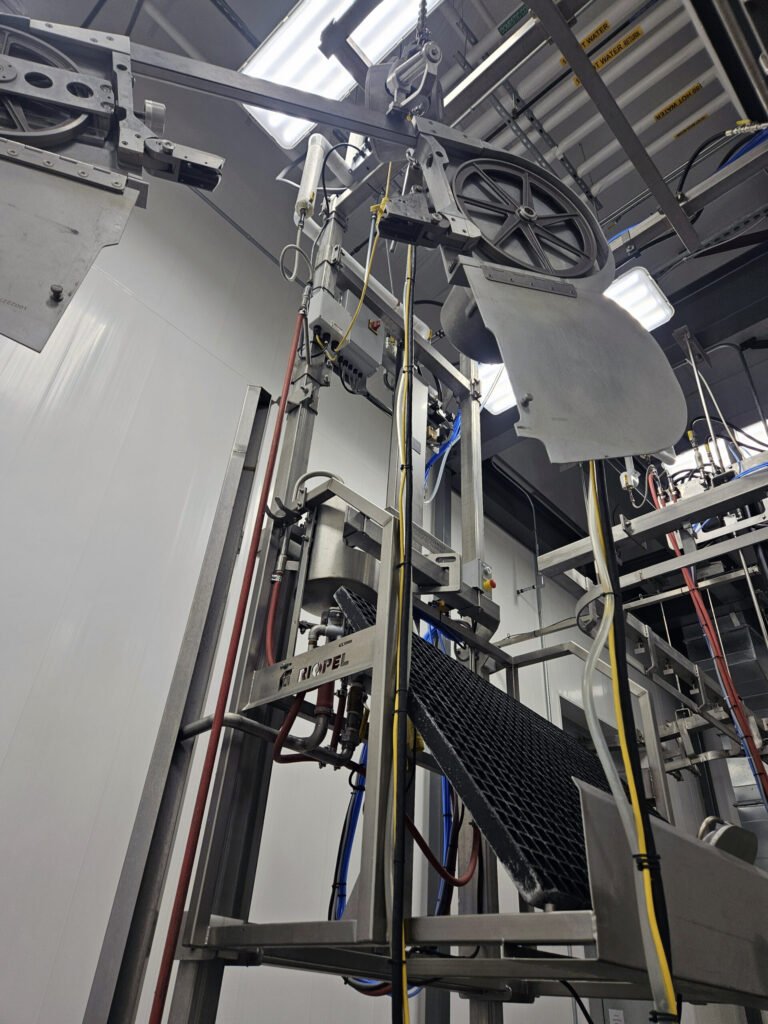
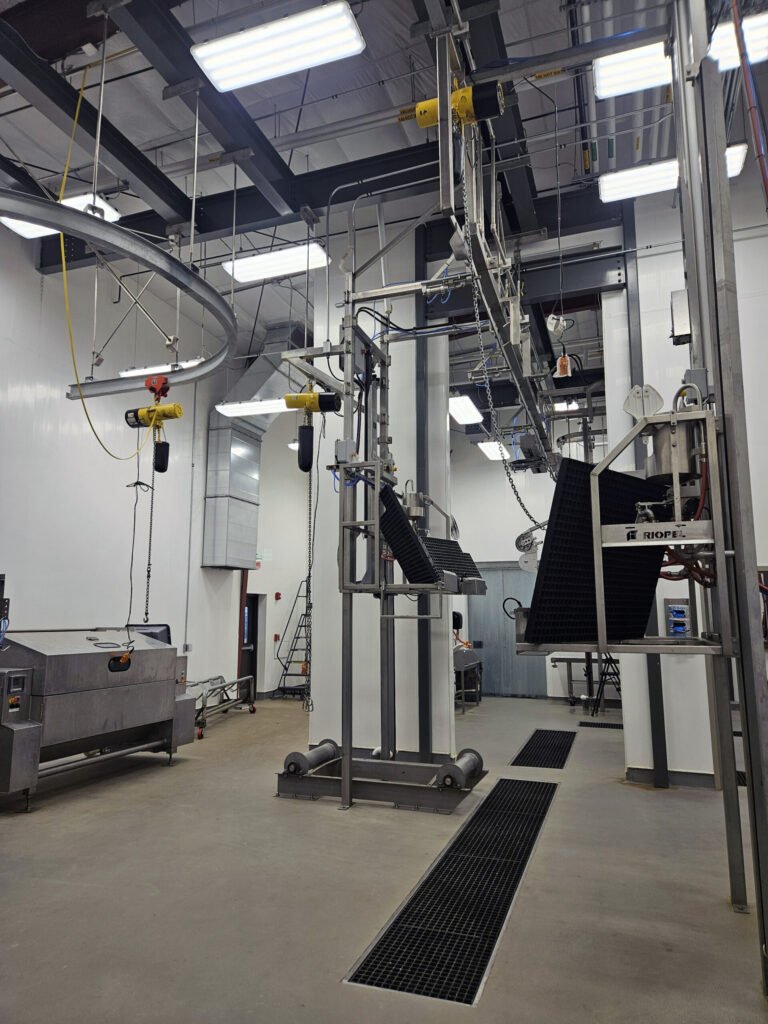
The design is also about worker safety. The rail system is gravity-fed, starting around 18 feet and dropping to about 14 feet as the carcass moves through the facility. Hydraulic equipment reduces the amount of lifting and bending employees have to do.
“Our staff doesn’t have to lift, bend, or anything,” Close said. “It’s a lot easier on their backs in this kind of modern facility than it would be in a facility that was built, you know, 30, 40 years ago.”
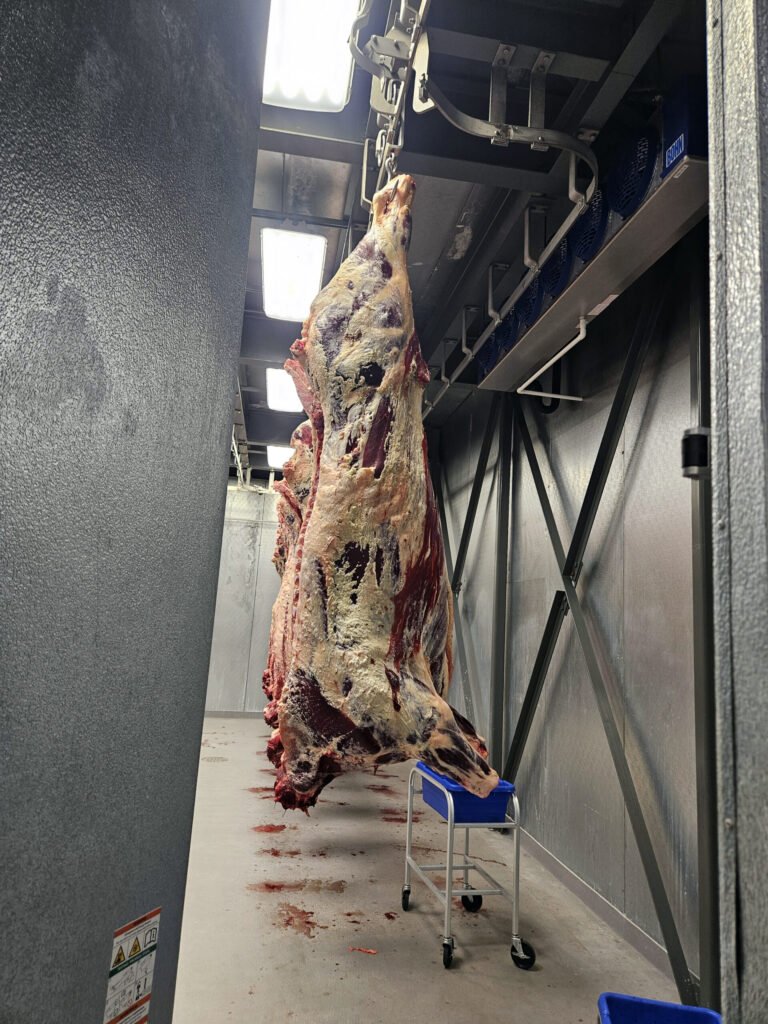
Close described the harvest side of the facility in practical terms. Cattle, hogs, lambs, and goats move through separate handling areas. The facility uses a hydraulic captive-bolt system designed to expedite the process. From there, animals are hung on the rail system and move from what processors call the “dirty side,” where hides and exterior material are removed, to the “clean side,” where the carcass continues through the inspected processing system.
It is not a romantic part of agriculture, but it is a necessary one. APC’s argument is that if people want local meat, local farmers also need a humane, inspected, modern place to process it.
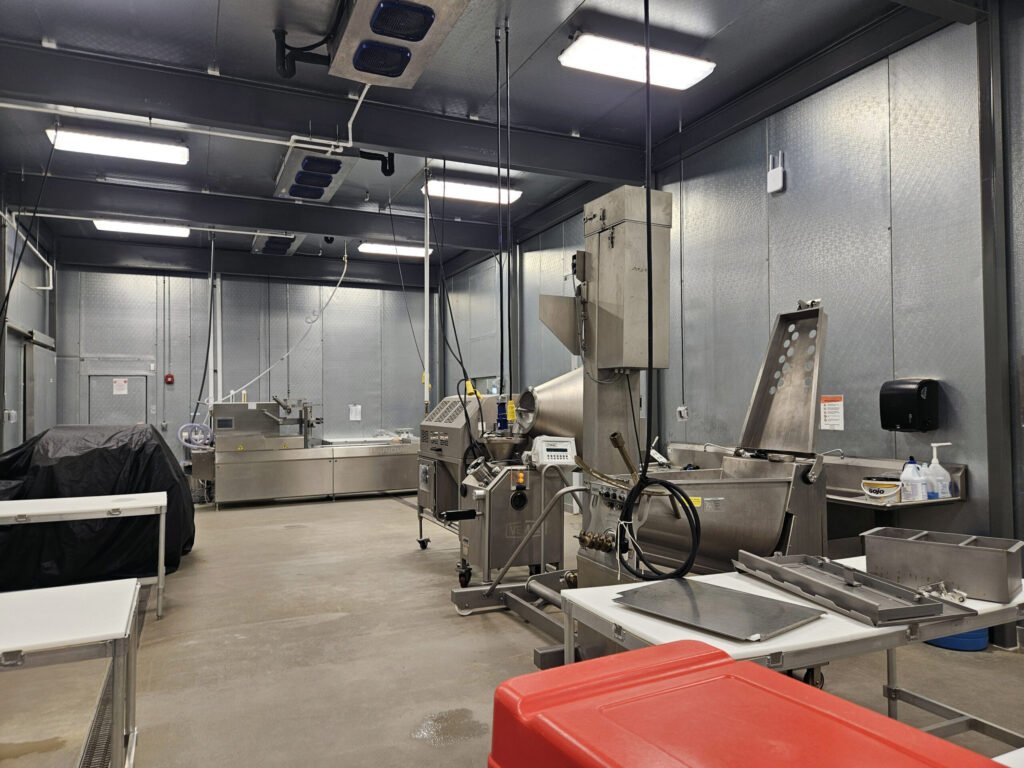
Inside the Processing Floor
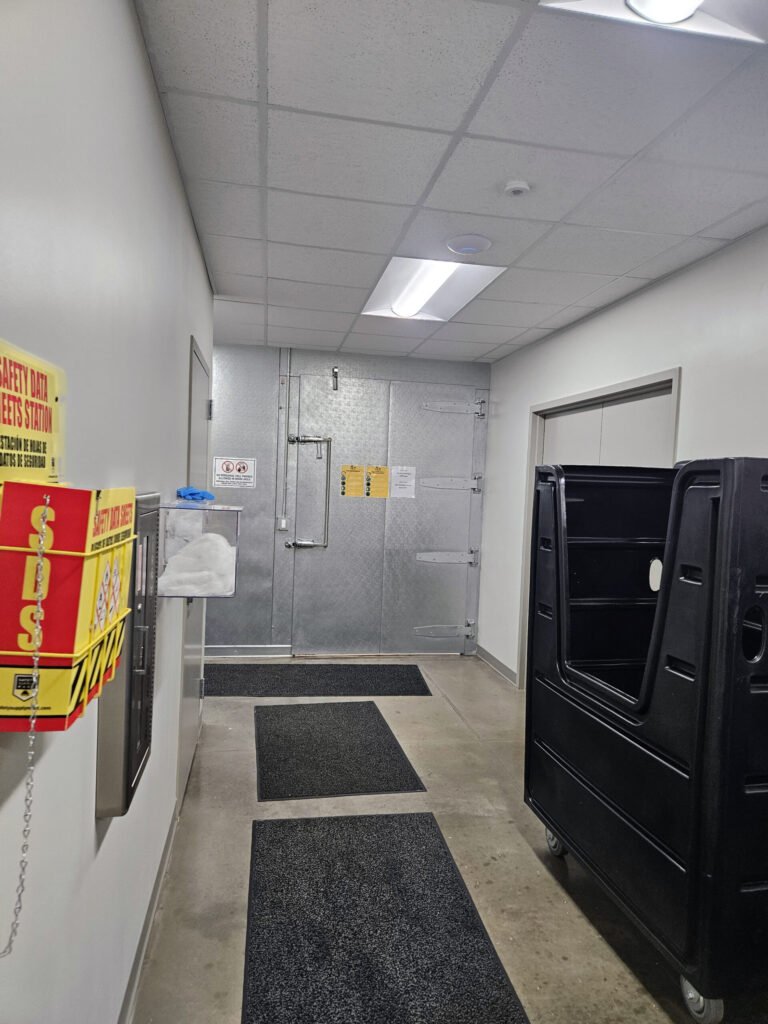
The processing floor immediately changed the feel of the tour. The room stays around 40 degrees and has to remain under 41. Employees work in hoodies, butcher coats, aprons, gloves, and other cold-room gear.
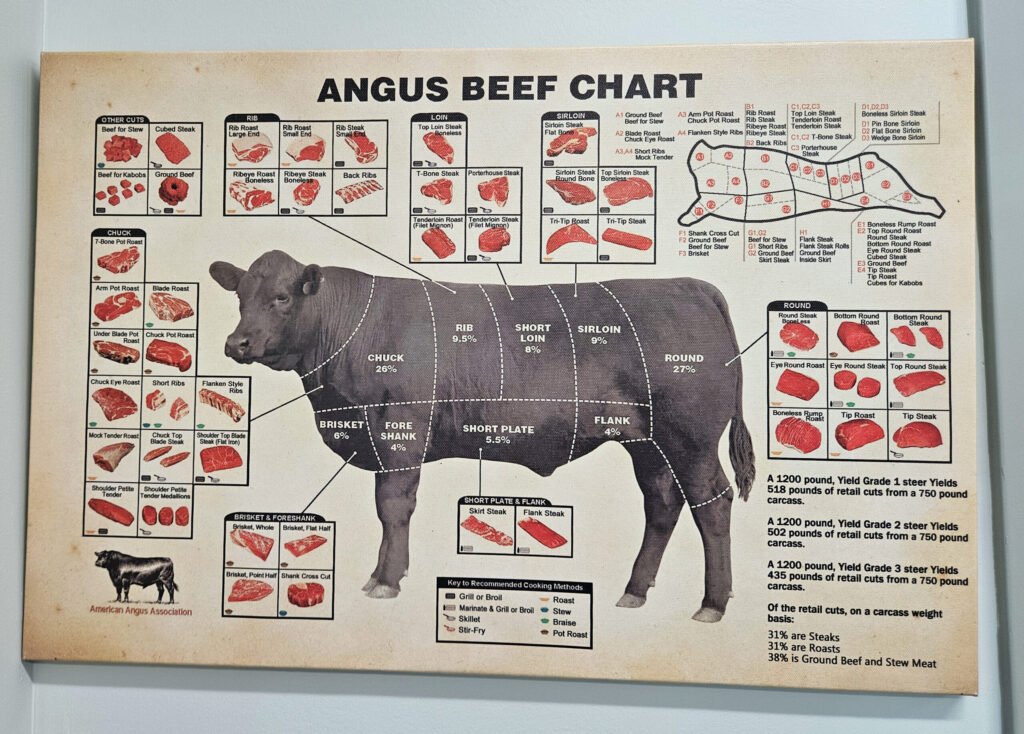
About a dozen people work at the facility now, Close said, with hopes of adding more as volume increases. The work is physical, but it is also technical. Carcasses are broken into halves, then primals, then custom retail cuts based on each farmer’s cut sheet.
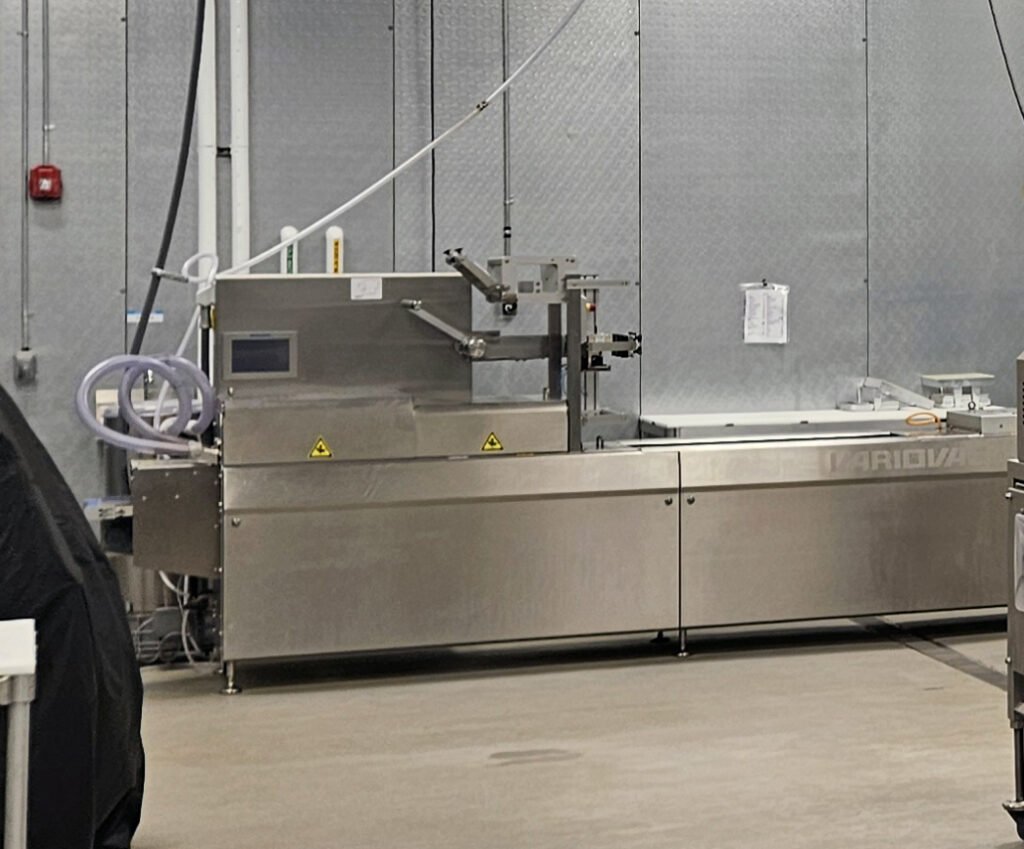
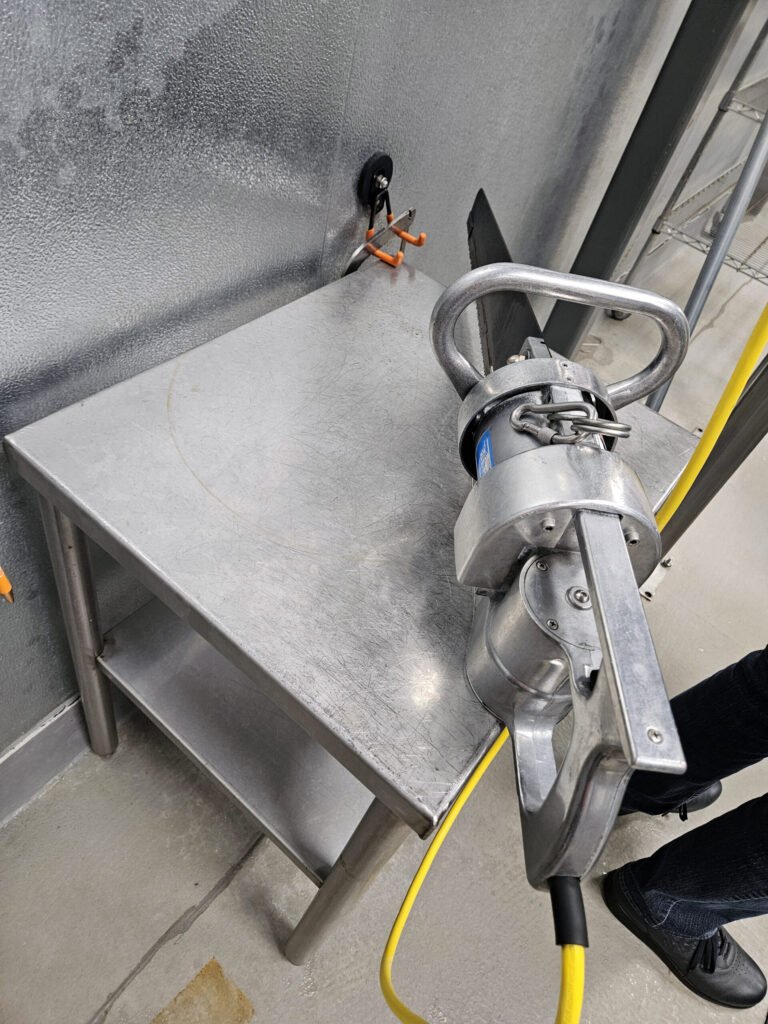
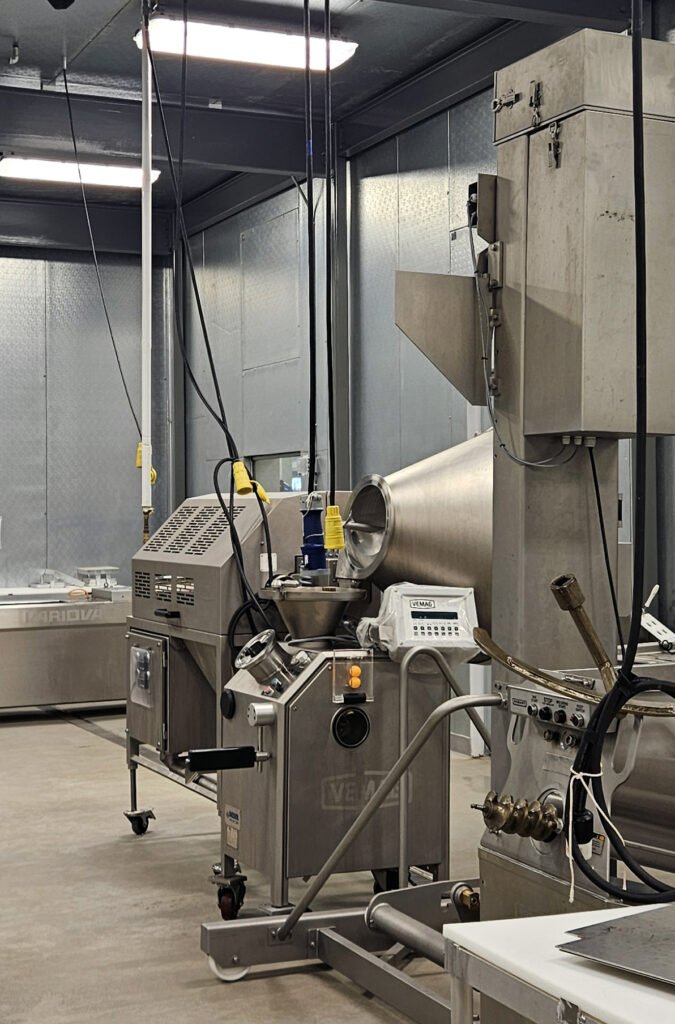
“We do custom cutting,” Close said. “So, for every farm that brings in animals, we follow their custom cut sheet.”
From there, the meat moves into packaging. The facility has professional vacuum-packaging equipment, including a system that makes the square ground-beef bricks shoppers see in stores. Once an animal reaches the grinder, Close said, the ground-beef packaging can move quickly.
“You can do an animal in probably 15 minutes once it gets to the grinder,” she said.
The cooperative is also preparing a tracking system that will give farmers a clearer accounting of each animal: live weight, hanging weight, final weight, steaks, grind, and other finished products. Close said that the information will help farmers understand exactly what they received from each animal and how yields compare across animals and production methods.
That kind of detail matters because APC is not just cutting meat. It is helping farmers understand the business of selling meat.
Building a Local Workforce
Operating a facility like APC requires more than equipment. It requires people who know meat science, food safety, cutting, packaging, labeling, machinery, sanitation, and the rhythm of working in a cold, highly regulated environment.
Close said several employees came in with meat-processing experience or meat-science backgrounds, including one lead employee from Virginia Tech’s meat science lab. Others have come from processors in the region.
The facility is also helping build a local training pipeline. Close said APC is working with TCAT Elizabethton, which outfitted a training room and launched a Meat Processing Technology program. Only a few students have come through so far, but APC has already hired one of them, and Close said the program is helping.
UT Extension has also held workshops at the facility, including carcass-grading programs with meat-science faculty. Local FFA groups have also toured.
“We do a lot of education,” Close said.
That education piece may be just as important as the processing itself. Rebuilding a local food system is not only a matter of constructing buildings. It also means rebuilding the skills that were lost when smaller regional processors closed.
Overcoming Old Assumptions
APC’s ordinary exterior is part of the story. Close said some people in the community were initially unhappy about the idea of a meat-processing facility nearby, partly because they remembered older plants that smelled bad.
“I think people grew up in the ’70s near a meat processing plant, especially in the Morristown area, and they just stank,” she said.
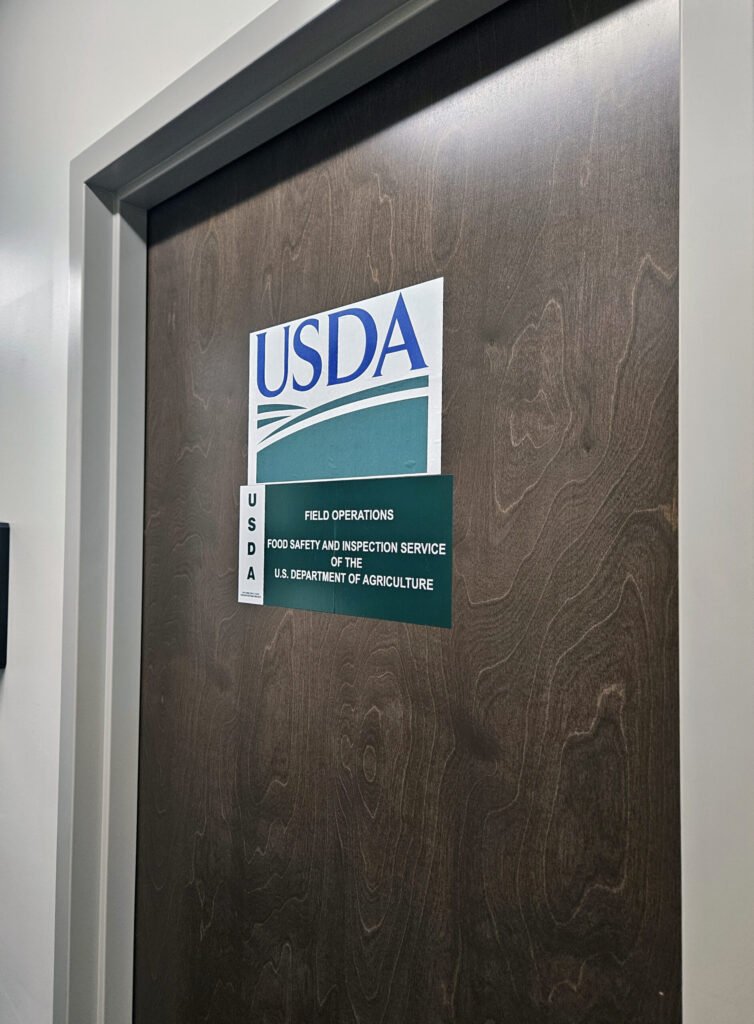
But Close argued that modern regulation has changed what a facility like this looks, smells, and operates like. APC is USDA-inspected. The facility operates in accordance with Good Manufacturing Practices and modern food safety expectations. USDA personnel have scheduled inspection days, and they can also drop in to check the facility when inspected processing is underway.
Standing outside, there was no odor, no noise, and little sign of the agricultural work happening behind the walls.
“If people didn’t know what this was,” Close said, “you would never even know it’s here.”
That is partly because the facility was built for this purpose from the start. It is clean, cold, and tightly controlled, a long way from the older plants some residents remembered.
A Missing Piece Restored
APC does not solve every problem in the regional food system. Close was clear about that. Even at full capacity, she estimated, the facility could produce enough beef for about 50,000 people a year, assuming an average consumption of about 50 pounds per person. Washington County alone has about 130,000 residents.
“So, county-wise, to meet all our local meat needs, we’d need two and a half of these facilities,” she said.
That number puts the project in perspective. A $10 million facility is a major investment, but it is not a complete local-food system by itself. Rebuilding what was dismantled is expensive, technical, and slow.
Still, APC restores a piece farmers had been asking for: a local place where animals can become local meat without first leaving the region’s food system.
As we left the 40-degree processing floor and stepped back into the East Tennessee heat, the building’s purpose was clearer than it had been when we arrived. The freezers by the front door were not just retail space. They were the visible end of a much larger project — one meant to help farmers retain ownership, ensure customers know where their meat came from, and keep more of the value of local livestock close to home.
Read the rest of the series: 2026 ARC&D FARM Tour Highlights













Leave a Reply