

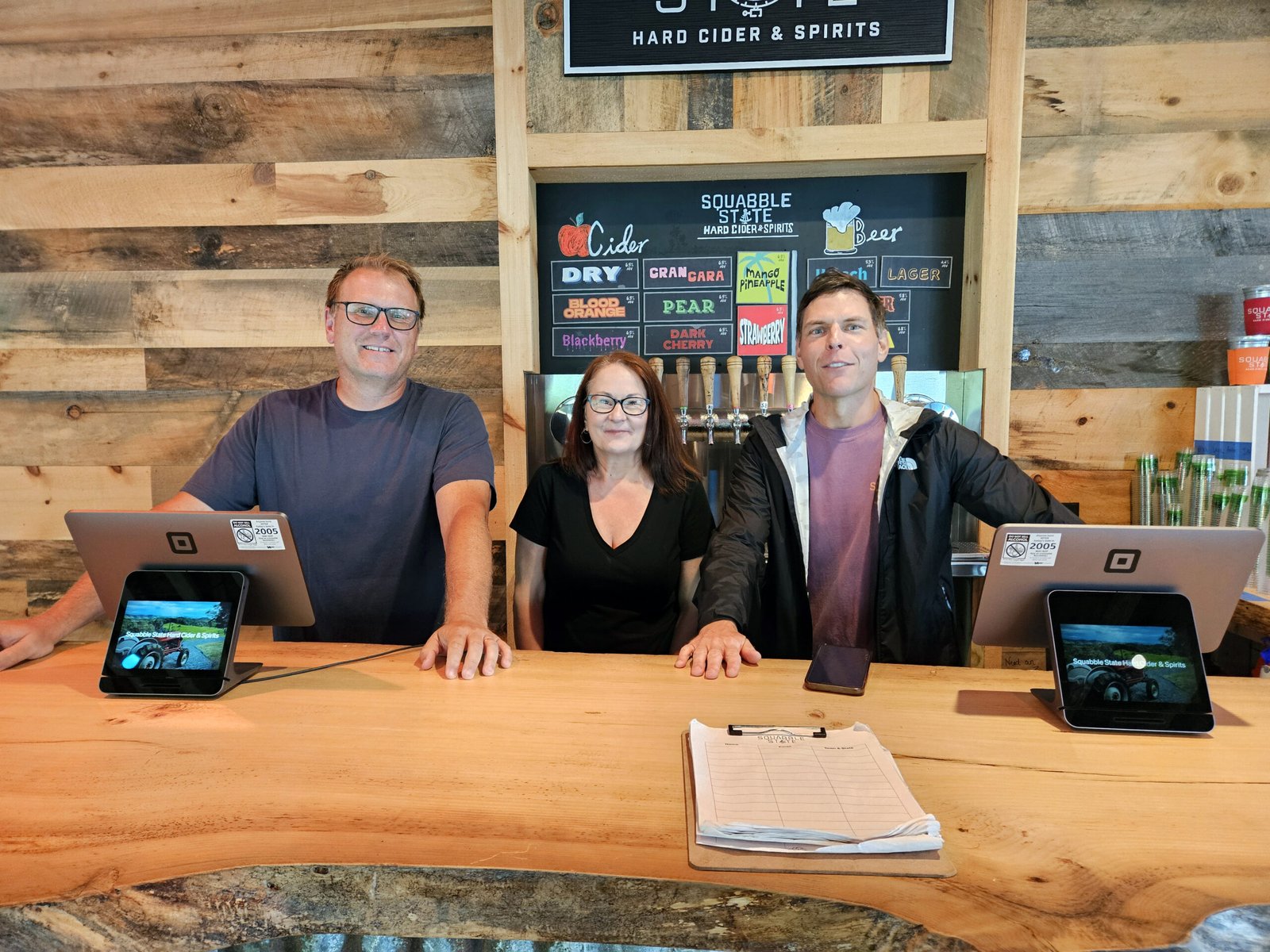
On a Bristol hillside in the Squabble State, two business partners are combining Virginia apples, a young orchard, disputed-border history, and an expanding vision for rural hospitality.
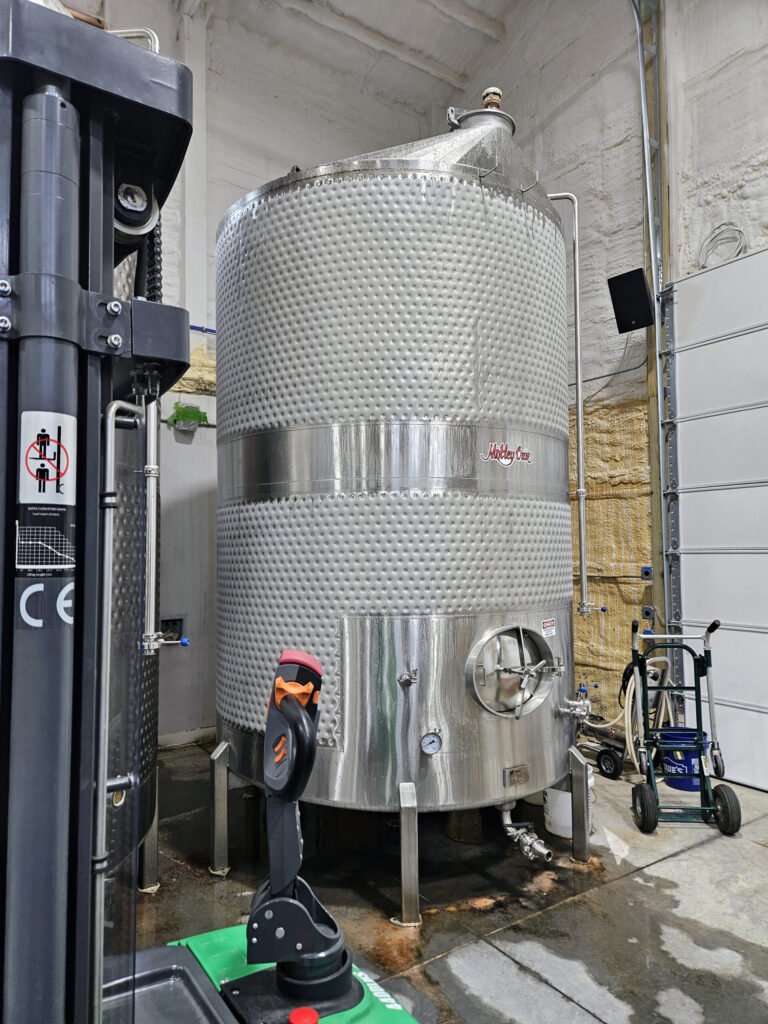
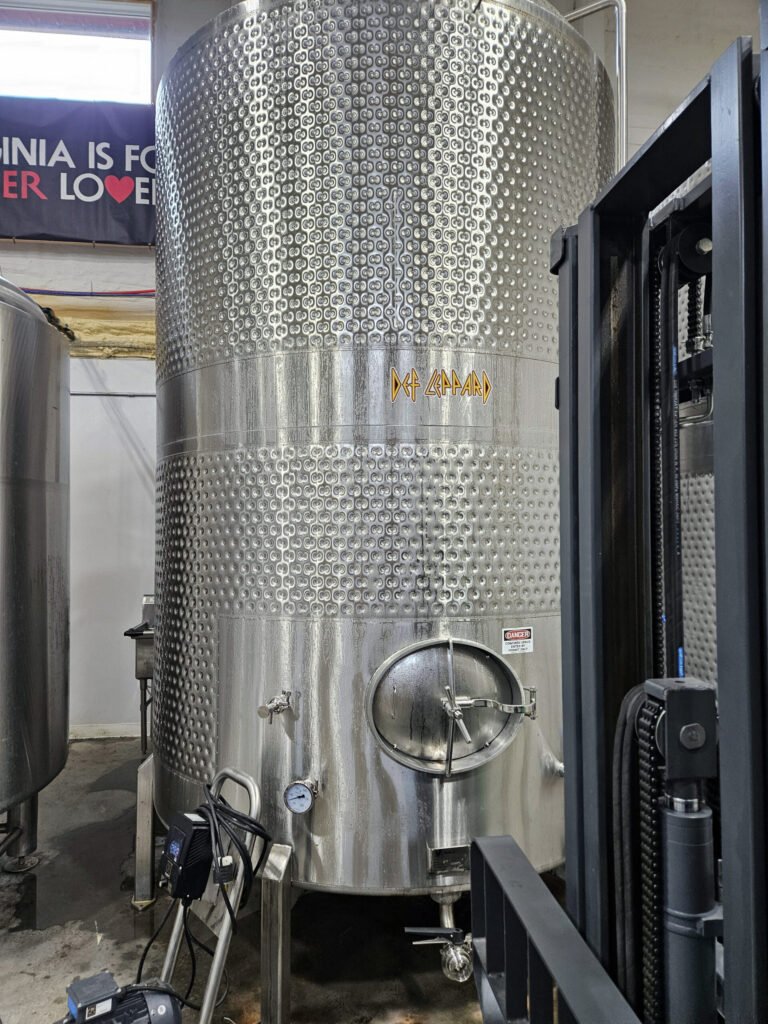
Squabble State’s production room looks a little like a heavy-metal reunion rendered in stainless steel.
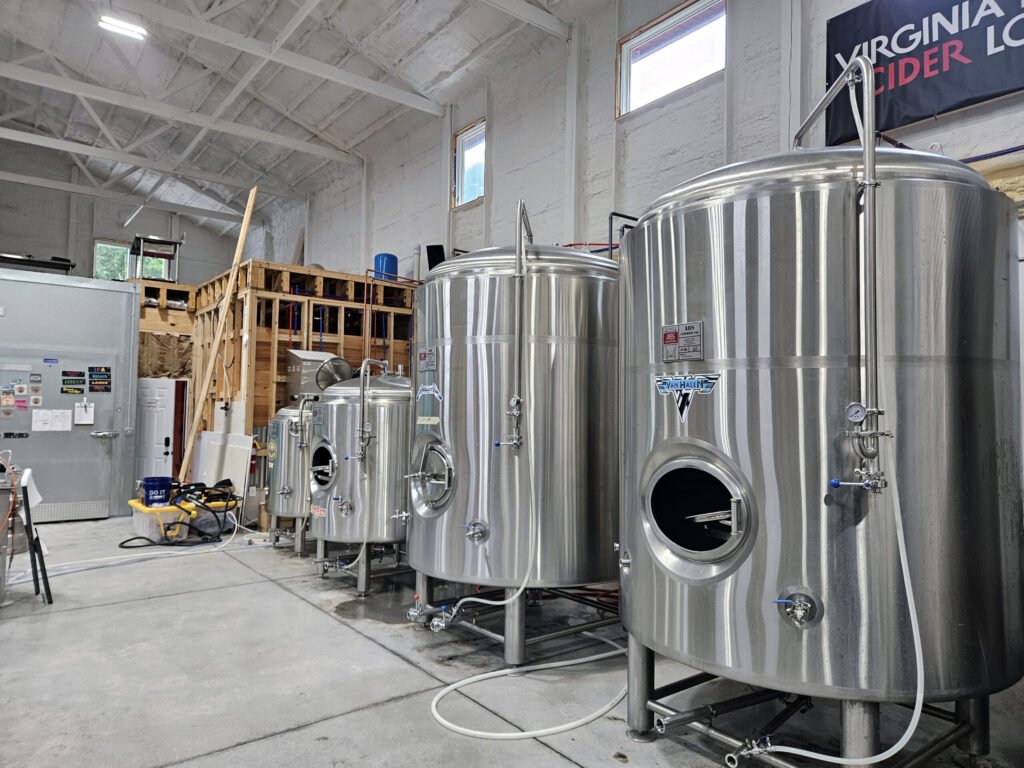
Mötley Crüe and Def Leppard appear on the two towering fermenters. Fruit blends come together in Twisted Sister before the filtered cider moves into bright tanks named Van Halen, Metallica, and Dokken.
The names add some levity to a process whose daily realities are less glamorous.
“You spend most of your time cleaning,” co-owner Will Payne said. “You’re always cleaning.”
There is also equipment to troubleshoot, recipes to document, and production records to maintain. Payne said something is almost always breaking or demanding attention. Neither he nor co-owner Will Clear came from the commercial cider industry, and both continue to work full-time on clean-energy-related projects in Southwest Virginia. Much of what they know about cider making has been learned on the job, with guidance from a consultant with experience in the California wine and cider industries.
The taproom officially launched on October 5, 2024.
The two owners approach Squabble State from different sides of the business. Clear runs cider production and manages the young orchard below the taproom. Payne concentrates on marketing, partnerships, distribution, and the long-range effort to turn the 68-acre property into a broader hospitality destination.
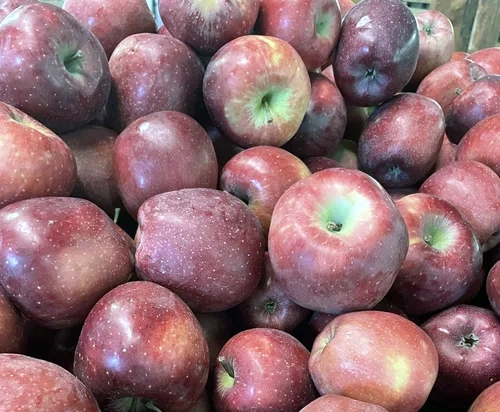
Virginia Apples, Bristol Cider
The apples in Squabble State’s current cider do not yet come from the young trees growing below the taproom.
For now, the company obtains juice made from Virginia-grown apples through a source in Nelson County. During a large production run, approximately 5,000 gallons of juice are divided between the two main fermenters. Fermentation takes about 2½ weeks and produces the base cider used throughout the lineup.
From there, Clear moves a portion of the base into Twisted Sister, the mixing vessel. Fruit purée is added according to the flavor being made. Payne described a typical blend as approximately 93% fermented apple base and 7% added fruit.
“The apples should always lead the way, and the others should follow,” Payne said.
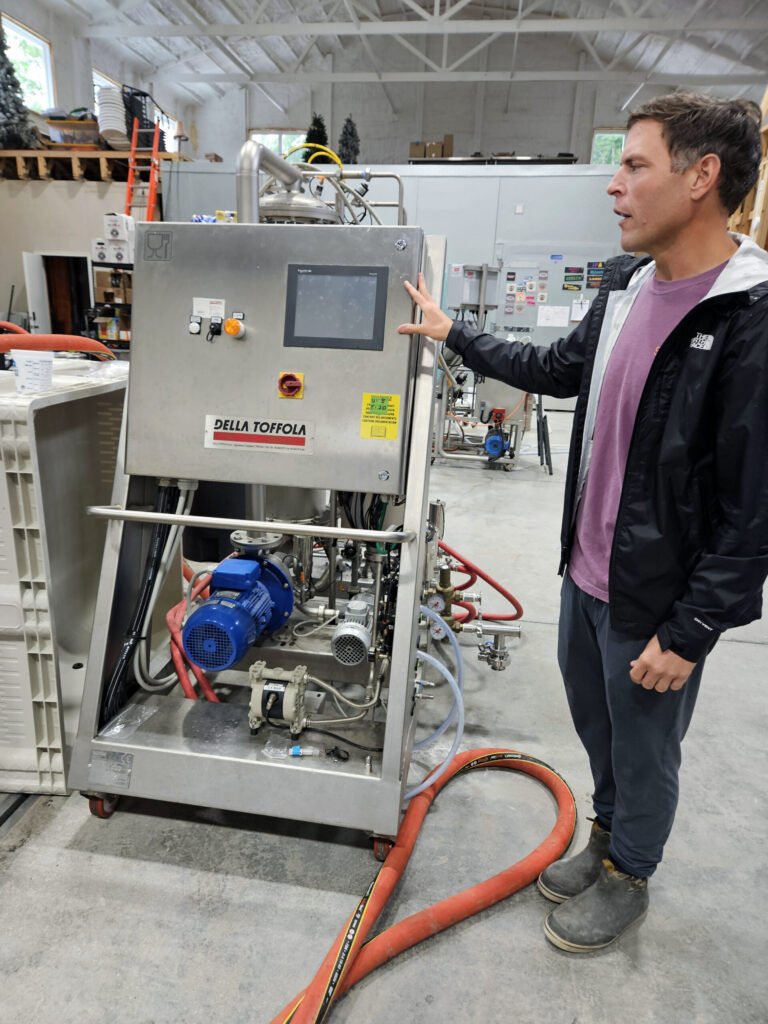
After blending, the cider passes through a cross-flow filtration system that removes pectin, fruit fibers, and other suspended material. The process can also remove some of the fruit’s color, which explains why a blood orange or strawberry cider may look considerably paler than its name suggests.
The filtered cider then moves into the bright tanks, where it is chilled to approximately 32 degrees before being transferred to kegs or prepared for canning.
Payne describes Squabble State’s house style as dry and comparatively low in sugar. That distinction matters because many customers arrive with a firm opinion about hard cider, often formed after trying one that was either too sweet or carried a fermented flavor they did not enjoy.
“We don’t do sweet or funky,” Payne said.
At the time of the visit, eight ciders were on tap. The year-round lineup included Dry, Pear, Blackberry, Blood Orange, and Dark Cherry, with rotating flavors such as Mango Pineapple, Blueberry Lemon, Watermelon Lime, and Pumpkin Spice planned around the seasons. Squabble State had also canned several of its core flavors for taproom sales, although the available cans had sold out by the day of the interview.
Wider distribution remains a future goal. Payne said the company is considering distribution beginning in 2027, but does not want that effort to distract from work on the property’s planned expansion.
A Cider for People Who Do Not Like Cider
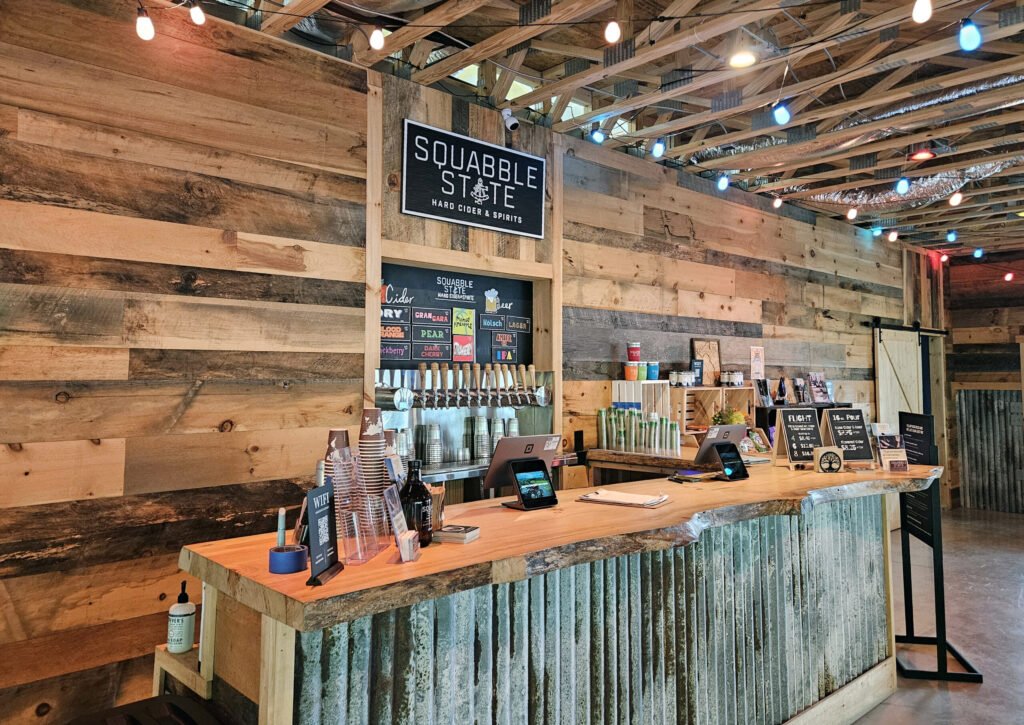
At the bar, Kimberly Clear poured samples while Will Clear and Will Payne joined the tasting.
The Dry was the simplest expression of the base cider. It had the crispness and carbonation of sparkling wine, along with a light yeasty finish that brought Prosecco to mind.
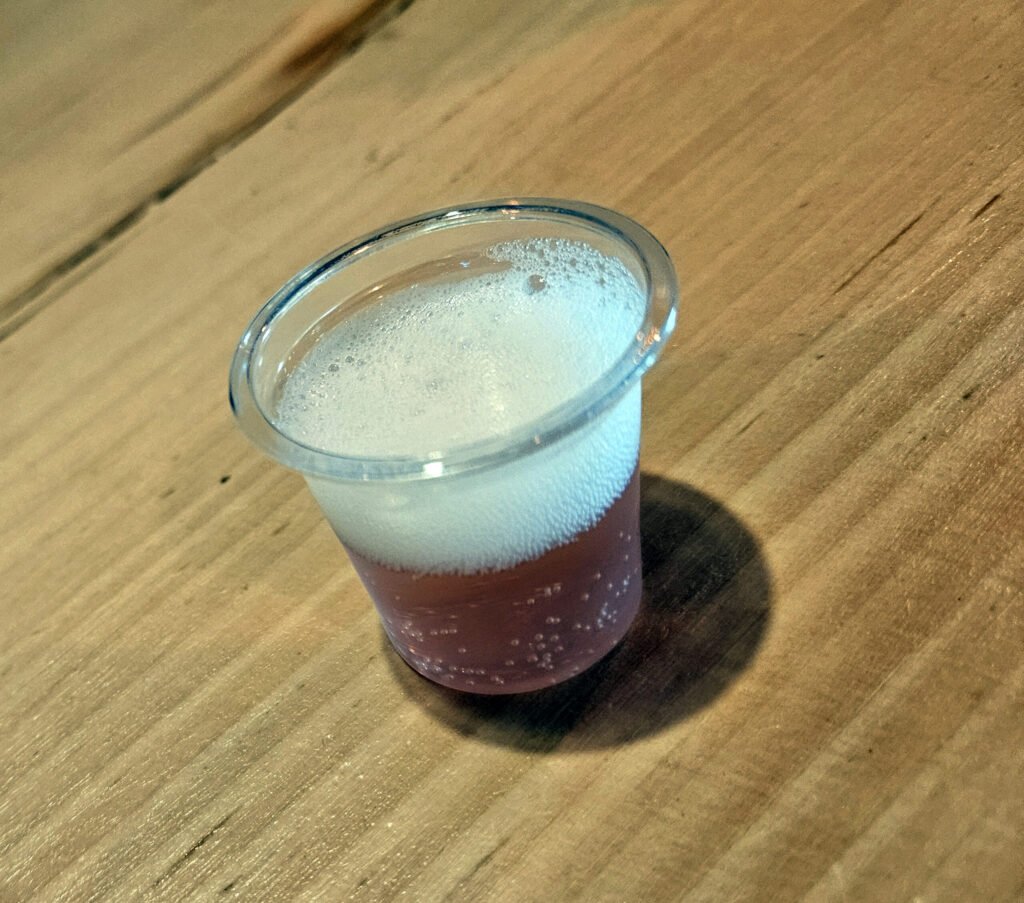
The Blood Orange carried restrained sweetness and a small push of citrus at the end. Blackberry, the taproom’s top seller, had more visible color than most filtered fruit ciders and a fuller berry presence without burying the apple.
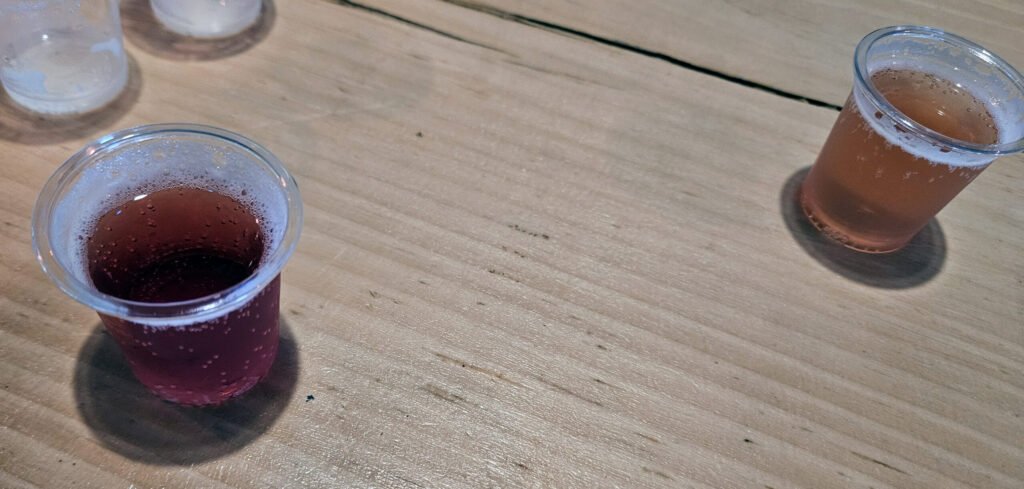
Cran-Cara combined cranberry with Cara Cara orange. Its pale-pink color resembled rosé, but the cider remained dry, mild, and crisp. The fruit brought a coolness that made it particularly suited to summer without turning it into something resembling juice or a sweet cocktail.
Mango Pineapple changed as it warmed. The pineapple arrived first, while the mango became more noticeable after several tastes. Clear said that development is common in the company’s blended flavors: a customer may not identify every component in the first sip, but the secondary flavor becomes clearer over the course of a glass.
Clear plans much of the annual production schedule during the winter, with a large run generally taking place in March or April. The goal is to retain dependable year-round ciders while developing a smaller group of seasonals that customers look forward to each year.
Pumpkin Spice appears to have secured that position. Clear said Squabble State produced about 300 gallons during its previous run and sold out during the first week of November.
“We can’t have it all year,” Clear said. “It’s like Christmas. If you had Christmas every day, you wouldn’t enjoy it.”
Hospitality Before Persuasion
The free tasting is not merely a courtesy for reporters or special guests. Payne said Squabble State lets customers sample the ciders before choosing one.
Clear’s explanation was less formal.
“I bought a whole lot of craft beverages in my life that I didn’t like,” he said.
Rather than asking a hesitant customer to commit to a full glass, the owners would rather let that person find out whether Squabble State’s dry style changes an old opinion about cider. Kimberly Clear said some of her favorite visitors begin by announcing that they do not like cider, only to discover one they would order again.
That approach fits the way Payne defines the business.
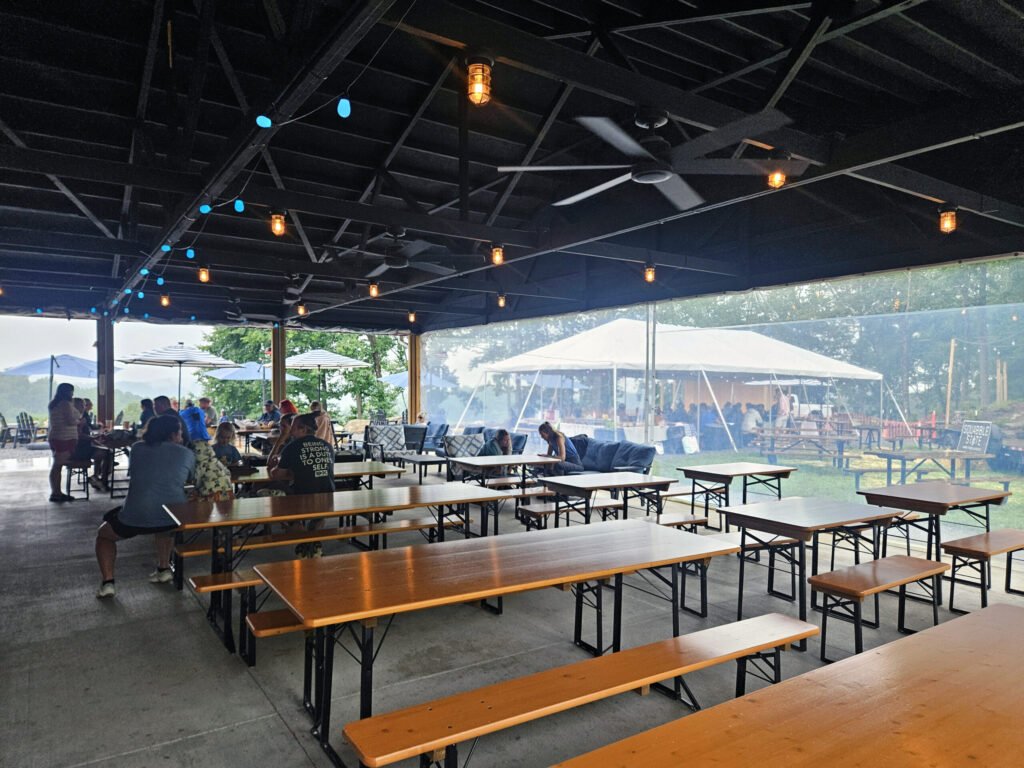
“While we fall in craft beverage, our category for this business is hospitality,” he said. “That’s our focus: the guest experience.”
The cider provides the foundation, but Payne does not see drinking as a requirement for enjoying the property.
“You don’t have to have a drink,” he said.
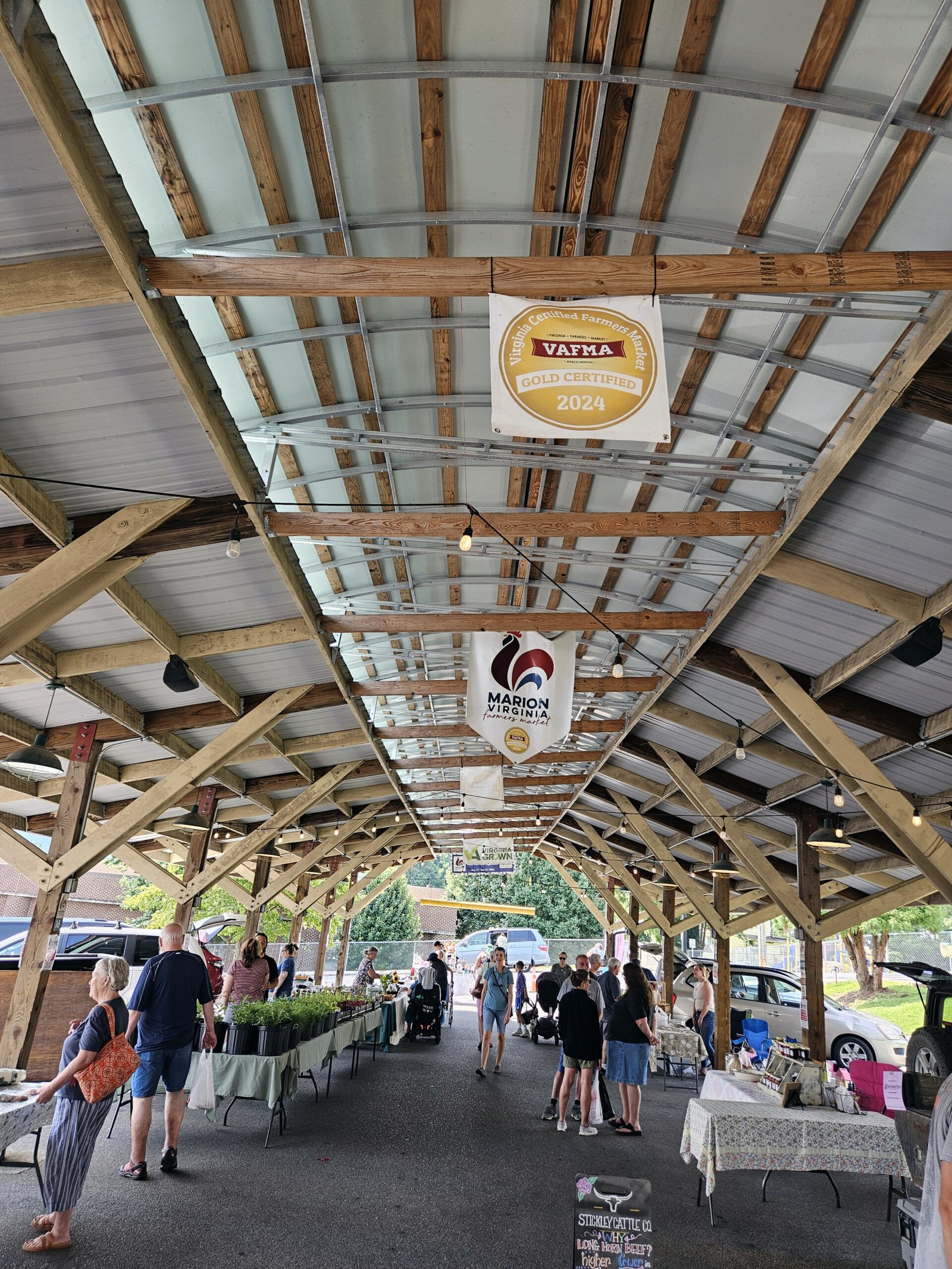
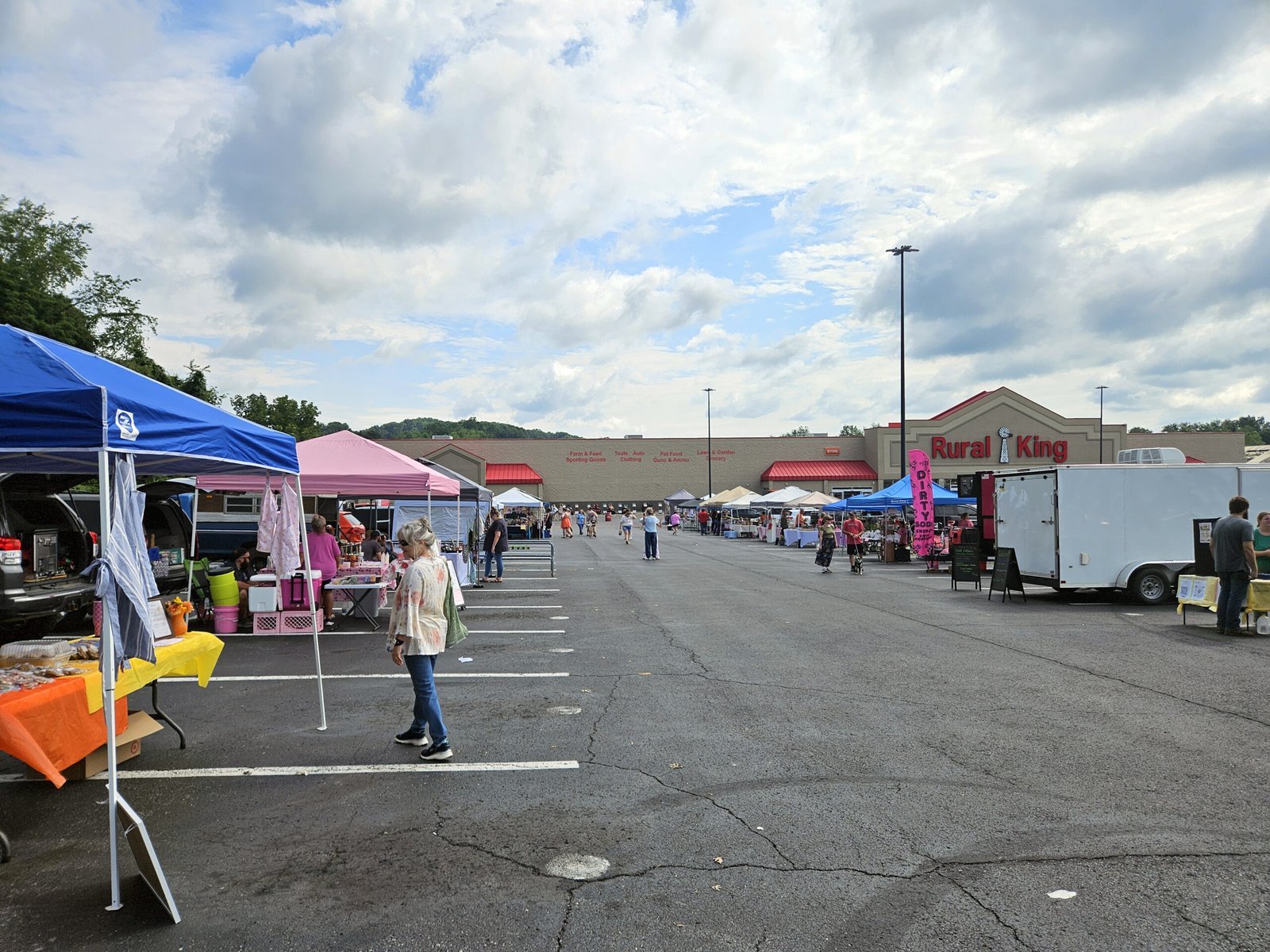
That broader idea was visible during the Pop-Up Farmers Market at Squabble State Hard Cider & Spirits, which brought local vendors to the property on the day of the visit.
The market was also what initially drew Appalachian Highlands Farmers Magazine to the cidery. Payne said he would welcome similar events in the future because they can benefit both the participating producers and the taproom.
“Hopefully it’s good for them, and it’s great for us,” he said.
An Orchard for What Comes Next
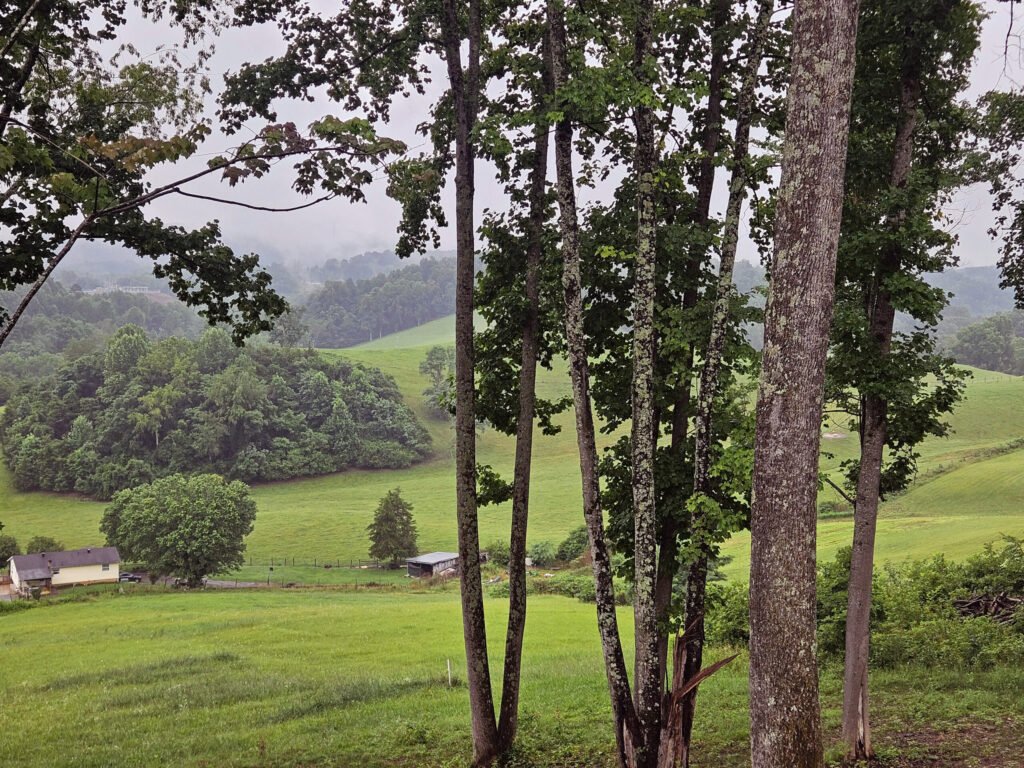
Below the taproom, Squabble State has 3½ acres planted in a high-density orchard.
The owners began with approximately 1,900 trees in March 2023. Payne estimated that about 1,700 remained at the time of the interview, with pests and the normal difficulties of establishing young trees accounting for some of the losses. Clear oversees the orchard as part of his role in the company.
For now, the fruit is intended primarily for a future apple brandy rather than for the cider currently poured upstairs.
Squabble State makes its cider in Bristol, but it is not yet estate-grown. The onsite trees are still developing, while the commercial cider relies on Virginia fruit sourced elsewhere.
The orchard also connects with Clear’s family history. His grandfather worked for one of the Bonham families involved in commercial apple growing in Southwest Virginia, giving Clear an early familiarity with orchards long before Squabble State was developed.
The owners have not publicly settled every detail of the orchard’s eventual use. Payne’s language during the tour was careful: they are saving their fruit “for now” for apple brandy. That leaves room for the agricultural plan to evolve as the trees mature and the larger distillery project takes shape.
The State That Never Was
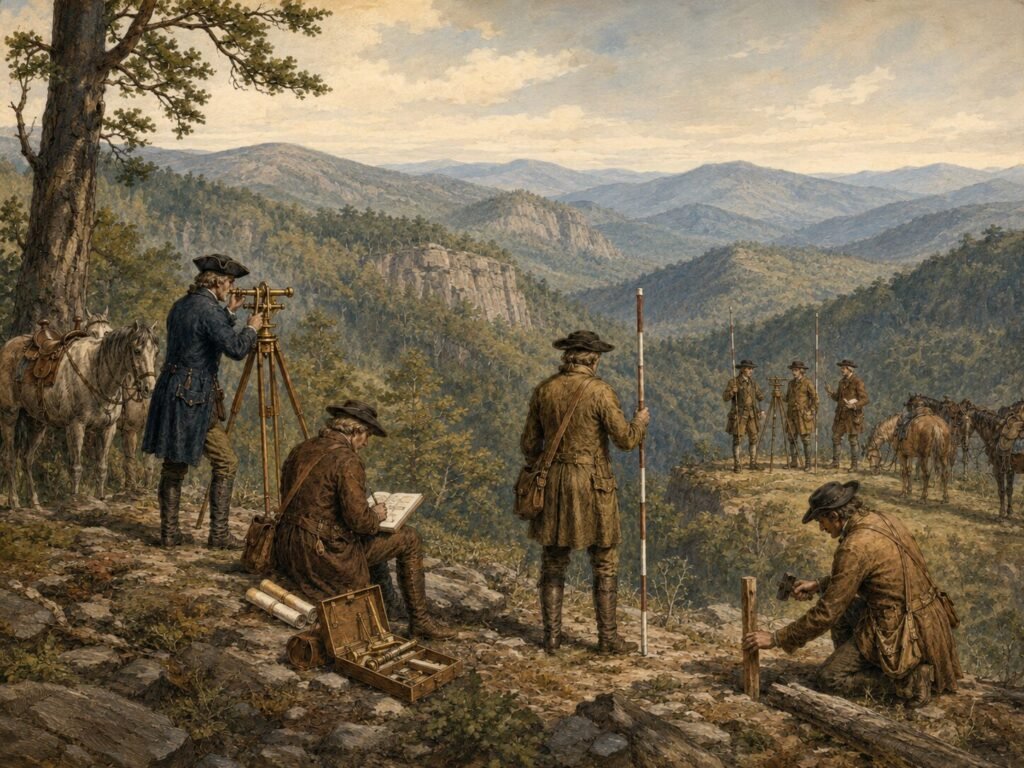
The name Squabble State comes from a boundary disagreement that began when survey parties attempted to establish the line separating Virginia from what was then North Carolina territory.
Payne traces the dispute to 1779. Virginia’s survey party followed one line, while the opposing surveyors established another farther north. The overlapping strip between the competing boundaries became known as the Squabble State. Payne said the disagreement continued, in various forms, for 123 years before the U.S. Supreme Court issued a final boundary decree in 1903.
The name was more than a later piece of local folklore.
In an 1854 Revolutionary War pension application, veteran John McQueen recalled living near present-day Jonesborough when he entered military service around the beginning of 1780. He described his home as in territory then called Squabble State, between the competing boundary lines.
Another pension file illustrates the practical problems created by the uncertain jurisdiction. A summary of the Revolutionary War pension records of William Cornett and his widow, Mary Everage Cornett, says an official described marriages in the area as having occurred in a “squabble state.”
The official explained that the dispute among North Carolina, Tennessee, and Virginia made it difficult to determine where the marriage records could be found and identified the territory as lying between Walker’s and Henderson’s lines.
Witnesses in the pension proceeding variously placed the same marriage near Sullivan County, Tennessee; Washington County, Virginia; or Russell County, Virginia. The disagreement was not merely cartographic. It followed families into courthouses and federal pension proceedings decades later.
For Payne and Clear, the name ties the business to a specific piece of local history rather than to a generic Appalachian image.
It also carries an appropriate undertone for a company owned by two men named Will, who are learning a difficult business while still holding full-time careers elsewhere.
Building Beyond the Taproom
Payne and Clear began developing the idea during the COVID-19 pandemic, when public gathering spaces temporarily disappeared, and the value of having somewhere to meet became clearer.
The taproom is the first completed piece of a larger plan.
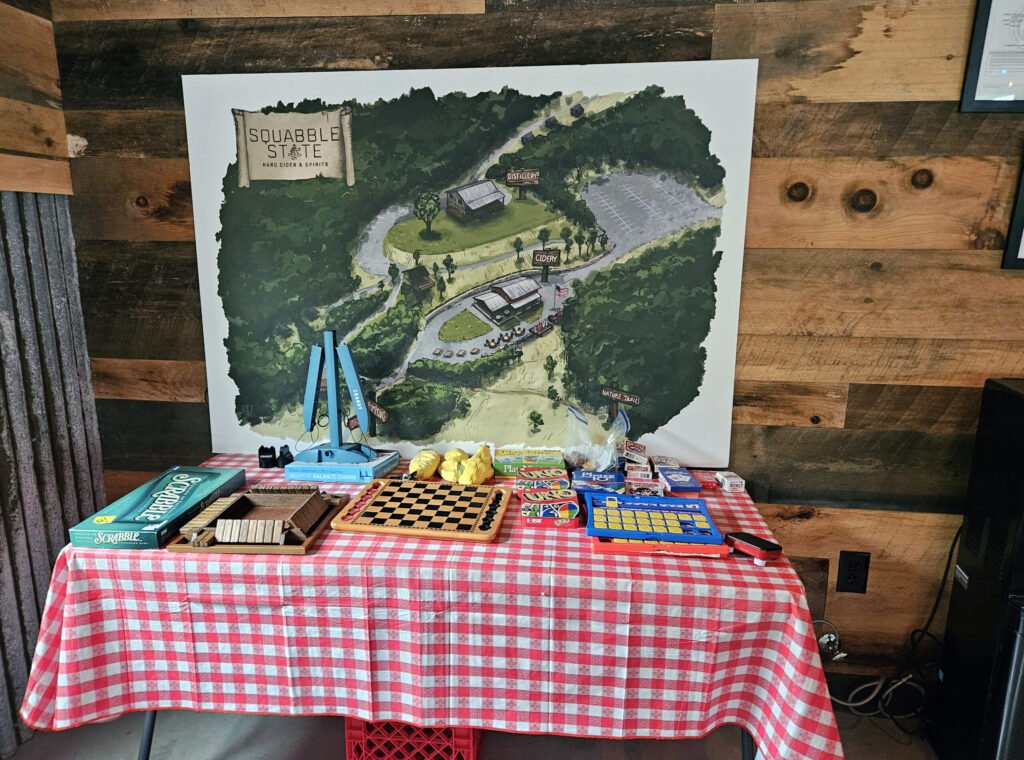
Payne envisions a separate distillery structure with a deck, a wedding and event venue, walking trails, and cabins or lodges spread across the property. Some trail work has begun, but the company has not announced firm completion dates for the larger projects.
The spirits operation is also still developing. Payne said Squabble State has approximately 60 barrels of Virginia bourbon, rye whiskey, and single-malt whiskey aging off-site. He also discussed fruit-infused vodka and a limited cocktail menu, built in part around the company’s cider.
At the time of the interview, Payne said Squabble State had approximately 60 barrels of bourbon, rye, and single-malt whiskey aging off-site. As the barrels reached three years of age, the company was preparing for the next steps toward bottling and eventually incorporating spirits into its hospitality plans.
Those spirits are part of a larger vision being developed in stages. Payne and Clear have already opened the taproom, established a working cider-production facility, planted a high-density orchard, and begun building an audience for a drier style of Virginia cider. Around that foundation, they are planning additional spaces for spirits, events, trails, and overnight stays.
The larger destination is still taking shape, but its first phase is no longer theoretical. Cider is fermenting in Bristol; customers are gathering at the taproom; local producers have set up on the property; and young apple trees are growing below the building.
The orchard and the aging barrels represent what comes next. The stainless-steel tanks, the taps, and the glasses moving across the bar represent what Payne and Clear have already accomplished.
Standing in the production room, surrounded by tanks bearing the names of bands that once filled arenas, Payne summed up that accomplishment more simply.
“We actually made it,” he said.








Leave a Reply