

Mullein in the yard, on the roadside, and in Appalachian memory
A Plant That Found Me Online
Recently, I started noticing mullein everywhere — not first in the fields, but online. Posts about the plant kept showing up in social media groups devoted entirely to it. There were people comparing leaf size, asking when to harvest flowers, showing off dried bundles, and trading stories about teas, oils, seeds, and yard patches.
That alone might not have stopped me. The internet has a group for almost everything. But these mullein enthusiasts were so prolific that I began seeing their posts almost daily. Then I realized I had some growing in my own yard in Bristol, Virginia. After that, the plant quit being background scenery. I started paying attention.
From Yard Weed to Roadside Landmark
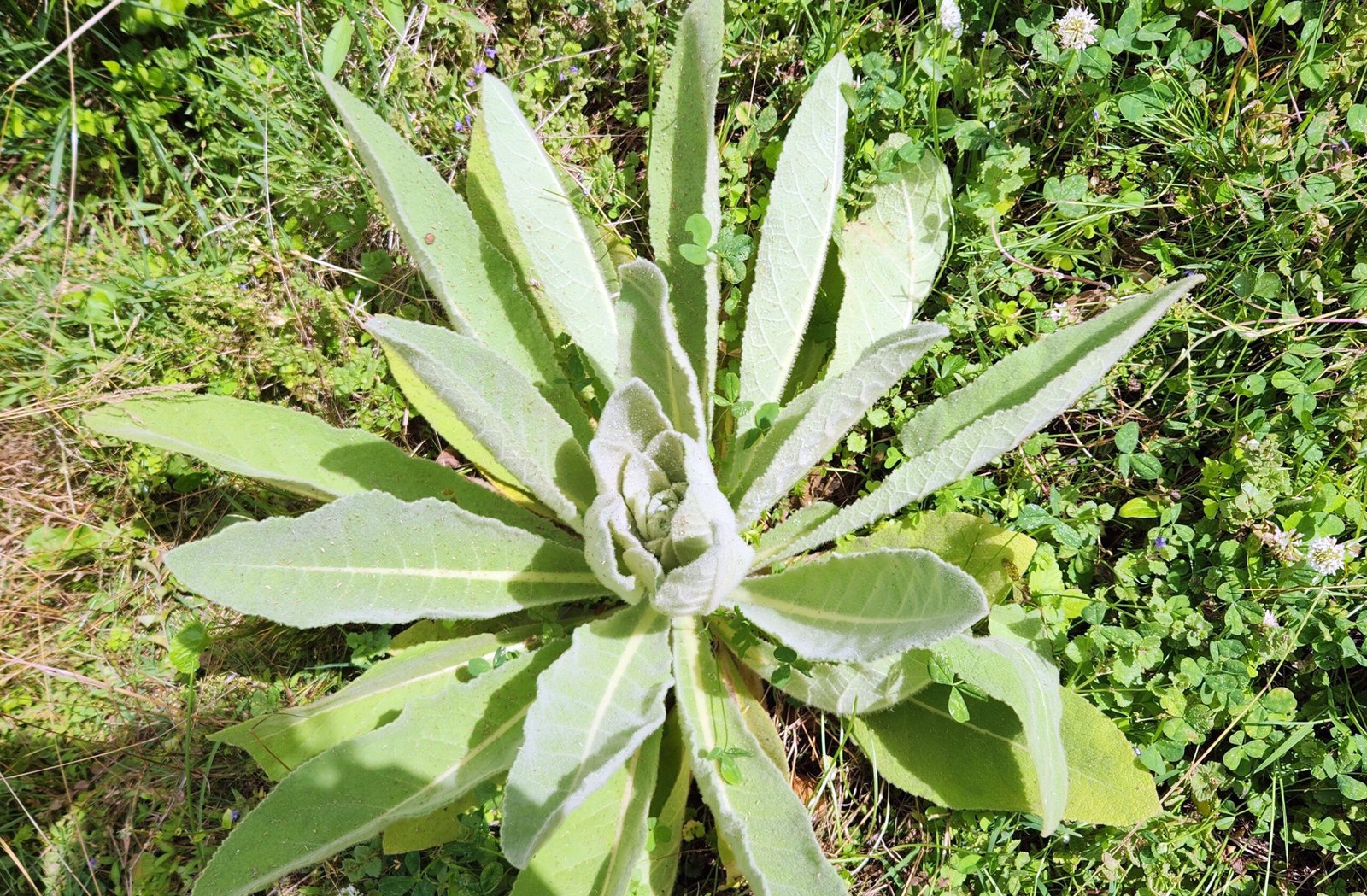
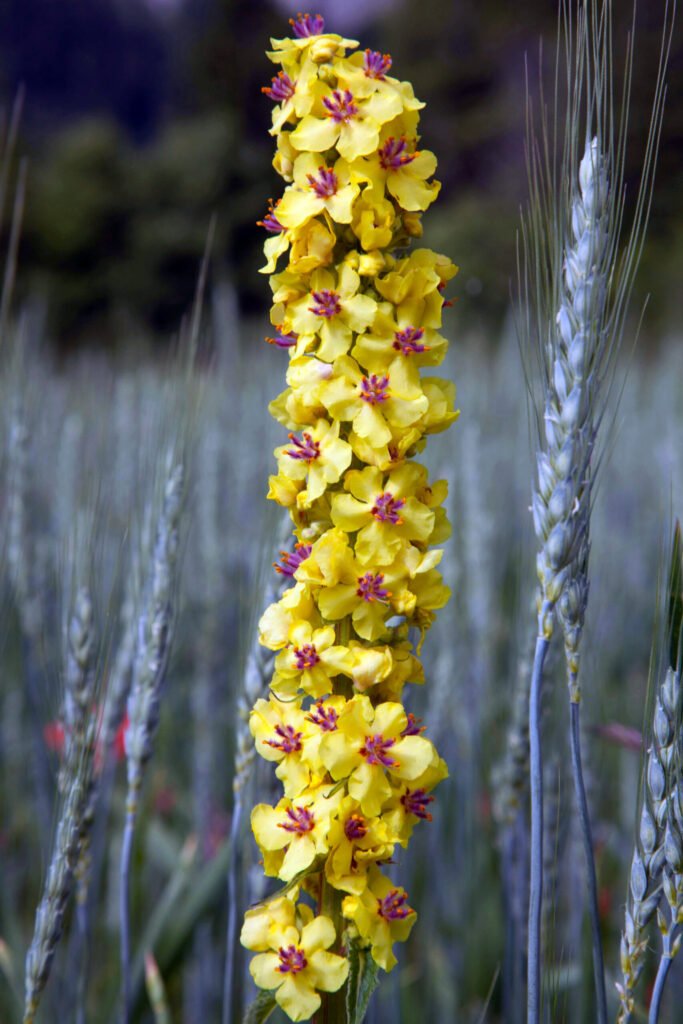
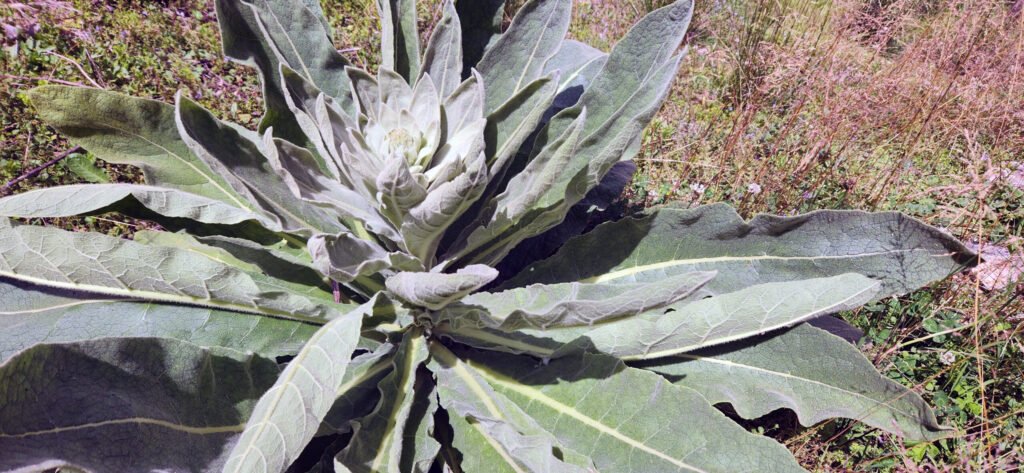
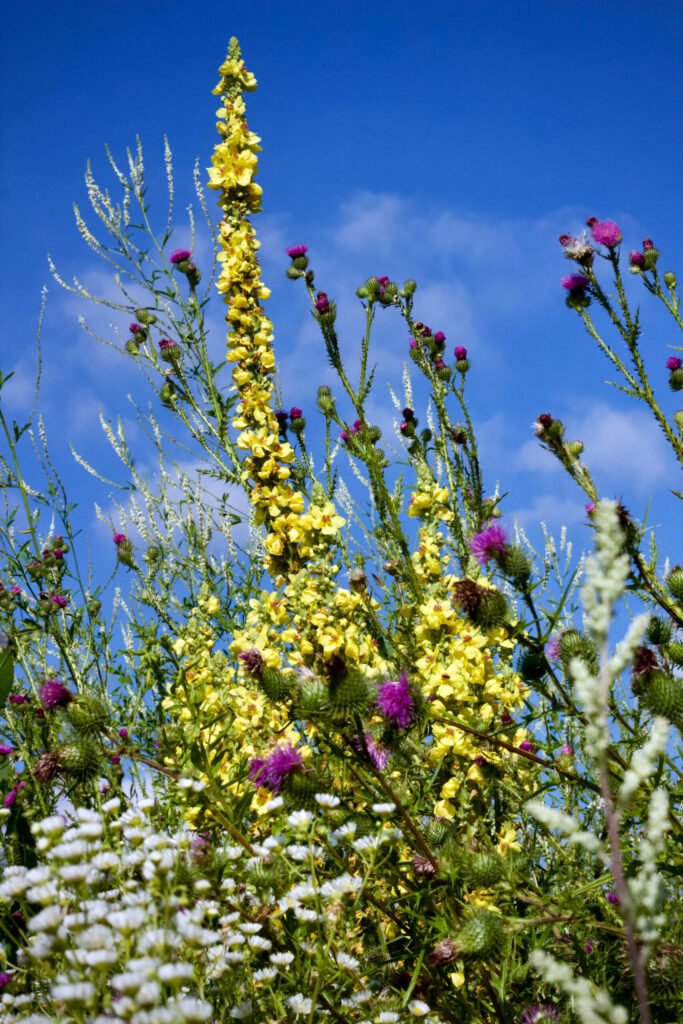
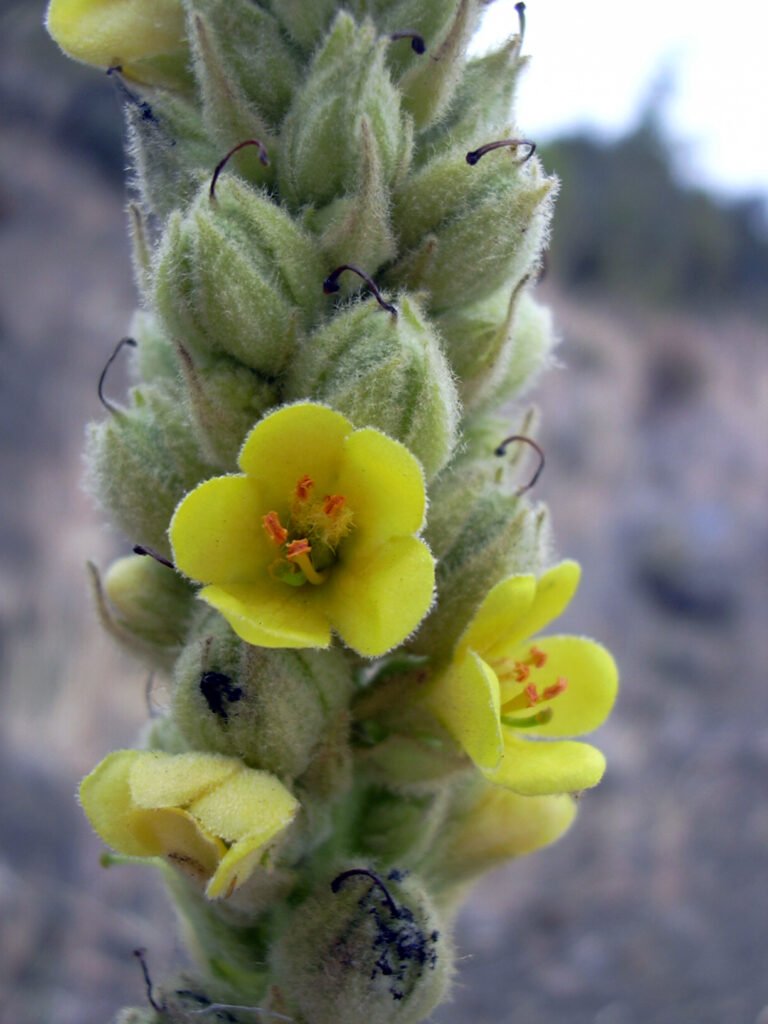
Once you know what common mullein looks like, it is hard to unsee. A first-year plant sits low to the ground in a pale green rosette, its leaves thick, fuzzy, and soft enough to invite touch. In its second year, it changes character completely, sending up a tall flowering stalk dotted with small yellow blooms.
Botanists know it as Verbascum thapsus, a biennial in the figwort family (Scrophulariaceae). Gardeners and foragers know it by older names such as flannel leaf, velvet dock, candlewick, Aaron’s rod, and torch-wort. Kew lists its native range as the Azores and Europe to Siberia and the Himalaya, and identifies it as a biennial species.
Mullein is an Old-World Plant in Appalachian Ground
Mullein is not native to Appalachia. Its older home range stretches across Europe and parts of Asia, and it was carried into North America long ago. A U.S. government plant profile notes that common mullein was introduced into the United States in the mid-1700s and used in Virginia as a piscicide, or fish poison — a reminder that “useful plant” has not always meant “gentle plant.”
That rough-edged history suits mullein. It is a plant of disturbance: roadsides, rocky banks, pastures, embankments, waste places, and thin, open ground. It often appears where soil has been scraped, burned, grazed, neglected, or otherwise opened to the sun. In that sense, mullein is not so much a delicate wildflower as a volunteer with work boots on. NC State Extension describes it as naturalized across the United States and Canada, and commonly found in fields, on roadsides, in pastures, and in waste places.
Torches, Folk Names, and Household Memory
Its old-world reputation traveled with it. The Greeks and Romans are often said to have dipped dried stalks in wax or tallow and used them as torches, which helps explain names like candlewick and torch-wort. Later European folk traditions gathered around it too, sometimes treating the plant as practical, sometimes protective, sometimes medicinal.
By the time it settled into the Appalachian landscape, mullein already carried a crowded bundle of names and uses. In the mountains, that bundle found a fitting home.
Mullein in Appalachian Folk Tradition
In Appalachia, mullein became part of a broader household plant tradition. It was not valuable because it came in a bottle with a label. It was valuable because people recognized it, named it, gathered it, dried it, and remembered what parents, grandparents, neighbors, or local healers had done with it.
That is the part of the story worth slowing down for. Folk medicine is not simply a list of “symptom plus plant equals cure.” It is also memory, place, access, thrift, observation, and survival. In mountain communities where store-bought remedies were not always nearby or affordable, familiar plants carried practical and cultural meaning.
What the Research Can — and Can’t — Say
Modern interest in mullein is not baseless, but it should be handled carefully. Researchers have identified compounds in Verbascum species that help explain why herbalists have long described mullein leaf as soothing when prepared as tea. Recent research in Pike County, Kentucky, also documented Verbascum thapsus among locally used medicinal plants identified in a survey of Appalachian plant knowledge.
Still, this is not the same as saying mullein cures disease. The better wording is that mullein has a long record of traditional use, contains compounds of scientific interest, and remains part of Appalachian plant memory. That keeps the story grounded without turning it into a medical claim.
Use, Story, and Caution
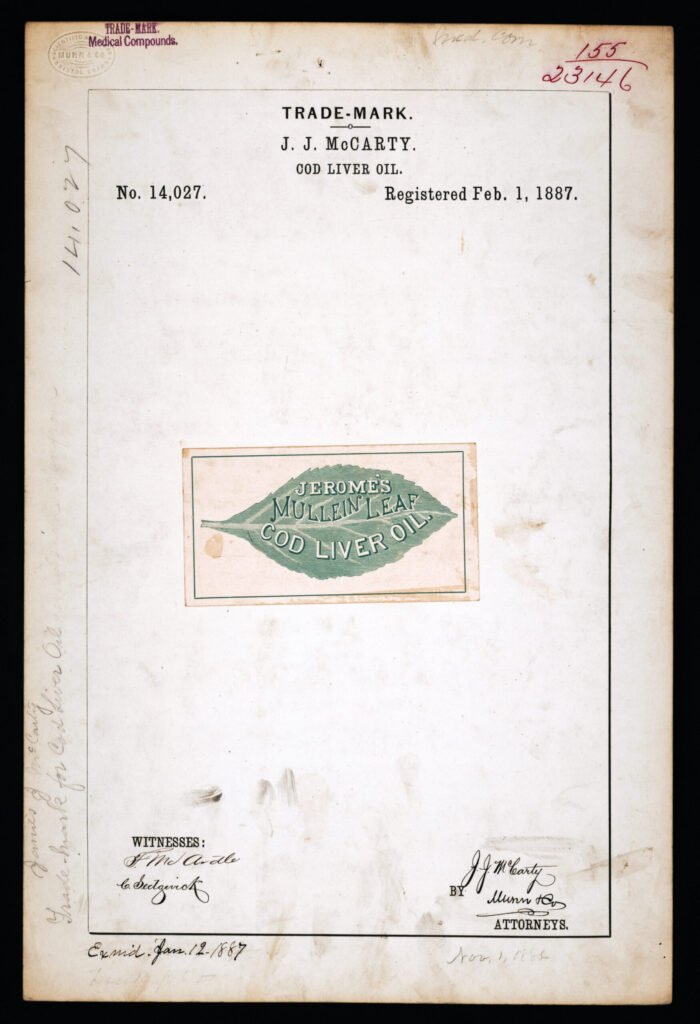
Old accounts connect mullein with coughs, colds, earaches, poultices, and other household uses. Those details belong in the historical record, but they should not be presented as medical advice.
That distinction matters. A story is not a prescription. Croup that affects a child’s breathing is a medical situation. Ear pain with drainage, hearing loss, ear tubes, fever, or a possible ruptured eardrum is not a place for home experimentation. The history is interesting enough without asking the plant to do more than the evidence can support.
Growing Where the Ground Has Been Disturbed
For anyone who has found it in the yard, the first lesson is identification. In year one, common mullein forms a basal rosette of pale, velvety leaves. In year two, it bolts upward into a tall stalk with yellow flowers. It prefers full sun and dry, open, well-drained ground.
The second lesson is restraint. A single plant can produce many seeds, and in some places common mullein is managed as a weed or invasive plant. In other places, it is simply one of those plants that appears in disturbed openings and then fades as taller vegetation returns. Either way, anyone encouraging it at home should understand that “volunteer” can become “too many volunteers” if seed heads are left unmanaged.
Harvesting Leaves and Flowers
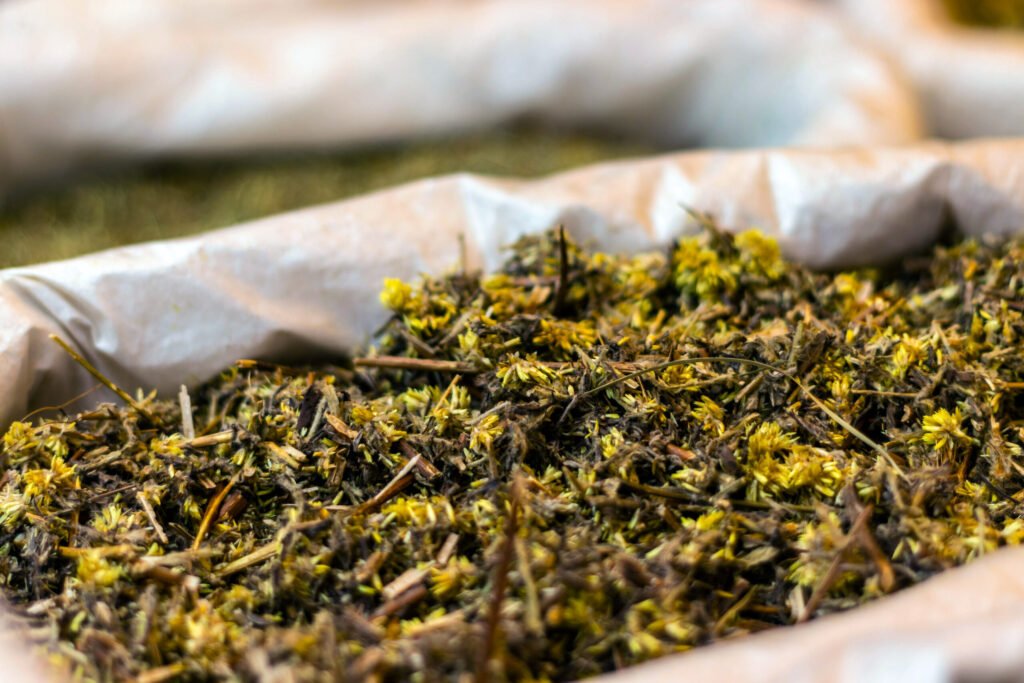
Those who harvest mullein traditionally focus on leaves and flowers. Leaves are usually gathered from healthy plants and dried thoroughly in a warm, airy place. Because the leaves are covered in tiny hairs, tea made from them must be strained carefully through fine cloth, a coffee filter, or another very fine strainer.
That old practical detail is easy to overlook, but it matters. The same fuzz that makes the leaf feel like flannel can irritate the throat if it ends up in the cup.
The flowers require more patience. They open gradually along the stalk and are often picked a few at a time. In traditional herbal practice, the dried flowers are sometimes infused in oil. That custom explains why mullein appears in old discussions of ear oil, but modern readers should treat that as folk history and use caution.
Why Mullein Still Holds Attention
The online mullein groups, for all their enthusiasm, may be part of a much older pattern. People see the plant, ask someone what it is, learn a name, and then suddenly the road banks are full of it. The difference now is that the porch conversation has moved to a feed. A plant once passed along through neighbors, family memory, and local healers now circulates through photos, comments, and daily posts.
Standing in a Bristol yard, that does not feel as strange as it sounds. Appalachia has always been a place where plants carry more than one meaning. They are weeds and remedies, annoyances and resources, memories and warnings. Mullein fits that tradition perfectly. It is not rare. It is not glamorous. It is not a miracle. But it is memorable.
And maybe that is why so many people keep talking about it. Mullein has a way of making itself known: first as a fuzzy rosette underfoot, then as a yellow-flowered staff by the roadside, then as a dried stalk rattling through winter. It asks for attention without asking for much else.
Once you learn its name, it becomes less like a weed and more like a neighbor you had been passing for years without introduction.












Leave a Reply