

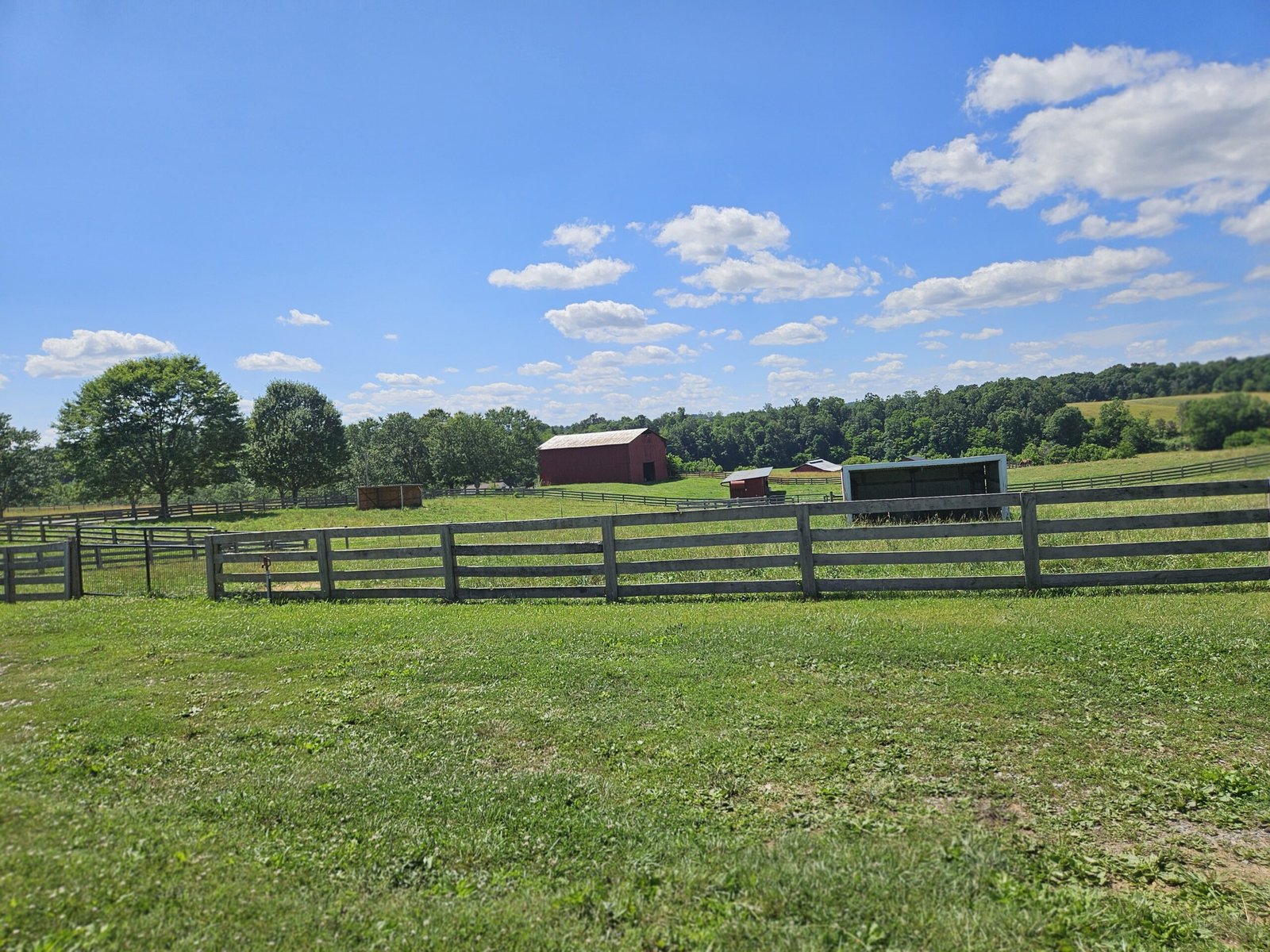
After visiting the Appalachian Producers Cooperative, where local livestock becomes packaged meat, Butterfield Farm brought our Farm Tour route back to the pasture.
Emily Bidgood of Appalachian RC&D Council had recommended the Telford farm for its careful, systematic use of rotational grazing and regenerative practices. By the time Abby Terhune started walking us through the converted horse barn, goat pen, pig paddocks, water lines, shaded cattle areas, and rolling fields, it was clear why.
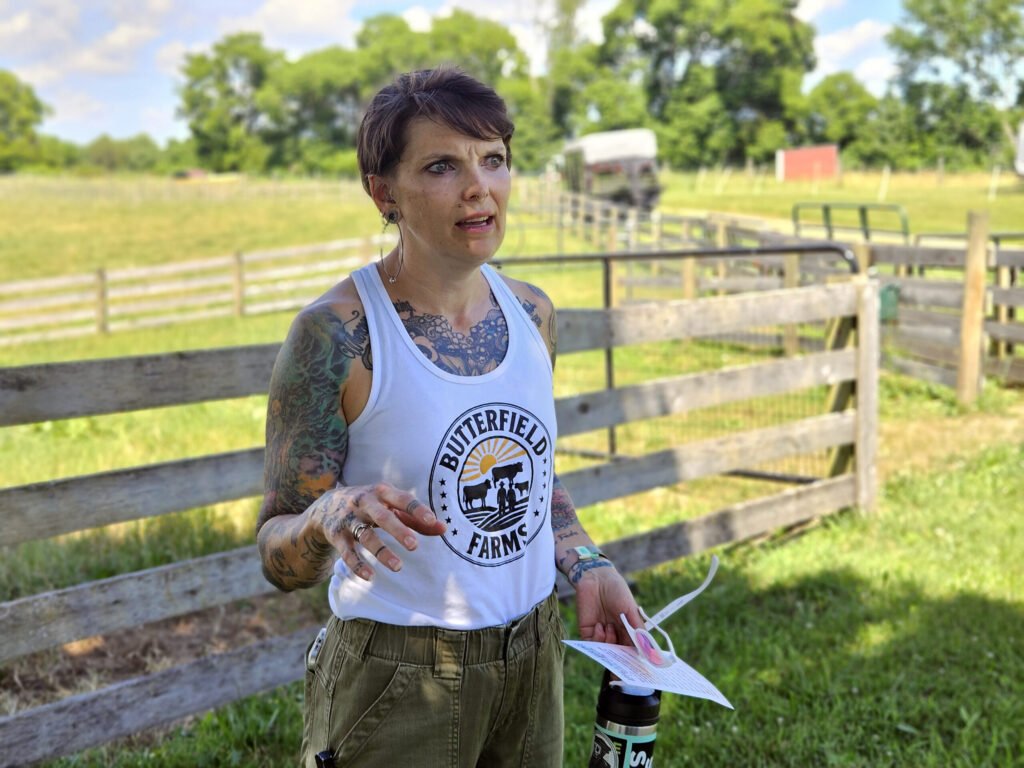
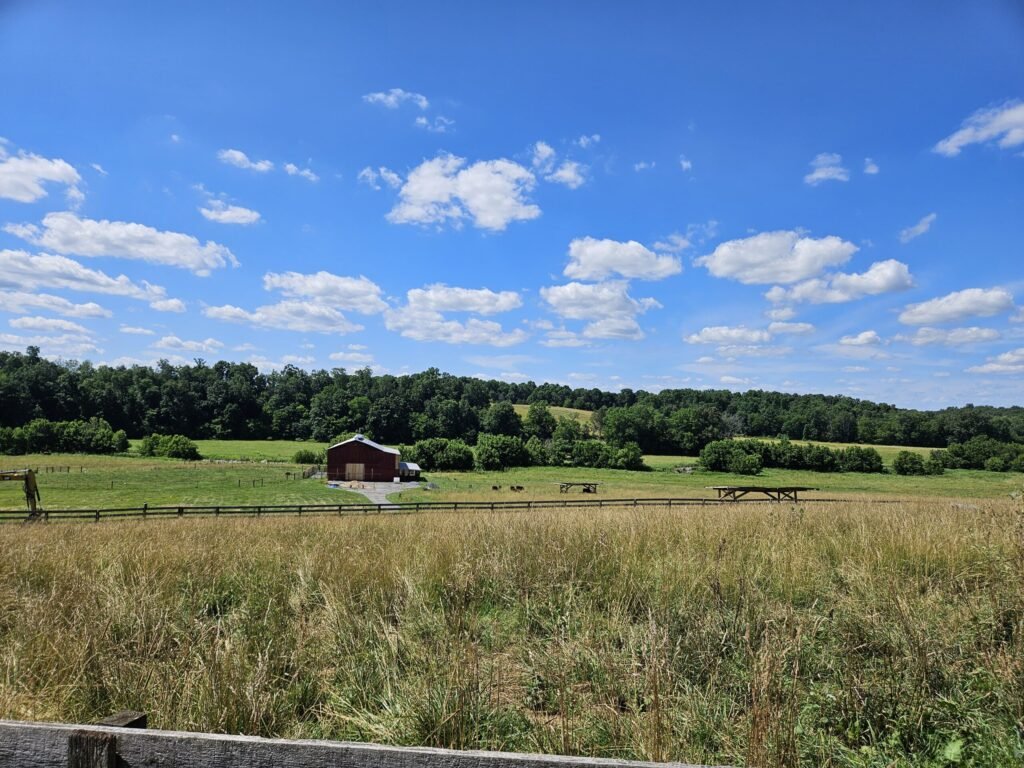
Butterfield Farm covers 117 acres, and Abby talks about it like a living puzzle. The pieces are cattle, pigs, goats, guinea hens, water, shade, manure, parasites, forage, family labor, and time.
Abby farms the property with her husband, Bill Terhune. She also homeschools seven children, several of whom study music, including classical piano at East Tennessee State University. When asked how she keeps up with it all, she laughed.
“We are like go, go, go,” she said.
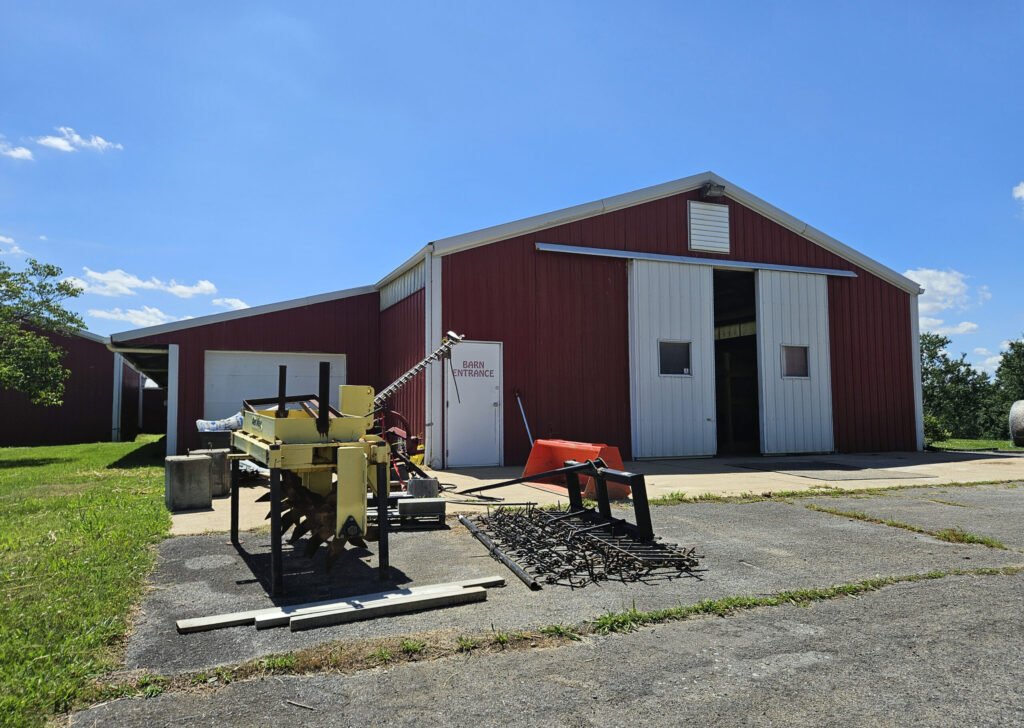
The tour began in a converted 21-stall horse barn, now adapted for livestock and milking. Abby said the older part of the farmhouse dates to 1850, and the land had once been used for tobacco and later for hay. When she arrived five years ago, she said, the property was beautiful but neglected.
“The land really needed some love,” she said.
The farm’s name carries personal history. Abby said her late husband had dreamed of raising cattle. After his death, she eventually left Northern California, bringing her children and goats, and with the desire to build something more permanent. In East Tennessee, she and Bill have continued that dream, but the farm they are building is not simply about producing meat or milk. It is about restoring the land that produces both.
Moving Animals With a Purpose
Butterfield’s system depends on movement.
“Nobody sits,” Abby said.
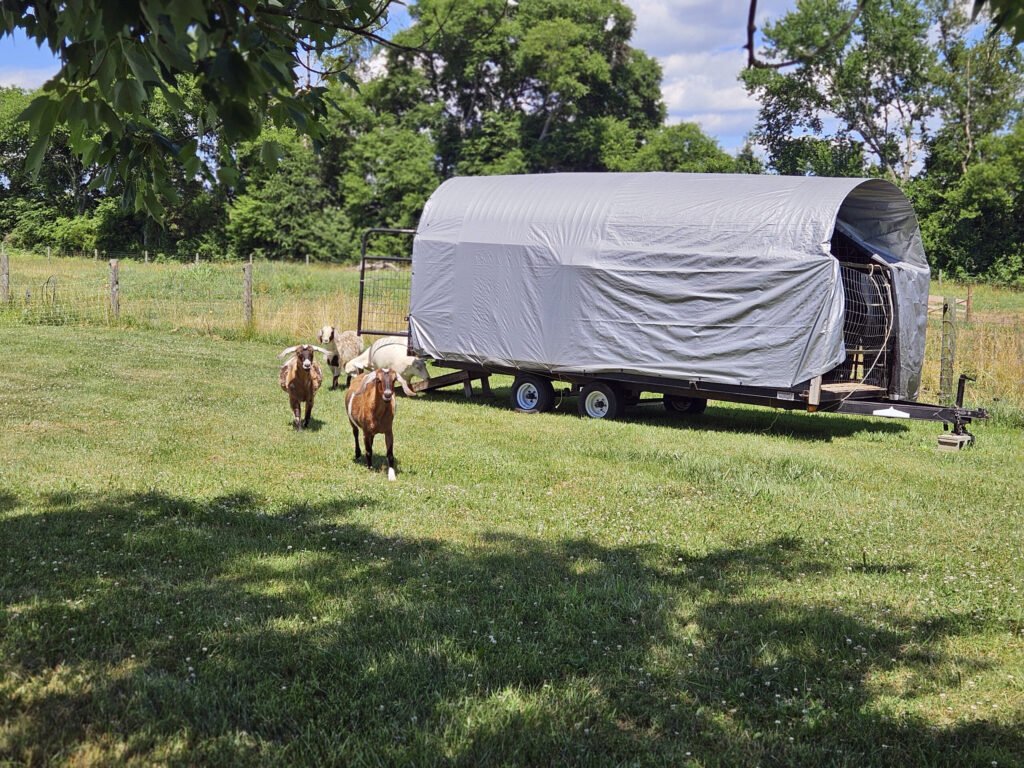
That phrase could serve as the farm’s operating principle. The cows move often, sometimes every day or two in summer. The goats move weekly. The pigs rotate through a paddock system inspired by farmer and author Joel Salatin. Even the horse and donkey are moved rather than left on one patch of ground.
For Abby, rotation is not just about giving animals fresh grass. It is also about parasite control, manure distribution, soil recovery, and animal comfort.
“The life cycle of a parasite is 21 days,” she said. “You move them every day. The goats are every week. The cows in the summer are every day or two.”
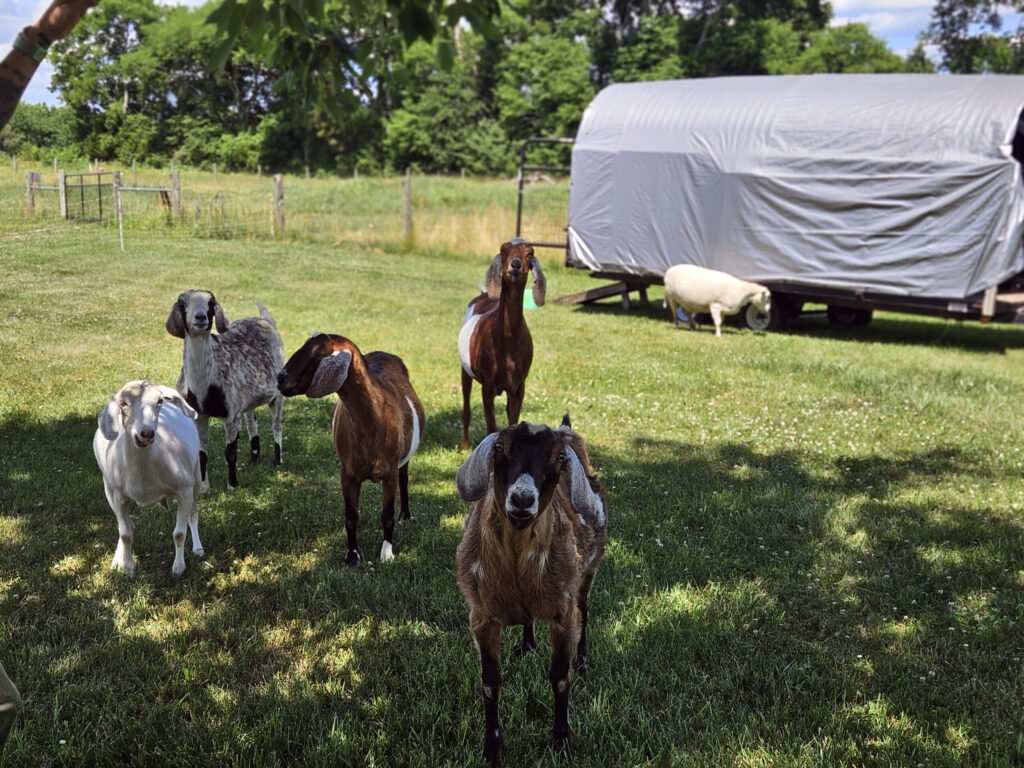
In East Tennessee’s humidity, she said, goats can struggle with parasites if they stay in one place for too long. So, they move. Cattle move. Pigs move. The farm’s fencing, water systems, and paddocks are all designed around that principle.
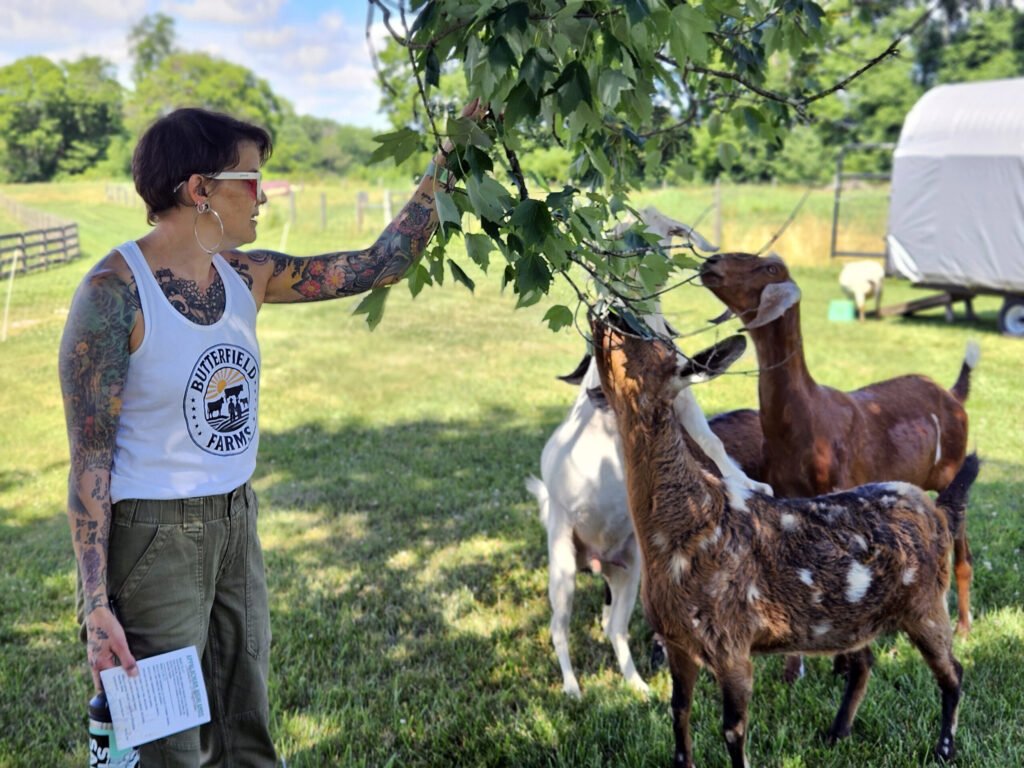
At the goat fence, Abby called the animals over and pulled down a tree branch so they could strip the leaves. She said the tannins in the leaves can help deter parasites. The goats are part of her strategy for managing brush and plants the cattle leave behind, but they are also one of the farm’s reminders that regenerative systems are not automatic. They require constant watching, adjusting, and learning.
That learning has not always been easy. Abby said they tried Katahdin sheep for a while, but sheep were not a good fit for the farm’s needs or for the way the family wanted to work. They also learned hard lessons with guardian animals after a donkey injured newborn goats.
“We learned a lot of hard lessons,” she said.
That honesty is part of what made the tour compelling. Butterfield Farm did not feel like a place where someone had found a perfect formula. It felt like a farm being actively studied, adjusted, and improved.
Pigs, Paddocks, and Mud
The pigs made the system easier to see.
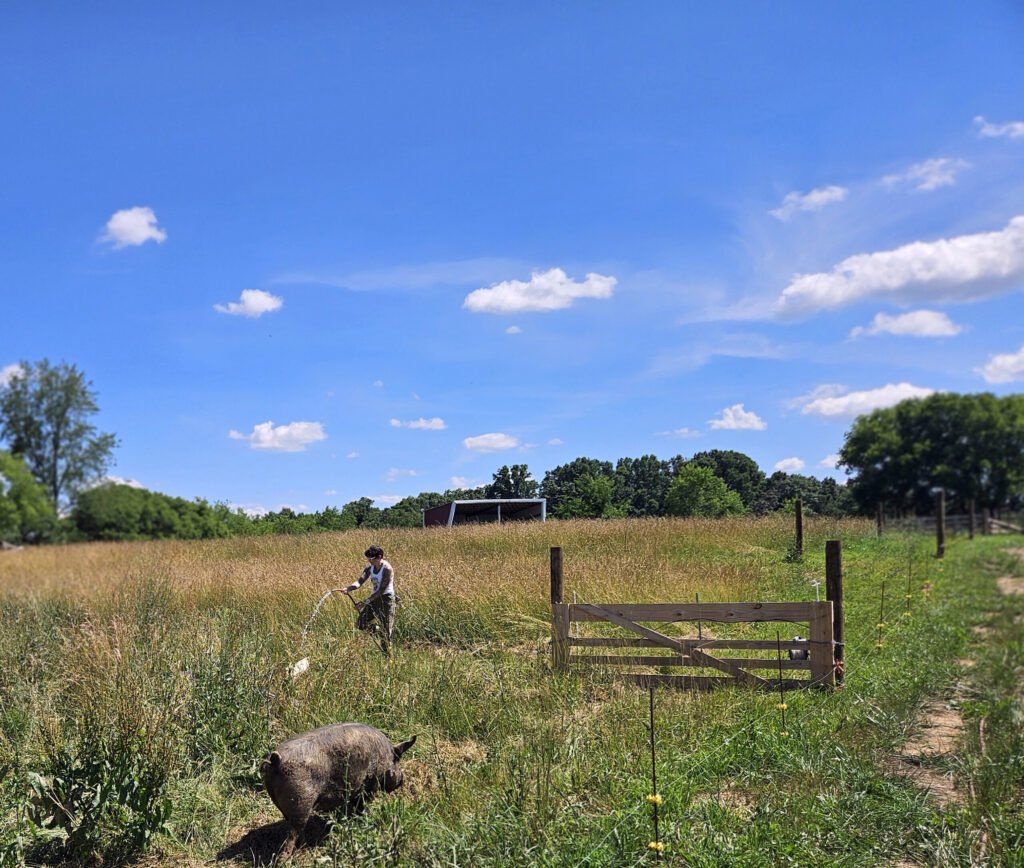
We walked to another fenced area where Idaho Pasture Pigs were scattered through tall grass and shade. Some were under a shelter. One large pig had settled into a deep mud wallow, looking entirely content. Abby turned on a hose and called the pigs in for water and a cooling spray.
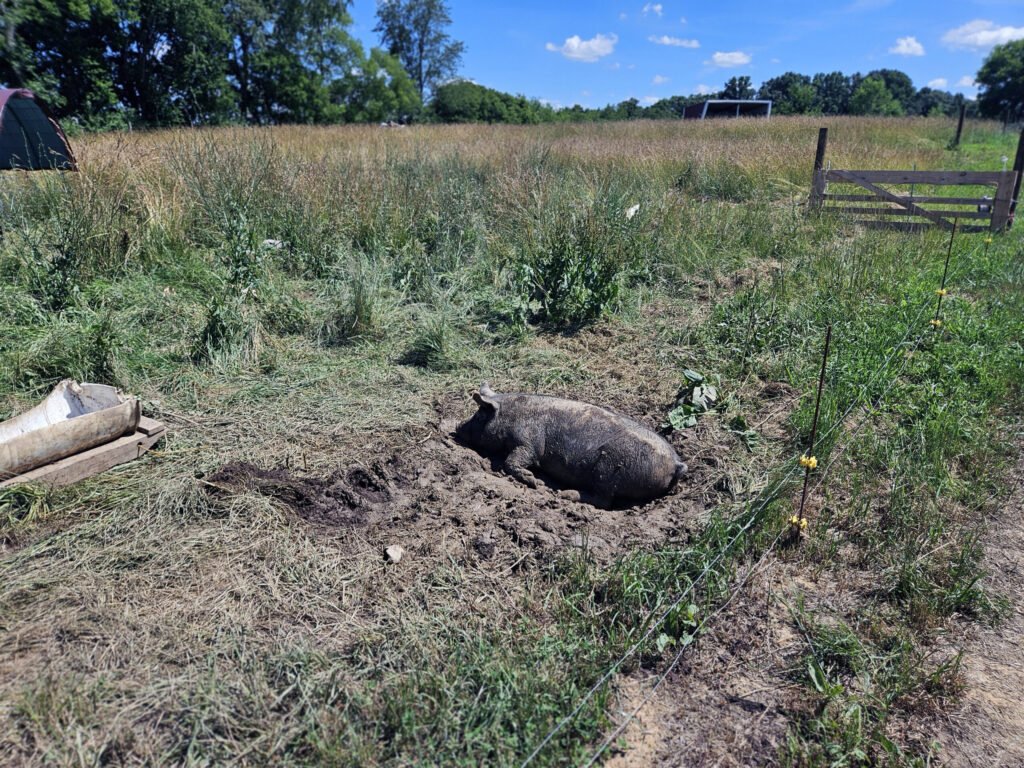
“We want them to do what pigs do,” she said. “We want them to wallow. We want them to get wet. We want them on grass.”
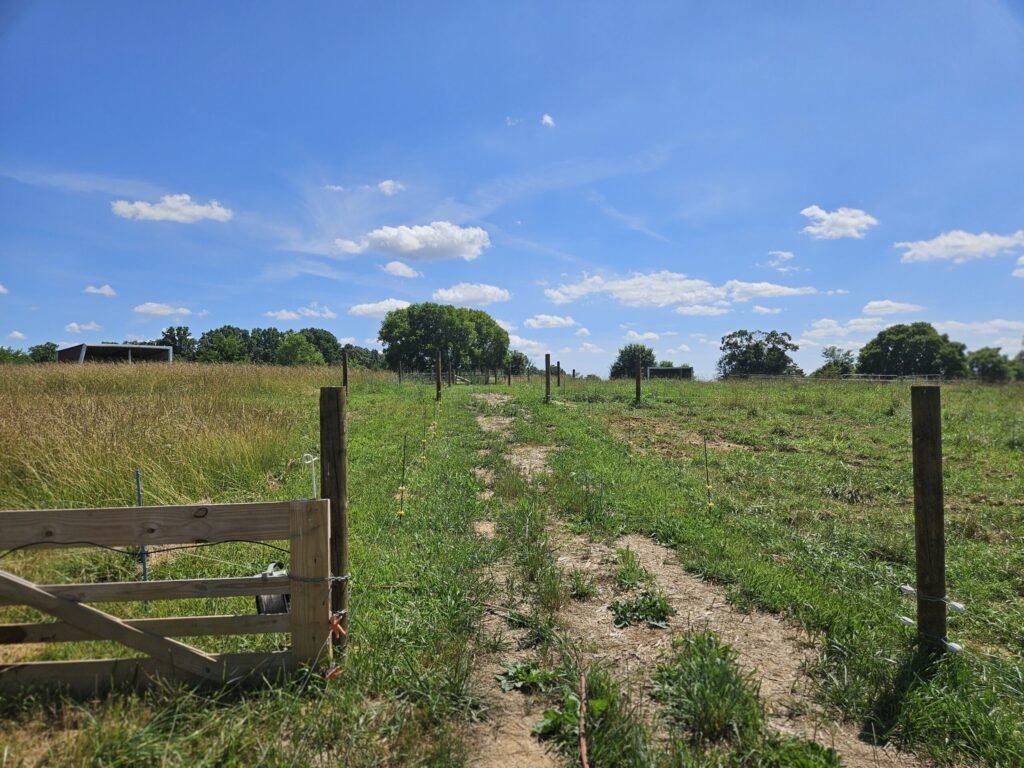
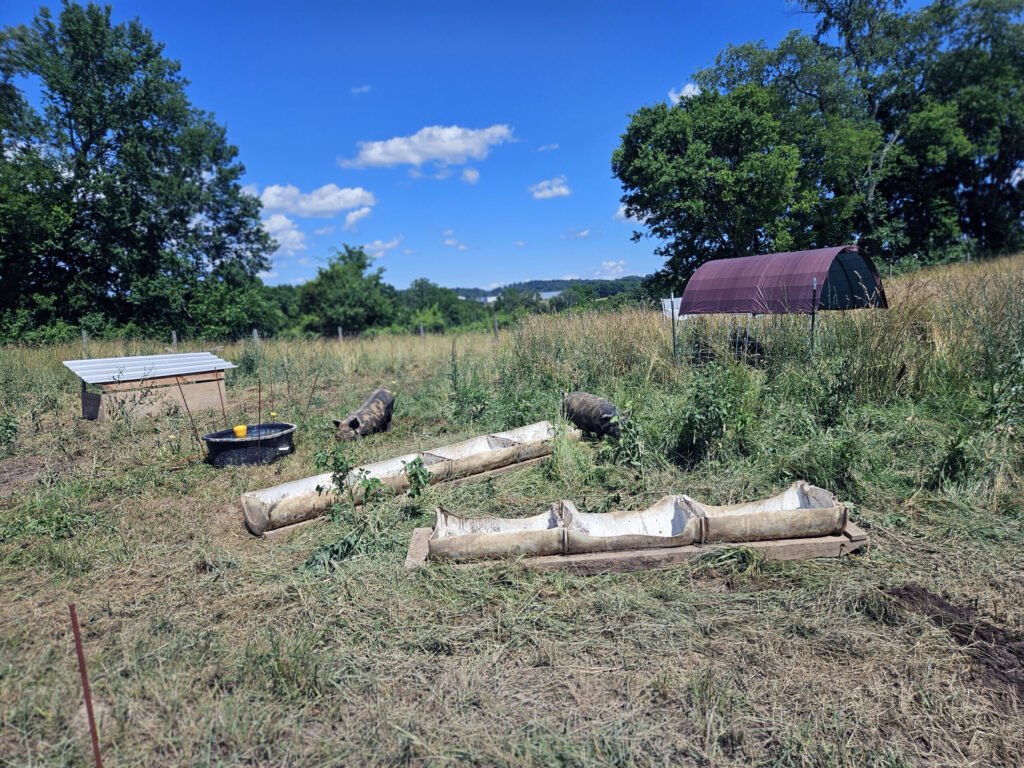
The pig paddocks are arranged so the animals can be moved through them in sequence. By the time the pigs return to a section, the ground has had time to recover.
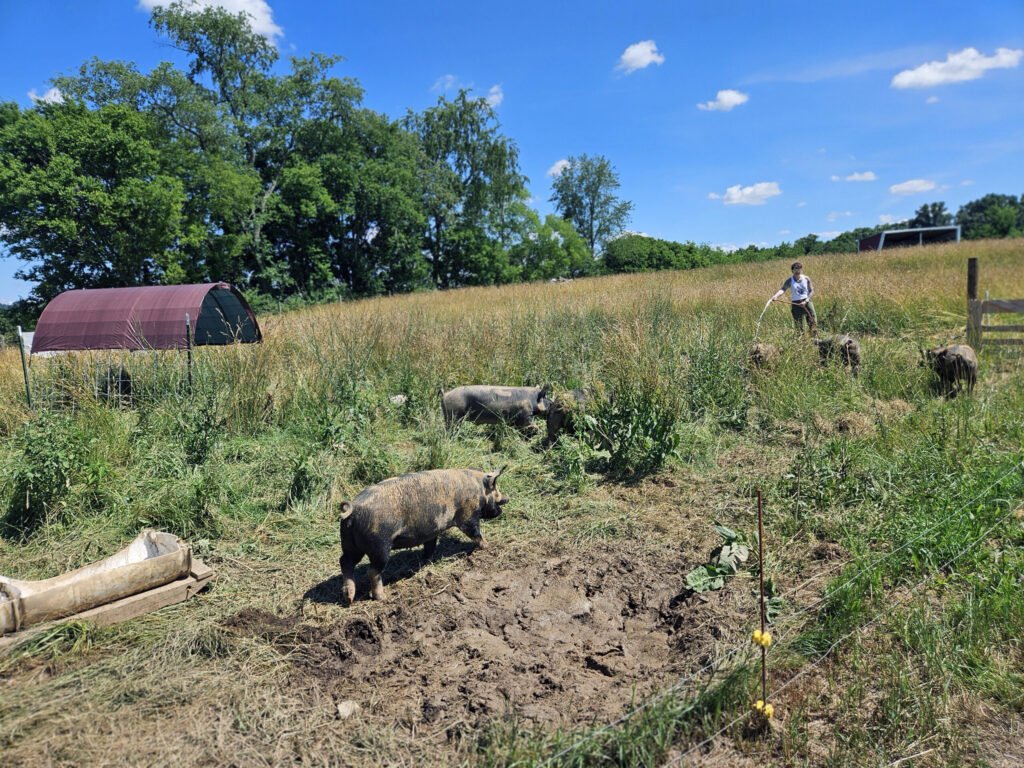
Abby said the pigs are fed organic, soy-free, corn-free feed fermented for two days in milk from the farm’s Jersey cows. The milk helps stretch the feed, she said, which matters because pigs are much more expensive to feed than cattle.
“It’s not like the cows where you can just feed them grass,” she said.
The pigs are part of the farm’s food system, but also of the land system. They disturb soil, eat forage, wallow, fertilize, and move on. Managed poorly, pigs can tear up land. Managed intentionally, Abby sees them as another tool in the larger rotation.
Jerseys, South Poll Cattle, and Slow Growth
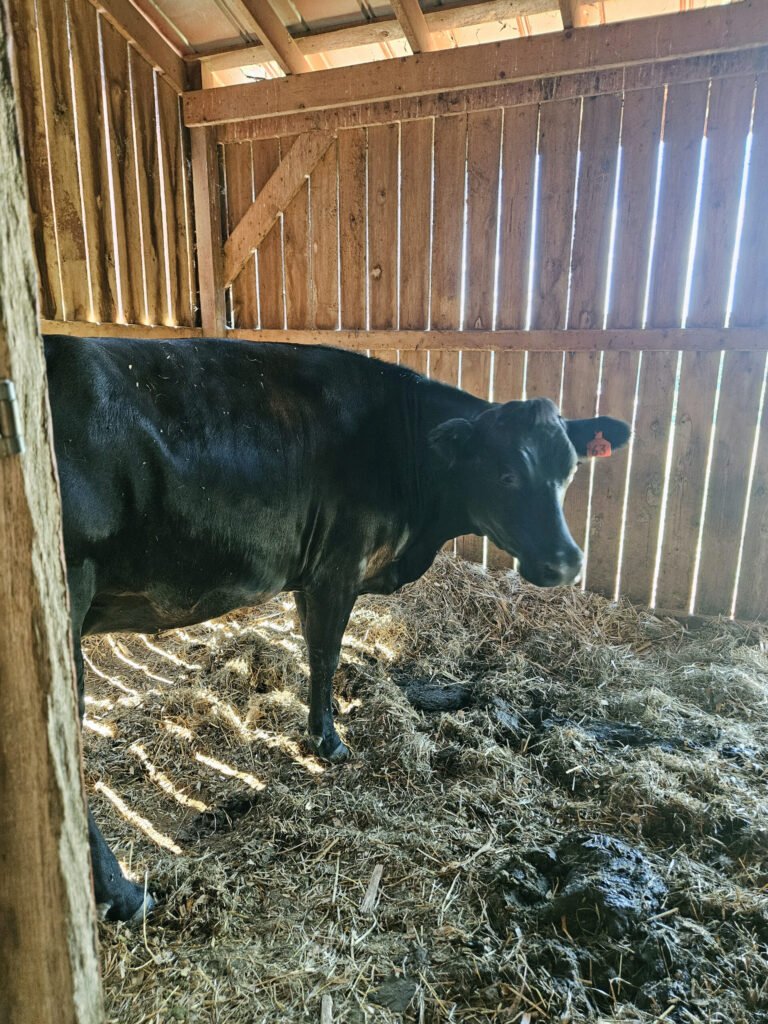
Butterfield Farm raises South Poll cattle for beef and A2A2 Jersey cows for family milk and for the pigs’ feed program.
The South Poll cattle are well suited to grass-based grazing and the heat and forage conditions of this part of Tennessee. Abby said the farm chose them because they fit the regenerative system she and Bill wanted to build.
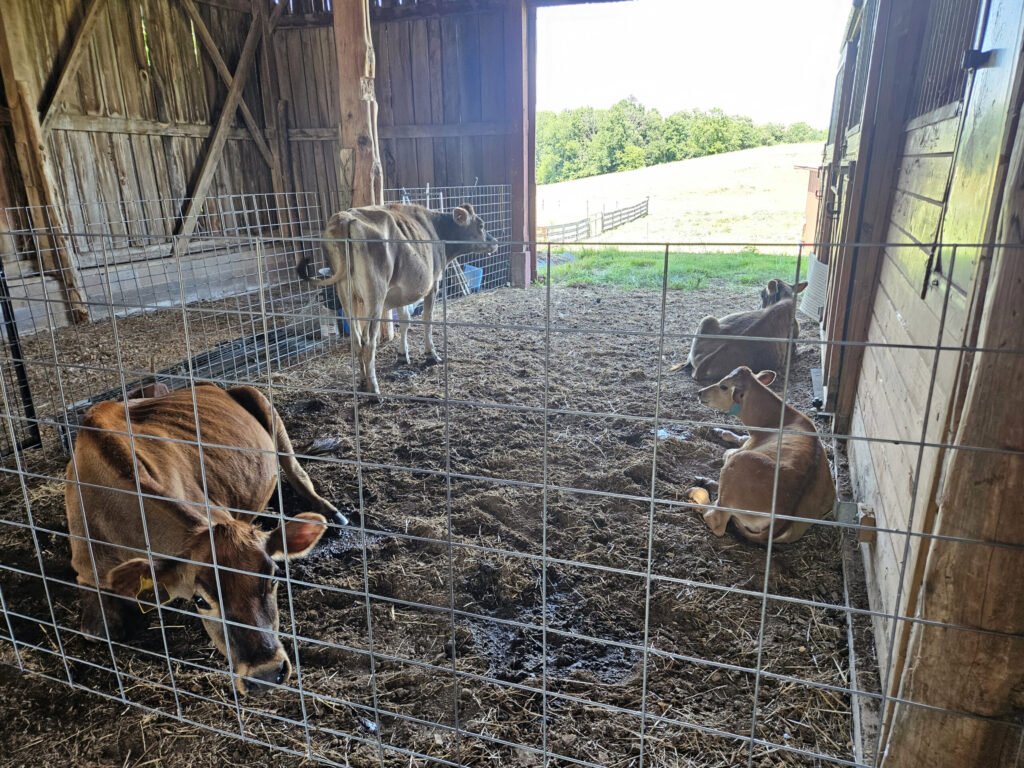
The Jerseys require more care in hot weather. Abby called them “delicate flowers” in the heat. On the day of our visit, several were resting in the shade of a barn, and Abby said she had been hosing them down to help keep them cool.
The farm had recently processed its first grass-finished beef animals, which Abby said had taken about three years to raise. That slower pace is intentional.
“We want slow growth,” she said. “We want the land to be rotated. We need manure.”
For Abby, beef production is not separate from soil recovery. The animals are not only being raised for market; they are also part of the farm’s effort to return nutrients to the ground.
“You’re not just doing it to raise the meat for the market,” she said. “You’re doing it for the whole cycle. It’s the land. We are replenishing the land.”
Milk, Feed, and Food Philosophy
Abby’s interest in farming is closely tied to her interest in nutrition. She said she spent years as a vegan before shifting toward an animal-based diet, a change she credits with improving her own health. That personal experience shaped the way she thinks about beef, pork, milk, and slow-grown animals.
She raises A2A2 Jerseys because she believes their milk is easier for her family to digest. A2A2 refers to the beta-casein protein in the milk. Abby said she uses the milk for her family and in the pigs’ fermented feed.
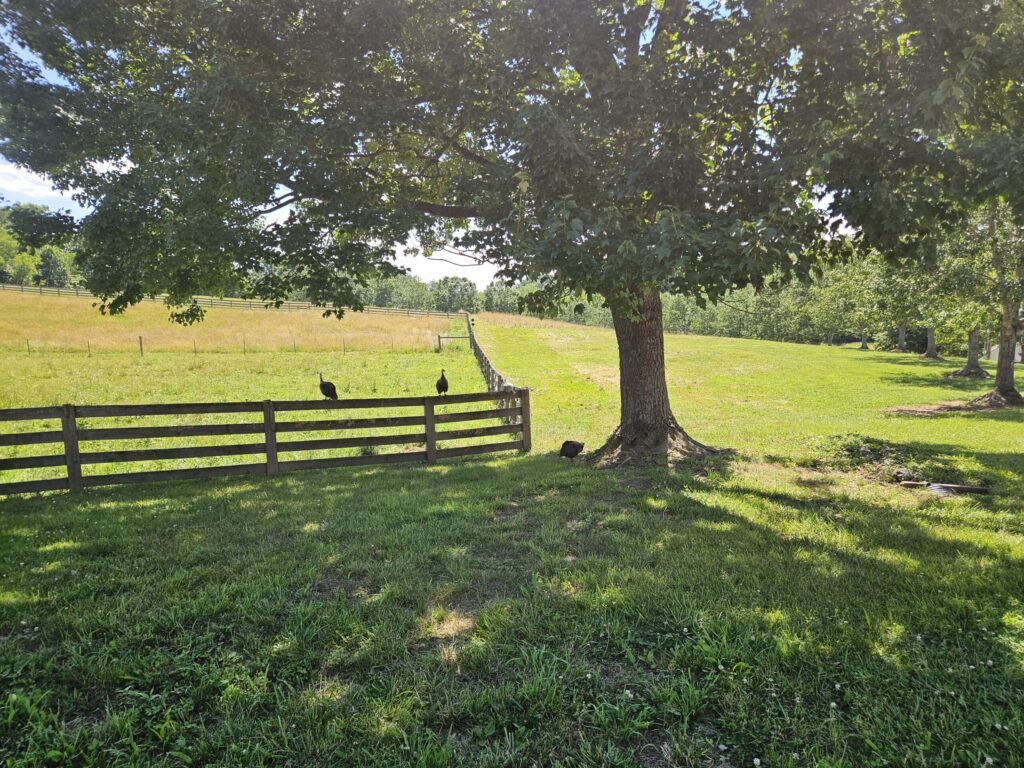
She also pays close attention to feed ingredients, minerals, and forage. The pigs receive organic feed without corn or soy. The animals receive apple cider vinegar, salt, and kelp, which Abby said she uses because she believes the region is iodine-deficient. Guinea hens move around the property, spreading manure and helping control ticks.
“We are very into the research,” she said.
Some of Abby’s views on food and health are personal and strongly held. In the context of the farm tour, what stood out most was how those beliefs translate into management decisions: slower growth, pasture access, feed choices, constant rotation, and an emphasis on reducing routine interventions by managing animals and land more carefully.
Abby said the farm does not treat animals casually or automatically. When an animal needs medical treatment, she said, they use it and are transparent with customers. But their first strategy is observation, rotation, minerals, and prevention.
Water, Soil, and Infrastructure
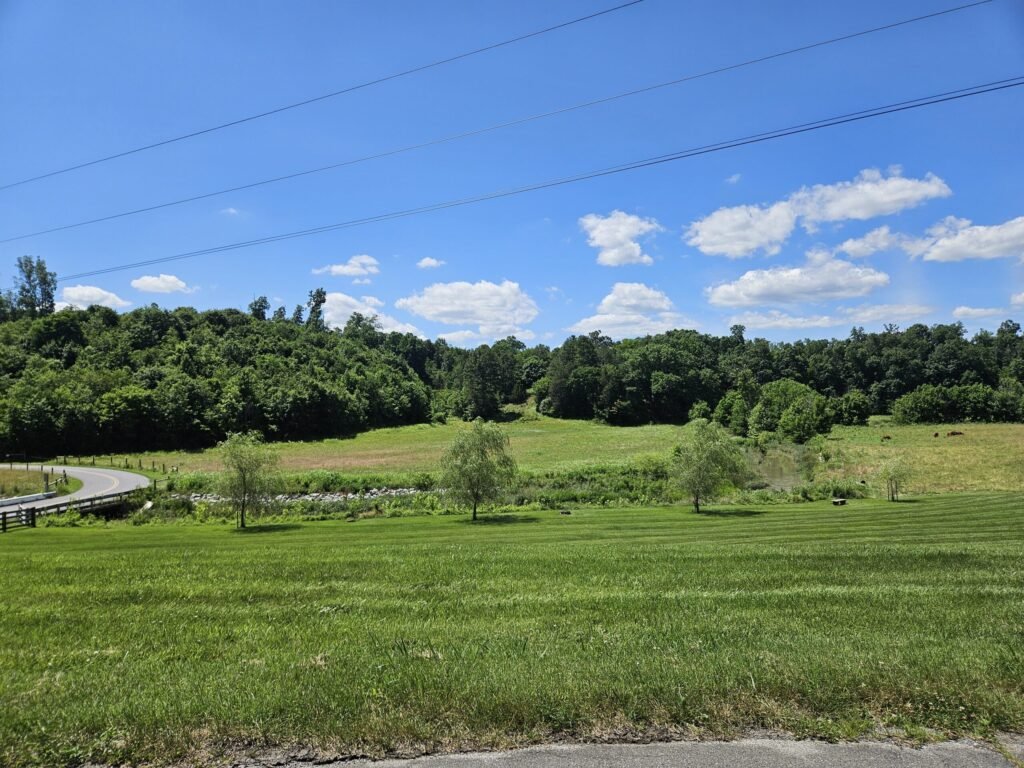
One of Butterfield Farm’s biggest conservation efforts has involved water.
Abby said the farm worked with the Natural Resources Conservation Service on a major creek project, including rock along 3,400 feet of creek bed and water lines that help keep cattle out of the stream. She described it as a $440,000 cost-share project that took about two years.
“They put rock all the way through and across the street,” she said.
The goal is to protect the creek and prevent streambank erosion. Abby said previous farming practices had allowed cattle in and out of the water, which pushed soil back and cost the farm land over time. Butterfield’s system is designed to provide animals with water without allowing them to damage the creek.
“We don’t let our cows in the water,” she said.
NRCS also helped with a watering system, and Abby said the farm has received 2,000 feet of water lines. She described the agency as an important resource for farmers trying to improve conservation practices.
“NRCS is the Natural Resource Conservation Service,” she explained. “Every county has its own office. They’re really good in Tennessee.”
Those kinds of improvements are not as visually charming as goats at a fence or pigs in a wallow, but they are central to the farm’s regenerative work. Fencing, water lines, shade structures, and creek protection are what allow the rotation system to function.
A Farm Still Learning
Butterfield Farm is not a finished system, and Abby does not present it that way.
She talked openly about what has worked and what has not. Sheep were not a good fit. Goats brought parasite challenges. The Jerseys need shade and water in the heat. Pigs are expensive to feed. Grass-finished cattle take years. Mobile shade, fencing, water lines, minerals, and rotation all require money and time.
The farm has also had to adapt to the land it inherited. Abby said the property had been neglected before she arrived. It had been used for tobacco and hay, and the soil needed manure, rest, and better management.
Five years in, she said she can see changes in the paddocks.
“It’s been good to be able to see the difference over the last five years,” she said.
That may be the most important point. Regeneration, at Butterfield, is not a slogan. It is daily work: move the animals, protect the creek, watch for parasites, spread the manure, give the pigs mud, give the Jerseys shade, and keep learning.
As part of a broader Farm Tour focused on the local food chain, Butterfield Farm helped complete the picture. The Appalachian Producers Cooperative showed the processing infrastructure that farmers need. Horse Creek Farm and Little Lou’s Creamery showed how dairy farms can add value and reach customers directly. Butterfield Farm showed the work that happens before any of that — the work of building food from soil, water, grass, animals, and careful attention.
The local food system does not begin at the market table, the freezer case, or the processing plant door. At Butterfield Farm, it begins in the paddock.








Leave a Reply