

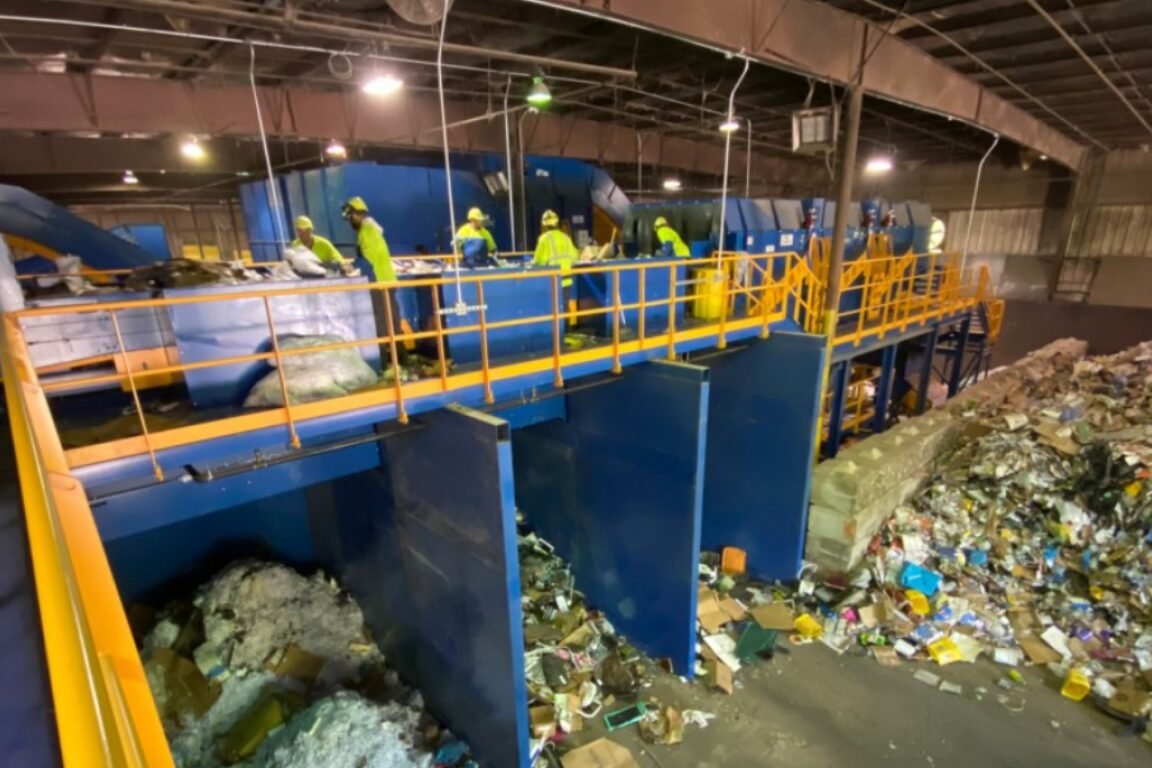
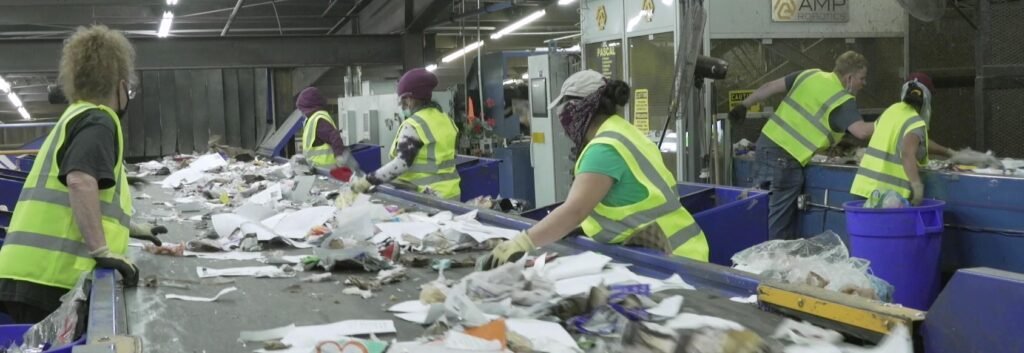
On June 2, the North Carolina Department of Environmental Quality announced $25 million in grants to 16 local governments across western North Carolina to repair, replace, and upgrade recycling and waste-reduction infrastructure affected by Hurricane Helene.

The funding, distributed through the Helene Recovery Recycling Infrastructure grant program, will support projects ranging from equipment purchases to facility repairs and new construction. State officials have framed the program as part of the region’s long-term recovery from Helene, which damaged public infrastructure and left communities managing both regular waste operations and large volumes of storm debris.
But the award also shows the limits of available recovery funding. Local governments submitted 45 applications requesting about $123 million in direct grant funding, far more than the $25 million available. While the program does not require a formal local match, county-level discussions show that some projects will still require significant local funding to cover design, contingency, construction management, and long-term operating costs.
The Scale of the Need
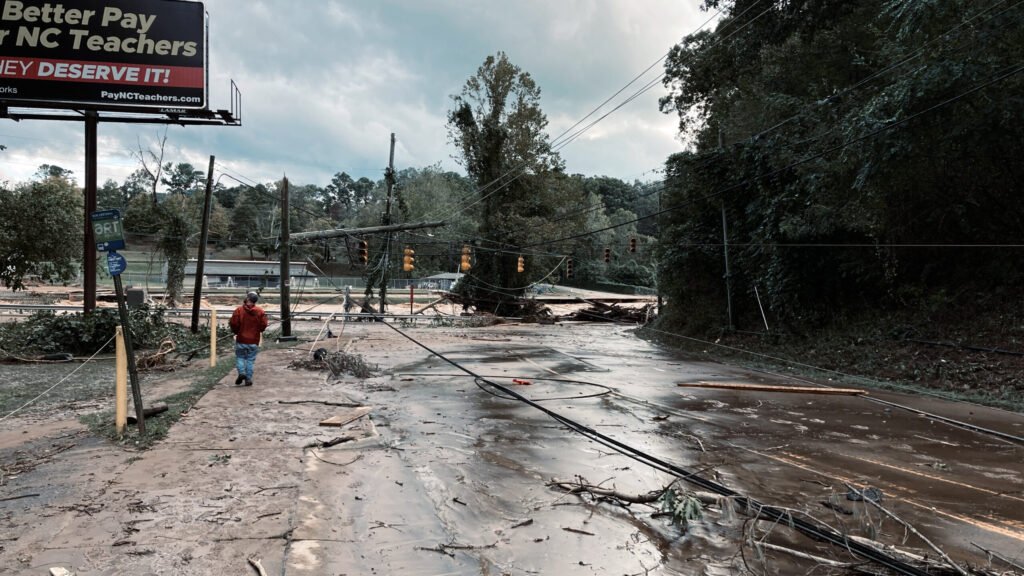
The infrastructure damage from Hurricane Helene created both immediate and long-term challenges for western North Carolina communities. Local governments have had to continue daily solid waste, recycling, and sanitation services while also managing storm-related debris and damaged facilities.

In the state’s announcement, Gov. Josh Stein said communities were still rebuilding core infrastructure after the storm.
“After Helene, communities across western North Carolina are dealing with damaged recycling facilities and enormous amounts of storm debris scattered throughout the region,” Stein said. “Western North Carolinians have worked hard to recover over the past 20 months, but communities are still rebuilding critical infrastructure.”

DEQ Secretary Reid Wilson described the grants as a way to help local governments repair systems that were exposed or damaged during the storm.
“Hurricane Helene tore apart waste management and recycling infrastructure throughout the mountains,” Wilson said. “These grants will help communities rebuild systems and equipment to manage waste more efficiently and reduce vulnerability when future disasters strike.”
The program is intended to help address those needs, but demand for the grants far exceeded available funding.
| Program Metric | Figure |
| Total Funds Awarded | $25 million |
| Applications Received | 45 |
| Projects Funded | 16 |
| Direct Funding Requested | $123 million |
| Project Completion Deadline | June 30, 2030 |
The initial request for proposals did not require a local funding match. The $145 million in total project costs cited by DEQ includes about $123 million in direct grant requests, along with roughly $22 million that communities voluntarily offered to contribute to their projects. That leaves nearly $100 million in unfunded direct requests across 29 projects that were not selected.
When asked about the path forward for unfunded projects, NCDEQ Recycling Program Analyst II, Matt James, said the agency continues to seek additional support.
“DEQ is pursuing other relevant grant opportunities for the remaining grantees,” James said. “We’re searching for non-profit sector support as well as other government agencies. Helene demonstrated vulnerabilities in recycling and composting infrastructure in the region, and it is our goal to make large, regional impacts to build more resilient waste reduction systems.”
“No Match” Does Not Always Mean No Local Cost
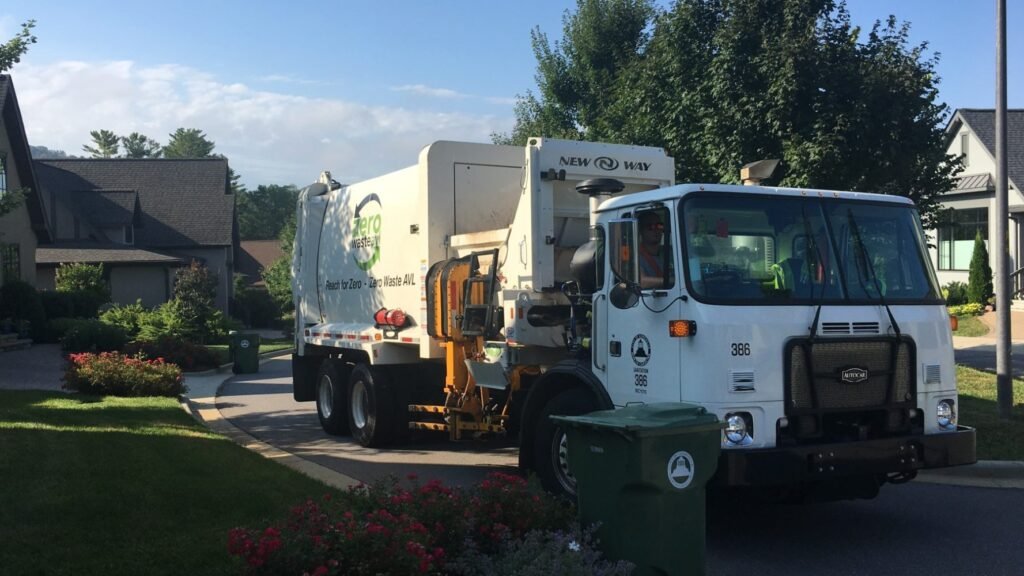
One of the most important details of the HRRI program is that it does not require a formal local match. For some counties, especially those using grant funds for equipment purchases, the process can be relatively straightforward.
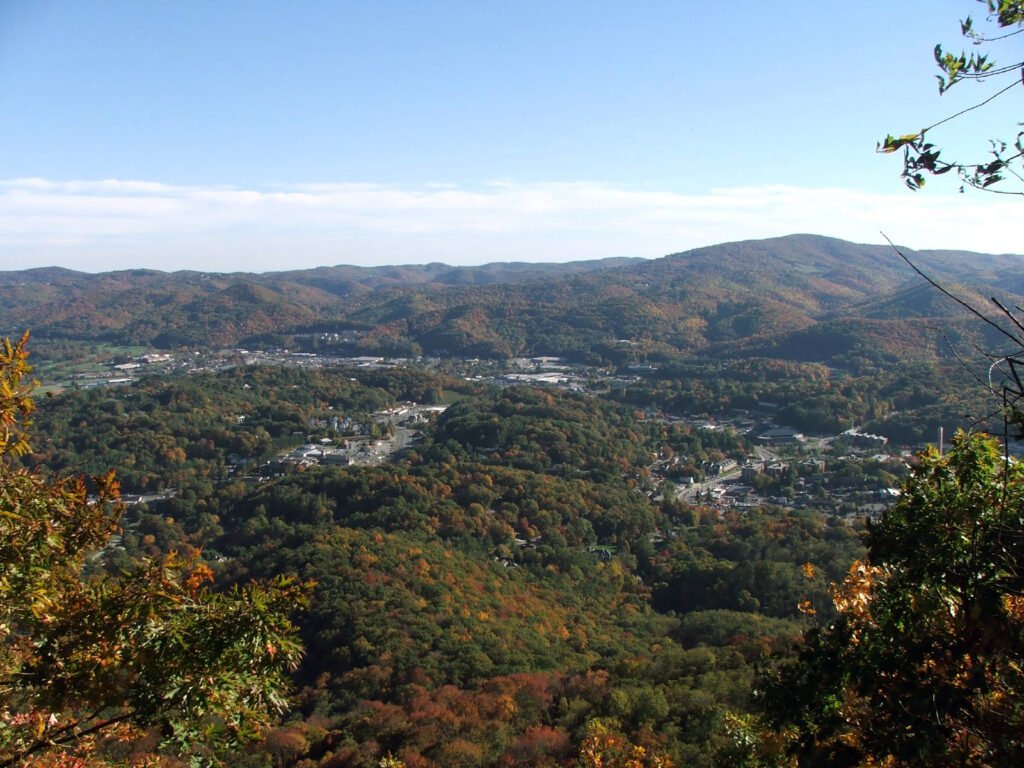
Watauga County, for example, received a $280,000 award. During spring county meetings, commissioners formally accepted the grant for the Sanitation Department to purchase roll-off containers, a metal pre-crusher, and a mini-excavator, with no local match required. Because that award is focused largely on equipment procurement, the county’s financial exposure appears more limited than it would be for a major construction project.
The situation is different for counties using the grants to build or relocate facilities.

In Jackson County, which received a $3 million award for a new transfer station in Cashiers, Public Works Director Chad Parker told commissioners during an April 21, 2026, Board of Commissioners meeting that the project’s total estimated cost was $4.6 million.
“The total estimate for the project was $4.6M,” Parker said. “There was no match requirement, but there was a requirement for the project to be completed by June 30, 2030. Also, they would need to consider future operational costs and upkeep for the facility… the grant did not pay for contingency, design work, or construction management.”
That distinction is significant. Although Jackson County’s grant does not require a formal match, the county would still need to cover an estimated $1.6 million gap to complete the project as planned. The unfunded costs include elements that are often essential to construction projects, such as design, contingency, and construction management.
Jackson County Commissioner Jennings supported the project, pointing to the practical transportation and environmental benefits of a new facility in the mountain community.
“It would take a tremendous amount of traffic off the road going up and down the mountain,” Jennings said. “It was definitely a need.”
The Jackson County discussion illustrates a broader issue for the grant program: the impact of a “no-match” award depends heavily on what a local government is buying. Equipment-heavy grants may involve relatively direct purchases. Facility construction, relocation, or major repair projects may incur secondary costs not covered by the grant itself.

Haywood County’s $2.5 million award falls somewhere between those examples, with funding tied to equipment replacement and facility relocation. Recent county meetings focused more on routine operations and upcoming Household Hazardous Waste events than on the grant’s structural financing, but the county’s project type suggests it could entail greater complexity than a simple equipment purchase.
Reimbursement Adds Another Layer
For the 16 selected local governments, the next phase involves procurement, documentation, and project execution. According to James, most grants are expected to become active with the start of the new local government fiscal year.
“Most of the grants will be live starting July 1 with the new local government fiscal year,” James said. “The projects range from 1 year to 3 years depending on the respective scope of each.”
The HRRI program also operates on a reimbursement basis rather than through upfront disbursement.
“Grants work on a reimbursement basis, so as communities make grant-related expenditures, DEQ will reimburse them based on their grant award,” James said.
That structure means local governments must first pay eligible costs, then submit documentation for reimbursement. For smaller communities or larger construction projects, this can create cash-flow challenges even when the costs are ultimately reimbursable.
The burden is not likely to be felt equally. A county purchasing roll-off containers or a mini-excavator may have a more predictable procurement process. A county building a transfer station may have to manage engineering, construction schedules, compliance documentation, bid changes, cost overruns, and future operating expenses.
All projects must be completed by June 30, 2030.

Federal Rules Shape Local Projects
Because the $25 million comes from the U.S. Environmental Protection Agency, local governments must follow federal procurement and labor requirements. Two of the most significant are the Build America, Buy America Act and Davis-Bacon prevailing wage rules.
The Build America, Buy America Act requires that iron, steel, manufactured products, and construction materials used in federally funded infrastructure projects be produced in the United States. The requirement can also apply to mobile equipment that exclusively serves public infrastructure, such as certain recycling trucks or collection containers.
Davis-Bacon requirements apply to construction or repair contracts exceeding $2,000. Covered contractors and subcontractors must pay laborers and mechanics no less than the locally prevailing wages determined by the federal government.
Those requirements reflect federal labor and domestic-sourcing policy goals, but they can also add complexity to documentation, procurement, and supply chain for local project managers. For rural governments already managing recovery operations, the administrative side of the grant can become a major part of the project.
A Broader Recovery Package
The $25 million recycling infrastructure program is one part of a larger $61 million EPA-funded recovery package awarded to NCDEQ after Hurricane Helene.
In addition to municipal recycling and waste-reduction infrastructure, the broader funding package includes support for disaster-related debris cleanup, brownfield redevelopment, hazardous-waste response, and pesticide removal. Those related programs may be especially important in rural and agricultural communities where storm debris, damaged storage areas, or unusable pesticides remain part of the recovery landscape.
The HRRI grants represent a significant investment in western North Carolina’s recovery, but they are not a complete solution to the region’s infrastructure needs. The awards will help selected communities replace equipment, repair damaged systems, and, in some cases, build new facilities. At the same time, local discussions show that project type matters: a no-match equipment grant can be very different from a no-match construction grant that still leaves a county responsible for design, contingency, management, and future operating costs.
For local governments, the work ahead is not only securing grant awards. It is turning those awards into completed projects while managing reimbursement timelines, federal requirements, and the financial realities that remain outside the grant.














Leave a Reply